
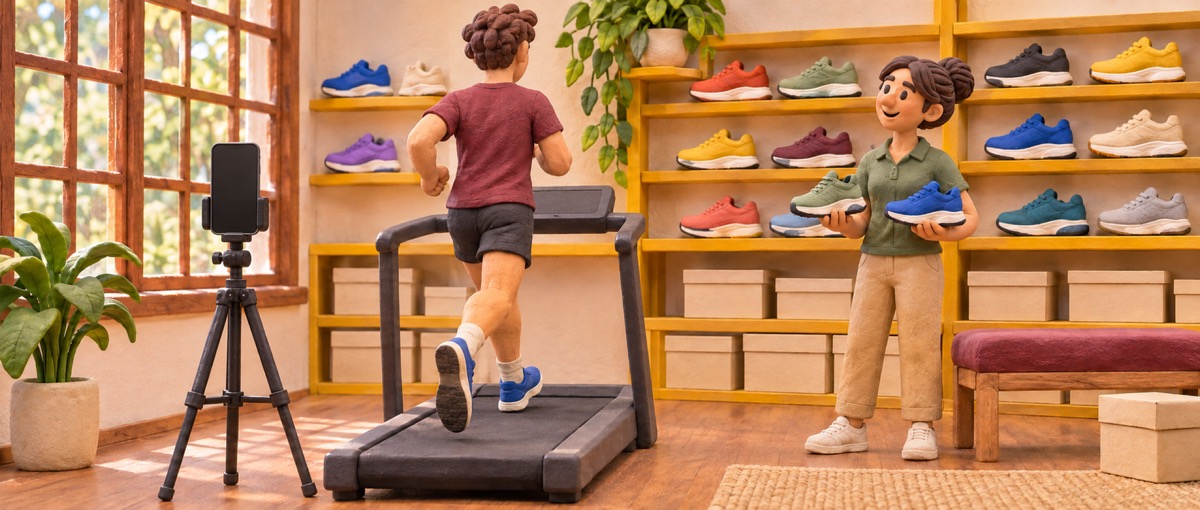
At the UK running-shoe chain Runners Need, a customer first puts on a neutral shoe selected by an employee and runs on a treadmill for 10 to 15 seconds. Ochy analyzes the video. The employee then combines the replay, the resulting data, and the customer’s preferences to choose several shoes for a fitting. The full appointment takes about 30 minutes; it does not end when the AI produces a report. Runners Need’s in-store process
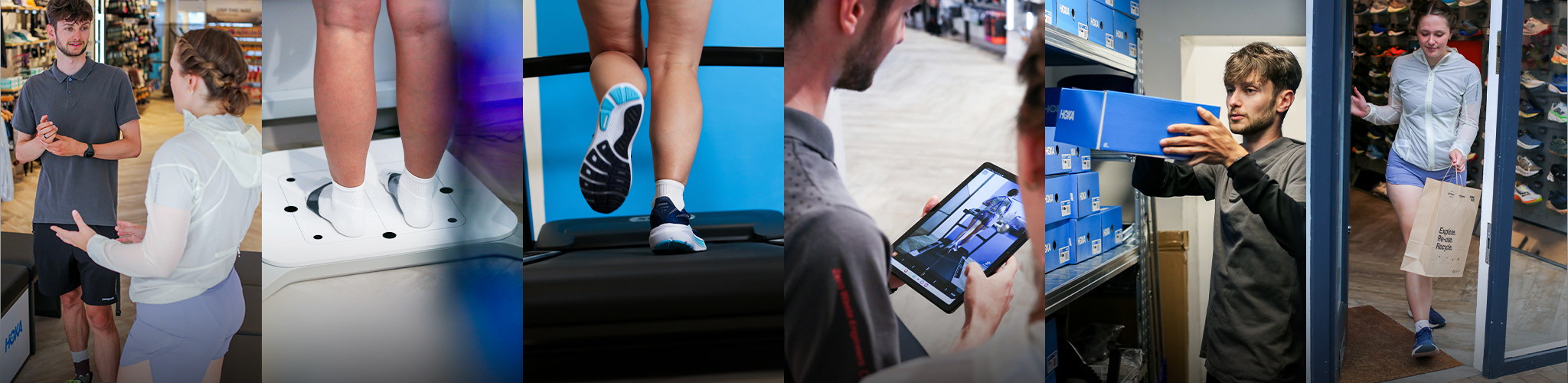
Runners Need’s website shows the complete in-store service. Foot scanning and running-form analysis are separate steps.
Ochy began as an AI gait-analysis app for runners: record a running video, identify movement patterns, and receive feedback. The same technology now appears before a shoe purchase.
In a March 2026 interview, cofounder Victor Dequidt said Ochy was being used in more than 100 running stores worldwide. Consumer subscriptions still generated about 60% of revenue at that time, with the remainder coming from business customers, especially running retailers. Ochy did not stop charging runners; it added another buyer. Cofounder interview about the business model
The last page of the report becomes a few shoes to try on
For a runner, learning how the body moves can be the result. For a store employee, the service is not complete until the employee knows which shoes to bring from the shelf.
Ochy’s retail product first asks about running experience and comfort preferences, then records the customer’s gait. After upload, the system combines movement data with the questionnaire to produce a ranked list of shoe matches. Opening a shoe reveals attributes such as cushioning, flexibility, and heel-to-toe drop. The employee can therefore explain a recommendation around specific products rather than merely reciting body measurements. Official shoe-recommendation guide
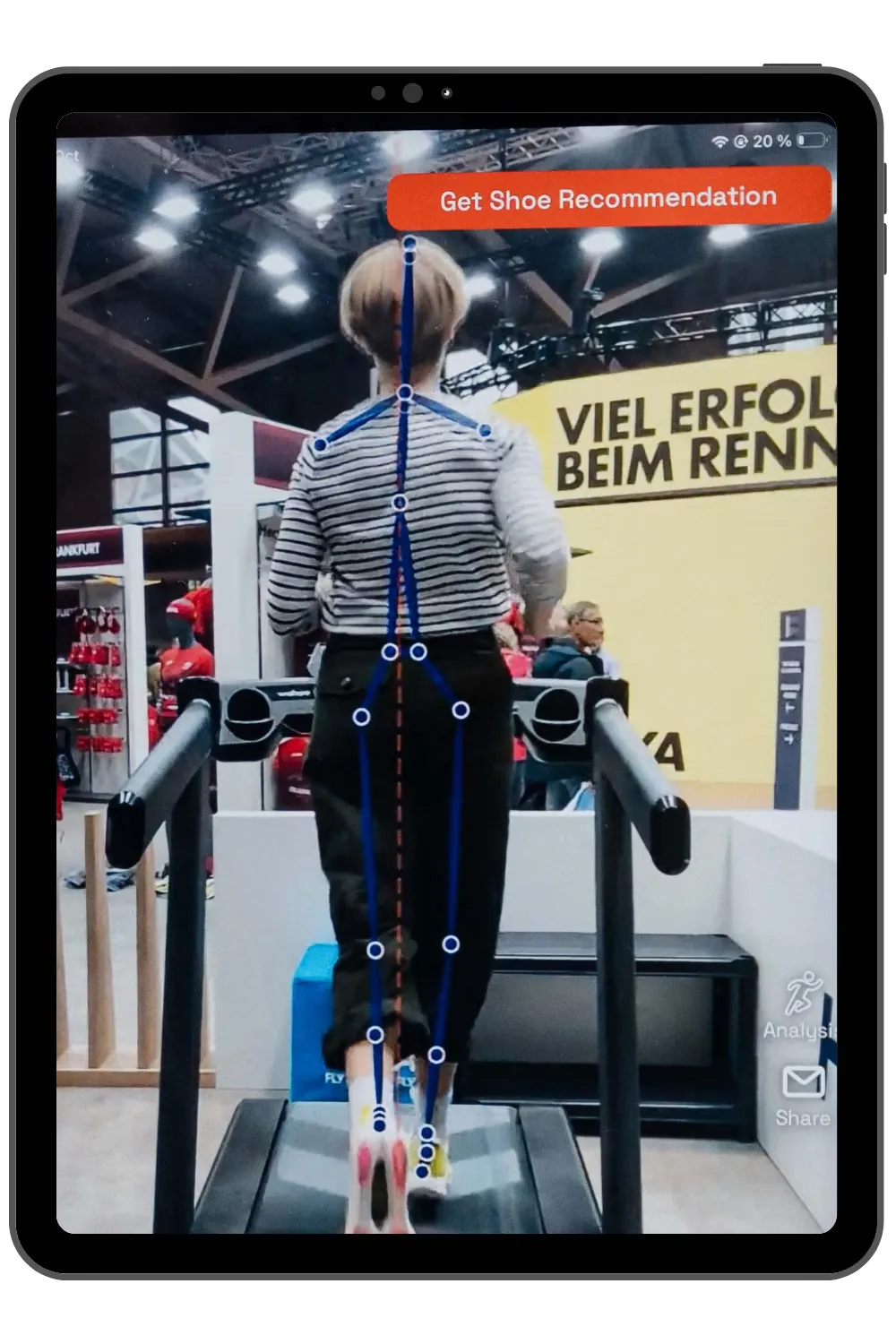
Movement is recorded first. Ochy presents this interface as part of its retail product.
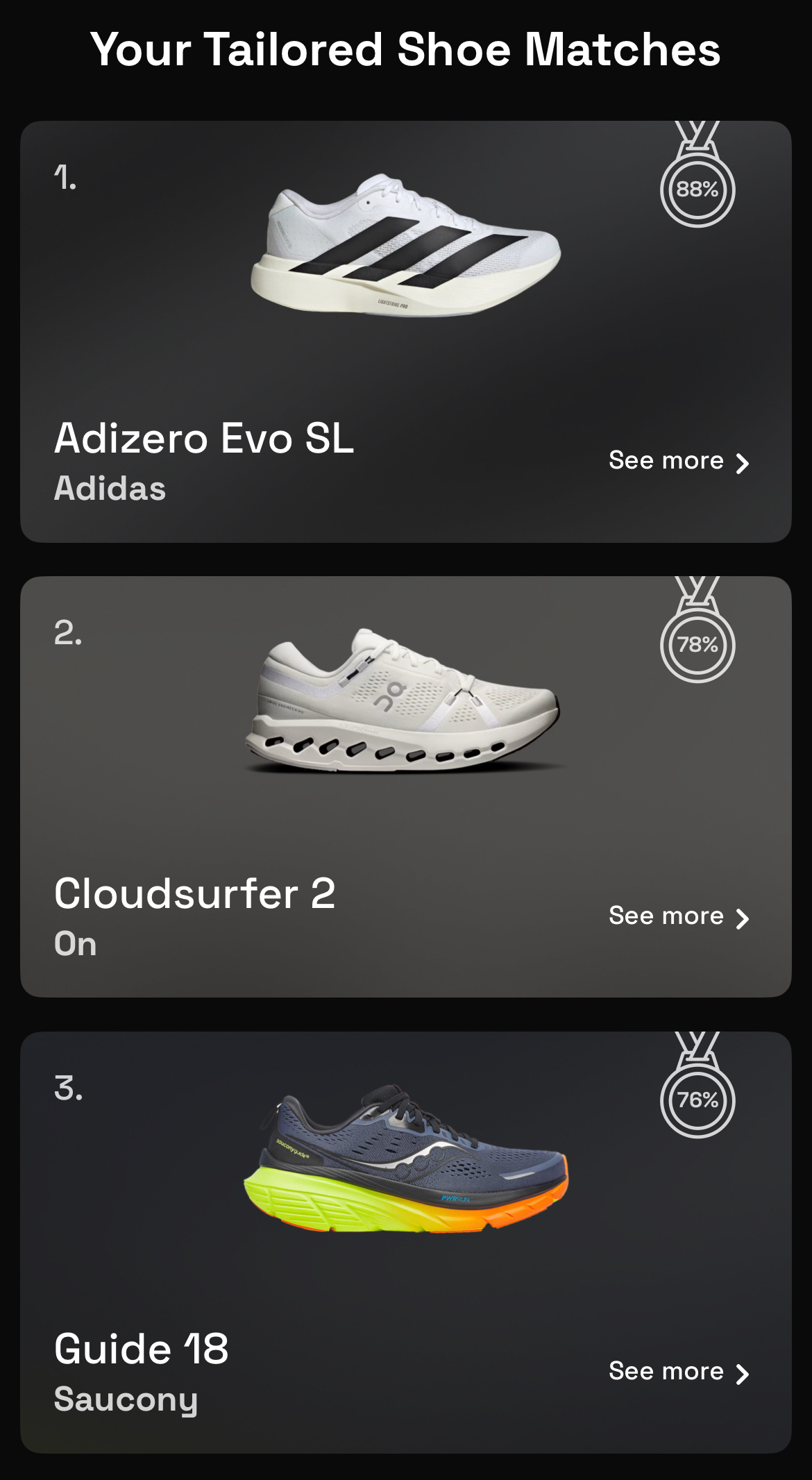
The analysis then leads to specific shoes. The percentages shown in the original product image are Ochy’s match scores.
This changes what the analysis is for. A runner opening the consumer app may want to improve running form. A store opens the product to narrow the set of shoes a customer should try during the current visit.
Runners Need also connects its own service fee to the purchase. Rear-view gait analysis costs GBP 15, but the fee is waived when the customer buys running shoes in a store or online within 30 days. Side-view running-form analysis is priced separately. That GBP 15 is a UK retailer’s service price, not Ochy’s app subscription price.
For the retailer, analysis can be sold on its own or included with a shoe purchase. The customer does not necessarily need another long-term sports subscription, while the store has a reason to buy software that fits inside a sales appointment.
A good recommendation is useless if the store does not carry the shoe
A retailer needs more than an answer to “what type of shoe suits this runner?” It also faces a more concrete constraint: which models does this particular store sell?
Ochy addresses this with a shoe-management console. A head office can define a shared base catalog for multiple stores, and each store can add the models it carries. A shoe can be removed from the recommendation pool when inventory is low and reactivated after replenishment. If Ochy does not yet list a model, the retailer can submit its brand, model, and product link; Ochy’s team gathers the attributes, verifies them, and adds the shoe. Official shoe-management guide
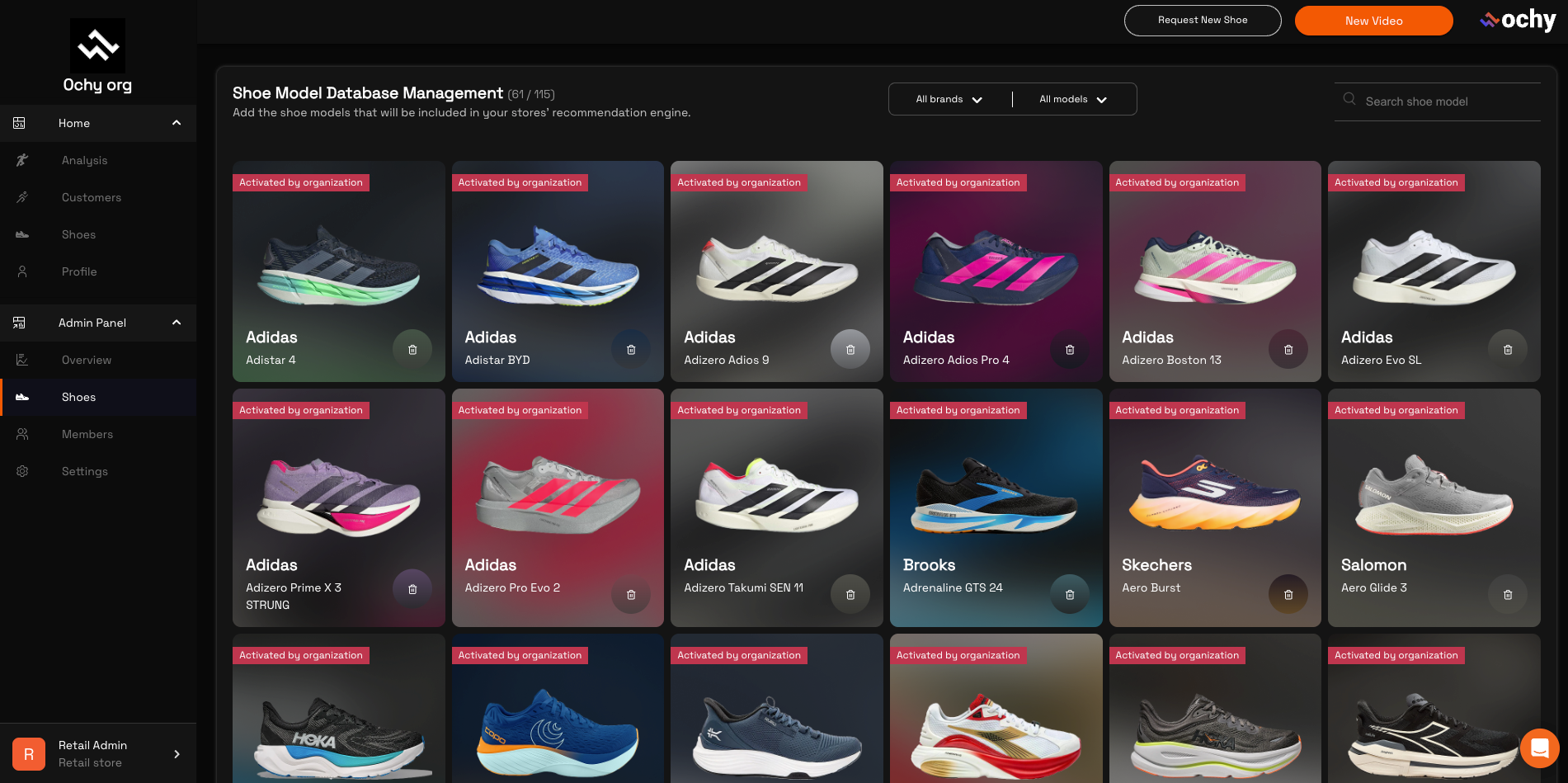
Head office and individual stores control which models can participate in recommendations. Source: original image embedded in Ochy’s guide.
The product is not searching the entire market for one universally best shoe. It is matching a runner against a catalog selected by the retailer.
That makes the recommendation actionable as an in-store fitting. It also means catalog maintenance affects what the customer eventually sees. Enabling a model, removing it, and adding a new release are part of the product’s commercial delivery, not administrative work outside the algorithm.
Ochy’s business plans are divided by analysis credits and available features. Its retail setup guide also requires a reliable internet connection, a suitable camera angle, and the runner’s full body in the frame. The product does not require an Ochy-built sensor, but the store still has to operate the capture and customer workflow correctly. Retail deployment and plan guide
Entering the store also means entering the employee’s existing system
By September 2026, Ochy had moved one step further. It integrated with foot-scanning company Volumental and launched the combined workflow in Runners Need stores.
The two systems answer different questions. Volumental uses scanning equipment to measure static foot characteristics such as length, width, and arch shape. Ochy uses an ordinary camera to analyze movement while a person runs. Ochy’s integration announcement
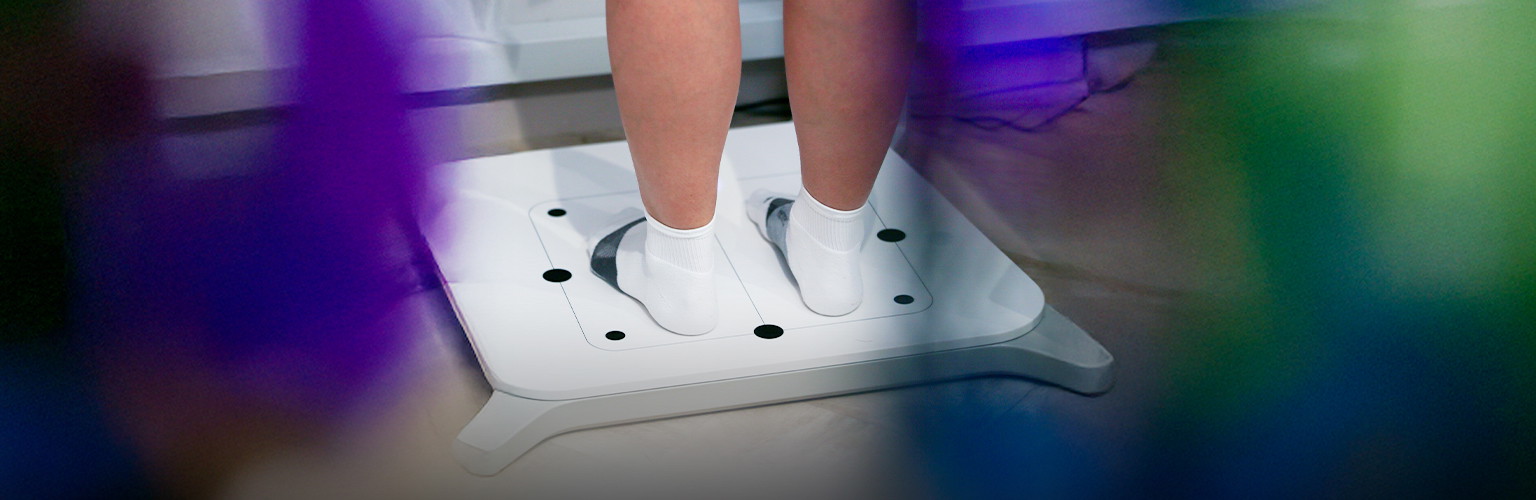
Static foot-shape scanning. Source: Runners Need. This is not specialized hardware required for Ochy’s running-form analysis.
The more consequential change occurs in the employee’s hands. The appointment still starts in Volumental’s app. The employee launches Ochy from the same tablet, while the customer’s name, email address, and consent carry forward. The analysis returns to the same customer record rather than creating a second profile. Volumental’s description of the live workflow
Opening another app may look trivial in a demonstration. In a store that repeats the same appointment all day, entering information once and switching systems less often can determine whether a new tool remains part of normal work.
The partnership announcement also routes commercial interest through Volumental’s team: retailers already using its scanning system can contact the company to add Ochy analysis. Volumental is therefore more than a data partner. It gives Ochy an entry point into an installed retail workflow and an existing customer relationship.
Running shoes change every season. To remain on the employee’s tablet, Ochy must keep its shoe data aligned with what is actually on the shelf, not merely keep its movement-recognition model working.