
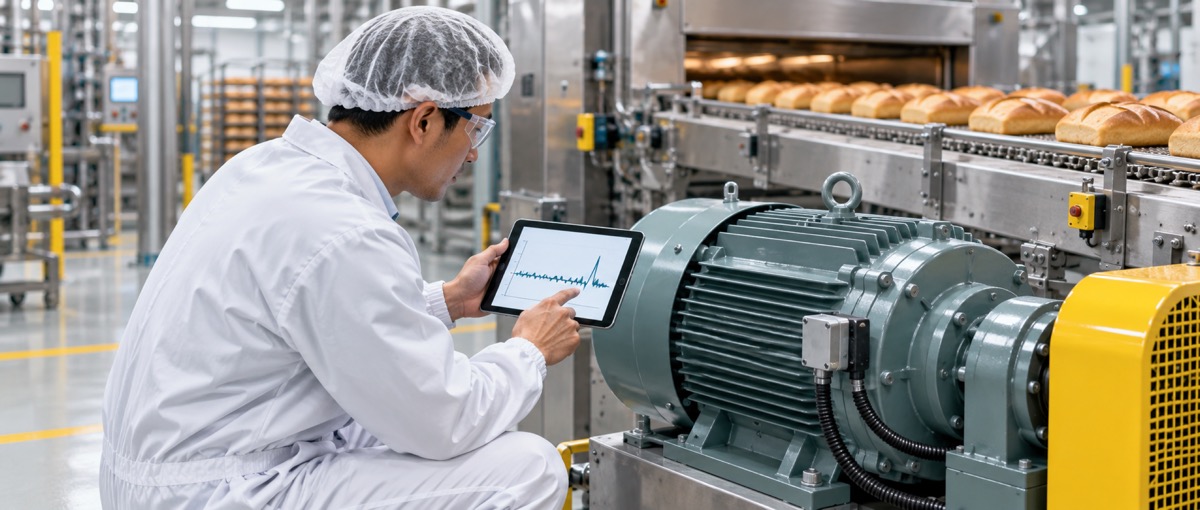
In July 2026, IntelliAM said its work with Mars UK had expanded to six sites. The company provides equipment-maintenance and reliability services while also deploying software that monitors machinery, detects abnormal behavior, and helps factories schedule repairs before a failure stops production. The new orders totaled about GBP 425,000, with close to half described as annual recurring revenue. Those figures come from IntelliAM’s July 22 order announcement.
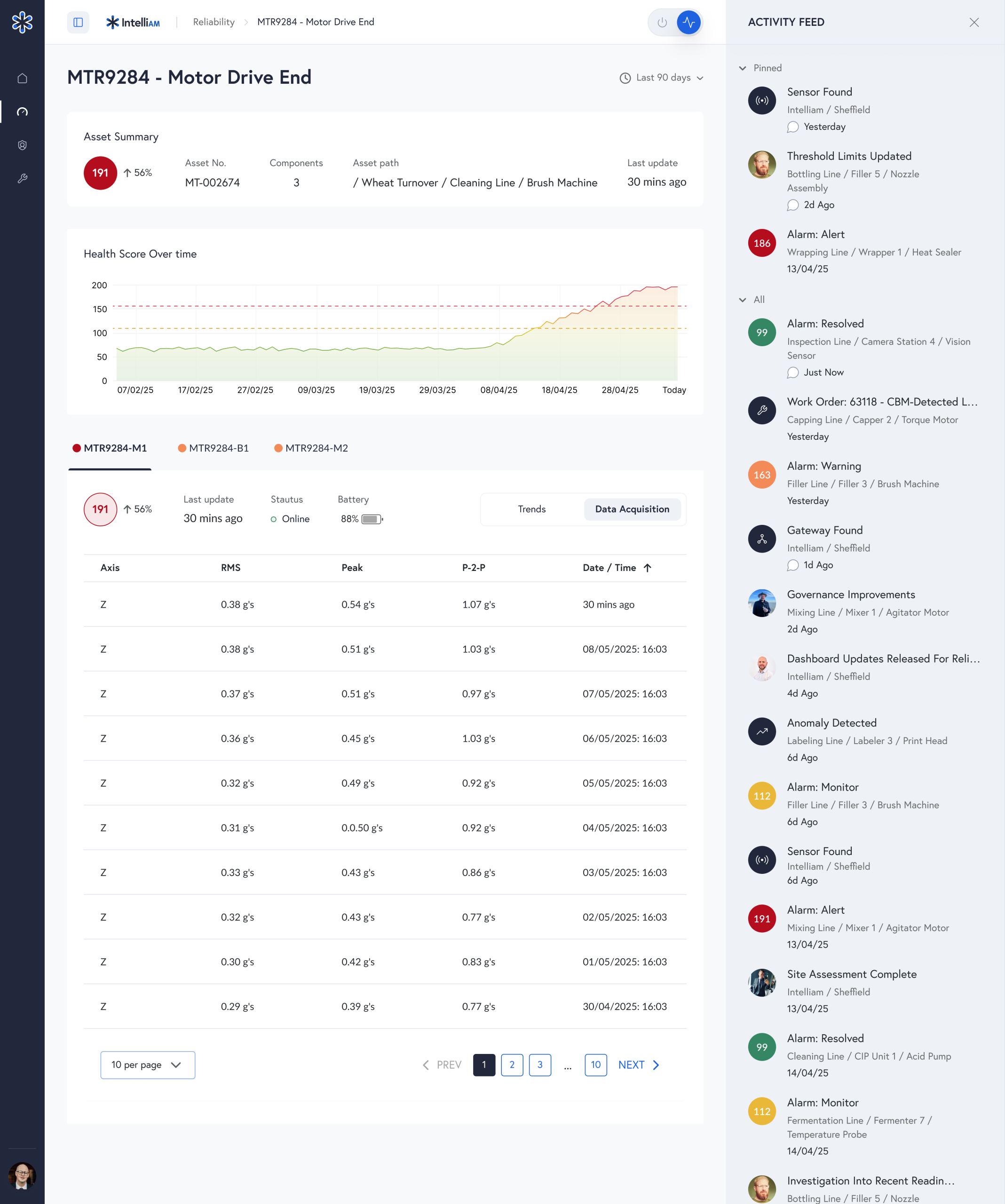
The useful detail is not simply that another large company bought AI. It is what the customer bought. The software did not arrive separately from maintenance work. Machine data, engineering judgment, and subscription software appeared inside the same commercial relationship.
For industrial AI builders, that is closer to the sales floor than a promise to connect a factory to a large model.
Engineers Came Before the AI Platform
IntelliAM’s operating base comes from 53North, an equipment-maintenance engineering business founded in 2013. According to the company’s published history, the business began with factory asset maintenance and later built cloud applications for equipment data. IntelliAM was formed in 2023, listed in 2024, and acquired 53North. The AI company is new, but the engineering operation and customer experience are more than a decade old.
That history changes how the product enters a plant.
A new software vendor has to explain how data will be collected, what an anomaly means, and who will act after an alert. A team already doing maintenance can connect software to existing work. Engineers do not automatically guarantee a good model, but the supplier does not have to learn every customer asset and maintenance routine from zero.
Industrial data is also not a file that can be uploaded and forgotten. Sensor readings need to map to a particular asset. An anomaly has to be interpreted in the context of operating conditions. Once a problem is identified, someone must decide what action to take. Without those steps, a polished dashboard can become one more screen that an engineer has to watch.
The IntelliAM website describes reliability, operational analytics, and recommended actions as product layers. It also says the platform can connect to existing sensors, control systems, and operational databases instead of requiring a factory to replace its entire stack. That is the company’s product position, not proof that AI autonomously controls production lines.
The practical advantage is narrower and more credible: a customer can test monitoring software without first agreeing to rebuild the factory’s systems.
The Buyer Needs the Next Repair Decision, Not Another Alarm
A company-published Hovis case describes how the workflow is intended to operate. IntelliAM says the system learns normal equipment behavior from real-time data, identifies changes, and lets engineers intervene according to asset condition rather than opening machinery on a fixed calendar. The case also reports payback in less than a year. That return figure is vendor evidence without independent audit and should not be generalized to every plant. The workflow appears in the Hovis case study.
The more important design question comes before the payback claim: who decides what to repair after the alert?
If every warning forces an engineer to repeat the investigation from the beginning, the software has replaced “find the problem” with “filter the alerts.” The information has to enter maintenance planning before the customer has a reason to keep paying for it.
A separate Baxters case says employees were trained to understand and respond to warnings. The system was deployed at several UK and US sites and covered sterilization, bagging, and canning operations. This is also vendor-published evidence without independent audit. It nevertheless shows that delivery included training and maintenance procedures rather than only login credentials. The account is available in the Baxters case study.
The commercial implication is direct. The product must enter the customer’s existing division of labor instead of asking every factory employee to become a data analyst.
Training and engineering service can look like friction when a software company wants high margins. In an industrial workflow, they can also be the mechanism that makes the software’s result actionable and defensible.
Why One Customer Can Keep Expanding
The Mars orders provide a visible expansion event. The relationship now spans several sites and includes both professional maintenance services and software. IntelliAM expected about GBP 334,000 of the total order value to be recognized in the current financial year, subject to delivery timing. An order is not the same as cash already received.
The expansion unit is not another group of user seats. It is another set of assets, lines, and sites. The person who determines that the system is useful may not be the person who approves the next budget. Engineering service can play two roles: it helps the customer make the system work, and it carries evidence from current operations into the next purchasing discussion. That is an interpretation of the commercial structure, not a company-reported conversion rate.
In November 2025, the company announced entry into building-material manufacturing. Predictive-maintenance deployments had begun for Tarmac, Marshalls, H+H, and Knauf across 15 sites in the UK and Japan. Expected revenue of GBP 250,000 for that financial year was a forecast at the time, not later realized sales. The details appear in the building-materials contract announcement.
The industry changed from food to construction materials, but the problem remained equipment wear, reliability, and unplanned downtime. IntelliAM did not explain cross-industry expansion as a universal assistant. It carried a maintenance workflow into another kind of plant.
That does not make replication free. Different assets, operating conditions, and maintenance practices still require interpretation. The repeatable part is the problem category, not necessarily the implementation effort.
Revenue Growth Should Not All Be Credited to AI
IntelliAM’s audited results for the financial year ended March 31, 2026 separate the business into useful components. The figures come from the 2026 annual financial report.
| Metric | FY2026 | How to read it |
|---|---|---|
| Group revenue | GBP 5.26 million | Includes services, hardware, deployment, and subscriptions; it is not pure AI software revenue |
| Platform subscription revenue | GBP 980,000 | Subscription revenue recognized during the year |
| Annual recurring revenue | GBP 1.65 million | Annualized contract measure at the reporting date, not the year’s revenue |
| Group gross margin | 44% | Reflects the mixed business model |
| Loss before tax | GBP 1.95 million | Growth has not yet produced profitability |
The audited results also report 64% group revenue growth and 35% organic growth. Those figures are not interchangeable, and the entire increase cannot be assigned to AI. ARR is calculated by annualizing monthly subscription revenue at the reporting date and incorporating future annual subscription contracts associated with sensor sales during the year.
This table makes the story less like a pure software success, but more useful.
A customer list alone can suggest effortless scale. A revenue total alone can make engineering service look like high-margin software. Reading both shows a company still attempting a transition: use service to obtain field knowledge and delivery capability, then make subscription revenue a larger and more persistent part of the relationship.
For a team building a similar product, the key question is not whether all service can be removed. It is how much new human work each deployment requires. If service headcount has to grow at the same rate as customers, the scaling advantage of the software has not yet appeared.
New Orders Still Contain Work That Has Not Been Won
On September 22, 2026, IntelliAM announced a new order from a large agricultural processing and commodities company. Orders from that customer had exceeded GBP 450,000 over the previous twelve months. The new project includes trials of machine learning and AI capabilities across the customer’s Europe, Middle East, and Africa operations. The regional trial is a disclosed action; a broader rollout remains an opportunity rather than a signed order. The distinction is visible in the September purchase-order announcement.
That is a useful place to end the case. Industrial AI does not have to begin with one enormous software agreement. An existing customer can buy maintenance service, test a capability inside real operations, and then decide whether to expand.
IntelliAM has shown that engineering service and an AI platform can win actual orders together. Whether the model ultimately becomes lighter and more profitable depends on deployment cost and subscription growth, not on adding more customer logos.
The builder lesson is therefore a tradeoff rather than a slogan. Services can be the distribution and implementation layer that gets AI into a factory. They can also prevent software economics from emerging if every expansion needs the same amount of bespoke labor. The product wins only when each new site teaches the platform enough to make the next site easier.