

In March 2026, California home insurer Delos said more than one million additional homes that had previously been difficult to insure had become eligible for a quote during the prior year. A homeowner does not buy an answer directly from an AI model. A broker enters the property’s address, Delos estimates its wildfire risk and produces a quote, and a partner insurance carrier issues the policy. The one million figure describes homes newly eligible to request a quote, not one million new policies. An industry report attributed the expansion to two changes: an updated risk model and more underwriting capacity from insurers.
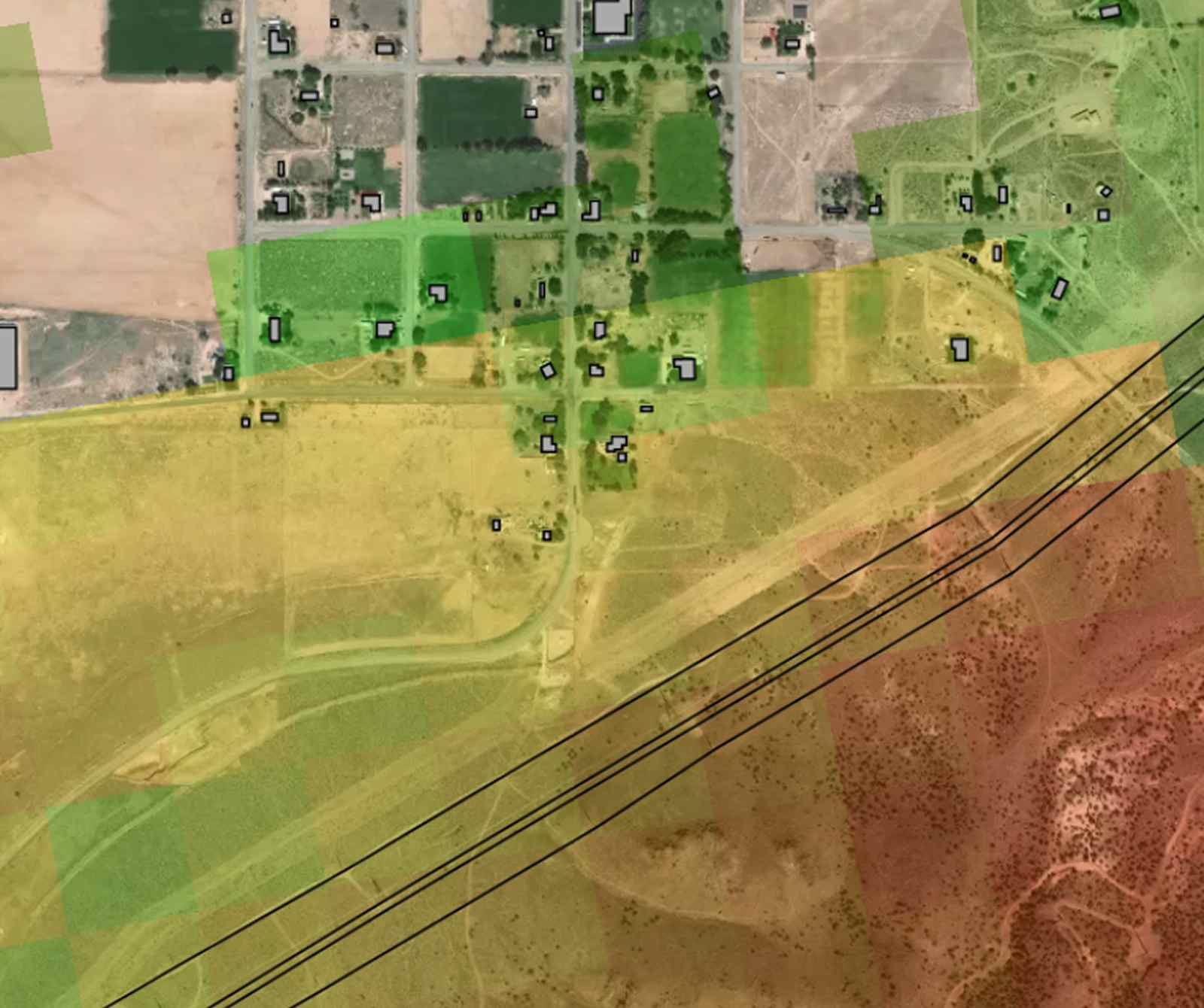
The interesting part of the company is not simply that it uses AI to predict wildfire risk. Prediction software does not collect premiums on its own. Delos connected the prediction to a harder commercial action: when conventional insurers reject an entire area, it tries to identify the individual homes for which it can responsibly say yes.
From a ZIP Code to One House
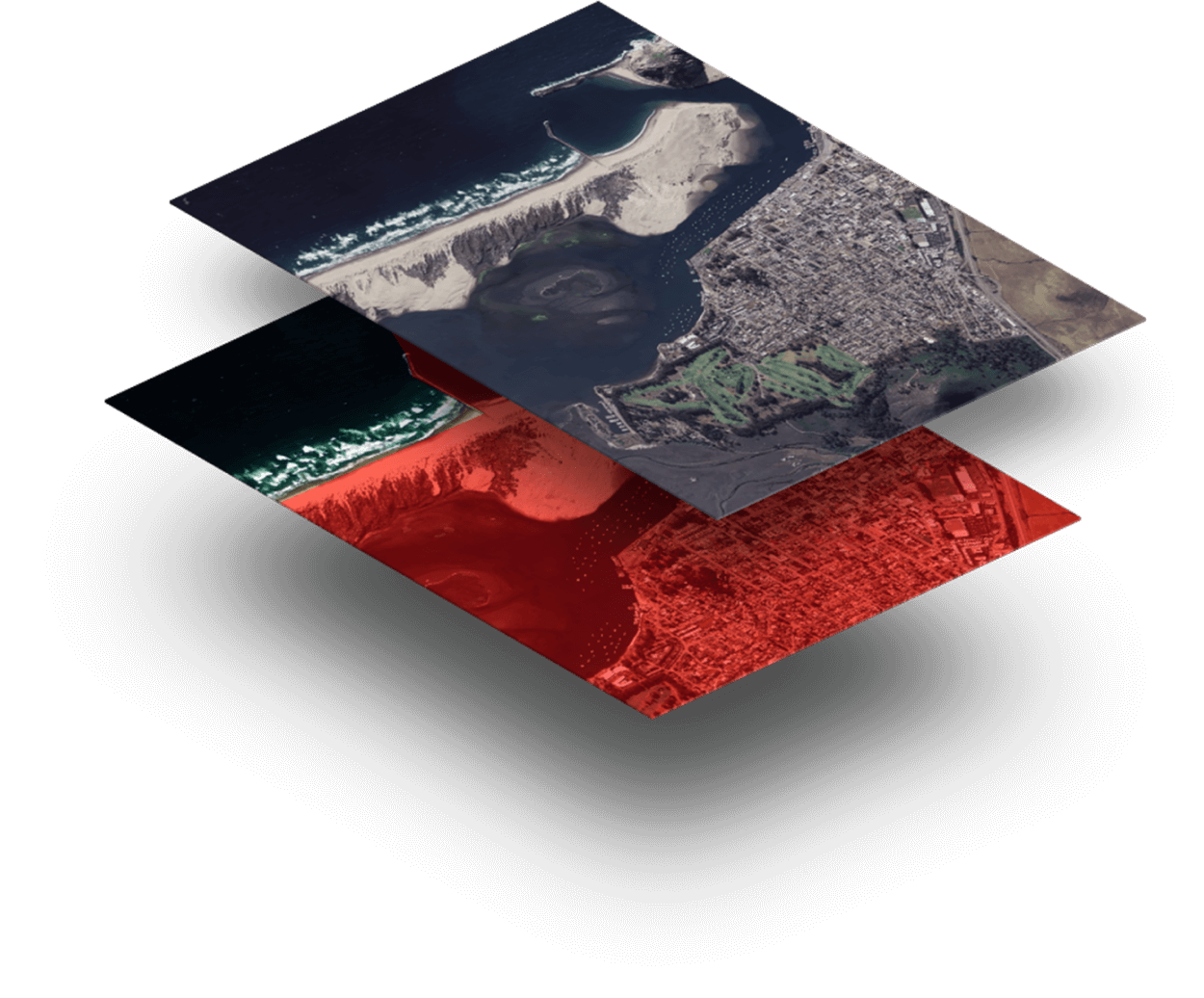
Large insurers can reduce exposure by withdrawing from a region. Once an area is labeled as having high wildfire risk, few carriers may be willing to examine whether a particular house is safer than its neighbors. Delos’s two founders came from aerospace engineering and later applied satellite imagery, vegetation, weather, terrain, and property data to individual parcels. A 2025 Celent case summary says the company’s geospatial machine-learning model uses roughly 200 inputs. That number came from materials Delos supplied to the industry research firm and has not been independently audited. The more important product change is the unit of analysis: the model moves from a broad region to a specific property.
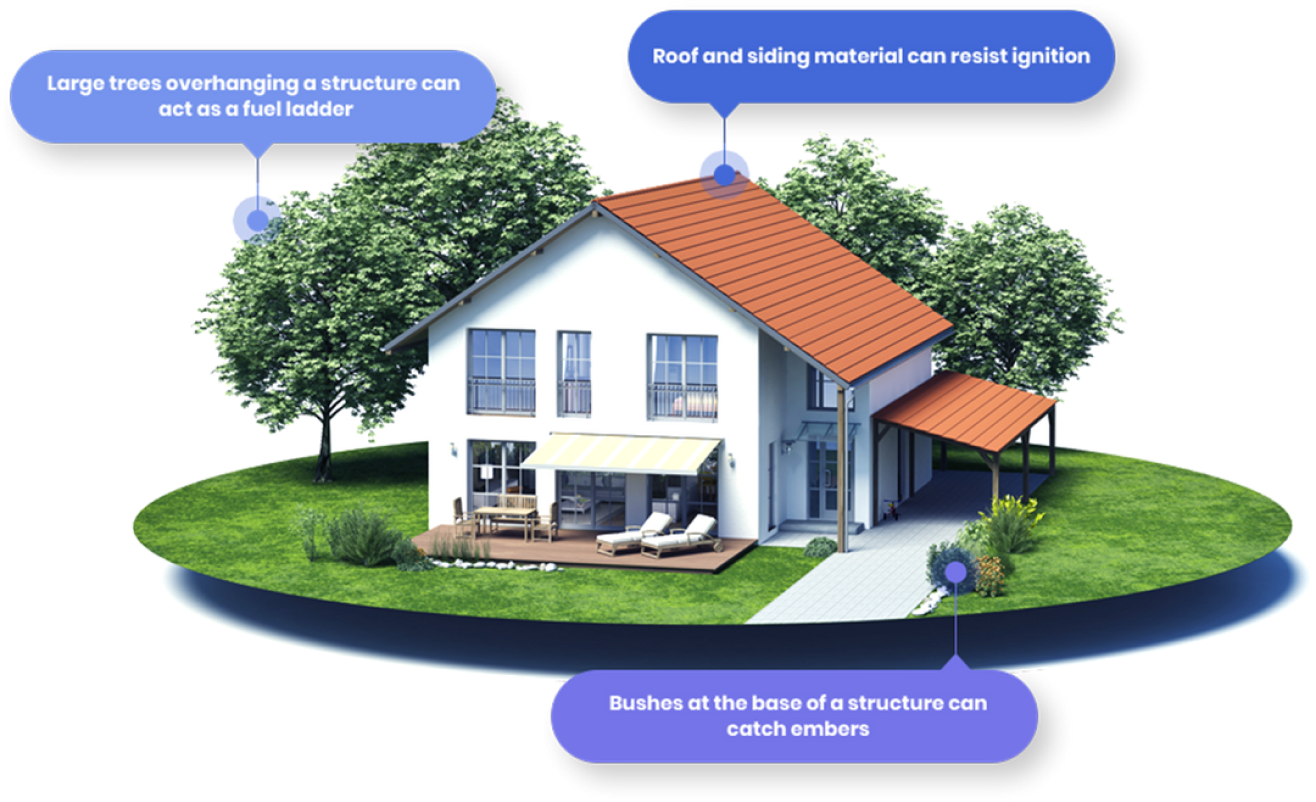
The house itself can also change the result. Fire-resistant roof materials, branches hanging over a roof, and shrubs growing against a wall can all affect how fire reaches a structure. Delos’s technology page presents those details on the same example house. The business does not depend on proving that an entire hillside is safe. It depends on finding properties within broadly rejected areas that can still be priced and insured.
This distinction matters commercially. A regional score may help an insurer decide where not to operate, but a property-level decision can create inventory for brokers. Each address that moves from an automatic rejection to a defensible quote becomes a possible policy. Delos is therefore not selling a generic risk dashboard. It is using finer-grained risk selection to reopen part of a market that broad underwriting rules had closed.
The model still faces a difficult standard. It must find homes that conventional rules overlook without underestimating the claims that wildfire can produce. Public product pages explain the inputs, but they do not provide an independently audited loss-performance comparison. The available evidence supports the workflow and the expansion of quote eligibility; it does not prove that every model-selected property will outperform a traditional portfolio.
The Model Has to Pass Two Gates
The first gate is insurance capacity. Delos operates as a managing general agent. It performs risk selection, quoting, and policy service, while partner carriers ultimately bear the claims risk. An overview from independent insurance broker Menlo names Homesite and Lloyd’s among the underwriting partners. Without capital from those carriers, even a strong model cannot issue a policy. That is also why the 2026 expansion should not be credited to the AI model alone. More insurer capacity was part of the change.
The second gate is the broker’s workflow. Telling a homeowner that a model considers the property safer does not complete a purchase. Delos places address autocomplete in the portal brokers already use, then feeds details such as age and floor area into its wildfire model. A Google Cloud customer case says this workflow can reduce specialty-home underwriting that once took days or weeks to less than five minutes. The time claim comes from Delos and its technology provider and has not been independently audited. The operating design is nevertheless clear: a broker receives an adjustable quote that can be discussed with a customer, turning a risk judgment into a transaction.
That combination produces more than a model demonstration. Celent reported that monthly gross written premium increased from about $3.5 million to $9 million during the 18 months it examined, while the number of broker agencies rose from roughly 6,000 to 11,000. The summary was published by an industry research firm, but it identifies Delos as the source of the underlying figures, which were not independently audited. Gross written premium is the total premium on policies handled through the program; it is not Delos’s net revenue. The Google Cloud case also says the company had insured more than 30,000 California properties. That figure is likewise a customer-reported number rather than audited evidence.
The two gates explain why this product is harder to reproduce than a standalone prediction API. An insurer has to trust that Delos is not hiding risk in order to supply capacity. A broker has to trust that the portal is fast, the quote can be sold, and the policy will be serviced. Model quality is necessary, but distribution, carrier relationships, and workflow integration determine whether the output reaches a paying customer.
A Quotable Home Is Not a Sold Policy
The announcement that more than one million additional homes could seek a quote can easily be read as a surge in sales. It only establishes that the edge of the sales territory moved outward. Brokers can now submit more addresses. Public sources do not disclose how many of those homeowners purchased a policy, renewed it, or eventually filed a claim. The industry coverage explicitly says the expansion relied on more detailed wind-speed and fire-spread data as well as additional underwriting capacity. The model helps decide whether Delos is willing to insure a home; partner carriers help decide how many such homes the program can support.
This is the part of Delos that ordinary AI risk software does not automatically acquire. The company takes responsibility for organizing the path from a data judgment to an issued policy. It must convince insurers that risk is not being underestimated while giving brokers a quote quickly enough to use in a sale. AI is not an extra interface sold alongside the insurance product. It is the selection mechanism inside the underwriting business.
For builders, the lesson is narrower than “better models create new markets.” Better resolution can convert a blanket rejection into a property-level decision, but commercialization requires control of the surrounding constraints. Delos needs data that changes an underwriting answer, carriers willing to fund that answer, and a broker experience that turns it into a policy. Its product rewrites “this ZIP code is too dangerous” as a question with commercial consequences: “how dangerous is this particular house, and who is prepared to insure it?”