

One customer asks how the product works. The next one arrives, and the explanation starts over.
RB2B, a website-visitor identification software company, received more demo requests than its small team could handle. Documents and screenshots still left prospects unsure how the product worked. It used Supademo to build clickable tours that prospects could explore before booking a sales call. A case study published by Supademo reports that RB2B saved 61 hours of sales calls in the first 30 days. RB2B case study
The buyers were not just overloaded sales teams. Founder Joseph Lee disclosed more than 3,000 paying companies and over $4 million in annual recurring revenue in September 2026. In October he said ARR was approaching $5 million. ARR is annualized subscription revenue, and the later figure was a target the company was approaching, not a milestone confirmed to have been reached. September disclosure October disclosure
Why not just record a video?
Supademo does not ask AI to invent the interface. Authors open a browser extension and click through their real software. The extension captures screens and steps with click hints. Authors can edit text, blur sensitive information, add branching paths, and share a link or embed the result in a website or help center. Official product tour
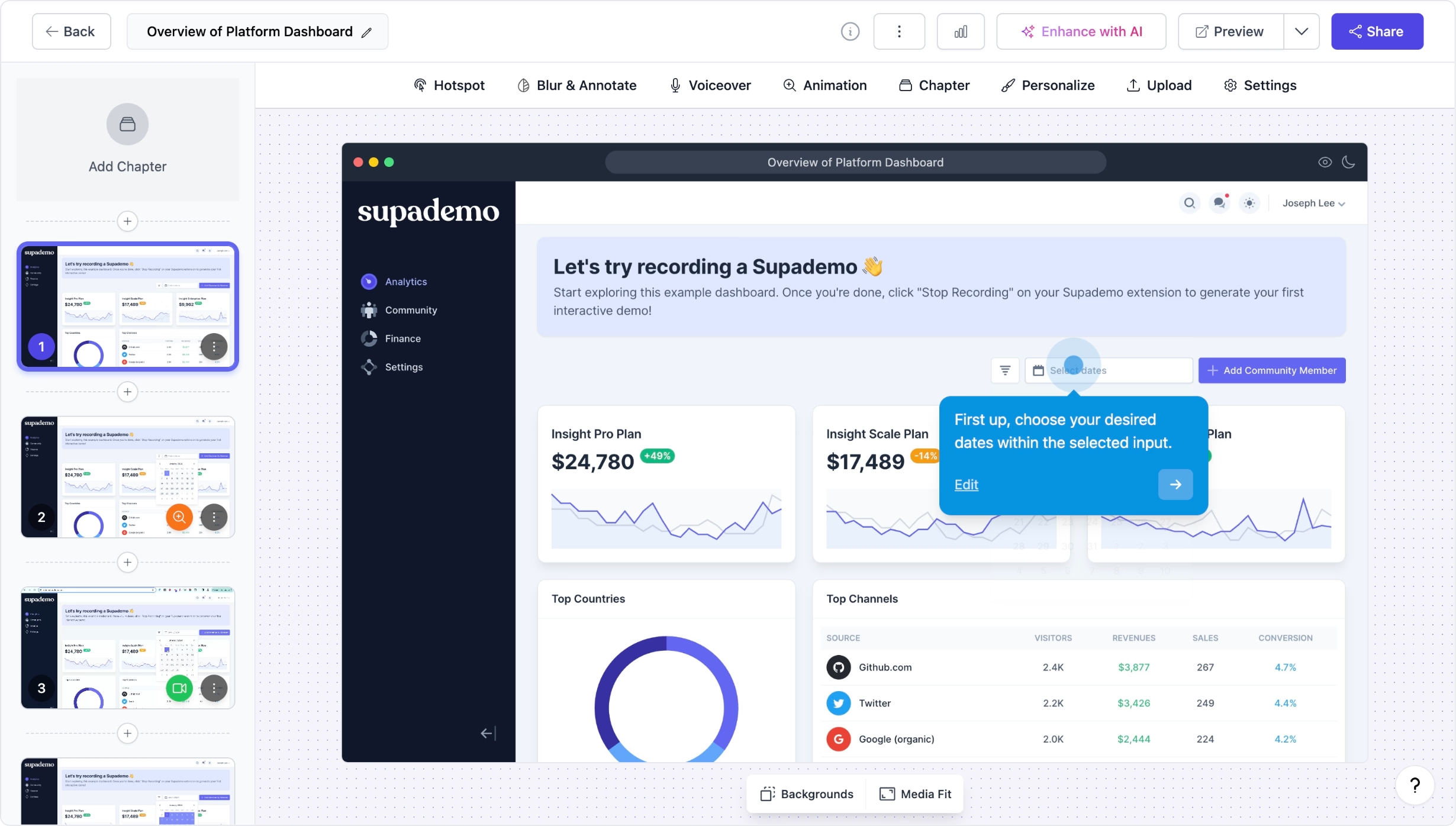
AI helps with production and revision: writing instructions, translating them, and turning text into narration. The tutorial demonstrates drafting narration by step, approving it, and generating the audio. Then an author can change a step without rerecording the whole thing. Voiceover tutorial
Viewers move at their own speed and choose the branch they need. When the software changes, authors can update the affected step rather than arrange an entire recording again.
Expansion happens inside the customer
Lightspeed’s customer education team started with three seats. Previously it handed recordings to a small group skilled at professional editing, leaving subject-matter experts unable to create tutorials directly. Lead Tom Aponte combined an explainer video with interactive payment tutorials tailored to the learner’s role.
Over six or seven months, Aponte promoted the tool internally. It spread from customer education to teams including revenue operations and retail, toward almost 40 seats. He discovered it had reached compliance when he took a training course and saw his own license being used there. Lightspeed case study
The initial purchase solved one team’s production bottleneck. Existing courses could embed the guides, and people who understood the work could edit them, giving other departments a reason to adopt the tool without replacing the company’s training system.
Viewing is free; creation is paid
The free tier supports one creator, five interactive demos, and unlimited views. On annual billing, Scale is $38 per creator per month. Higher tiers offer more demo formats, permissions, and collaboration. Creators use seats; each viewer does not need to buy one. This puts the purchase decision with teams that can save time on repeated explanations and maintenance, and maps expansion to new authors coming on board. Official pricing
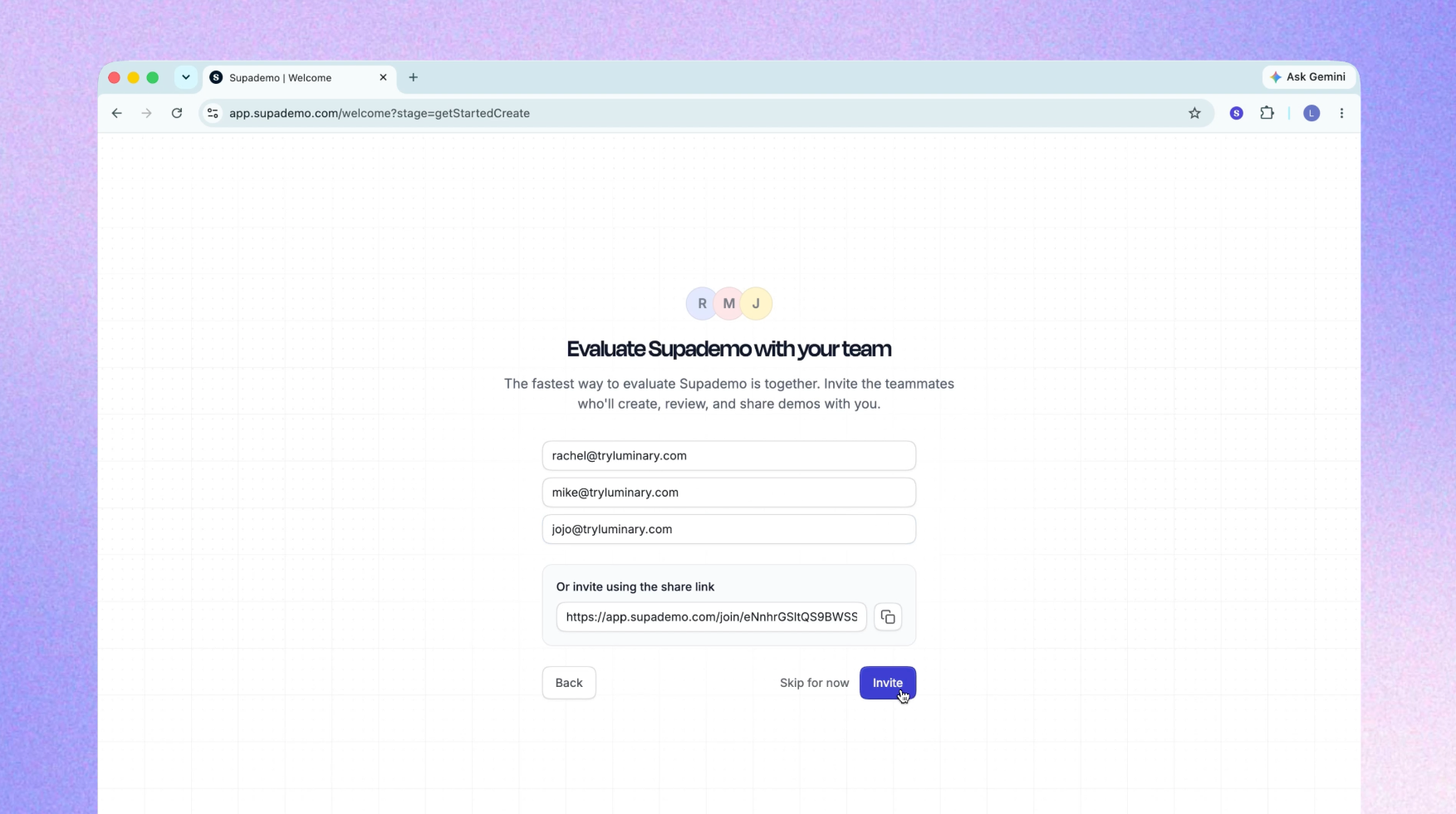
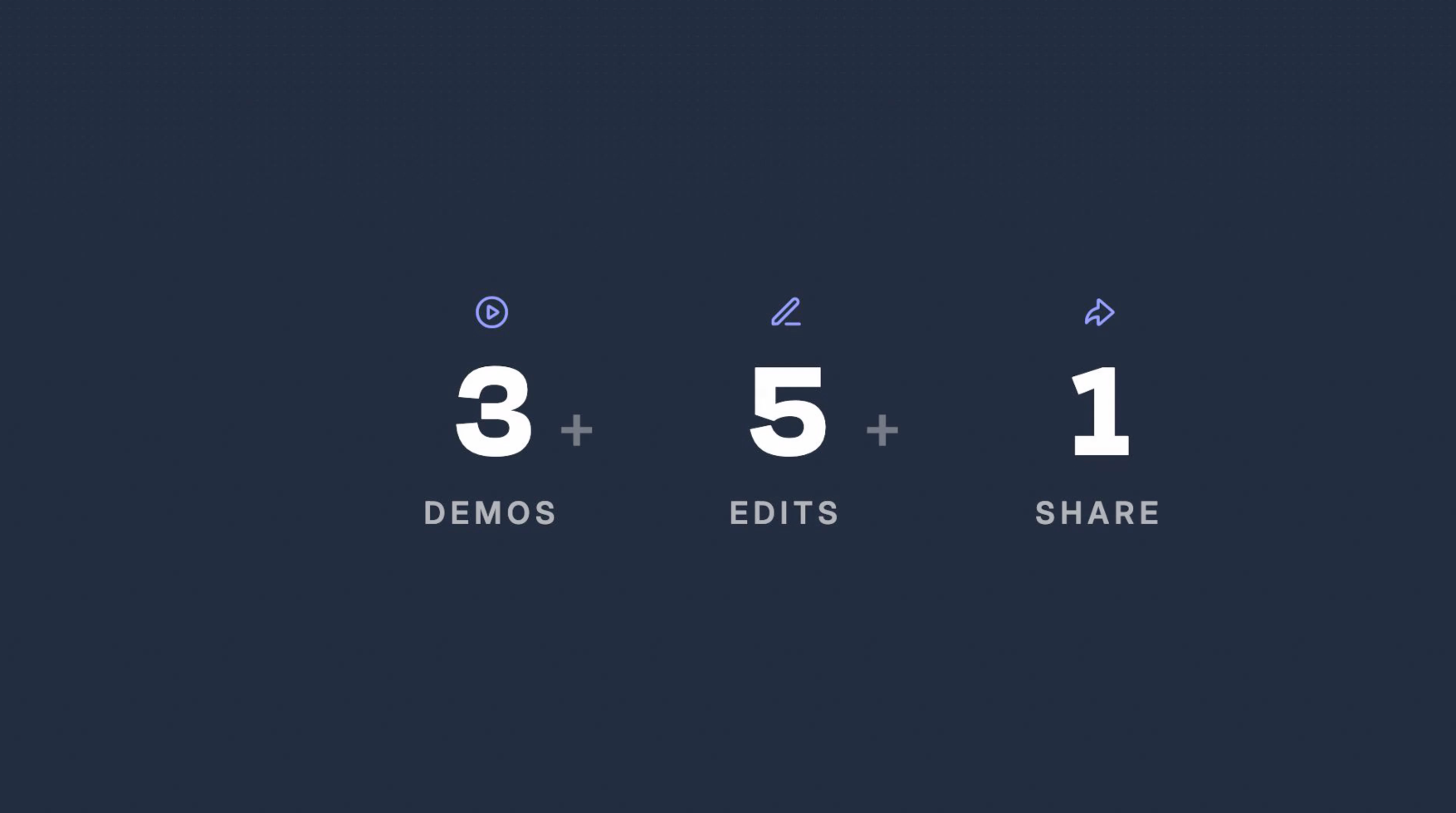
Supademo applies this approach to its own onboarding. Users can try a higher tier for 14 days and drop back to free without losing demos if they do not pay. The company tracks whether a user creates three demos, makes five edits, and shares at least once within seven days. It reported paid conversion of 24.7% for users who reached that benchmark, compared with 9.6% for those who did not. That is a correlation, not evidence that forcing more edits would cause the same conversion rate. Founder onboarding breakdown
From an authoring tool to metered visitor assistance
Supademo also puts AI in front of the visitor. Its assistant first asks what they want, then offers a relevant walkthrough. When a visitor asks what an interactive demo looks like, the official example presents a clickable tour rather than just a text answer. Official demonstration
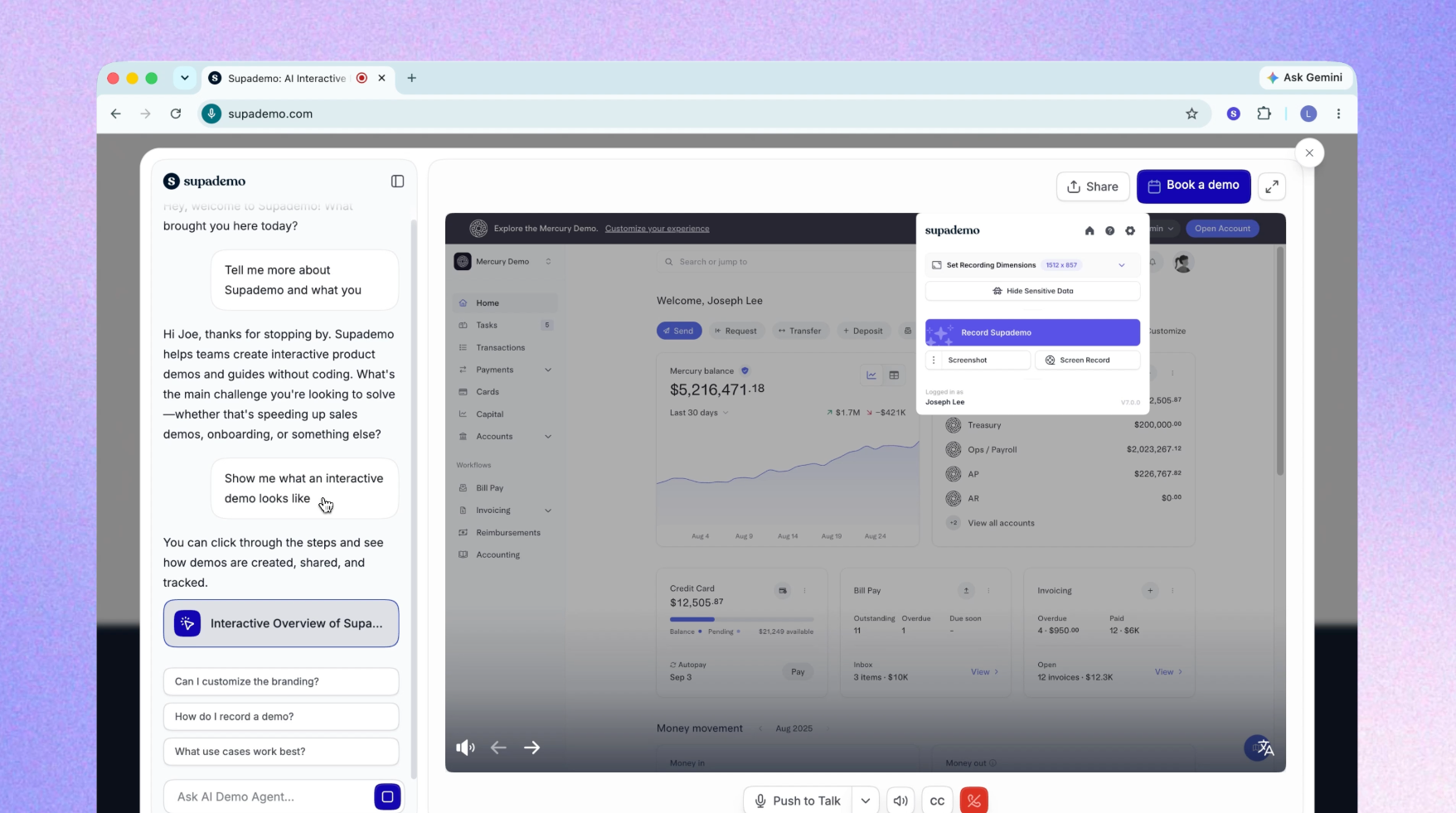
Pricing now covers reception workload as well as creator seats. The pricing page lists one credit per assistant reply and one per 15 seconds of voice, while browsing a demo independently is not metered. Using the page’s $199 credit package, a typical 15-minute session at about 20 credits works out to approximately $1.25; that is not a flat rate for every session. Official pricing
There are two purchases to justify. The number of people who regularly make guides drives seat demand. The number of visitors who need help drives assistant usage. Cross-department adoption provides evidence for the first; customers still need to judge whether each assisted interaction is worth paying for. See the original link for Supademo.