
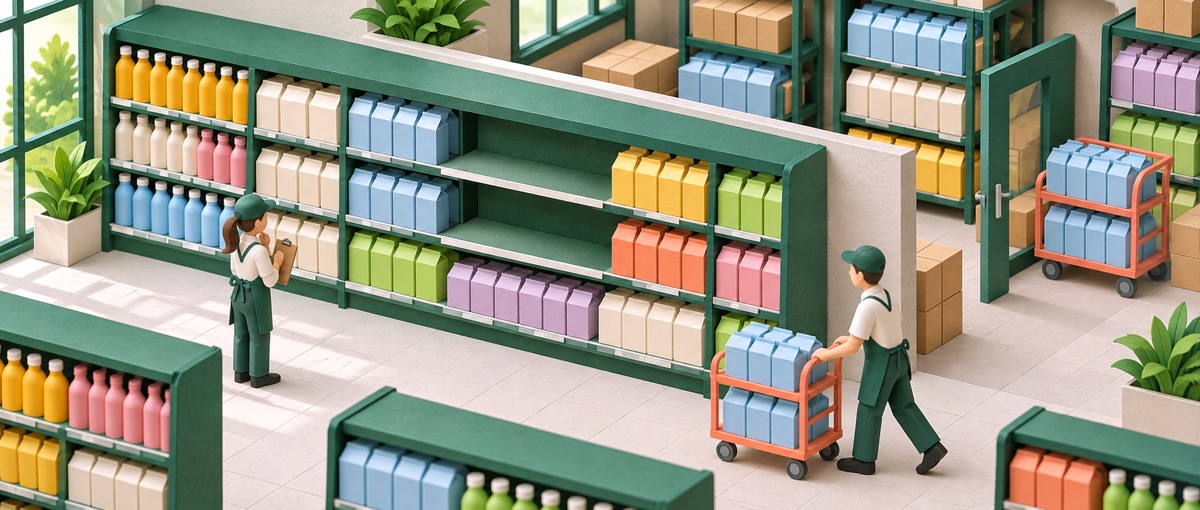
When Schnucks installed shelf-scanning robots, its first challenge was that they found too many problems. The US grocer thought its stockout process worked well, but repeated scans brought empty shelves and price-label problems into the work queue. Rather than sending everything to employees, Schnucks initially limited the list to about 60 priorities a day so stores could adjust. Schnucks rollout retrospective
The robot is Simbe’s Tally. It moves through open stores and uses cameras and AI to identify shelf gaps, where products are located, and pricing discrepancies that employees can investigate. In September 2026, Simbe announced more than 3,000 autonomous units under contract across over 75 retail brands. These are company-reported contracts, not the number of units installed or hardware sales. Stores pay monthly for a service that keeps turning changing shelf conditions into actionable work. Contract announcement
In stock in the system, missing from the shelf
Inventory in a database is not the same as availability to a shopper. Goods may be in the back room or in the wrong place, and a label may no longer match the product. A shopper who cannot find an item may give up, while a store that sees a positive inventory count may not replenish it.
Tally repeatedly scans shelves during trading hours. It does not carry boxes for staff; it identifies where they should look. Official product overview
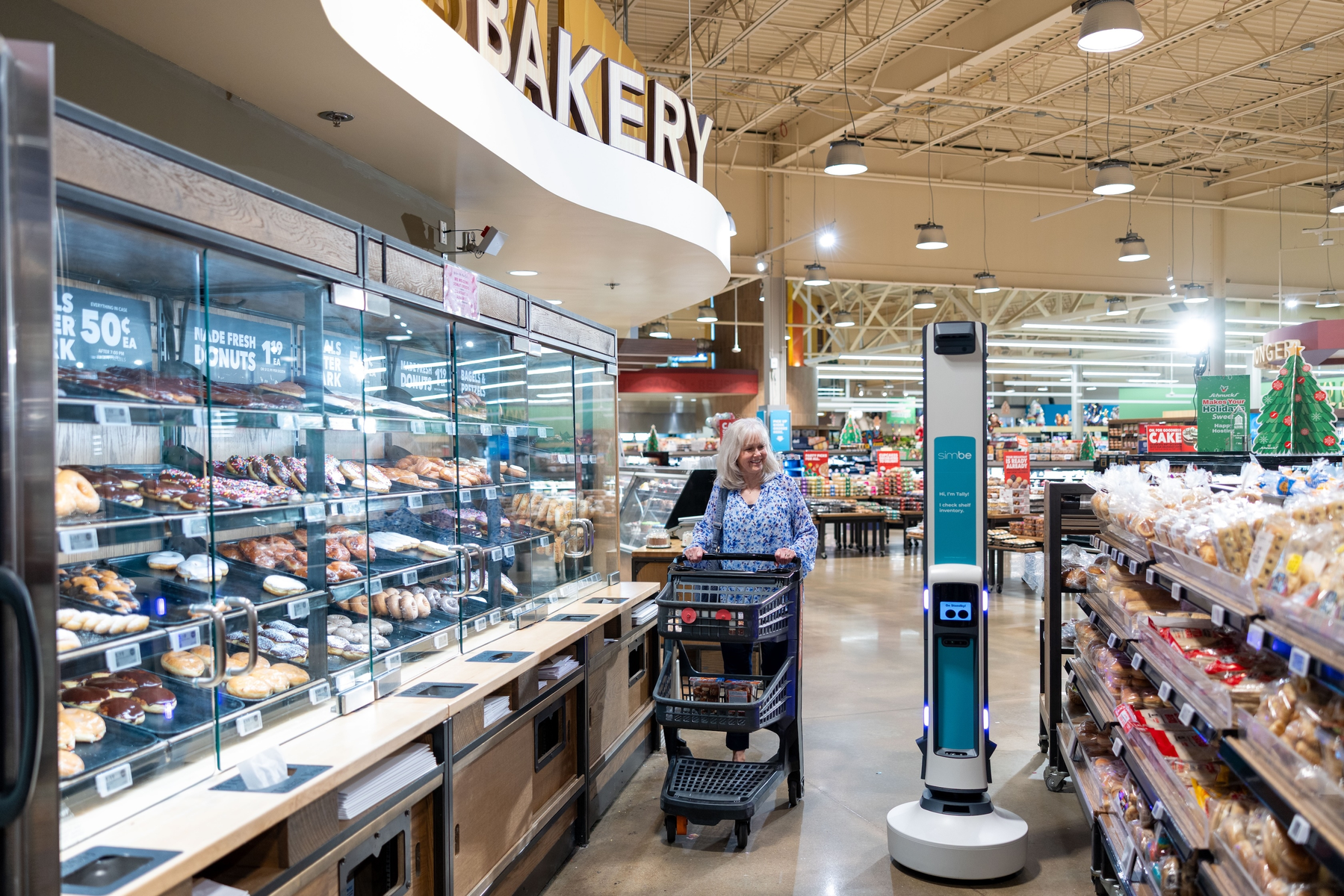
Vision can identify visibly out-of-stock items and gaps in facings, but cannot count everything hidden from the camera. Simbe separates visible shelf conditions from more precise RFID counts, which require tagged items. Official FAQ
An accurate report still needs someone to restock the shelf
Simbe Mobile turns replenishment, pricing, and merchandising findings into tasks with location and shelf context. Managers can see unfinished work and compare stores. The software supports ordinary phones and Zebra handhelds. Mobile workflow
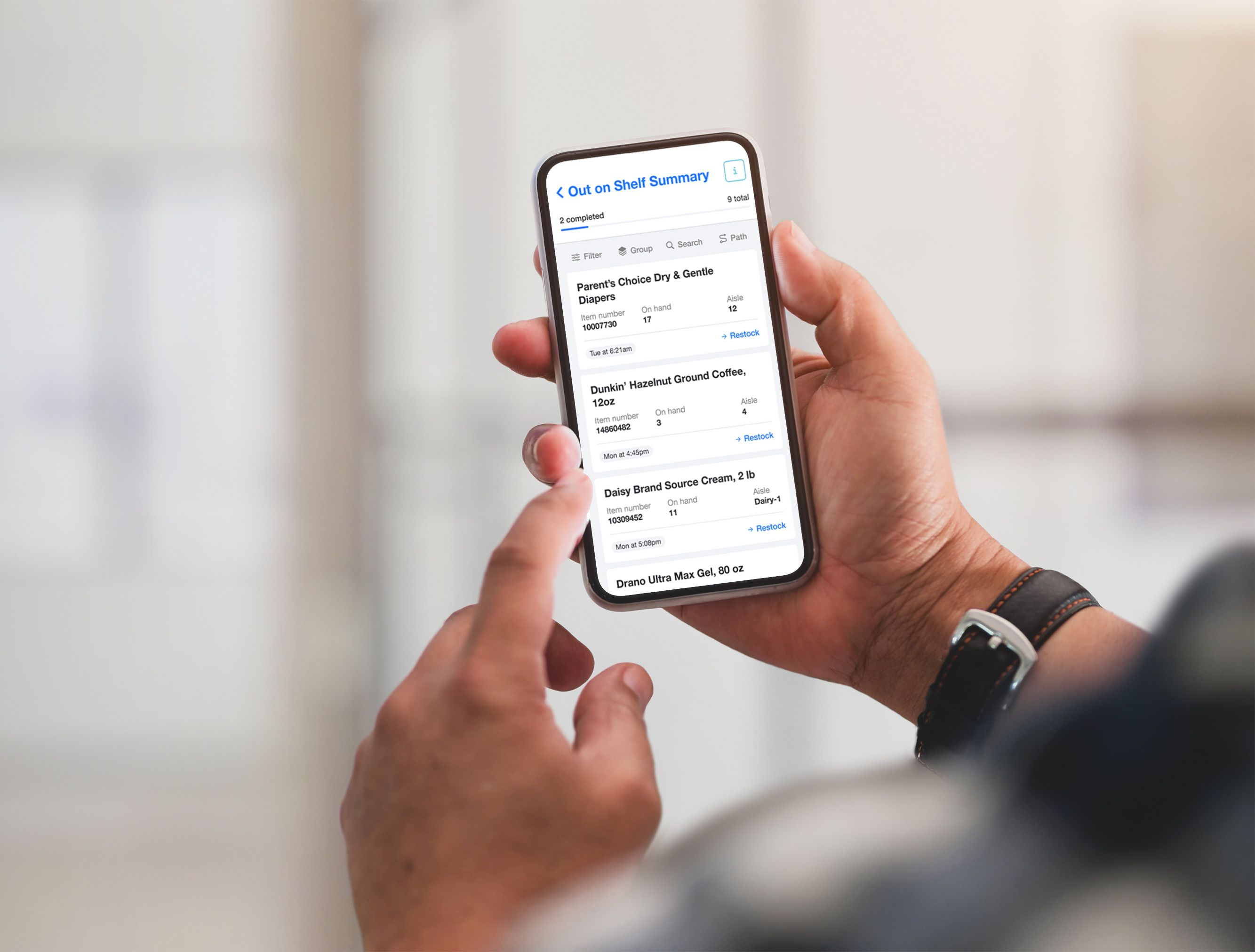
In the demo, diapers show 17 units on hand in aisle 12 but still appear on the shelf-out-of-stock list. The restock control, location, and recorded inventory are on one card. Employees get a specific product to investigate rather than a vague inventory alert.
In the 2026 retrospective, Schnucks explained that it initially treated the rollout as an IT project focused on installation, integration, and uptime. It learned that operations had to share ownership or the data would not translate into action. Once staff trust the system, the retailer can expand the scope. Finding more issues and giving stores capacity to handle them are separate jobs. Rollout retrospective
Schnucks’ own company history confirms a chainwide rollout in 2021, with Tally continuing toscan stores. Retailer adoption record
Why not sell the robot outright?
Simbe says customers do not buy Tally upfront. Monthly fees depend on the footprint, assortment, and whether the retailer uses vision, RFID, or both. Software issues can be handled remotely; Simbe sends an engineer for physical repairs rather than asking stores to train their own robotics team. Service and pricing model
The buyer’s question changes from what a machine costs to whether ongoing detection and correction are worth a monthly payment. A large chain with many products has different coverage and task volumes from a convenience store. For Simbe, signing the contract is only the start: hardware must keep running, data must remain useful, and staff need to be able to act.
A whole-store round is not enough for every department
In January 2025, Simbe introduced Tally Spot, a fixed sensor for selected areas. A mobile robot covers the whole store, but fast-moving fresh food and prepared foods may need more frequent attention. High-shrink areas such as alcohol may have different monitoring needs. Fixed sensors can watch these areas without waiting for the next round. Launch announcement
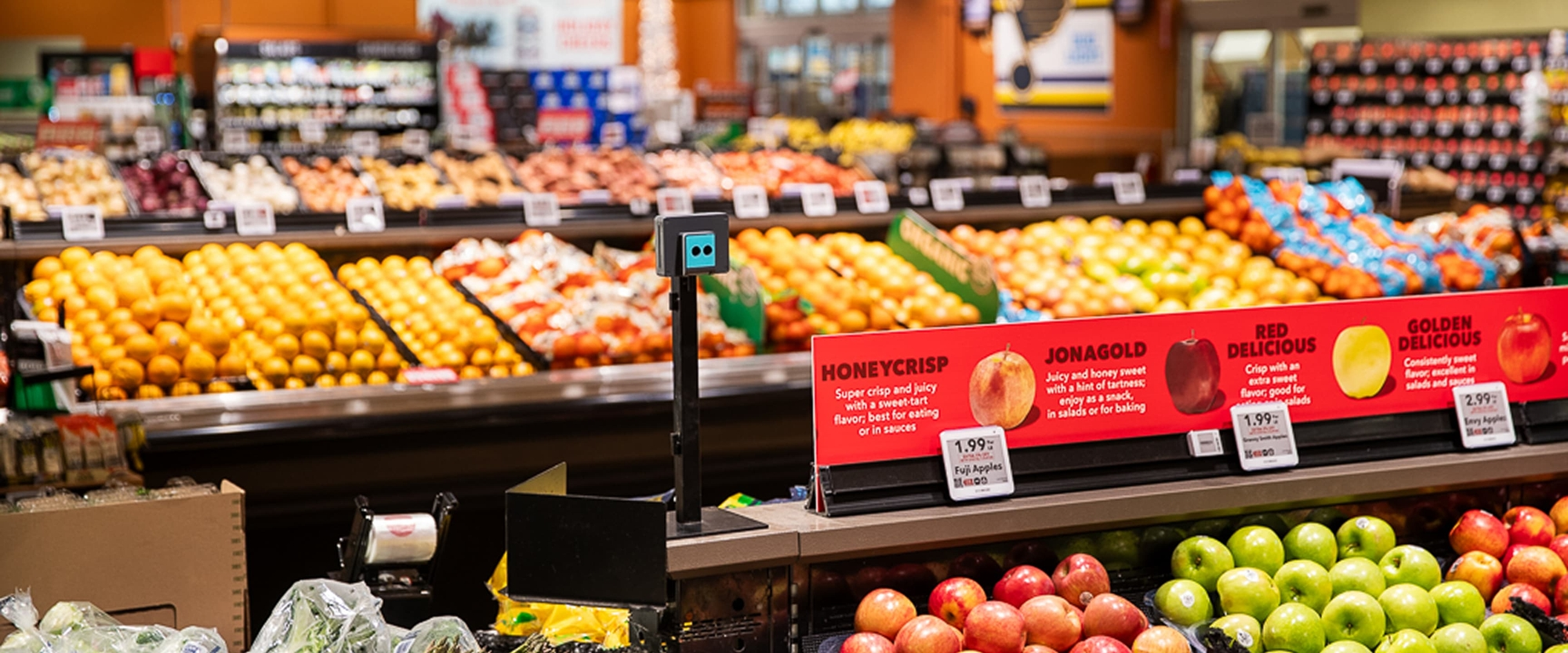
Simbe said several partners were using the beta at launch. Rather than making one robot solve every problem, it offers the same retail customers another way to capture data at a different cadence. Whether extra hardware is worthwhile depends on how quickly the area needs an update, not on how busy a robot looks.
The same location data can guide shoppers
At Schnucks, product positions also feed the consumer app, which can sort a shopping list by the store route and find a product by aisle and area. Integration with electronic shelf labels can light up a product location for staff or shoppers. Schnucks customer story
That use predates the 3,000-unit announcement. Data gathered to replenish shelves was already helping people find items. Once restocking, shopper navigation, and store management use the same data, renewing the service is about more than keeping a robot. It is about where those workflows will get their next reliable update. See the original link for Simbe’s product and customer materials.