

Put a collar on a cow, draw a grazing area on a phone, and the herd can move to a different section of pasture.
That sounds like a technology demonstration, but Halter has turned it into a subscription business. In August 2026, Farmers Weekly reported that Halter said it served 3,500 farms and ranches worldwide with 1.5 million collars. In June 2025, the corresponding figures were 2,000 farms and 500,000 collars. These are company-reported adoption figures, not independently verified counts of paying customers. Farmers Weekly report
The reason to buy is not simply seeing where cattle are on a screen. The operational change is that work which once required someone to go into the field can now be scheduled from a phone.
How does a herd respond to a phone?
Halter does not ask a farmer to shout voice commands at cattle. The person operates an app, while the animals respond to cues from their collars.
A farmer defines a grazing area on a map and schedules a herd movement. The collars then guide the animals. Halter says its machine-learning models help guide and contain the herd, analyze behavior, flag possible health issues, and combine satellite and weather data to estimate pasture conditions. Halter technology explanation
The system is not effective the moment a collar is attached. Halter says training usually takes seven to ten days. It begins with sound and vibration; if an animal ignores those cues, the collar can apply a low-energy pulse. The product also imposes usage limits and pause mechanisms. Halter dairy product page
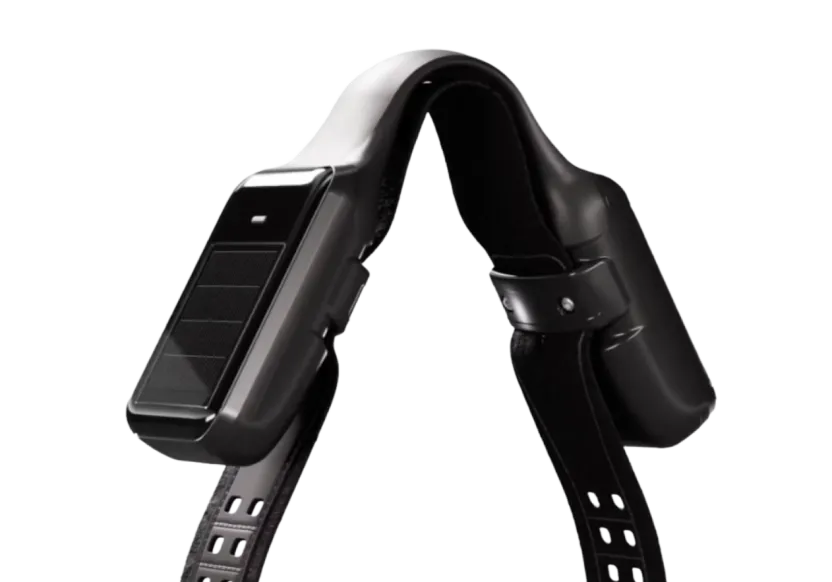
The physical collar includes a solar component. Sound and vibration cues come from the device worn by the animal. Source: Halter.
For a farmer, the line in the app replaces some of the repeated work of installing posts, stringing wire, and moving temporary fences. If rain changes the plan or one paddock needs more time to recover, the farmer does not first have to rebuild a fence in the field before changing the grazing schedule.
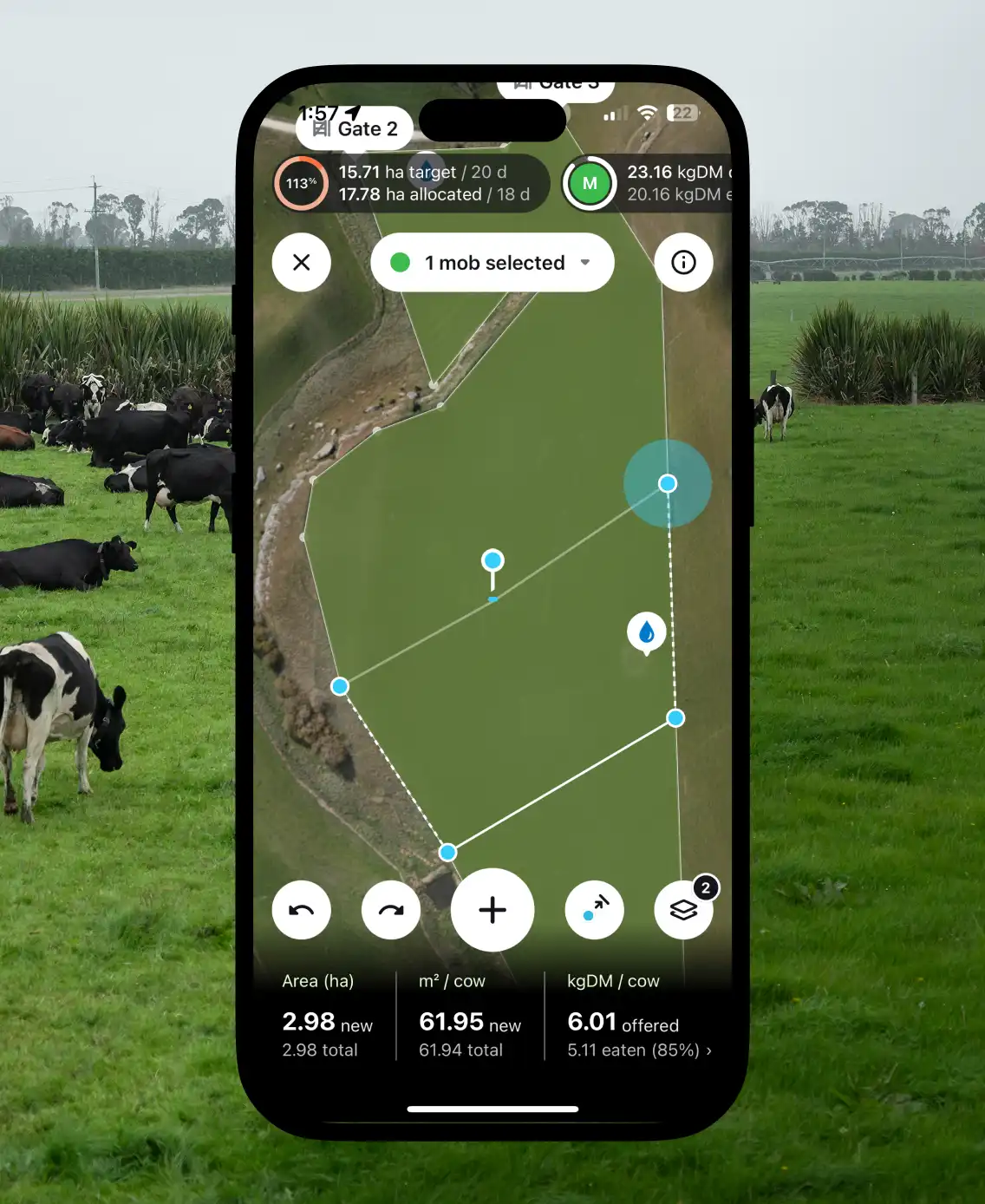
The boundary can be adjusted on a map. The bottom of the interface also shows area and allocated pasture dry matter per cow. Source: Halter workflow demonstration.
Halter’s public demonstration shows another workflow: a farmer can schedule a movement the night before so cattle head toward the milking shed or move to their next grazing area at a specified time. Halter workload workflow
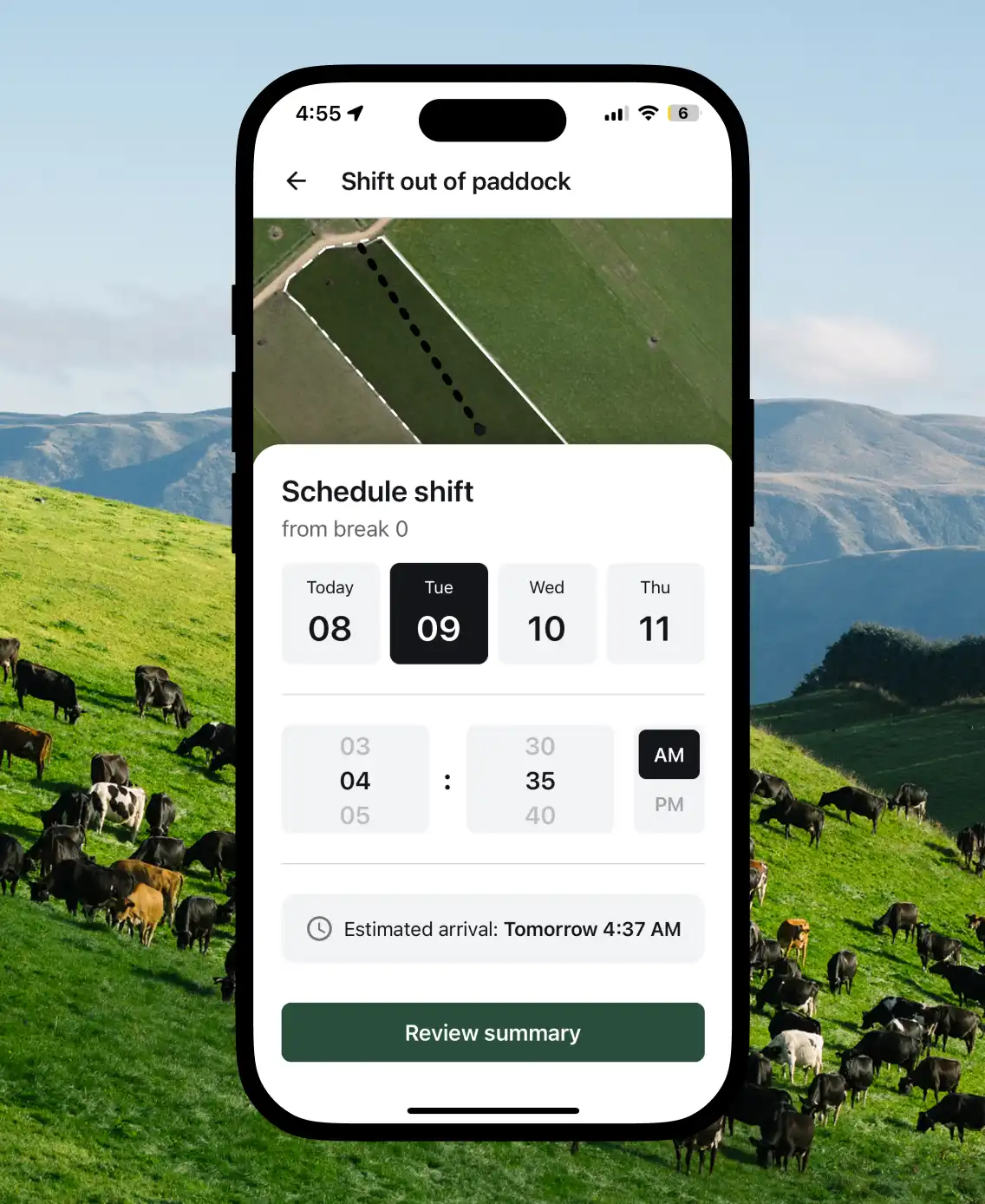
The user selects a date and time for the herd movement, and the interface displays an estimated arrival time. Source: Halter workflow demonstration.
What work does a collar buyer want to remove?
Grace Magruder and her husband Kyle at Ingel-Haven Ranch in California were not trying to solve an abstract digital-transformation problem.
Less predictable weather required more flexible herd rotations so pasture could recover. More frequent rotations, however, also meant repeatedly building and moving fences. After seeing the physical effects of decades of ranch work on her father, Grace did not want the same labor burden to determine how long she could continue operating the ranch.
When Drovers interviewed her in March 2026, she was using Halter to adjust grazing boundaries from her phone. She still had to judge pasture growth, water availability, and herd condition. What changed was that putting those decisions into effect no longer depended entirely on moving fences. After several weeks, she told her husband that she did not want to return to the previous process. Drovers ranch interview
There is another part of the economics that is easy for an outsider to miss: grass.
Grazing is not just releasing cattle into a field. How much feed is allocated today, how closely it is eaten, and which area rests next all affect later production. When a farmer draws an area, Halter displays allocated pasture dry matter per cow and can compare herd demand with available feed. Making boundaries easier to change gives the operator a practical way to make the feeding plan more precise. Halter pasture-management page
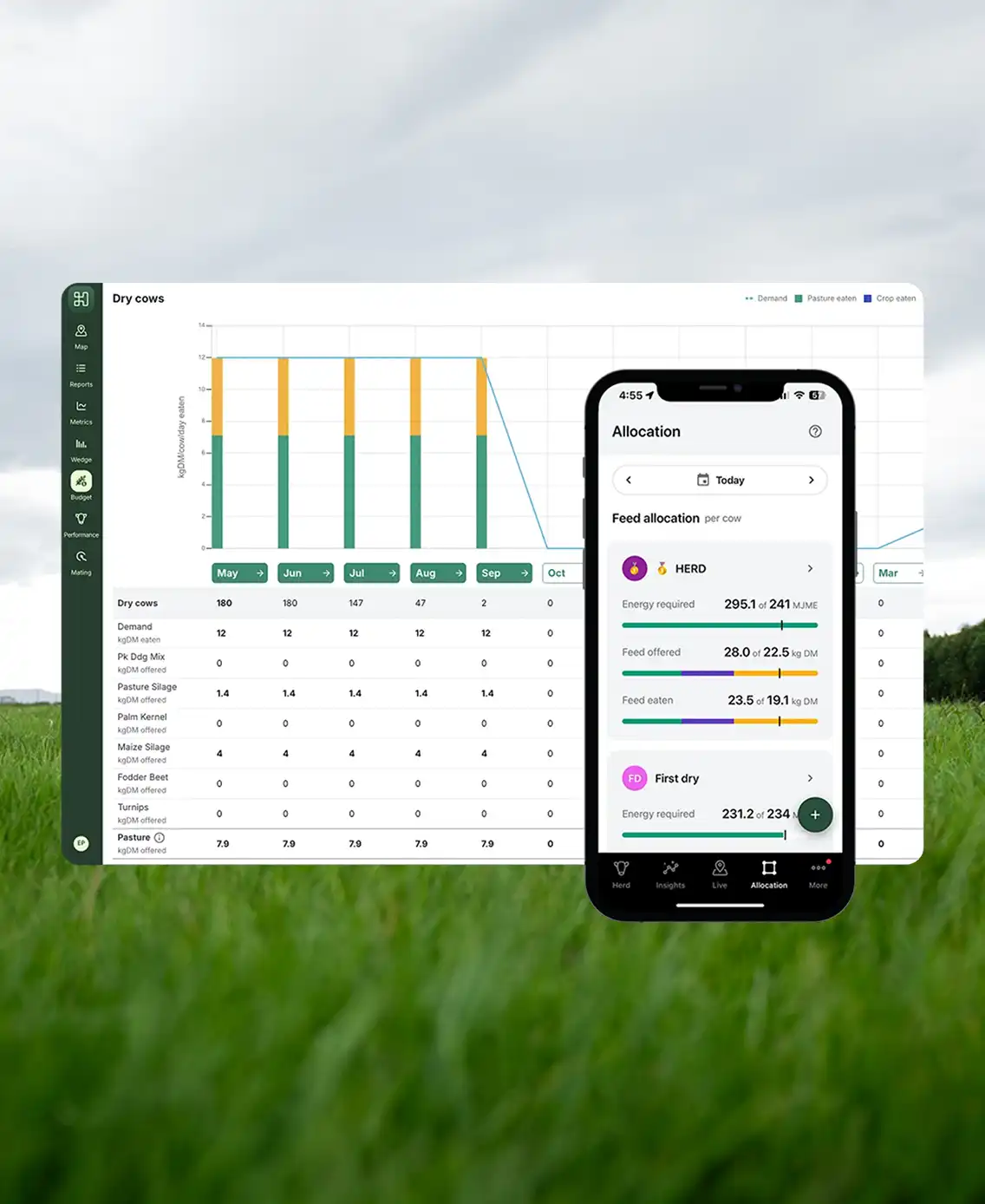
The workflow goes beyond drawing a paddock to calculating demand and allocating feed. Values shown are from Halter’s demonstration, not operating results from the ranch in this article.
AgFirst and Transform Agri analyzed ten high-performing New Zealand dairy farms that adopted Halter and changed their management practices. The group reported an average 9.5% increase in milk solids per hectare and a 13% increase in pre-tax profit. This is a result from a specific sample, not a randomized comparison, and the study attributes the change to technology and management working together rather than to the collar alone. Ten-farm study summary
Reducing physical labor, making a more detailed grazing plan executable, and seeking higher output from the same land are the places where the subscription has to earn its cost back.
The monthly price follows each cow, but the product is more than a collar
Halter prices its dairy product per cow per month and offers monthly or annual payment arrangements. The actual price is quoted for each farm. Local support and replacement of eligible hardware are also part of the service commitment. Halter dairy product and service terms
Farm size therefore scales the bill directly. Adding one collar is not merely another hardware sale; it brings another animal into the managed system. In return, reliability and the process for replacing a failed device are no longer minor after-sales details. They become part of the reason to renew the service.
Farmers Weekly reported that Halter’s New Zealand entity generated NZD 98.1 million in revenue during the nine months ending December 31, 2025. About half came from subscriptions and installment revenue, while the rest came from services supplied to a related US company. This is not the global group’s annual recurring revenue. The report also says farmers sign 24- or 36-month subscriptions and may pay monthly or prepay annually. Halter financial report
Beyond revenue, the next useful question is which deployment constraint Halter removed.
The next group of customers was constrained by connectivity
Earlier versions of the system relied on dedicated communication towers installed on a farm. For remote ranches with large areas and difficult terrain, obtaining coverage could prevent a purchase before the operating workflow was even tested.
In April 2026, Halter introduced a satellite-connected product for beef operations, allowing collars to work without an on-farm communication tower. High Lonesome Ranch in Colorado was an early deployment. Its manager, Lloyd Calvert, oversees 225,000 acres of complex terrain and said in Halter’s announcement that being able to check cattle in remote areas at any time provided peace of mind. Satellite product announcement and customer account
The change makes the same type of service deployable for some beef ranches that could not support the earlier infrastructure. Dairy operations still have a tower-based product. The announcement does not prove how much additional revenue the satellite product has produced; it shows how removing a connectivity requirement can turn an interested but unreachable buyer into a serviceable customer.
Cattle do not move because a report recommends a new pasture. The monthly fee pays for making a plan drawn on a phone happen in the field.
Open the original link at the end of the article to view Halter’s dairy product page.