
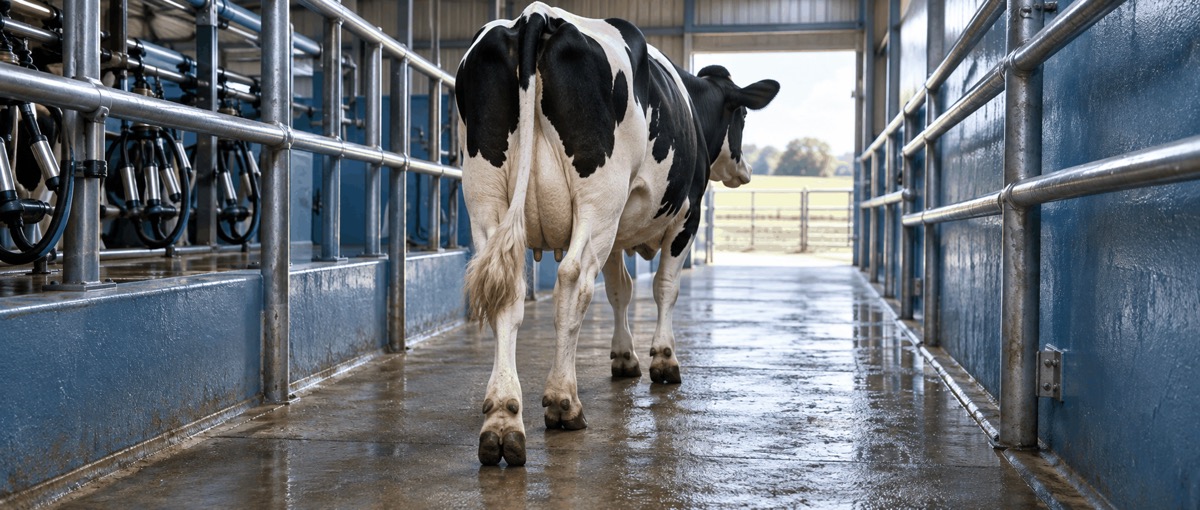
After milking, the cows leave through a passage. Jack McMaster, a dairy farmer in Northern Ireland, used to walk through the barn and watch for animals that were not moving normally. His family later installed a camera above the exit from the milking area. The cows still follow their usual route, while CattleEye analyzes their gait and identifies the animals that should be checked by a person. McMaster farm case
The recurring price is visible through a different customer channel. From February 2026, Dutch animal-health provider Royal GD listed basic mobility monitoring at EUR 1 per cow per month. That is a public price for its Dutch offering. It excludes additional installation and service charges, and it is not the invoice paid by the McMaster farm in Northern Ireland. Royal GD subscription agreement
The camera does not treat a hoof; it tells a person which cow to inspect
The McMaster herd has about 300 cows. The camera sits above a passage the animals already use every day, so the farm does not need to move the entire herd through a separate scoring process. That placement matters. A monitoring product is easier to use repeatedly when observation is part of the normal route rather than another task that workers must schedule and remember.
On the day a BBC program filmed at the farm, CattleEye’s account of the visit says the system flagged three cows from the morning milking. A hoof trimmer then lifted and examined the animals’ feet, found problems that included an early sole ulcer, and treated them. The sequence shows the product’s operating boundary: computer vision prioritizes the inspection list, but a trained person confirms the physical problem and decides what action to take. McMaster farm case
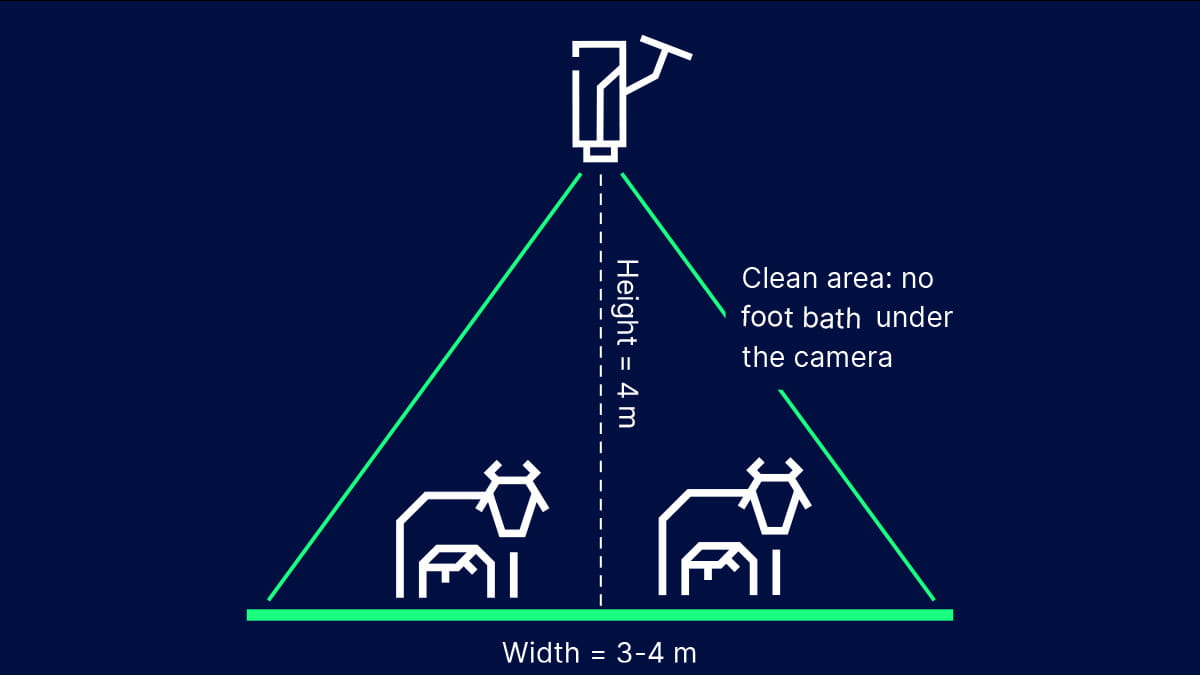
GEA’s official installation illustration places the camera above the cow passage.
George McMaster says lameness problems on the farm fell by nearly 10% after the system was installed. That statement is useful as a named customer’s observation, but it is not a controlled trial. The public account does not separate the effect of earlier alerts from hoof-trimming practices, staffing, feed, flooring, weather, or other changes on the farm. It supports a narrower conclusion: the family says the system helped it find mobility problems sooner and observed fewer lameness issues after deployment.
The value of the camera is therefore not simply that it can detect a cow in a video. The farm already knows which animals belong to the herd. The useful output is a repeated comparison of how individual cows are moving and a short list that tells workers where to spend attention first. That turns a broad instruction such as “watch the herd” into a finite set of animals to inspect during the day.
This workflow also avoids presenting an AI score as a diagnosis. Gait can indicate that an animal deserves attention, but the camera cannot lift a hoof, locate a lesion, or perform treatment. The product is commercially credible when it improves triage without hiding the human work that still follows.
Revenue scales with the cows being monitored, while deployment is priced separately
If CattleEye were sold only as a camera, a farm with 100 cows and one with 300 cows might pay the same hardware price even though the larger herd creates more observations and more potential alerts. Royal GD’s Dutch offering separates the fixed connection of a site from the recurring analysis of each animal.
The agreement lists a one-time EUR 3,000 charge covering the camera, installation, software deployment, and startup guidance. After that, basic mobility monitoring costs EUR 1 per cow per month. A combined option that adds body-condition scoring costs EUR 1.40 per cow per month. Royal GD also lists a EUR 15 service fee per quarter. These figures reveal the structure of the offer, but they should not be treated as CattleEye’s universal global price or as evidence of what the McMaster family pays. Royal GD subscription agreement
The split makes the commercialization logic easier to see. The fixed payment covers the work required to place a camera above the correct passage and connect the site. The monthly fee grows with the number of cows whose movement is scored. A larger herd produces a larger recurring bill because the service continues to maintain an individual monitoring record for more animals.
GEA has also integrated CattleEye into its DairyNet herd-management software. A farm can open an individual cow’s record, review video, see current and historical scores, and create a targeted hoof-trimming list based on those scores. The camera’s output therefore does not have to remain inside a separate AI dashboard. It can become part of the system where the farm already reviews animal records and assigns work. GEA product description
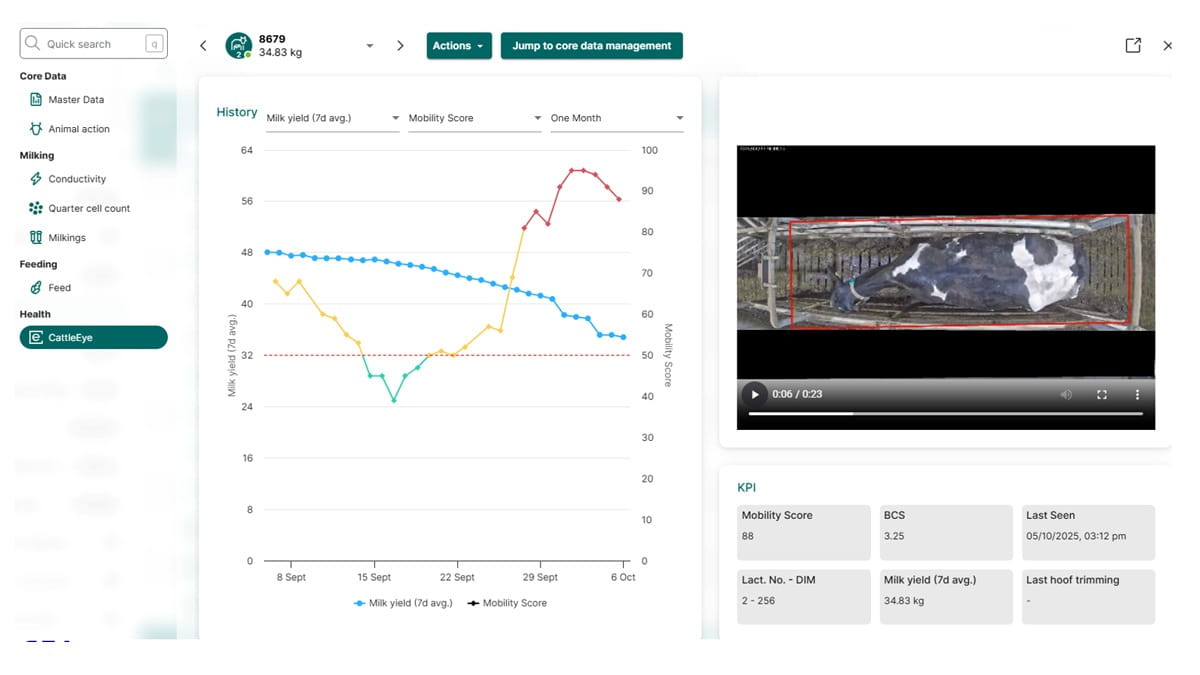
GEA’s official interface image shows video and mobility-score history for an individual cow.
That integration is important because an alert has little value if no one knows who should act on it. A list can be handed to the hoof trimmer or the employee responsible for checking animals that day. The system does not perform the physical work, but it can make the handoff explicit: these cows were flagged, these records explain why, and these are the animals that should be examined first.
The product can charge per cow because its continuing job is also organized per cow. Its durable commercial question is not whether computer vision recognizes that an animal appears in the frame. It is whether the system can keep answering, every day: which cow should be checked first, and what change in its movement put it on the list? A task that once depended on someone walking through the barn and noticing the right animal can begin with a prioritized list, while diagnosis and care remain with people.