
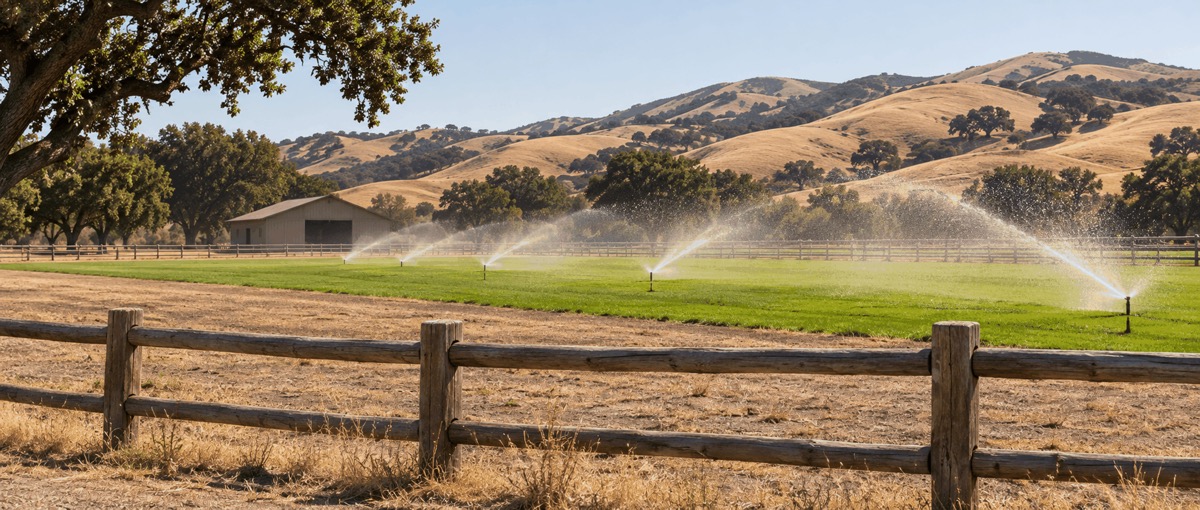
A field can look dry on the surface while still holding enough water around the roots. GroundWorx puts sensors in the soil so a grounds manager can check conditions below the surface before deciding whether to run another irrigation cycle. The company published meter readings from the Arabian Horse Center at California Polytechnic State University: from January through May 2026, the site used 24.81 acre-feet of water, down from 32.32 acre-feet in the same five months of 2025. That is a reduction of about 23%, or roughly 2.45 million US gallons. GroundWorx field evidence
The comparison is useful because the figures come from the same site’s water meter and cover equivalent calendar periods. It is not, however, a controlled trial that removes the effects of weather, operating schedules, staffing, or other management changes. The evidence supports a narrower claim: after the center adopted this monitoring approach, its measured water use was lower year over year. It does not establish that AI alone caused every gallon of the difference.
That distinction matters because GroundWorx is selling more than a model and less than a fully autonomous irrigation system. It sells a recurring way to observe individual locations and decide where water is needed. The product enters the workflow before a person authorizes irrigation, at the moment when a manager must choose between watering an entire area and leaving a sufficiently wet section alone.
Check the roots before running another irrigation cycle
Grounds managers need to react before grass becomes visibly damaged. By the time a patch changes color, the useful decision window may already be closing. Surface appearance is also an unreliable guide: two nearby areas can dry at different rates because of shade, soil composition, drainage, traffic, and sprinkler coverage.
GroundWorx’s GX-1A sensor measures soil moisture, temperature, and salinity on a schedule. The GAIN software combines those readings with weather forecasts and learns how specific locations behave after heat, rain, or irrigation. It can then issue alerts and recommendations that reflect the monitored point rather than assuming that an entire property needs the same treatment. How GAIN works Golf-course offering
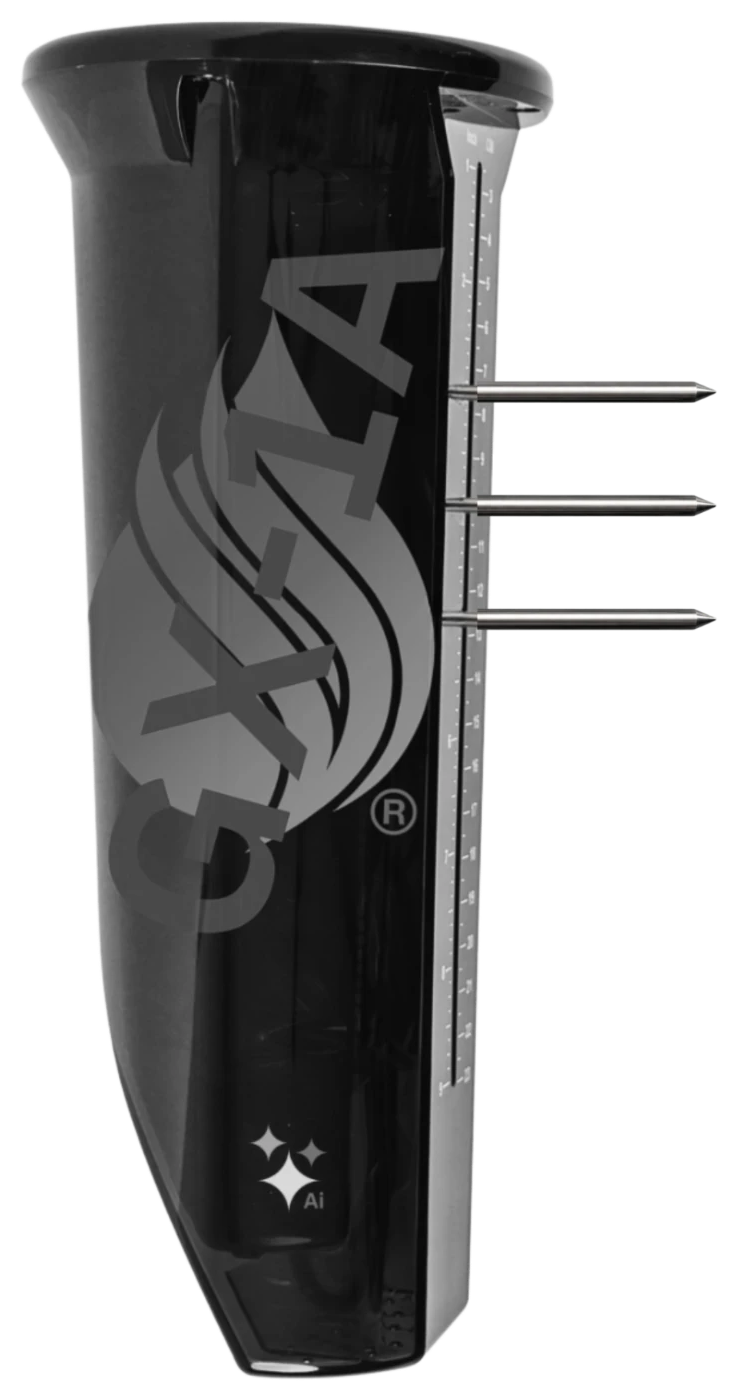
The GX-1A product image from the GroundWorx website shows the hardware form. It is not evidence that the Arabian Horse Center used this exact pictured unit.
The commercial value is not simply that a sensor can produce a moisture percentage. A manager needs to know whether the number calls for action now, whether rain is likely to change the decision, and whether one monitored area differs enough from the rest of the grounds to justify a different schedule. By connecting repeated readings to forecast conditions, the software turns a measurement into a recommendation that can arrive before the next irrigation decision.
The system still leaves the operating choice with the grounds team. GroundWorx’s public materials describe alerts and irrigation guidance, not proof that its device automatically opens and closes every sprinkler. That human boundary is important for large properties where safety, event schedules, maintenance access, and local knowledge can override a purely numerical recommendation.
An $850 sensor creates a recurring software line
GroundWorx publishes a straightforward price for golf-course customers. A GX-1A sensor costs $850 and includes the first year of GAIN service. After that, the listed software charge is $325 per sensor per year. The company also offers a managed deployment in which GroundWorx retains ownership of the equipment and the customer pays a subscription for each monitored location. GroundWorx golf pricing
Those prices are public offer terms, not the Arabian Horse Center’s invoice. Even with that limitation, they reveal how the business is structured. The initial hardware purchase gets a sensing point into the ground. The continuing fee pays for the location’s data history, forecasts, alerts, and recommendations. Revenue can therefore grow with both the number of sites and the number of monitored points inside each property.
The two purchasing options also address different budgets. A customer that wants to own the hardware can make an upfront purchase and then renew the software. A customer that prefers an operating expense can use the managed plan and keep paying for the monitored point as a service. In either case, the durable product is not a one-time probe reading. It is the repeated observation and decision support attached to that location.
GroundWorx also chose not to require every customer to adopt a separate management dashboard. In July 2025, turf-management company GreenSight became a reseller and integration partner. Customers already using GreenSight’s TurfCloud can view GroundWorx soil readings in the same system as drone imagery and other grounds-management information, and can buy GroundWorx products through GreenSight’s channel. GreenSight integration announcement
That integration is a distribution decision as much as a technical feature. Selling another dashboard asks a superintendent or facility manager to open another page, maintain another login, and remember to consult another source before acting. Moving the underground readings into an existing operating system lets the recommendation appear beside the information already used to manage the property.
For vertical AI builders, GroundWorx illustrates why recurring revenue often forms around a decision point rather than around the sensor itself. The sensor makes the hidden condition observable. The software interprets changes over time and adds forecast context. The channel integration delivers that guidance where the manager already decides which area needs another irrigation cycle and which one can wait. Hardware starts the relationship; repeated, location-specific decisions create the reason to keep paying.