
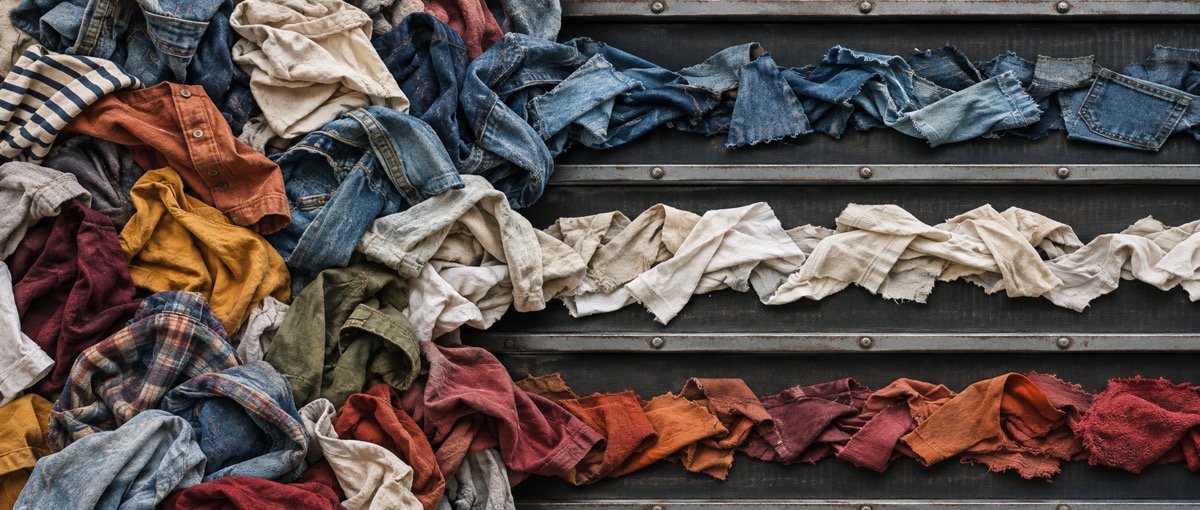
British recycling company Circle-8 plans to build a facility for processing used textiles. In May 2025, it announced that it had purchased an AI sorting line from Denmark’s NewRetex, with part of the purchase supported by a UK innovation project. Circle-8’s wider factory plan targets annual capacity of 25,000 tonnes, but this transaction covers one sorting line. The buyer spent first on separating old clothing into usable material categories. Circle-8 procurement announcement
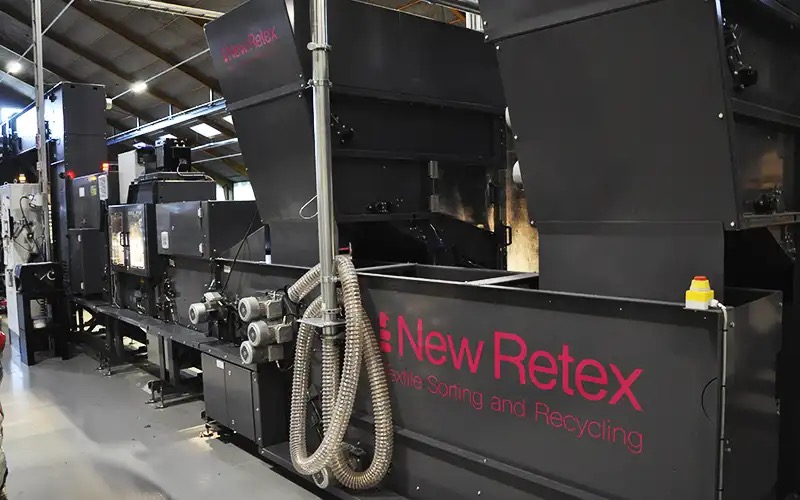
Textile sorting equipment shown on the NewRetex website. This is not a photograph of the British facility in operation.
The order is commercially meaningful because NewRetex did not begin as a company selling an abstract recognition model. It operated a textile-processing workflow in Denmark, learned how classification had to connect to physical separation and material records, and then sold that operating capability as equipment and software to a buyer building its own plant.
Why must a recycling plant separate old clothes so precisely?
The first step in textile reuse is to remove garments that are still wearable and can be resold. What remains moves into a different process. For a factory that wants to turn used clothing back into fiber, a mixed pile is not yet a qualified raw material. Cotton, polyester, and blends need to be separated, while zippers, buttons, and other hard components also need to be identified. NewRetex website Circle-8 procurement announcement
The NewRetex line feeds garments individually along a conveyor. Sensors and software identify fiber composition, color, and the presence of hard parts, after which the equipment routes items into the appropriate categories. The software also records each item’s weight and fiber information so the operator can trace material as it moves to another company.
The machine does not turn a shirt into new fabric. Its job is to convert a mixed, poorly specified stream of used clothing into batches whose composition is known and that a downstream processor can accept. Recognition alone would only label an item. The saleable workflow must also move that item into the correct stream and preserve enough data for the next participant to trust what is being delivered.
This is why the data system belongs with the physical line. A recycler needs to know not only what the model saw, but how much material entered each category, where the batches went, and whether the output matches a customer’s input requirements. The commercial product is therefore a production step with records, not a dashboard that stops after classification.
First sort for others, then sell the sorting line
NewRetex originally received and processed used textiles in Denmark, then sold the separated material to downstream companies. In material submitted to a Danish parliamentary committee in August 2025, the company said that 28 Danish municipalities were sending textile waste to its operation. For those service customers, NewRetex provided both sorting and information about where materials went, supporting municipal recycling reports. Danish parliamentary material
Circle-8 did not buy another shipment route to Denmark. It bought the ability to sort material in Britain. After NewRetex obtained a patent for its sorting technology in 2024, the company began treating the equipment and accompanying data system as a separate line of business. Its annual report describes the Circle-8 agreement as the first sale of a sorting facility. NewRetex annual report
That transition changes the commercial model. A service operator earns money by accepting material and performing the work. An equipment seller transfers a repeatable process so the customer can operate it in another location. The second model requires more than demonstrating accurate classification inside the seller’s own factory. The line, software, installation, workflow, and output records must be packaged so another organization can use them.
The buyer confirmed the purchase, but neither party disclosed the transaction price. Circle-8’s planned 25,000-tonne annual factory capacity should not be presented as throughput already achieved by this one line. Nor does an order prove that the wider facility is complete. The evidence supports a narrower claim: a British recycler was willing to buy the sorting stage separately before the entire plant was operating. Circle-8 procurement announcement
For vertical AI builders, that is more instructive than the number of textile categories a model can recognize. NewRetex first made recognition, routing, and delivery records function as one real production step in its own operation. Only then did a foreign buyer have something concrete to purchase. Identification can tell a plant what an item is; a commercial system must also separate the right material and leave the next company able to receive it.