

If you slept badly last night, should you still follow today’s cycling plan? Livity does not ask you to buy another wearable to answer that question. It reads the sleep, heart-rate, and activity data a watch has already collected, calculates a recovery score, and recommends cycling options based on current recovery and the heart-rate zones the user normally trains in.
Founder Martynas Narijauskas says Livity has taken no outside funding and passed EUR1 million in revenue during 2026. That is revenue earned during the year up to the disclosure, not annual recurring revenue. The distinction matters because the app sells more than one payment model and the company has not published how much of the total came from subscriptions, lifetime purchases, or individual acquisition channels. Livity 5.0 release notes Founder revenue disclosure
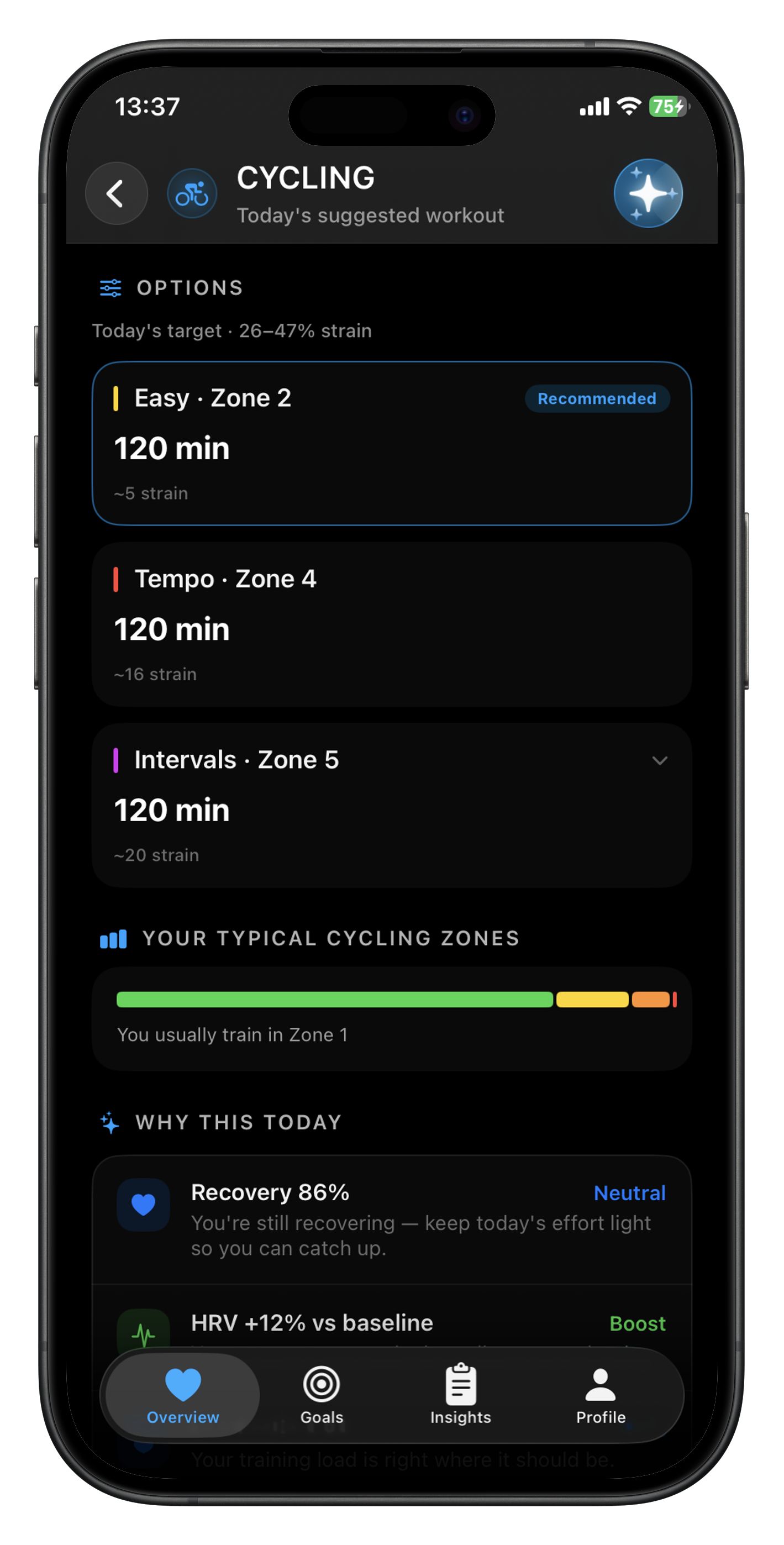
Livity’s official 5.0 cycling recommendation screen, showing how recovery status enters the training choice.
Some customers buy a year; others pay once
Livity initially focused on people who already owned an Apple Watch. The watch captured the signals, while the app brought sleep, heart rate, and training history into one place so a user could decide whether to train normally or reduce intensity. The founder positioned it as an alternative to adding another piece of hardware. Later releases added Garmin, Fitbit, and Oura connections, allowing people to bring data from several devices into the same app. Founder’s two-year retrospective Livity 5.0 release notes
The business does not require every customer to accept a recurring subscription. Alongside weekly, monthly, and annual options, Livity offers a lifetime purchase paid once with no renewal. A small but concrete sales snapshot shows why that flexibility matters.
After the Lithuanian television program Rykliai featured the company, Narijauskas reported 1,020 new downloads and 325 trial starts by the following morning. Ten customers skipped the trial and purchased immediately. Two chose lifetime access, while the other eight selected weekly, monthly, or annual subscriptions. This is not a long-term conversion rate and the sample is far too small to infer a stable package mix. It does show that people arriving from the same burst of attention did not all want to buy in the same way. Founder post-broadcast review Livity payment FAQ
For a bootstrapped consumer app, the lifetime option creates a tradeoff. It brings cash forward and serves people who dislike subscriptions, but the company still has to support the product after the one-time payment. Livity has not published the economics of that choice. The useful evidence is narrower: it has found buyers for both recurring access and permanent access while using the same underlying wearable-data workflow.
People search for watch problems, not for AI
Taking no outside investment does not mean Livity avoided spending on growth. Narijauskas says he sold shares he owned in Vinted and put the proceeds into Livity’s marketing. Earlier acquisition work centered on app-store optimization and paid advertising. In 2026, the company rebuilt its website and began publishing search-oriented content consistently.
In a three-month retrospective, the founder attributed about 10,000 organic-search clicks and roughly EUR7,000 in revenue to that work. These are company-reported attribution figures, not an experiment proving incremental profit. They do, however, show the type of demand the content was designed to capture. Livity publishes answers to concrete questions such as how to choose a sleep-data source or why a watch and phone display different scores. The person searching for that answer already owns a device and already has a data problem. Founder profile and disclosure Search-channel retrospective Livity FAQ
AI becomes useful after the user enters the app; it is not necessarily the first concept the buyer must understand. Once someone has reviewed sleep and recovery scores, they can ask when their condition worsened during the past week or how training load changed on those days. The basic health calculations run primarily on the device. When a user deliberately opens the AI conversation, selected data and prompts may be processed by cloud services. Reading a score and asking the AI are therefore separate actions rather than one automatic transfer of the user’s full history. Livity website Livity privacy policy
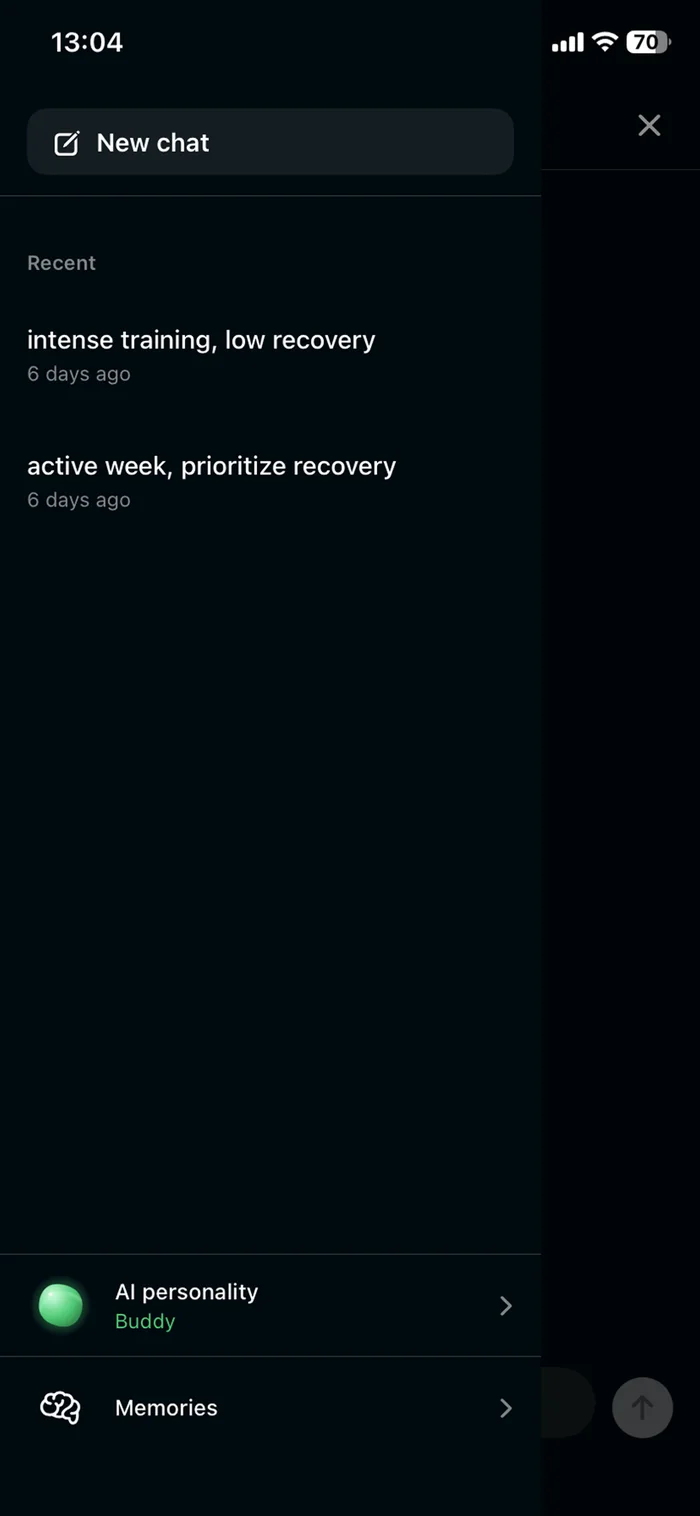
Livity’s official AI conversation history, where users can return to earlier discussions about training and recovery.
Livity has not disclosed how the million-euro total divides among subscriptions, lifetime purchases, or acquisition sources. What it has demonstrated is more specific: start with a watch the customer already owns and data that appears every day, identify a decision the person repeatedly needs to make, and package that answer as software people will buy.