

One Bevel user wanted to keep an Apple Watch while seeing recovery indicators that the watch did not present directly. After installing Bevel, one of the most frequent interactions happened at meals: take a photo, let AI estimate what was on the plate, and correct the items it identified inaccurately.
That meal-logging action does not currently require a subscription. The paid boundary appears later. If the user wants AI to read personal training and sleep history, create a plan that adapts to recovery, and keep checking in over several weeks, Bevel’s US Pro plan costs $99.99 a year. US App Store reviews and in-app purchases Bevel membership guide
Bevel does not sell another watch. It connects to devices people already own, including Apple Watch and Garmin, then organizes their sleep, recovery, exercise, and nutrition records. The company says it has more than 2.5 million members. That number should not be read as 2.5 million paying subscribers. The commercial strategy is to make existing device data more useful first, then sell an ongoing AI coaching relationship to people who want planning and interpretation. Bevel website
The free version already completes real jobs
Another user described a simpler benefit than “more complete health data.” A hard bicycle commute can count toward daily strain even when the rider did not manually start a workout on the watch. That matters to someone who already wears the device but does not want to record every ride as a formal training session. The watch remains the sensor; the app improves how the resulting activity is interpreted. US App Store review
Bevel has not placed every useful daily action behind Pro. Users can review sleep and recovery, log meals from a photo, and ask AI to generate a single workout without consuming coaching credits. The membership documentation also says features that are already free will not later be moved into the paid plan. Bevel membership guide
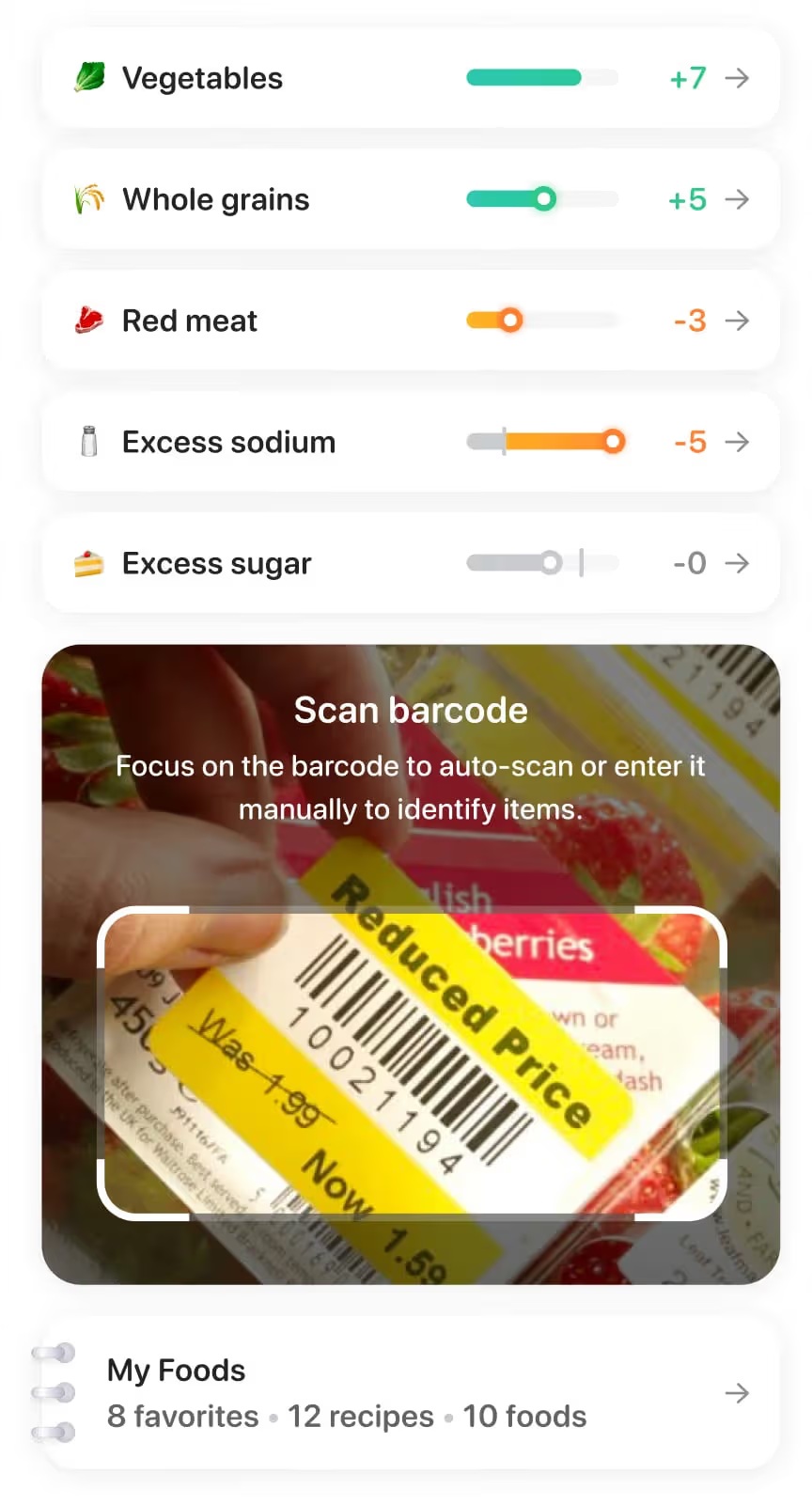
The nutrition logging interface shown on Bevel’s website.
This gives the free layer a complete outcome rather than a disabled preview. A person can finish logging lunch, review last night’s recovery, or receive one exercise session without first agreeing to an annual contract. Those actions also create and organize the history that makes the paid service more valuable later.
A workout list is different from a half-marathon plan
“Give me one strength workout” and “I want to run a half marathon, I can train four days a week, and my recovery has been poor; how should the next several weeks change?” both involve generated exercise, but the product is delivering different things.
The first request can end with a list of movements. The second requires the system to know what the person has already done, when they are available, how their recovery is changing, and what should happen after the next check-in. Bevel places multiweek programs, analysis grounded in personal history, and recurring follow-up in Pro. Coaching conversations and scheduled check-ins draw from a weekly-reset allowance, while routine meal logging does not use that coaching quota. AI coach guide Bevel membership guide
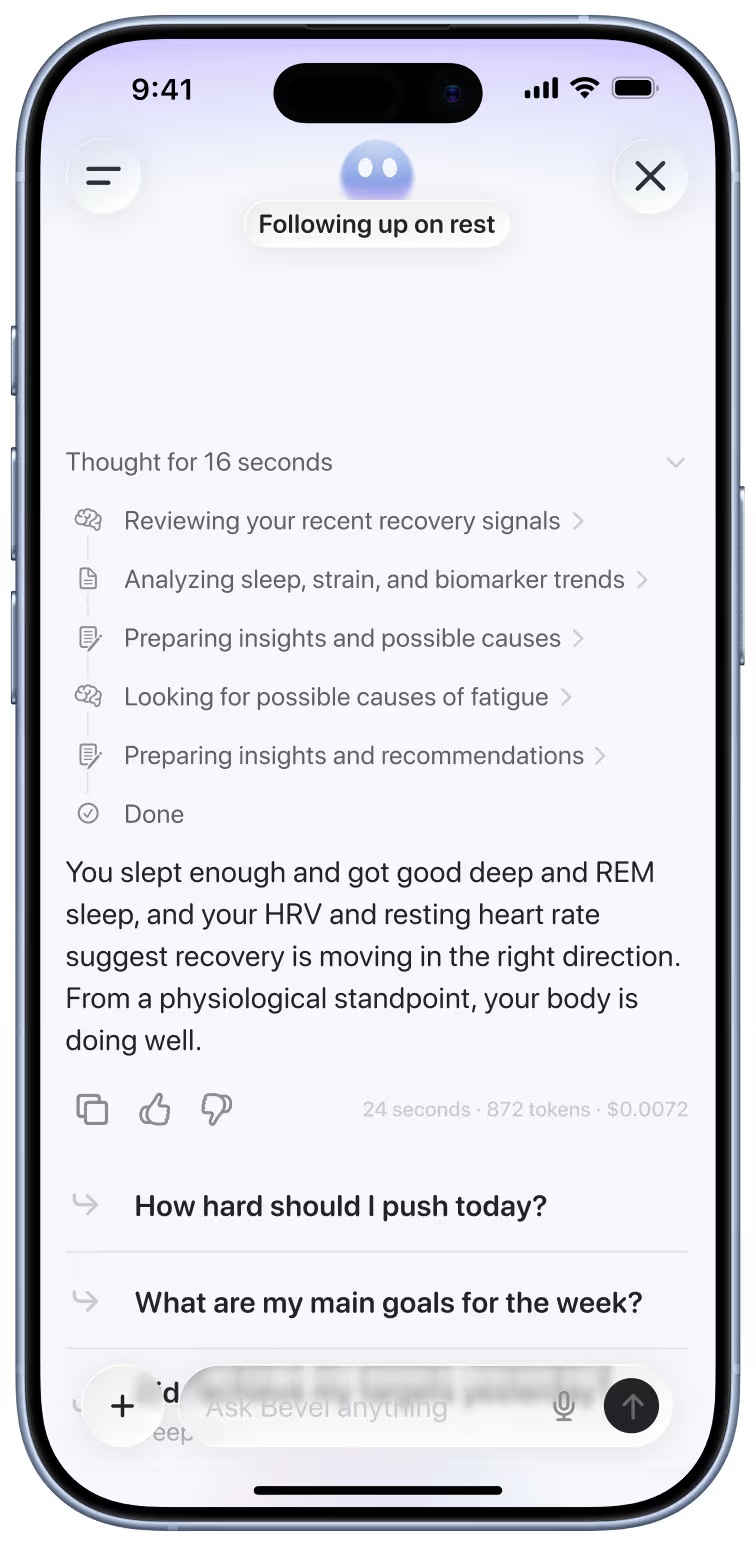
An official Bevel AI recovery-analysis example, not an independently measured training result.
Calendar integration illustrates the difference between a chat response and an operating workflow. A recent version can write training plans and scheduled workouts into Apple Calendar or Google Calendar. The result of asking the coach is no longer only a paragraph inside a conversation. The next training session can appear where the user already manages time. App Store version history
A long-time Garmin user wrote in the US App Store that the free product was already useful but still worth subscribing to. The value for that individual came from combining data across devices without replacing them, then having AI interpret the measurements and arrange future training. One review is evidence of one person’s willingness to pay, not Bevel’s conversion rate. It nevertheless answers a useful product question: this customer was no longer asking whether an activity had been recorded, but whether accumulated records could guide the next week of training.
That is the paid problem the free layer cannot finish in one sitting. A meal photo can be logged today. One workout can be generated and completed. A plan that changes with recovery requires memory, repeated interpretation, scheduling, and another decision tomorrow. The company can therefore give away useful AI actions without giving away the complete coaching relationship.
Bevel’s approach is a practical freemium lesson. Give the free user a job that can be completed now; reserve for the paid user a job that remains open and becomes more personal as history accumulates. The product does not need to make every AI interaction scarce. It needs a credible reason for someone to return with yesterday’s data and ask what to do next.