
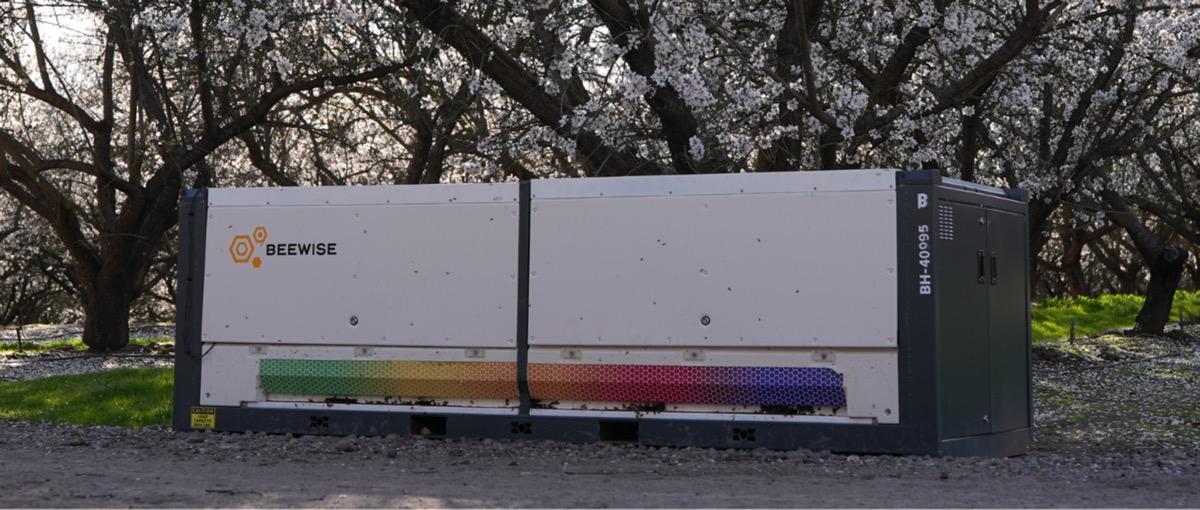
In spring 2026, Colorado beekeeper Derek Maness supplied colonies for almond pollination in California. By September, he told Aspen Daily News that his contract with Beewise was worth roughly $480,000 and that about $200,000 remained unpaid. Maness still had to cover fuel, wages for six full-time employees, and sugar syrup to feed bees during the dry season. The pollination work had already consumed cash even though the contract had not been fully settled. Beekeeper interview and contract reporting
Beewise builds robotic hives that allow colonies to be monitored and managed remotely. AI analyzes images of the comb captured inside the hive to help beekeepers detect unusual conditions. When a colony needs food, an operator can instruct the internal robot to deliver feed to that colony’s feeding frame. Yet when a grower asks Beewise for a quote, the grower is buying pollination during a flowering period, not purchasing the machine itself. Hive operation and transaction model Orchard pollination service Inside the device
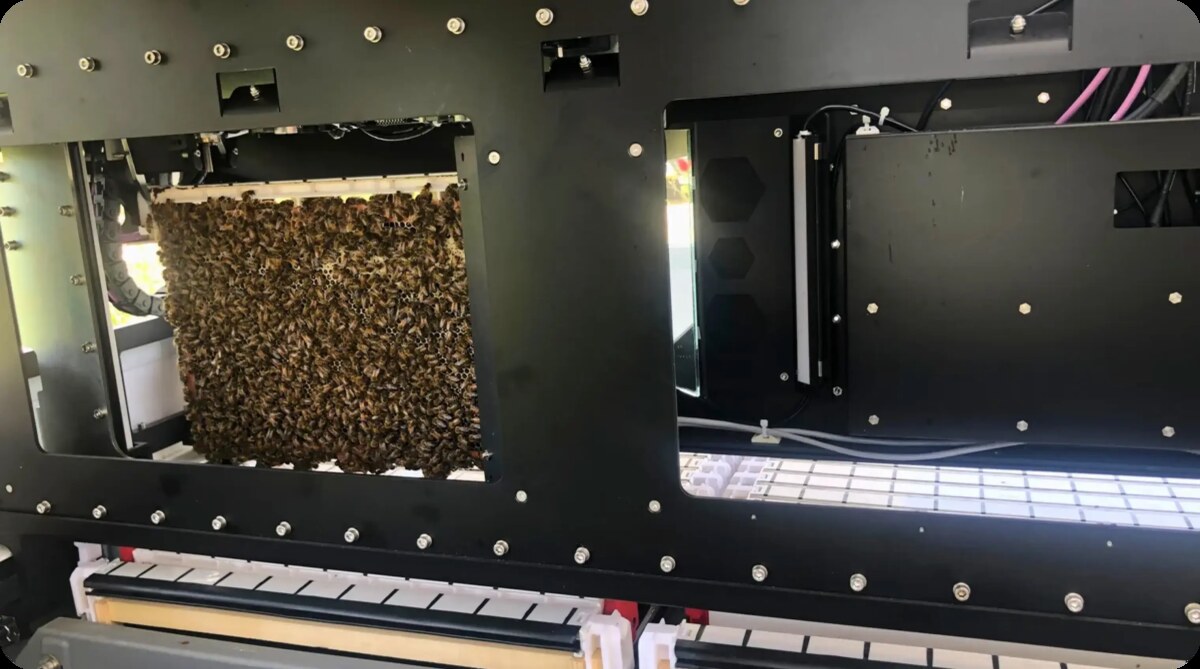
Beewise’s website shows the equipment and comb inside a BeeHome. AI monitoring and robotic operations happen inside the enclosure; the bees leave it to pollinate.
Growers buy a flowering window, not a machine
An almond orchard blooms for only a few weeks each year, while bee colonies require care throughout the year. The conventional pollination process brings colonies into an orchard for the bloom and removes them after the flowers have finished. Beewise is trying to change the cost and frequency of managing the colonies around that work. A beekeeper can inspect colony status without opening every hive each time, but can still intervene manually when the monitoring identifies a problem.
BeeHome units can be deployed with an ordinary forklift. The bees fly out to pollinate on their own, while the robotic mechanisms stay inside the enclosure. The product is therefore not an outdoor robot moving among flowers. It is infrastructure for maintaining the biological workforce that performs pollination. On-site industry reporting How the hive works
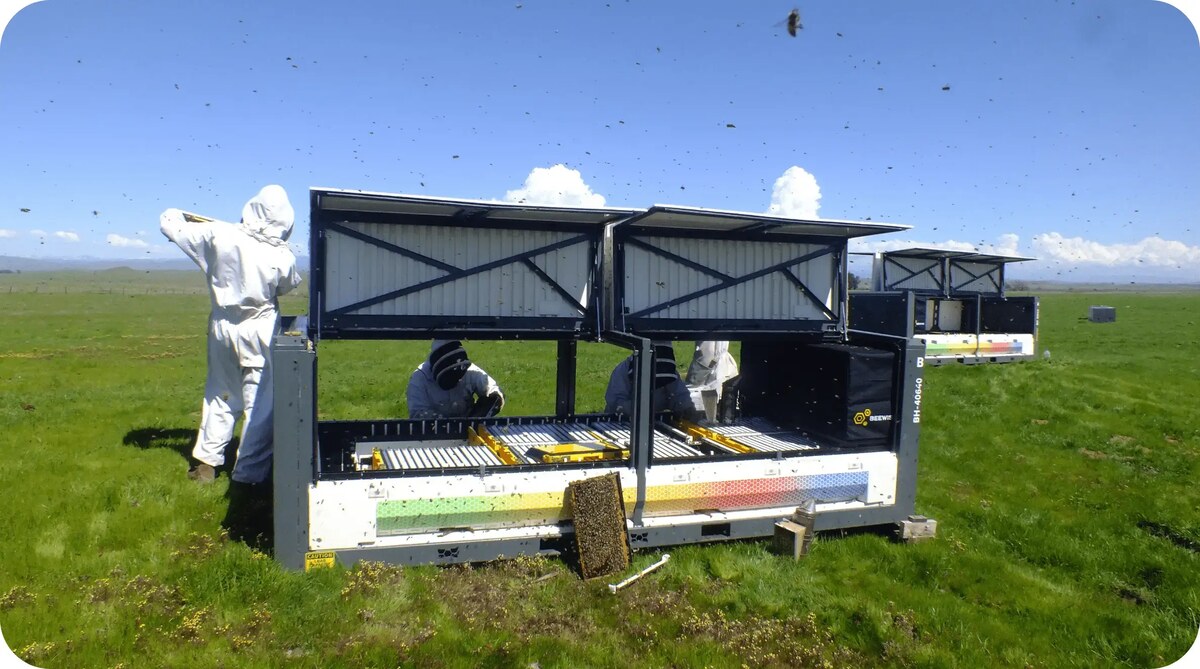
Beewise’s website shows a field unit opened for direct access. A beekeeper can still work with the colonies manually. This image is not from the disputed contract described in the reporting.
The equipment has been used in agricultural settings. Nuveen Natural Capital disclosed that it began a multiyear controlled trial with Beewise in 2024, using solar-powered hives to monitor and manage colonies in the field. The owner of The London Seed Company also says on Beewise’s customer page that he has used BeeHome for coriander pollination. The first example is a trial, and the second is a named use case. Neither public account discloses a purchase amount. Nuveen agricultural report Grower use record
Beewise also arranges pollination with conventional colonies. Maness’s contract is evidence that a real pollination transaction took place, but it does not establish that his colonies were housed in robotic hives. Beewise can place its own equipment into a service or coordinate colonies already operated by independent beekeepers. Both approaches have to deliver enough healthy colonies during the same narrow bloom window. Beewise FAQ Pollination-business reporting
That distinction matters when evaluating the business. The AI hive can reduce the effort required to inspect and feed colonies, and named growers have tested or used the equipment. The reported $480,000 contract, however, belongs to the pollination marketplace and service layer. It should not be presented as the sale price of BeeHome hardware or proof that the hardware generated that contract value.
The bloom ended, but the invoice remained open
Contracts reviewed by the reporter show that some orchards agreed to pay in two installments. Half was due after colony strength was inspected in February, and the balance was due after pollination was completed in March or April. Beewise’s chief executive said that some orchards failed to pay the company as required, which in turn prevented the company from paying beekeepers in full. That is the company’s explanation for the delay, not a court finding. Public California dockets do confirm that Beewise has filed litigation over some commercial contracts. Contract terms and company response Great Valley Growers docket
Once the trees stop flowering, colonies can be transported to another job. The unpaid balance cannot move on in the same way. Another beekeeper in the report, Shannon Wallace, said he sold a forklift to create working capital. Better monitoring does not change the order of events: fuel, labor, feed, and transportation are paid before or while the service is delivered, while final payment may arrive later. Beekeeper interview
Payment does not necessarily have to wait until the bloom is over. On another Beewise page, beekeeper Brandon Boy says that receiving money in advance gave him the confidence to reinvest in his operation. The page does not disclose the exact terms of his arrangement, so it cannot show how much was prepaid or who bore each risk. It does provide a useful contrast: when a company sells a time-sensitive pollination service, payment timing is part of the product. Beekeeper feedback published by Beewise
A complete service design therefore has to answer more than whether AI can recognize a colony problem. The parties need to know who measures colony strength, what evidence makes an installment due, when money reaches the beekeeper, and who advances funds if an orchard misses its deadline. The robotic hive addresses the operational risk of caring for colonies. Contract and payment design address the financial risk of delivering a seasonal service before all buyers have paid.
Beewise connects those two systems: year-round colony management and a marketplace that places bees into short agricultural windows. The technology can make colony care more observable and less dependent on opening every hive. But when the product sold to growers is pollination rather than machinery, commercial reliability includes settlement as well as biological performance. Flowers can close on schedule; the payment workflow has to be designed so that the people who supplied the bees are not left financing the gap.