

A bird calls outside the window early in the morning. By the time you take out your phone and open an app, the sound has stopped. Haikubox approaches that problem with a small device that stays outside, connected to power and Wi-Fi. It does not need someone standing nearby or a phone microphone running all day. The box listens for bird sounds, identifies them, and keeps the relevant audio clips so that a person can return to them later. How the device works
In August 2026, Haikubox released a redesigned app that also turns a phone microphone into a free, live bird-identification tool. A person can begin listening without first buying the box or creating an account. At the same time, the company’s bird-and-bat listening device is listed at $299 and includes one year of premium service. If the free app can already tell someone which bird is calling, the commercial question is what the dedicated hardware still provides. App Store version history Device and plan
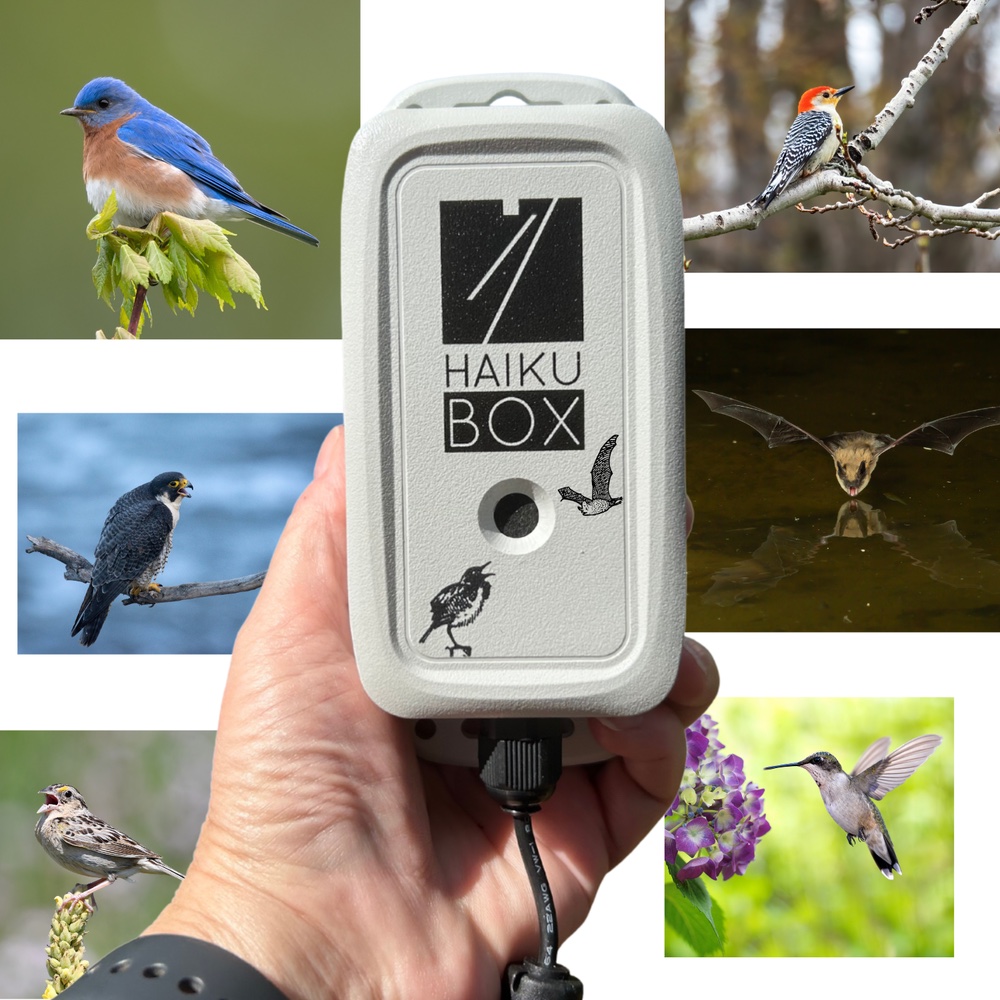
Haikubox’s official product image. The device records sound; it does not use a camera to photograph birds.
Knowing which bird visited when nobody was there
The free app answers a question about the present: what is making that sound now? The box answers a different question: what happened here while I was away? A device owner can review the detections and play back the short sound segment that triggered each identification. Premium subscribers can also configure notifications instead of repeatedly opening the app to check the record.
Those notifications are not necessarily sent for every brief sound. One example in the company’s FAQ is a new-bird alert that waits until a species has been detected five times in one day, provided that it had not reached that frequency during the previous five days. This threshold cannot guarantee that every identification is correct, but it reduces the chance that each isolated call becomes a separate phone alert. App Store product description Notification rules
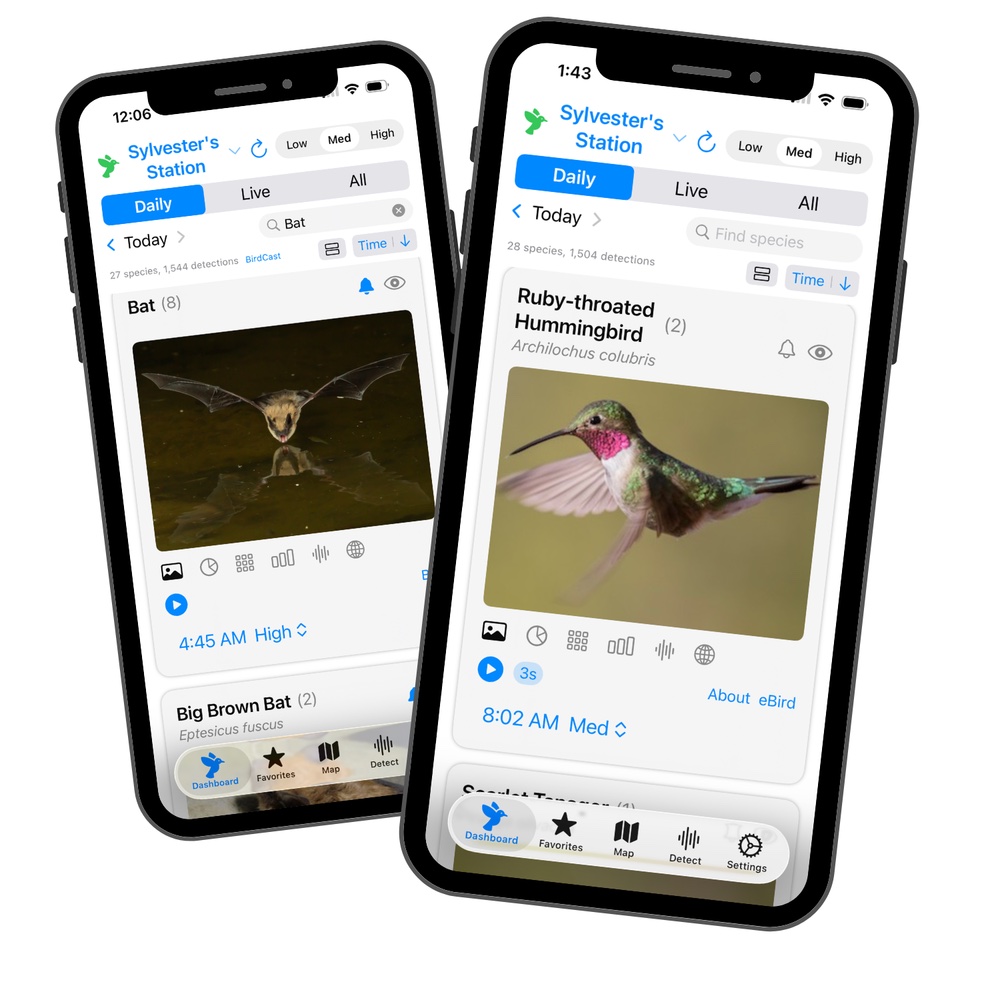
The official Haikubox app interface. Owners can inspect identification records and replay saved clips.
After the first year included with the hardware ends, an owner can decline to renew and still see detections from the current day. The $59-per-year premium service adds immediate notifications, remote live listening, access to the previous 30 days of sound recordings, and a long-term list of species detected at that location. Haikubox therefore does not put the basic answer to “what bird is this?” entirely behind a subscription. It charges for being notified, listening remotely, and keeping a more useful historical record. For someone who only wants to identify an occasional call, the free phone experience may already be sufficient. Free and paid features Renewal price
That distinction is the core of the product. A phone microphone is convenient when its owner is present and decides to listen. A powered outdoor device is valuable when observation must continue without that decision being made each time. The hardware purchase buys a fixed listening point; the subscription makes that point easier to monitor and gives its observations a longer memory.
What did 344 listening sites hear?
The records produced by these boxes have already supported a use that goes beyond one owner’s backyard list. Researchers used Haikubox data to examine the effects of the 2024 solar eclipse across North America, publishing the study in 2025. During the event, 655 boxes located in areas that experienced at least a partial eclipse were online. After excluding sites affected by restarts, environmental interference, and other problems, 344 monitoring locations remained in the analysis. Solar-eclipse research paper
On average, the clearest decline in bird vocalizations appeared among the group of sites where the sun was more than 99% obscured. The pattern was not universal. At one monitoring location, for example, an American robin continued singing during the peak of the eclipse. A distributed acoustic record can preserve both the aggregate change and the exceptions that would disappear in a simple claim that birds became quiet.
The study is not evidence of unit sales, subscription conversion, or revenue. It demonstrates something narrower but important to the product’s value: the hardware was already operating at enough fixed locations to create records that researchers could compare across a large natural event. Device owners who did not consent to share their data were not included in the research, and the final sample was smaller than the number of online boxes because the analysis applied technical and environmental filters. Research methods and sample selection
A phone app can identify one sound and then stop listening as soon as the user closes it. The eclipse study required the opposite. Monitoring had to be underway before the eclipse began and continue after daylight returned. Each site also needed a record tied to one location rather than a collection of opportunistic phone recordings made at unrelated moments.
That is why free live identification does not necessarily undermine the paid box. The free app can introduce the recognition experience to anyone with a phone and satisfy occasional curiosity. The dedicated device sells continuity: it stays in place, captures visits that happen while the owner is absent, and builds a timeline that can support alerts, personal observation, and, with consent and filtering, comparison across many locations. Haikubox is not charging $299 merely to name a bird. It is charging for a listening station that remains on duty after the phone has gone back into a pocket.