
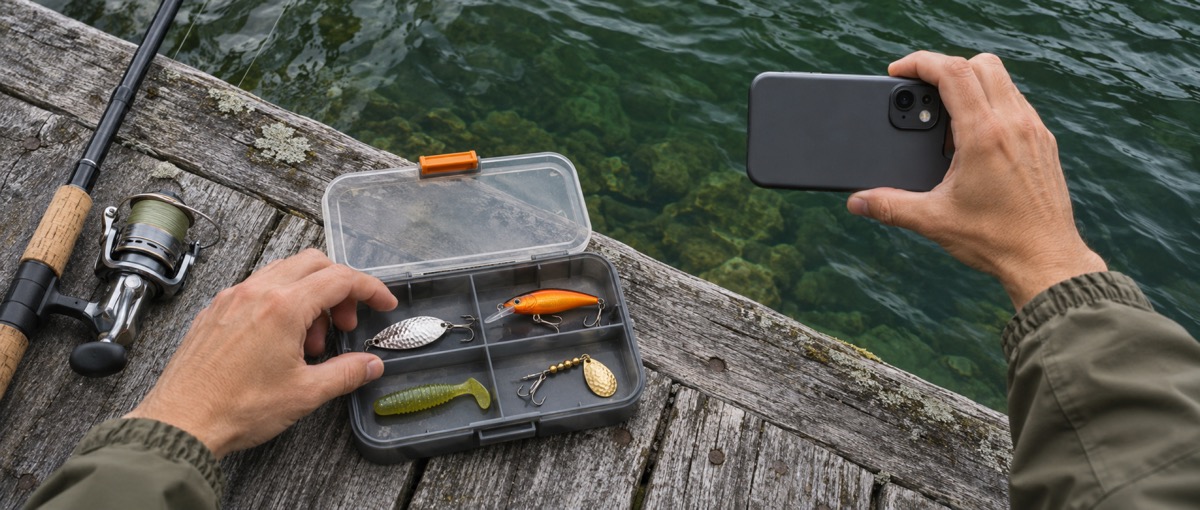
An angler reaches the water, takes a photo of the fishing spot, and receives a recommendation for which artificial lure to use. Fishing AI App is built around that small decision. It combines the image with conditions such as weather, water clarity, and time instead of merely identifying what appears in the photo. Product description and official interface
The app has also converted some of that utility into paid subscriptions. Data last synchronized by TrustMRR on November 6, 2026 and marked as verified through a RevenueCat connection listed $30,109 in all-time revenue, $2,228 in monthly recurring revenue, and 665 active subscriptions. All-time revenue is not profit, and active subscriptions cannot automatically be treated as 665 distinct people. Payment data
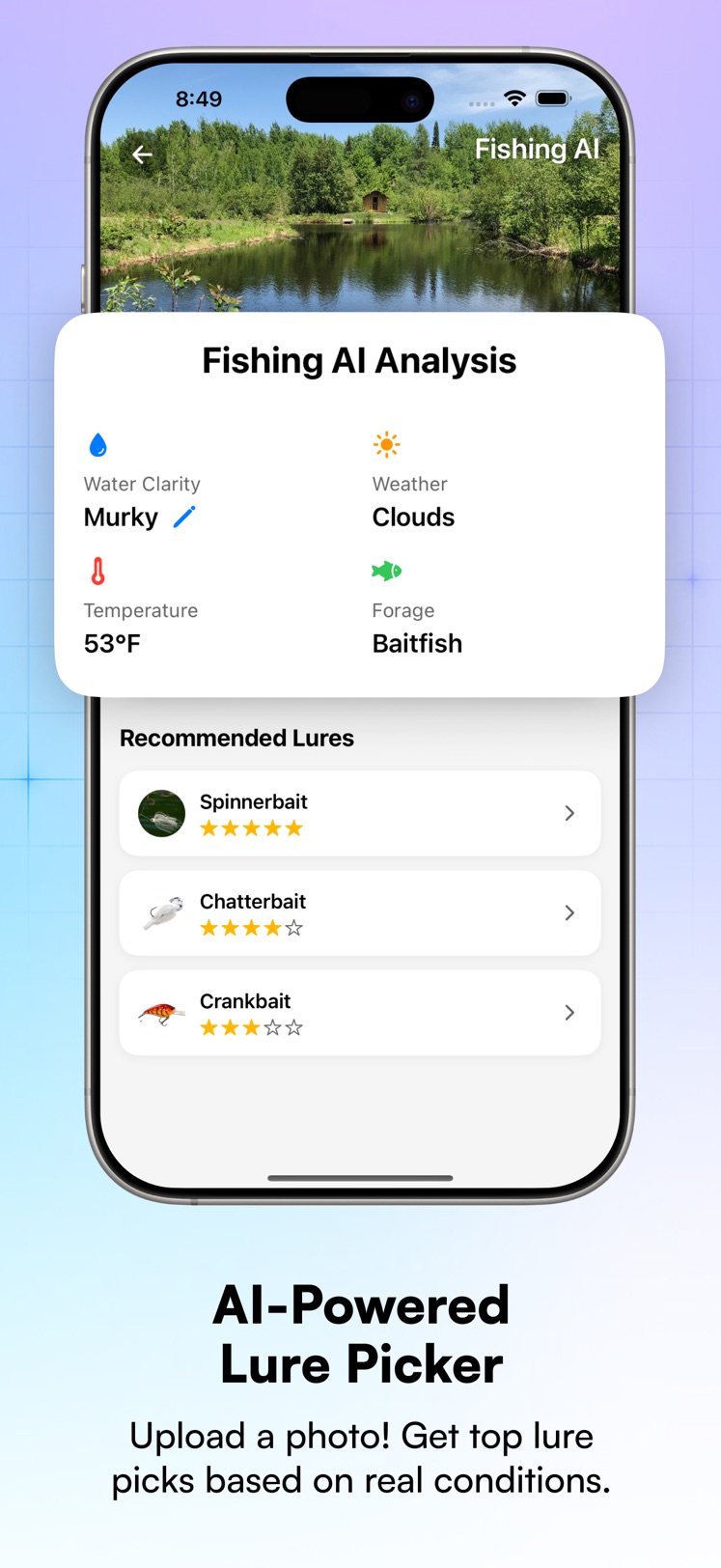
An official example shows conditions such as water clarity and weather beneath a photo, followed by several recommended lures. The star ratings are part of the product demonstration, not an accuracy measurement verified for this article.
Start with the lures the angler actually brought
Lure recommendation has an immediate practical constraint: even excellent advice cannot be acted on at the water if the angler did not bring the recommended lure.
Fishing AI addressed that problem in a July 2025 update. The app added an option to recommend only from a user’s own lure collection, while explaining why a lure fits the conditions and how to fish it. Users can also allow unrestricted AI recommendations or combine their own inventory with the broader catalog. Version history
That change is more important than simply making the model produce a longer answer. It narrows the answer space before the recommendation is generated. In a store, “What should I buy?” can be useful. Once someone is already standing beside the water, the more actionable question is, “Which of the lures I have with me should I use now?”
This is also a distinctly mobile workflow. The phone supplies the camera at the fishing spot, access to local conditions, and a recommendation at the moment of choice. Fishing AI does not require dedicated hardware. The value comes from connecting a real-world scene with the tools already in the angler’s tackle box.
The product record does not establish that the own-lures feature caused the reported revenue or increased the number of fish caught. Its significance is narrower and more useful: it turns a generic recommendation into one that the user may be able to follow immediately.
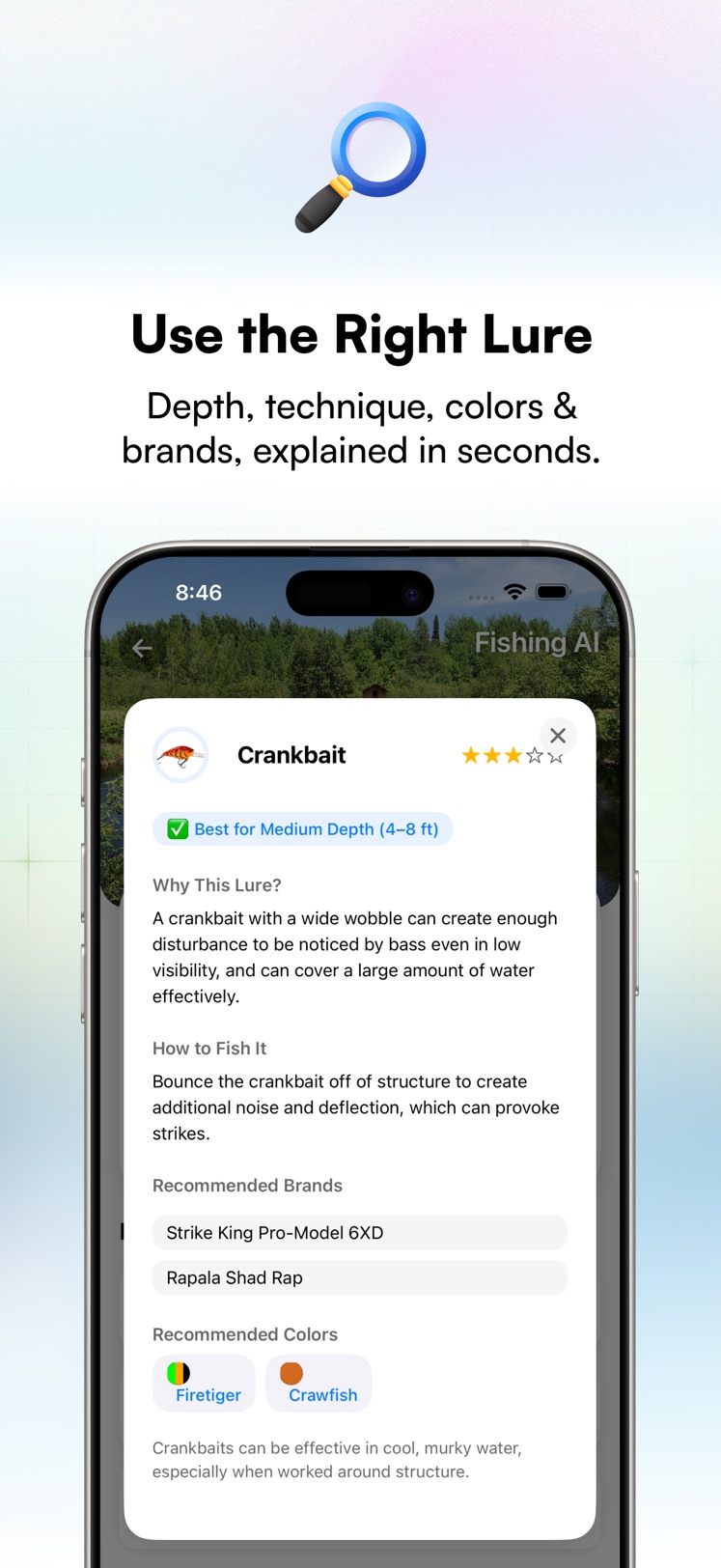
The official interface explains suitable depth, technique, brands, and colors for a recommended lure. It is a product example rather than a result produced or tested for this article.
An annual subscription needs a reason to return after the first photo
The China App Store listing shows a monthly subscription at RMB 58, an annual subscription at RMB 198, and a discounted annual option at RMB 148. The app is available only in English. The store page does not explain who is eligible for the discounted annual price, so it should not be read as an offer available to every user. China App Store listing and in-app purchases
The revenue figures help establish that real transactions exist, but their scope matters. TrustMRR reports data synchronized through the app’s payment infrastructure; it is not an audit of the developer’s complete finances. The $30,109 figure is cumulative revenue, not annual revenue or current monthly revenue. It does not subtract app-store fees, customer acquisition, model inference, or other operating costs. The 665 figure counts active subscriptions, not necessarily unique subscribers.
For a product like this, the commercial challenge is not limited to persuading someone to take the first photo. Whether the app remains useful at a new fishing spot, in different weather, or during another trip determines whether a one-time recommendation can support a recurring subscription.
Fishing AI also includes a catch log that stores the fish, lure, weight, and time in one place. The release history says past scans can be revisited as well. These features give the app a role after the immediate lure choice and create a record an angler may want to consult on a later trip. Product logging features
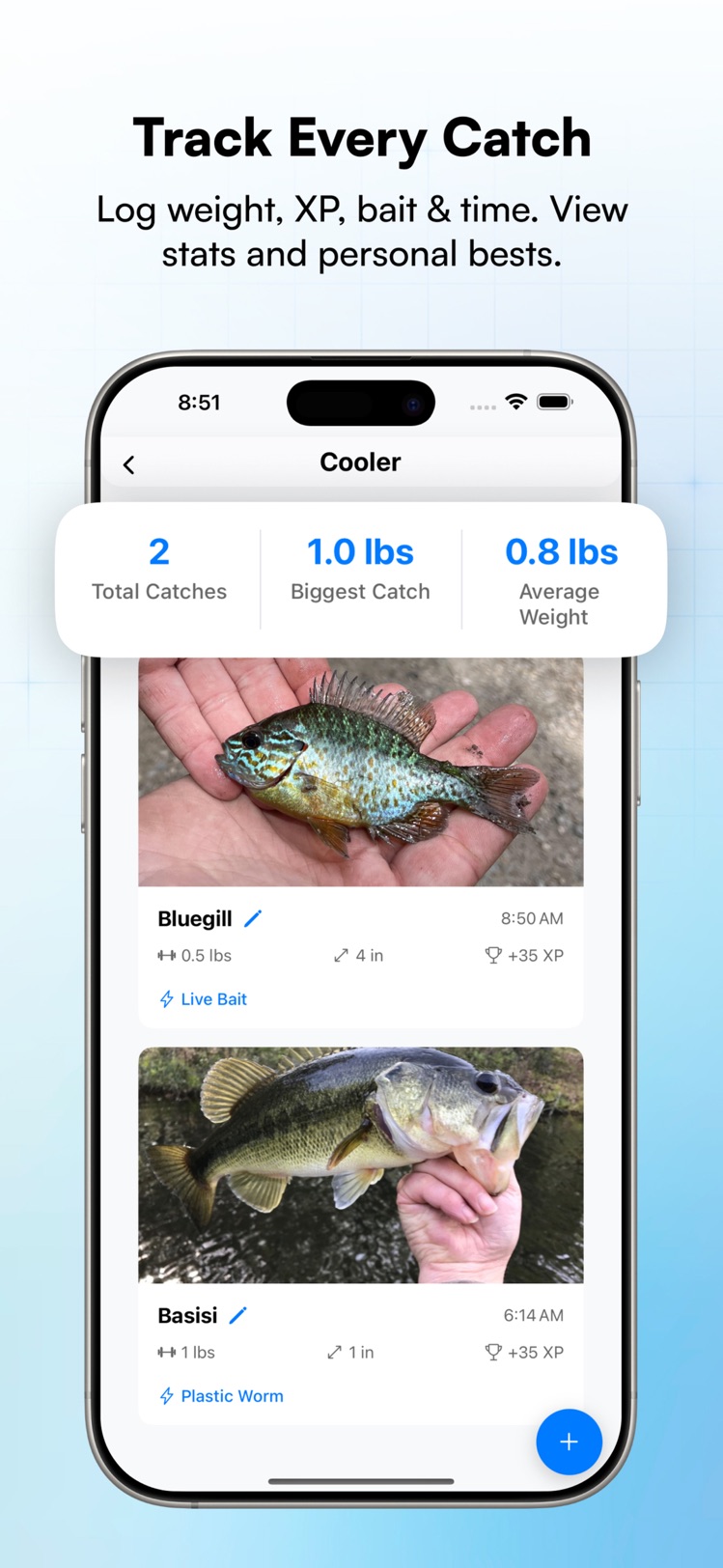
An official example saves catches, lure choices, weights, and times for later review. The fish shown in this sample are not evidence that the recommendation improves catch rates.
What remains to be demonstrated is whether the accumulated history makes the next recommendation more personal, rather than merely asking the angler to take another photo. The available sources do not disclose retention, acquisition cost, recommendation accuracy, or a measured improvement in catches.
That uncertainty does not erase the product lesson. Lure selection is the entry point, but a subscription needs continuing value. Restricting the recommendation to equipment already on hand makes the first answer more executable. Remembering what happened afterward could make the next answer more relevant. If every session treats the subscriber as a brand-new angler, the convenience of one recommendation will have to carry the annual plan on its own.