
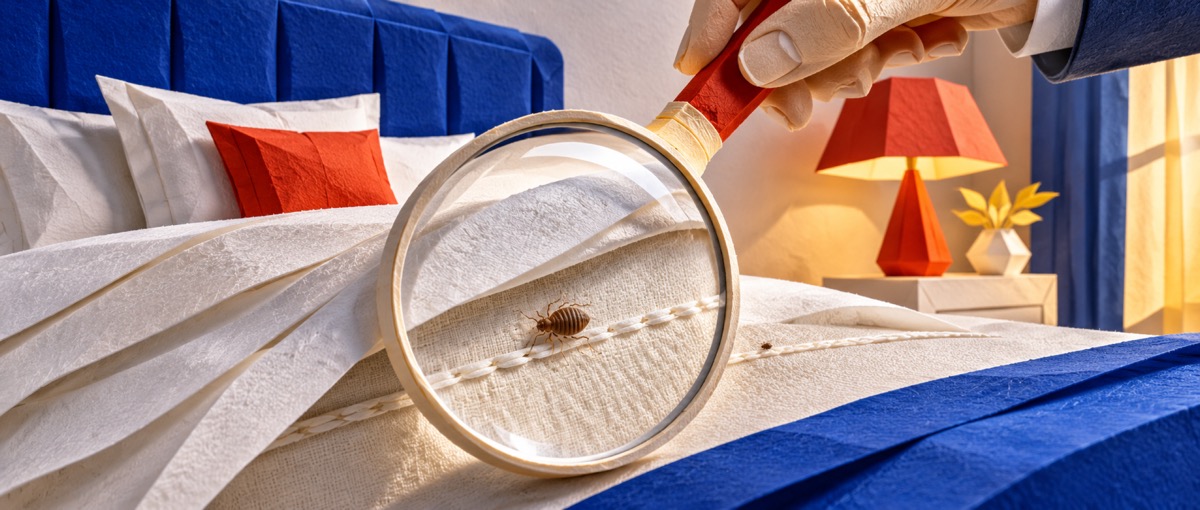
A small white box sits beneath a mattress. When a bed bug enters, the system confirms the detection and sends the hotel an alert with the room number. British company Spotta packages this hardware and monitoring service as a subscription, so hotels do not have to buy the devices outright or rely only on guest complaints to learn that a room may have a problem. Bed Pod product overview
The unglamorous business has reached meaningful scale. In October 2025, investor FSE said Spotta’s Bed Pods had been deployed across more than 10,000 hotel rooms. That figure describes rooms covered at the time, not the number of hotels. FSE commercial update
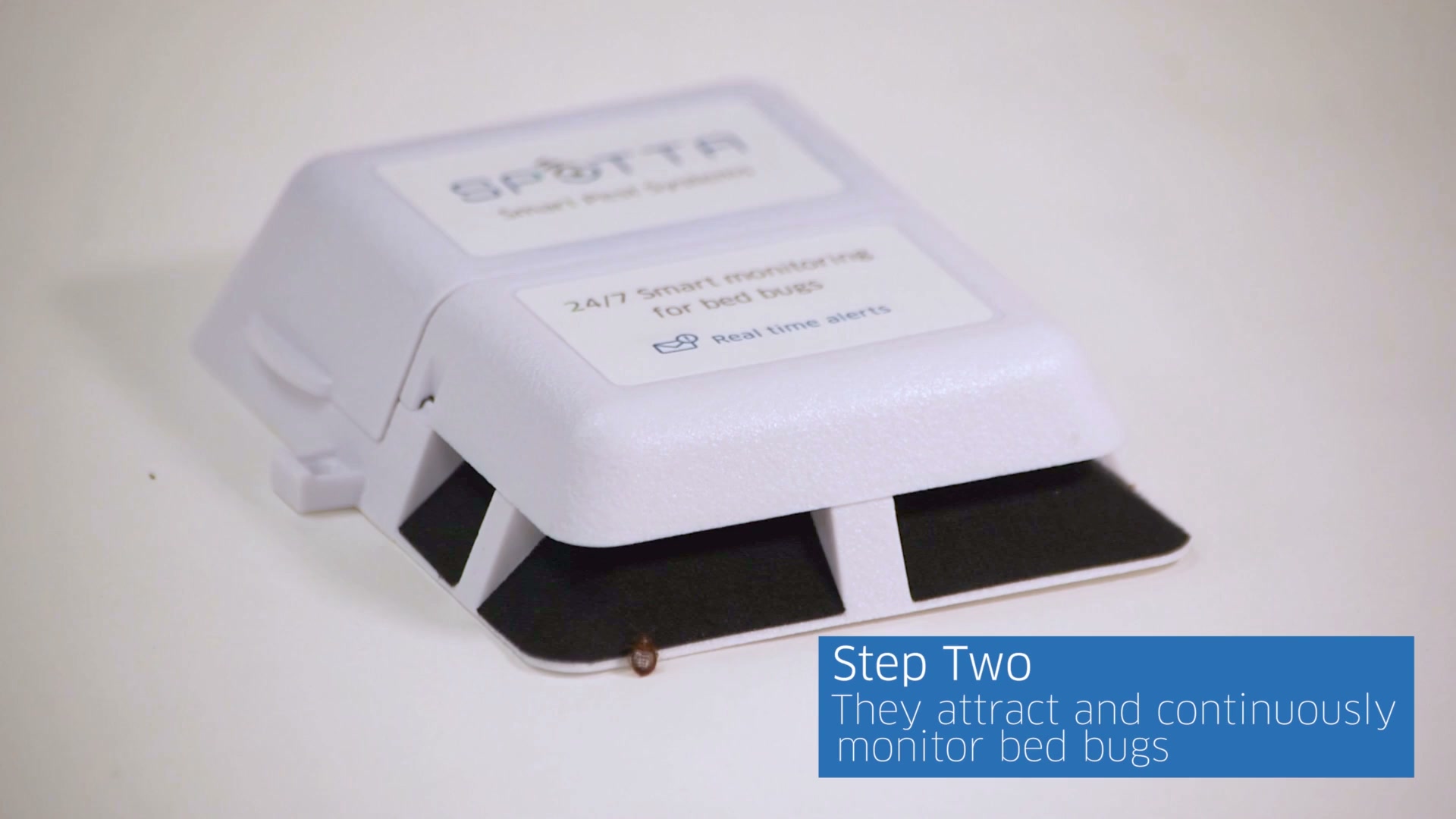
A frame from Spotta’s official demonstration video. The Bed Pod is a small trap that attracts and monitors bed bugs, not a surveillance camera in the guest room.
A hotel fears more than a single bug
Hotels already have housekeeping and pest-control services. Why add another device?
The difference is what happens between inspections. A manual room check covers only the moment when someone is looking. A conventional trap can catch an insect, but someone still has to notice it. Spotta continuously monitors each equipped room and notifies designated staff after a detection. How the monitoring differs
At London’s Bankside Hotel, maintenance manager Andras Goldsbrough has publicly endorsed the product as a way to address bed bugs proactively. For a hotel, a problem discovered late can create a greater risk of spread, guest complaints, and rooms taken out of service, rather than just the cost of one treatment.
The device sits out of sight beneath the mattress, without exposed wiring or noise that would disturb a guest. It does not connect to the hotel’s guest Wi-Fi, reducing its dependence on the property’s existing network during installation.
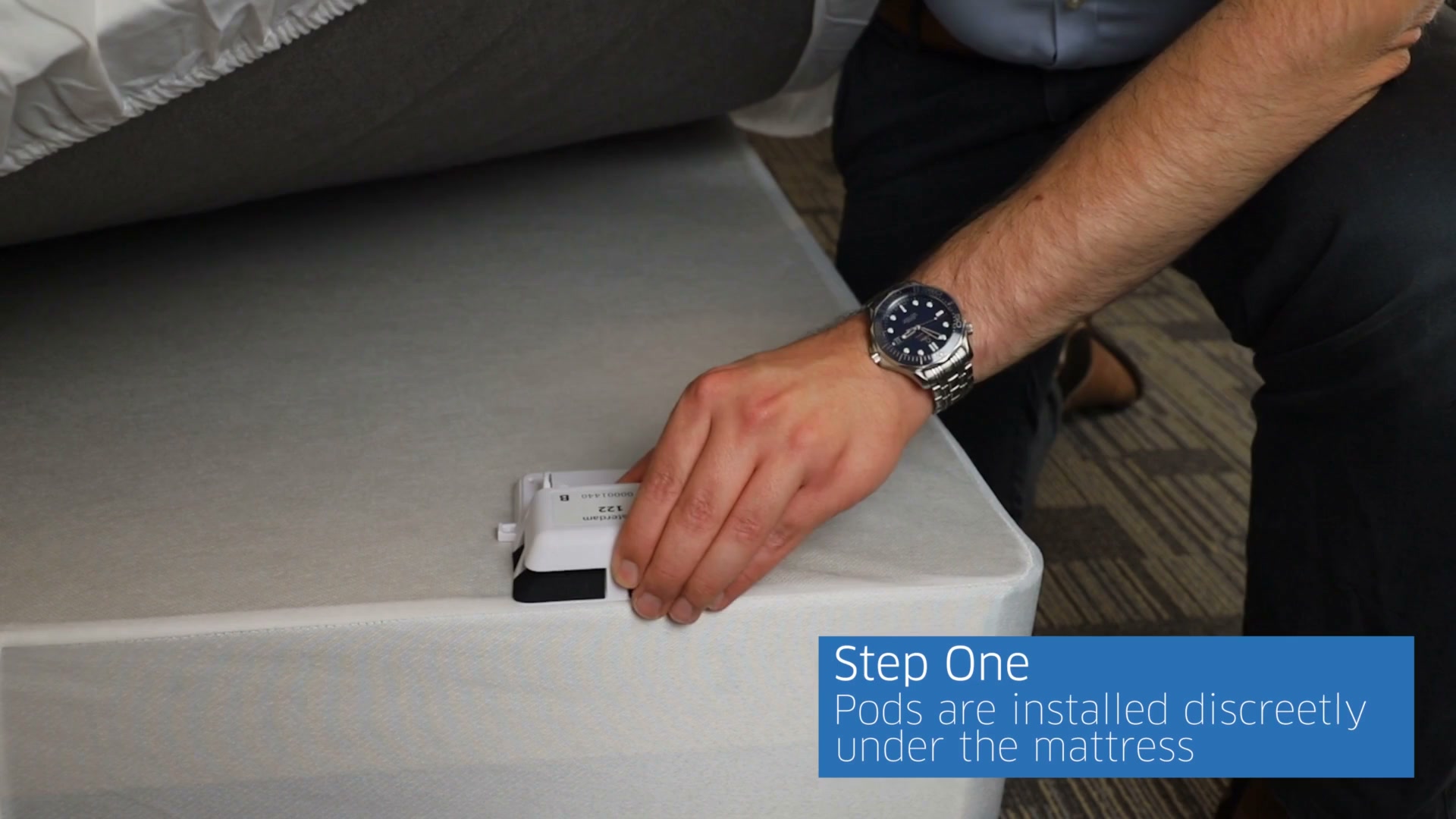
An official installation demonstration: lifting the mattress reveals the monitoring box underneath.
The AI output is an alert that someone can act on
Spotta uses AI and connected devices to identify pests. What the hotel receives is a notification that can be turned into a work order. The official demonstration is specific: a bed bug was detected in room 412 at 2:12 a.m., with an image of the captured insect attached.
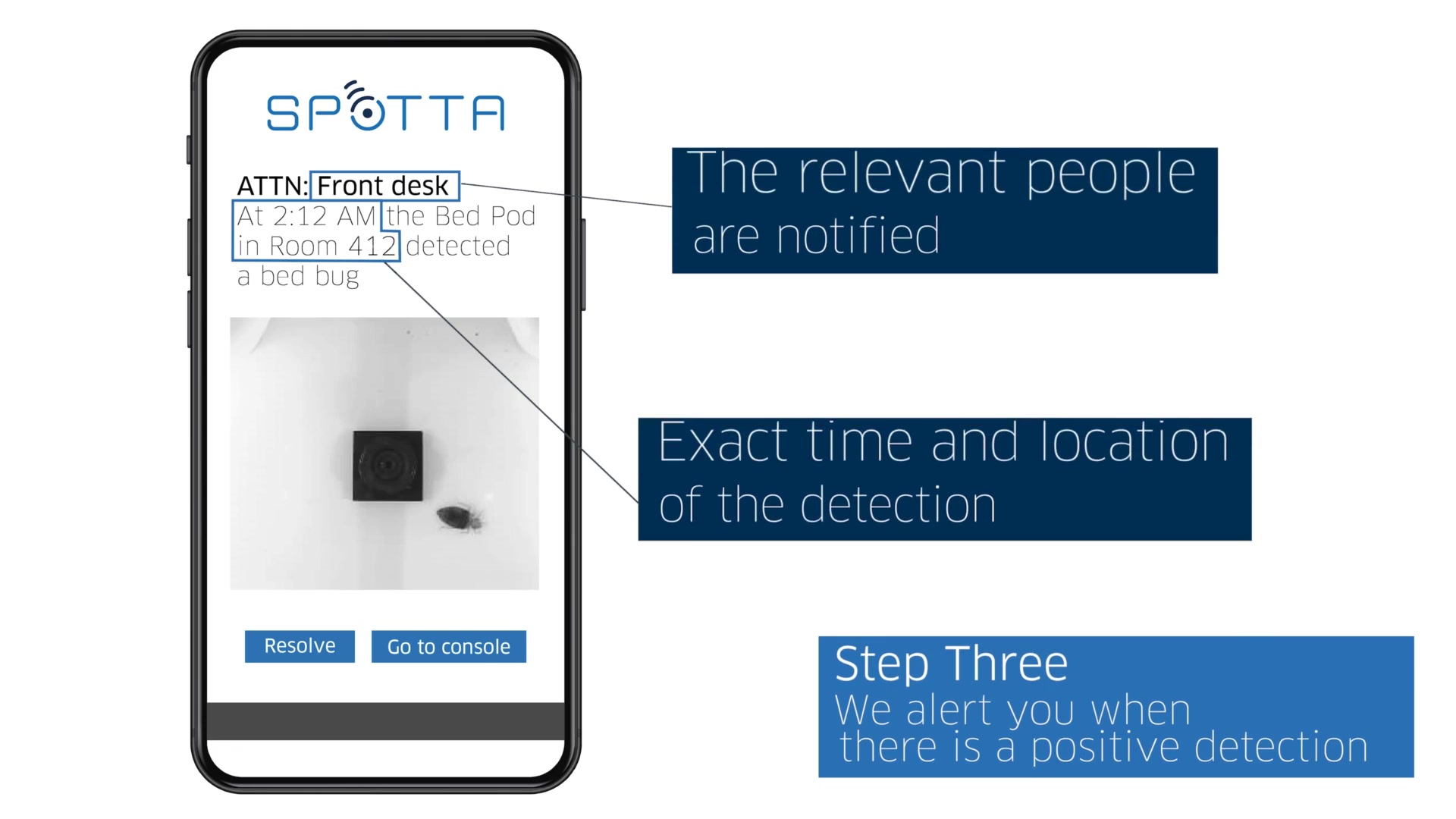
An example from Spotta’s official demonstration. It identifies the relevant people, time, room, and image; it is not a real hotel incident collected for this article.
The room number connects classification to operations. Front-desk and maintenance staff know where to investigate, and the pest-control provider has a precise location to check. Spotta handles detection and confirmation; the hotel’s existing team or service provider still performs the treatment.
Continuous monitoring also creates a continuous maintenance obligation. The service must show more than pest activity: staff need remote visibility into battery level, connectivity, and device health. A box that has stopped reporting cannot safely be interpreted as evidence that the room has no bed bugs. Monitoring and device-operation information
By not taking over treatment, Spotta gives partners a reason to sell
Spotta’s channel design follows that division of labor. Its partner program lets pest-control companies and distributors sell monitoring to customers they already serve. The terms are explicit: the partner keeps the customer relationship and can continue providing the treatment work. Partner program
This is not a replacement model that removes the incumbent service provider. A pest-control company that previously earned revenue from individual treatments can add a recurring monitoring service. When the system detects a problem, that same company can still make the site visit. Spotta supplies deployment training, support for the first installations, and device monitoring.
The hotel gains continuous monitoring. The service provider adds subscription revenue while retaining treatment work. Spotta avoids building its own local pest-control crews. In this model, the channel is more than a source of leads: it is also the delivery network that ensures an alert ultimately results in someone arriving at the room.