
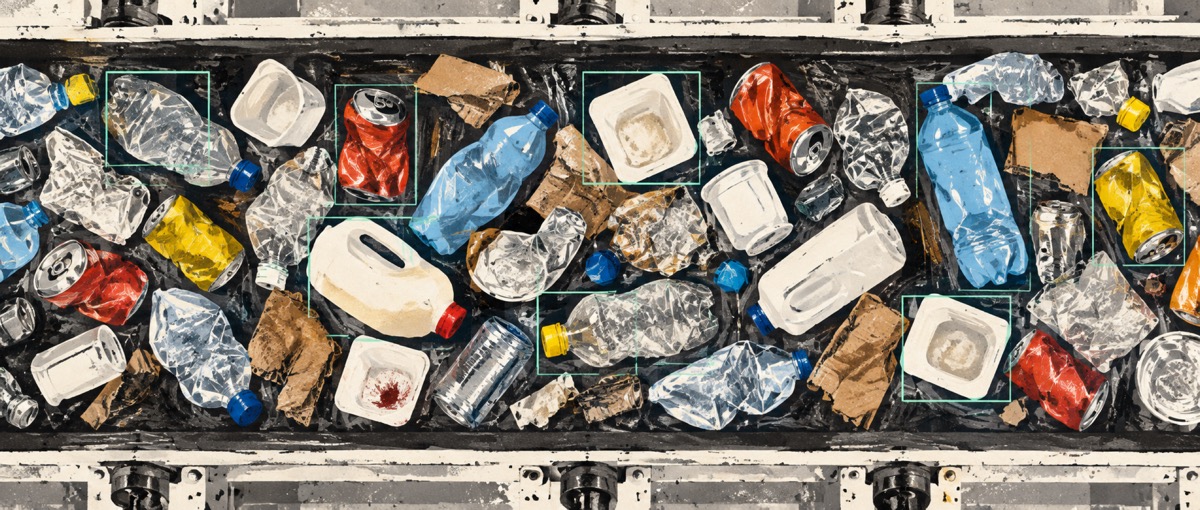
The proportion of clear and light-blue plastic in a batch can change what that recycled material is worth.
At Greentech Baltic’s PET recycling plant, production manager Tadas Lenkutis used to judge that blend from experience. After installing Greyparrot, the team began using live composition data from the conveyor to prepare its output. Clear plastic flakes can command a premium; when a customer accepts a small amount of light-blue material, the plant can adjust the blend accordingly. In a customer case published in October 2025, Greyparrot estimated that this finer blending increased the plant’s PET recycling revenue by about 10%. The figure is a vendor-reported estimate for this facility, not a general customer result. Customer blending and revenue case
The AI doing this work does not reach down and pick up bottles.
Greyparrot mounts camera-based analysis equipment above a recycling plant’s existing conveyor, identifies the waste moving underneath, and displays its composition, flow, and changes in a dashboard. The plant is not simply buying a camera. It pays for an annual license that includes use of the equipment, software updates, and support. Official license explanation
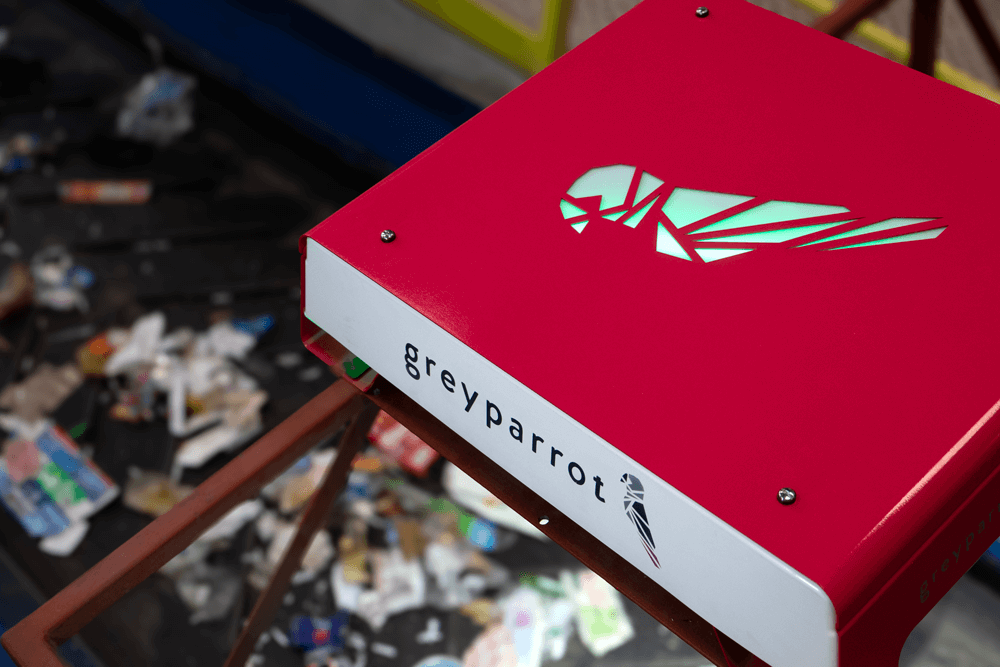
The Analyzer mounted above a conveyor. Source: image published with a Greyparrot customer case.
Sorting the bottles is not enough; the plant must know what it can sell
Recycling plants already have sorting machinery. The harder questions are what is mixed into the material currently in front of them, whether a machine adjustment improved the output, and whether the final batch meets a customer’s specification.
Greentech Baltic previously opened one representative bale each month for a manual quality check. Incoming material does not wait for sampling day: contamination, color, and source can change at any time. Continuous data lets the team notice off-specification input earlier and makes blending less dependent on experience alone.
The endpoint of AI recognition is not merely “this is a plastic bottle.” It is “how should this batch be processed, and how can it be sold?”
In the Analyzer dashboard, operators can review conveyor footage on one side and see material composition change over time on the other. The system also lets a plant assign prices to material categories, converting detected quantities into estimated value rather than leaving staff to calculate from a list of recognition labels. Analyzer product description Data and value calculation
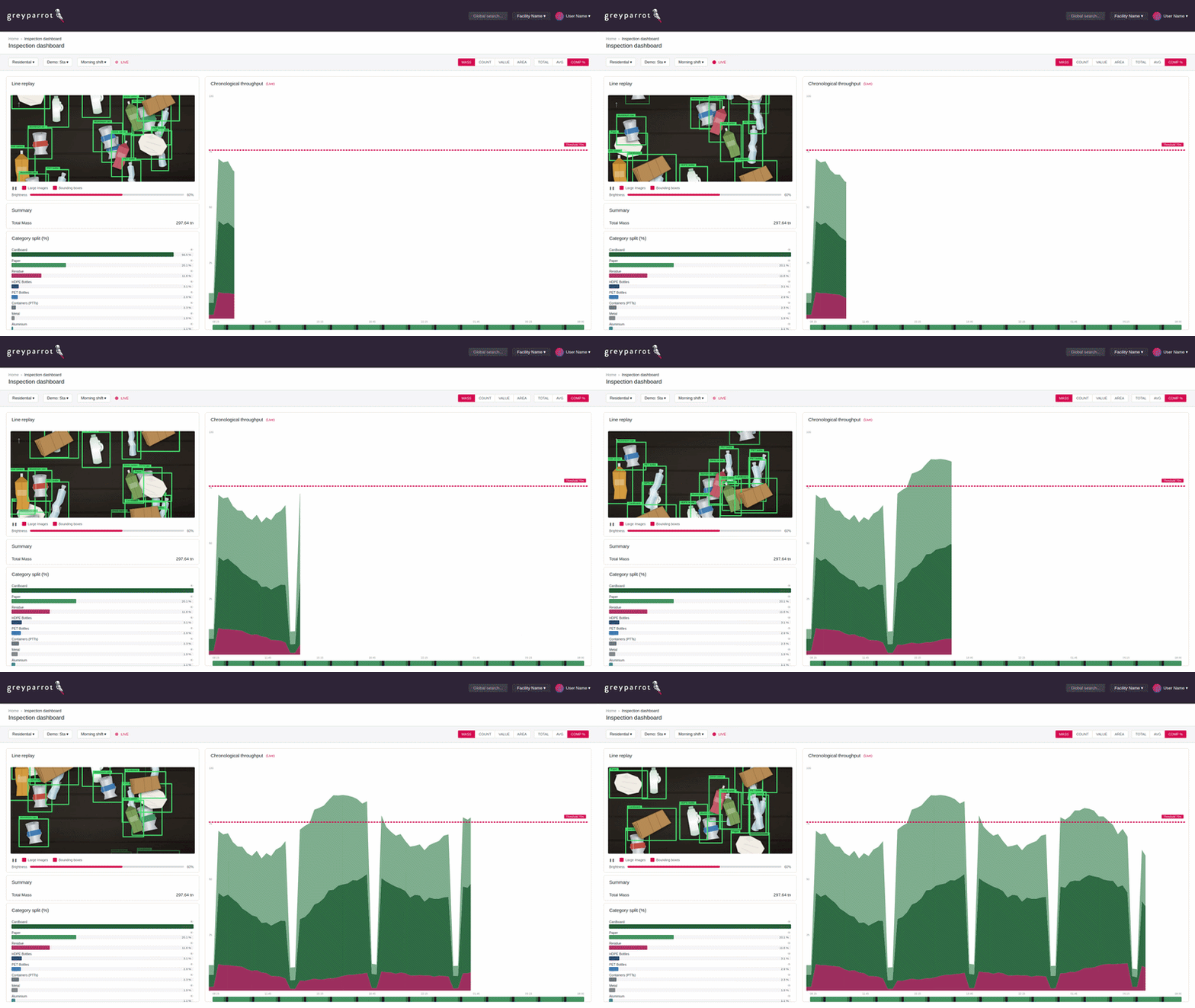
Greyparrot’s official dashboard demonstration places recognition footage beside composition changes. It shows demo data, not the Greentech Baltic customer’s live record.
A plant does not have to wait for robots to take over
Another customer, Omrin, first installed an Analyzer on one output line.
Engineer Karin Wolters had been taking three manual samples a week. Continuous monitoring reduced that work to one sample a week. When material purity changes, the team can investigate sooner and then adjust airflow or its near-infrared sorting system. According to the March 2025 customer case, people still operated the machinery at that point. Feeding the data into automatic machine control was a future ambition, not a completed deployment. Omrin customer case
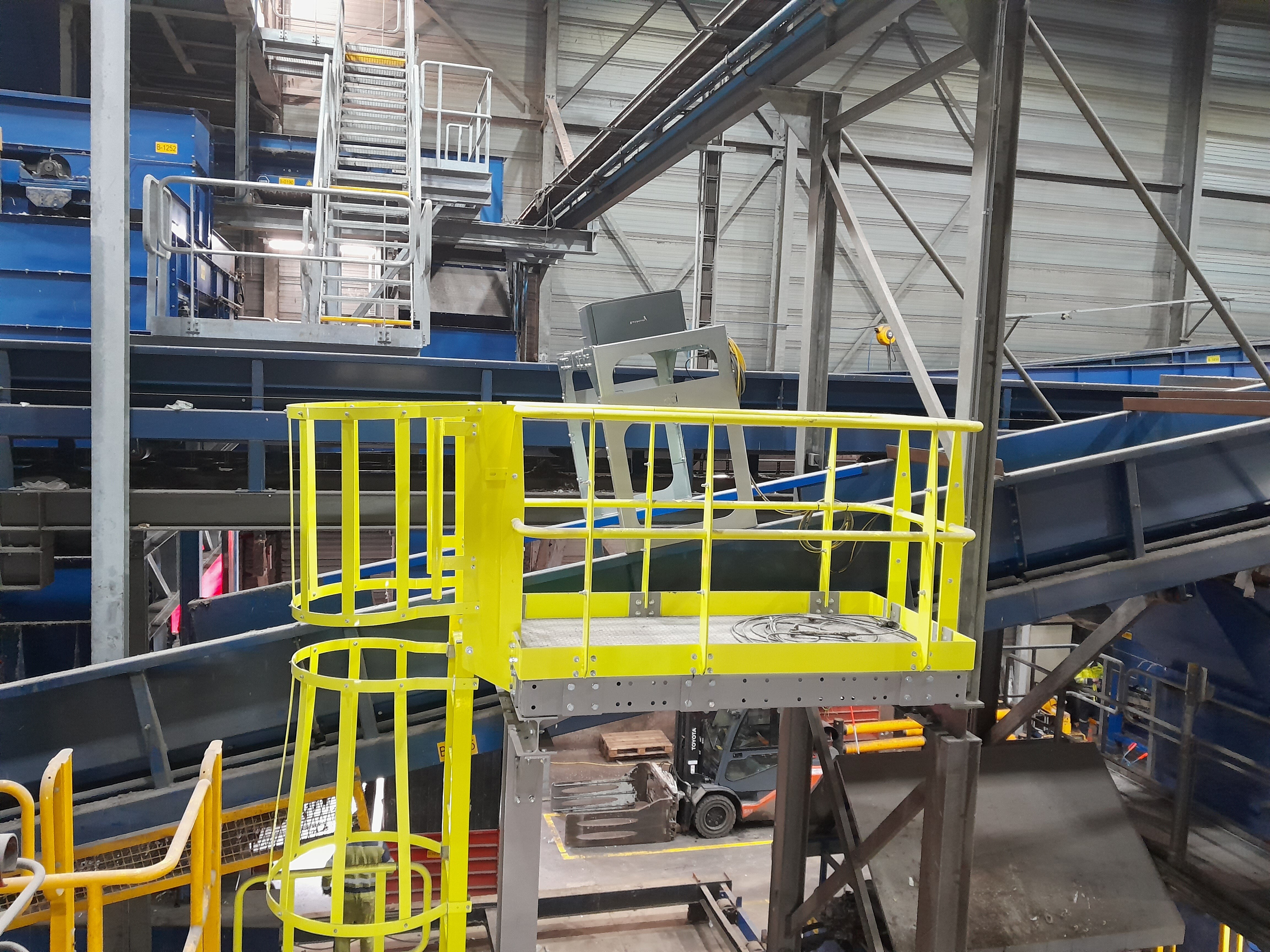
A deployment on Omrin’s existing production line. Source: customer-site photo published by Greyparrot.
This creates a pragmatic adoption path. A customer does not have to replace an entire production line or wait for a fully autonomous plant. It can first give engineers better information about what needs adjustment.
Greyparrot also offers Sync, an interface for sending data to compatible third-party hardware and software. Greyparrot does not manufacture sorting robots itself. Sync and equipment integration
Monitoring, human decisions, and machine integration can therefore happen in stages. They do not have to be purchased as one complete factory overhaul.
The camera is licensed annually because the product must keep working
Greyparrot’s annual license includes Analyzer hardware, unlimited-user access to the dashboard, system updates, and support from its team. Pricing varies with customer requirements and the number of deployed units; the website does not publish a single list price.
Installation is not the end of delivery. The equipment must be calibrated for the site, dirty lenses must be cleaned, and both the material library and dashboard must continue to evolve. The annual fee places that ongoing work inside the product rather than treating the camera as a finished one-time sale.
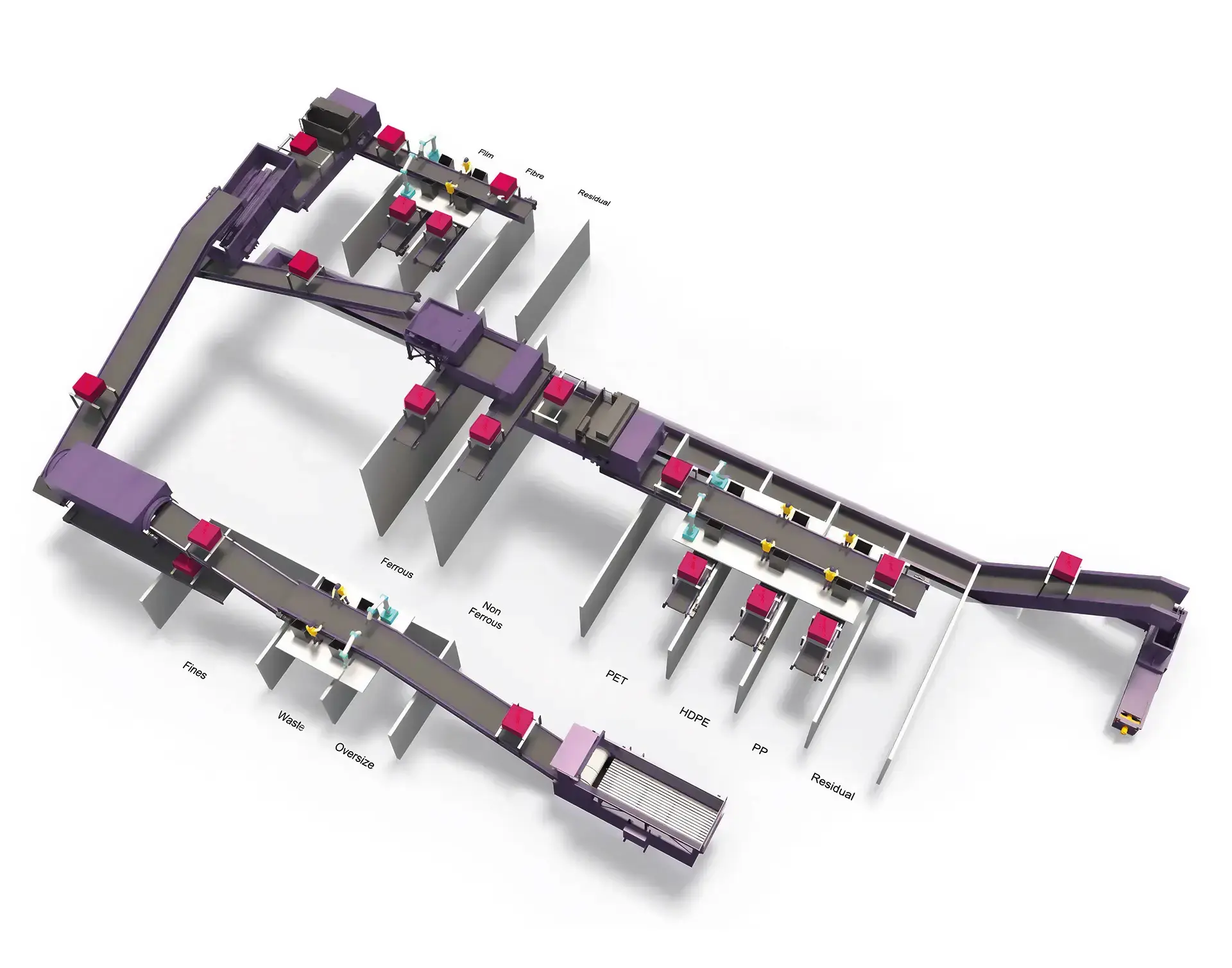
Greyparrot’s official facility diagram shows several analysis points across different material streams. It does not mean every customer deploys this complete configuration.
One output line can answer a quality question. Multiple measurement points can compare input and output more broadly. The number of licenses is therefore connected to how much of the plant a customer wants to understand, not merely how many office employees need to log in.
Greyparrot currently says more than 300 Analyzers operate across more than 65 recycling facilities in over 20 countries. Those are company-reported deployment figures. Three hundred devices do not mean 300 customers, and the numbers do not disclose Greyparrot’s revenue. Official deployment scale
Waste data has also entered the brand owner’s office
In June 2025, Greyparrot launched Deepnest, applying data from recycling facilities to a second question: after a brand designs a package and consumers discard it, does that package reach the correct sorting stream?
A plant wants to know how much valuable plastic escapes from a line. A brand wants to know why its bottle, label, or pump is rejected during sorting. Deepnest provides analysis by brand, material, and region, supplementing rather than merely repeating a laboratory judgment that something is theoretically recyclable. Deepnest launch announcement
In May 2026, consumer-health company Kenvue and Deepnest announced a collaboration. They planned to use data from recycling facilities in the United Kingdom and United States to study how components such as labels and pumps affect sorting, and to simulate the consequences of changes in material or transparency. This is an announced direction for the collaboration, not a report that Kenvue has already redesigned packaging or measured a completed outcome. Kenvue collaboration announcement
The purchasing reason has consequently expanded. A production manager pays for information that improves today’s blending and reduces material loss. A packaging team needs evidence for decisions about the next version of a product.
That expansion also creates the next sales problem. A plant needs a report showing where material is being lost now. A brand needs a recommendation about whether to change a label, pump, bottle body, material, or color. Collecting both answers from the same data network does not mean the same report can be sold to every buyer.