
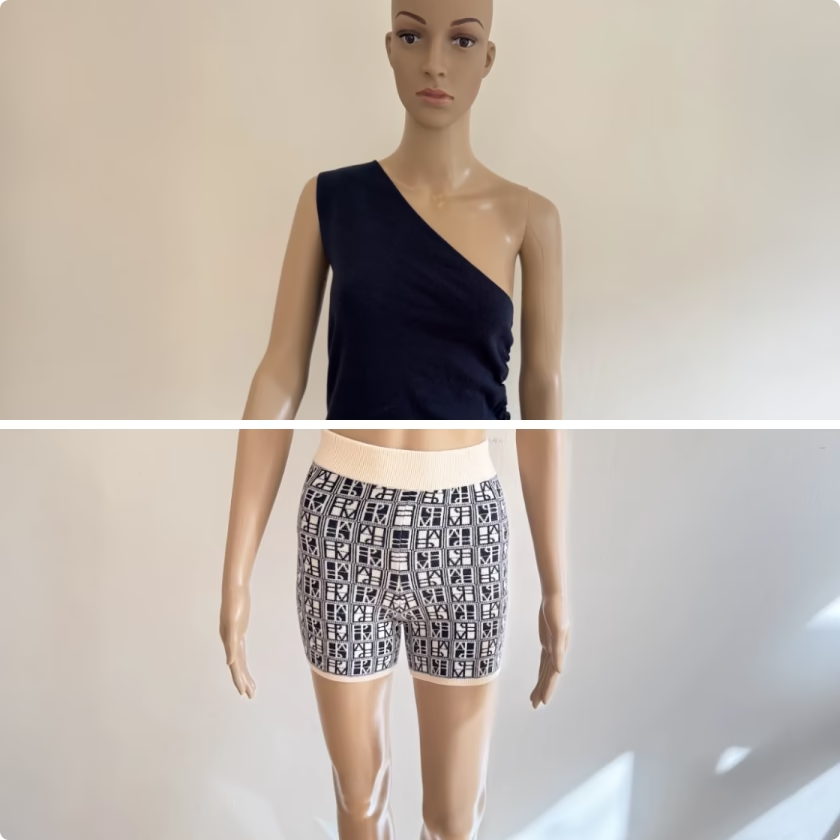
One garment first appears on a plastic mannequin. It then appears on an AI-generated model.
That is the workflow Australian fashion brand JUAN & ME shows in a Botika customer case. The brand gives Botika existing product photos and receives new on-model sales images without organizing a new model, location, and production crew for every asset. According to the vendor case, a process that previously took four to six weeks fell to less than 24 hours. JUAN & ME customer case
| Customer input | AI-generated result |
|---|---|
 |
 |
The original product photo and generated result published in Botika’s JUAN & ME case.
Botika’s business is to turn garments that already exist into new sales images. A fashion brand can change the model or setting, or convert a flat-lay or mannequin photo into an on-model presentation.
In an interview published in August 2025, co-founder and CEO Eran Dagan said the company’s revenue had reached nine times its level a year earlier and its customer base had reached eleven times its prior level. In December 2025, Botika separately said it had passed 3,000 active paying customers. These are company-reported figures, not audited public results. CEO growth interview Botika’s 2025 review
Merchants are not paying only for an impressive-looking AI image. Product pages, social posts, and wholesale catalogs all wait for usable assets before a launch can move forward. When the images are not ready, downstream work waits too.
The garment is real even when its presentation is rebuilt
Botika does not begin with a complex prompt and ask the model to invent something vaguely similar to a product. It begins with a photo of the product that the merchant already sells.
When a garment is already on a person, the user can select a different model and background. When only a flat-lay is available, the workflow first identifies the product, then lets the user choose a model, pose, and scene before reviewing the output. Botika’s tutorial also asks users to spread sleeves, reduce wrinkles, and keep lighting even when they photograph flat-lay inputs. Official workflow tutorial
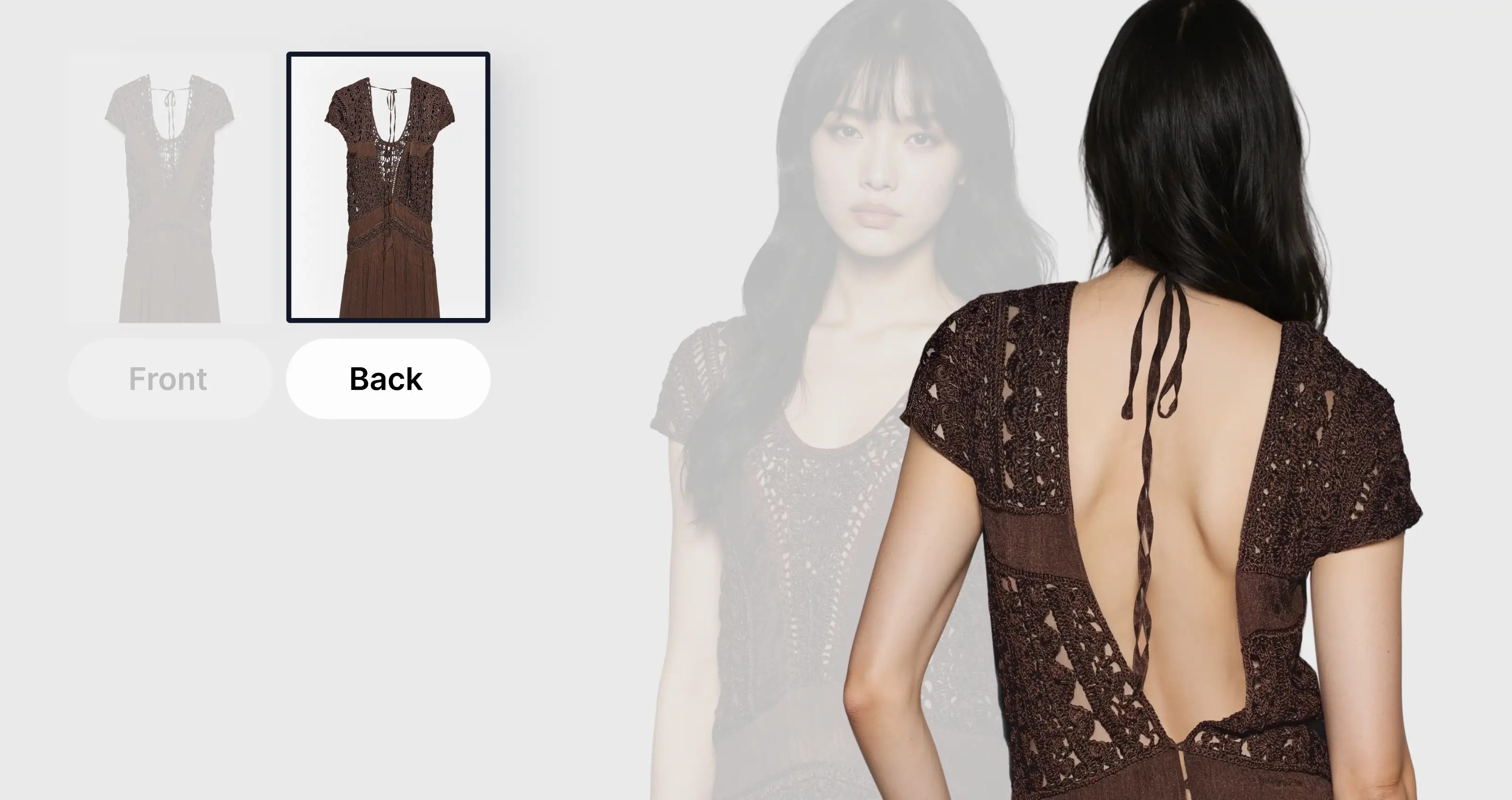
From flat-lay product photos to on-model presentation. Source: Botika’s 2025 product review.
In 2025, Botika moved its flat-lay-to-model feature from beta into full production. The change lowered more than the cost of arranging a shoot. A brand could reuse the flat-lay photography process it already understood as an input instead of first finding a person to wear every garment.
But the ability to change a model does not mean the garment can change without consequence. The buyer receives a physical product. Its neckline, print, seams, and fabric details are the parts the image must represent faithfully enough for commercial use.
Customer demand doubled, so the company expanded its retouching team
Fast growth did not automatically make delivery effortless.
In a September 2025 FashionUnited interview, Dagan recalled that the customer base had doubled in a single month the previous December. The company became overwhelmed and had to expand both its internal and retouching teams while investing in infrastructure. He also acknowledged that Botika had failed to meet some customers’ expectations during that period. Interview on growth and delivery pressure
That operational detail matters more than the claim that AI can produce an image in minutes. Generating one attractive picture and reliably delivering a catalog batch that can go live are different jobs.
Botika’s own tutorial exposes the work between those points. If a user finds a problem with a hand, garment edge, or other detail, the user can request a correction. Botika says its team reviews the request and regenerates the image. The official example below focuses on a neckline issue rather than whether the model’s face looks appealing.
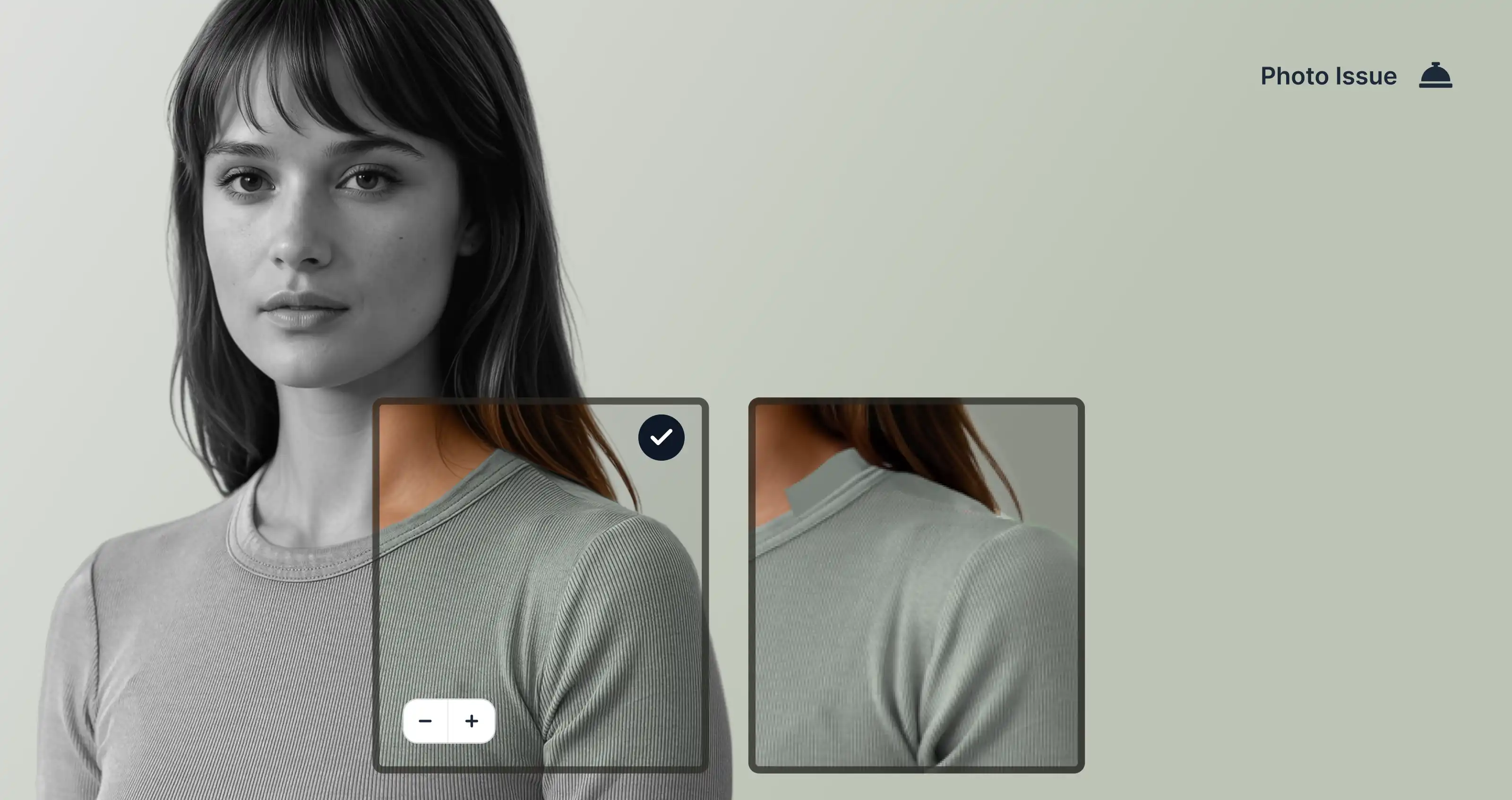
Garment details are part of the deliverable. Source: correction example in Botika’s official tutorial.
AI removes part of the coordination involved in a traditional shoot, but it does not remove responsibility for quality. For a merchant, detecting and fixing a problem can be as important as the speed of the first generation.
Credits pay for generation, while plans also sell revisions and review
Botika charges through subscriptions and credits. Its current pricing page says one generated photo consumes one credit and one generated video consumes five. Under that rule, four images and one video for a product require nine credits. The calculation describes usage, not a nine-dollar price. Botika pricing rules
This maps consumption to the merchant’s catalog. The purchasing question is not merely how often someone wants to use AI. It is how many products are in the next launch and how many assets each one requires.
Plans differ on more than generation volume. Annual plans list revision allowances for each image. The enterprise offer adds dedicated models, branded backgrounds, custom retouching requirements, and a team that reviews images.
| Delivery stage | What the merchant receives |
|---|---|
| Generate images and video | Turn existing product photos into new presentation assets |
| Request a correction | Identify a problem for review and regeneration |
| Enterprise quality and brand requirements | Check whether a batch fits the brand’s style and delivery standard |
Product-page images are not independent artworks. They must sit beside every other item in a seasonal catalog. Consistent models, lighting, and composition affect whether the whole batch can be used without another production pass.
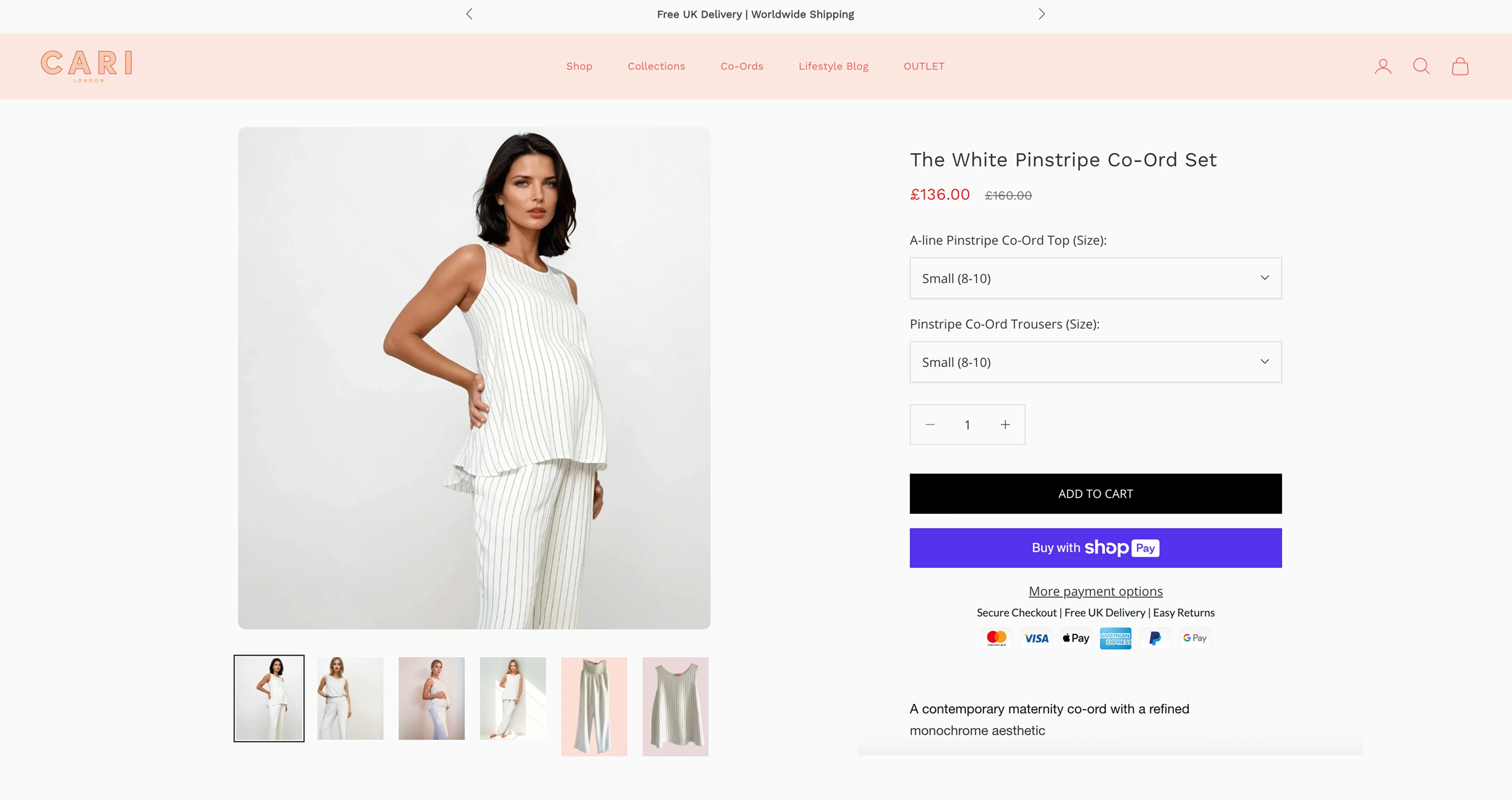
The historical CARI example shows generated output reaching a sales page instead of stopping in an image library.
This means Botika’s cost cannot be understood through GPU usage alone. When customers hand revisions and quality review to the vendor, the company also accepts the labor attached to those promises. Whether the next phase of growth becomes operationally lighter will depend not only on how many credits Botika sells, but also on how many times each catalog batch must be reworked.