

The team at sports publisher Sportskeeda used to add captions to videos with Adobe. Taking one video from raw material to a finished result often required between 90 minutes and two hours.
After seeing creators use Submagic on YouTube, the team brought the AI editing product into its production process. According to a customer case study published by Submagic, production time fell to roughly 30 to 35 minutes per video, and the team now makes more than 2,500 videos a month with the product. These are vendor-published customer figures, not an independent benchmark for every editor. Sportskeeda customer case study
Submagic is not trying to generate a film from nothing. It helps turn footage that already exists into short videos that are ready to publish.
In a June 2025 interview, co-founder David Zitoun said Submagic had reached $8 million in annual recurring revenue with 13 employees. ARR is the annualized value of the subscription run rate at that point. It is not cash collected during a completed year, and it is not profit. The number was reported by the founder rather than independently audited. Founder interview
One part of the company’s growth model fits the product especially well: people who know how to use a video tool can also earn money by demonstrating and recommending it.
The finished video is the shortest sales demonstration
Submagic began with a narrow job: adding styled captions to talking-head short videos.
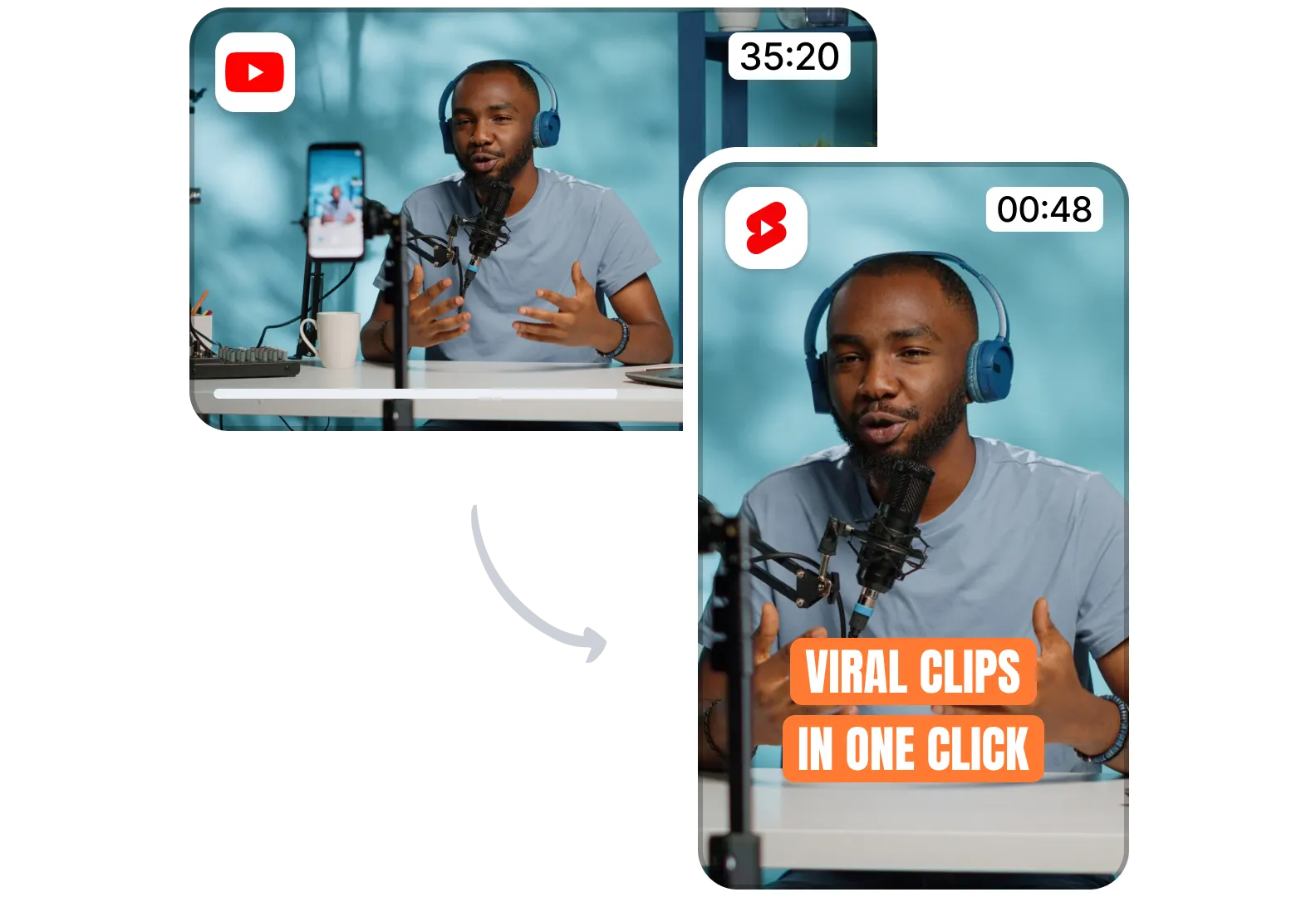
That product does not require a long explanation of speech recognition or editing models. Place an untreated clip beside the processed result and viewers can immediately see the captions, emphasized words, and changes in pacing.

The same source footage before and after processing. Source: excerpt from Submagic’s official demonstration video.
In an interview with SaaS Club, Zitoun recalled using a new TikTok account with no audience to publish product demonstrations during the company’s early days. One video received about 100,000 views and brought in the first 40 to 50 paying customers. He then recruited roughly 50 to 70 creators to continue making promotional videos. Early customer acquisition
The approach worked for more than the generic reason that short video attracts attention. Submagic’s customers already make short videos, and the most persuasive explanation of the product is also a short video. Using the tool, demonstrating it, and distributing the demonstration do not require three different groups or three different media formats.
That alignment gives a small company more chances to show the product in the context where a buyer would use it. A creator can explain a workflow, publish the finished result on the same channel, and send viewers to the product without translating the value into a conventional software advertisement.
The affiliate earns a share of the subscription, not a one-time fee
Submagic offers affiliates a 30% recurring commission. When a customer subscribes through a referral link or discount code, the affiliate can continue receiving a share of the associated subscription rather than collecting only a reward for the first purchase. Official affiliate program
This changes the creator’s role. Instead of accepting payment for one sponsored post, an affiliate can publish tutorials, show editing results, and direct people with the same production problem to a tracked link.
Commission alone does not create demand. Submagic also supplies promotional materials, automated email support, and discount-code tracking. It uses FirstPromoter for attribution and affiliate invoices instead of building every part of the payout system internally.
A customer case study published by FirstPromoter attributes about EUR 1.636 million in cumulative revenue to the program. That figure is cumulative attributed revenue for this channel, not Submagic’s total annual revenue. The page does not state a period that would support annualizing the number, and the report comes from the affiliate-platform provider rather than an independent financial review. FirstPromoter customer case study
The operating advantage is the ability to borrow creators’ continuing production capacity. A 13-person company does not need to make every demonstration internally, localize every variation itself, or produce a separate piece of content for every audience segment.
Recurring commission can also keep an affiliate interested after the first post. Its limitation is equally important: the economics work only while referred users remain subscribed. A channel that efficiently creates trials or first payments does not automatically solve product retention.
From adding captions to finding clips
A tool that edits a short video after it has already been cut addresses only the later part of production. Magic Clips moves earlier in the process. A user can upload a long video or provide a YouTube link, let the AI identify candidate clips, and then adjust the framing and captions. Magic Clips product page
Long-form content becomes a set of short-video candidates. Source: Submagic’s official product material.
The workflow is easy to understand for podcasts, interviews, and tutorials. A creator does not have to plan and record every short video separately. Existing long-form material becomes the source from which new pieces can be selected and republished. The AI proposes candidates; the creator still decides what to use and how to edit it. A clip recommendation is not a guarantee that a video will become popular.
Sportskeeda’s case study describes more than caption generation. Long-video clipping, reframing for different aspect ratios, and integration with the publisher’s internal system are part of the workflow. When a team produces thousands of videos each month, removing one repeated step can save time every day rather than only during a one-off experiment. Media production workflow
At the time of this review, Submagic’s public US-dollar pricing was per member. Annual prices below are the monthly equivalents shown for annual billing.
| Plan | Monthly billing | Annual billing, monthly equivalent |
|---|---|---|
| Starter | $19 | $12 |
| Pro | $39 | $23 |
The plans also differ by video credits, duration limits, and features. Paying a monthly fee does not provide unlimited production across every tier. Official pricing
Moving from captions into clip selection expands the amount of work the product can capture. It also raises the standard for usefulness. A caption tool can succeed by making a visible output faster. A clipping assistant must repeatedly find source segments that an editor considers worth publishing.
Fast acquisition does not guarantee that users stay
The $8 million ARR figure is not the whole story. In the same June 2025 interview, Zitoun said monthly customer churn was about 15%. In his explanation, roughly 15 out of every 100 customers present at the beginning of a month would leave by the end. The metric refers to customer count, not a claim that the company lost 15% of its revenue each month. Churn definition and reported figure
Some customers try an AI editor once. Others stop making videos after finishing a small batch. Affiliate distribution can bring these people into the product, but it cannot create a continuing need to publish.
That is why a user such as Sportskeeda is useful to examine. The team did not arrive with one isolated editing task. It already had a production line that continuously generated new footage. Once the tool sits inside captioning, clipping, reframing, and internal handoff, the next batch of material creates another job for the product.
For builders of AI tools, acquiring the first payment cheaply and acquiring a customer who still has work next month are different achievements. A demonstration video can prove that the product is worth trying. Recurring production work gives the subscription a reason to continue.