
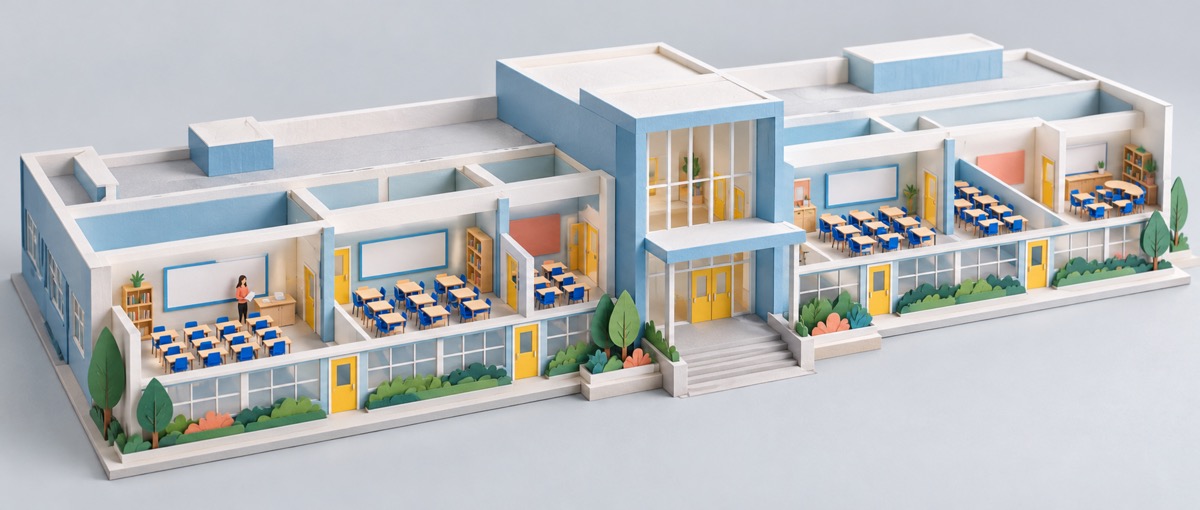
Ninety-seven teachers were already using the free version, yet their district still approved a one-year purchase worth $22,260.
The vendor was Brisk Teaching, an AI product that creates writing feedback, quizzes, and teaching material inside tools such as Google Docs. On June 18, 2026, the school board of Pennsylvania’s Haverford Township School District approved contracts for Brisk and another AI tool by a 5-3 vote. Local reporting documented both the number of existing teacher users and the value of the Brisk contract. Report on the purchase
If teachers could already use the product for free, what was the school buying?
The answer sits in two different workplaces. A teacher has an assignment that needs feedback. A district has many teachers who have already begun using AI.
Start inside the document a teacher already opened
Brisk does not require teachers to migrate all of their instructional material before they can begin. Its browser extension works in Google Docs, Slides, web pages, and PDFs, while its web product handles batch jobs such as an entire class’s assignments. Brisk FAQ
For writing feedback, a teacher can specify the grade level, rubric, and focus of the assignment, then let the AI draft comments. Those comments are not automatically sent to students. The teacher reviews, edits, and approves them before they appear on student work. Brisk feedback feature
In October 2025, Brisk expanded a workflow that previously handled one document at a time into batch feedback. A teacher can import a folder of work from Google Drive or Google Classroom and choose the type of feedback without reorganizing the files first. Batch feedback announcement

Generation is not the same as approval. Image source: Brisk’s official tutorial.
The most revealing part of the design is not the batch operation. It is what happens after the batch finishes.
An official tutorial updated in October 2026 states that teachers cannot approve feedback directly from the assignment overview; they must open and review each assignment first. The individual assignment view places the original work and feedback side by side, with the approval control at the top. A teacher can also regenerate or insert feedback. Brisk batch feedback tutorial
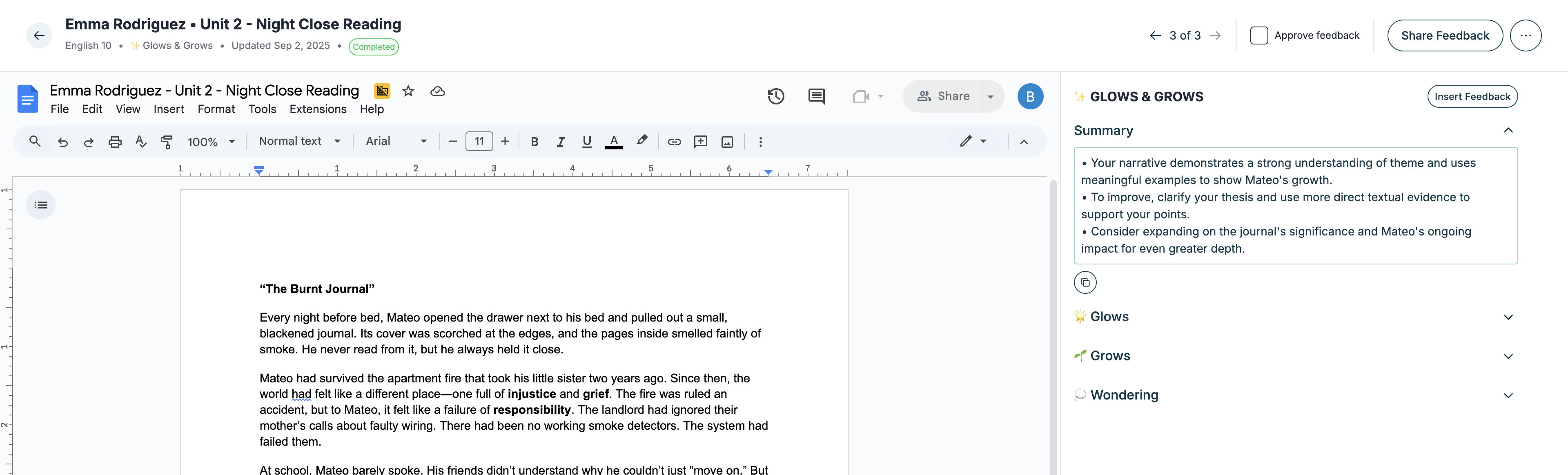
AI drafts the response, but the teacher still has to inspect this assignment. The image is an official tutorial example, not student work uploaded for this article.
That interaction preserves an important distinction. Removing repetitive typing does not remove teacher judgment. The AI output enters an existing review action instead of becoming the conclusion a student receives automatically.
A tool one person can use and a system a school can manage are different products
Brisk still offers a free teacher plan. Its paid Premium and Intelligence plans target schools and districts through custom pricing. They add more than usage capacity: administrators get visibility, instructional standards configuration, training support, and deeper curriculum integration. Brisk plans
| What the user needs | What Brisk provides |
|---|---|
| One teacher: How can I respond to this assignment faster? | In-document tools, draft feedback, and material generation |
| A school administrator: How can classrooms use one system consistently? | Tool management, usage dashboards, instructional standards, and training |
| A district: Can generated material connect to the local curriculum? | Configuration for curriculum resources, pacing, and instructional plans |
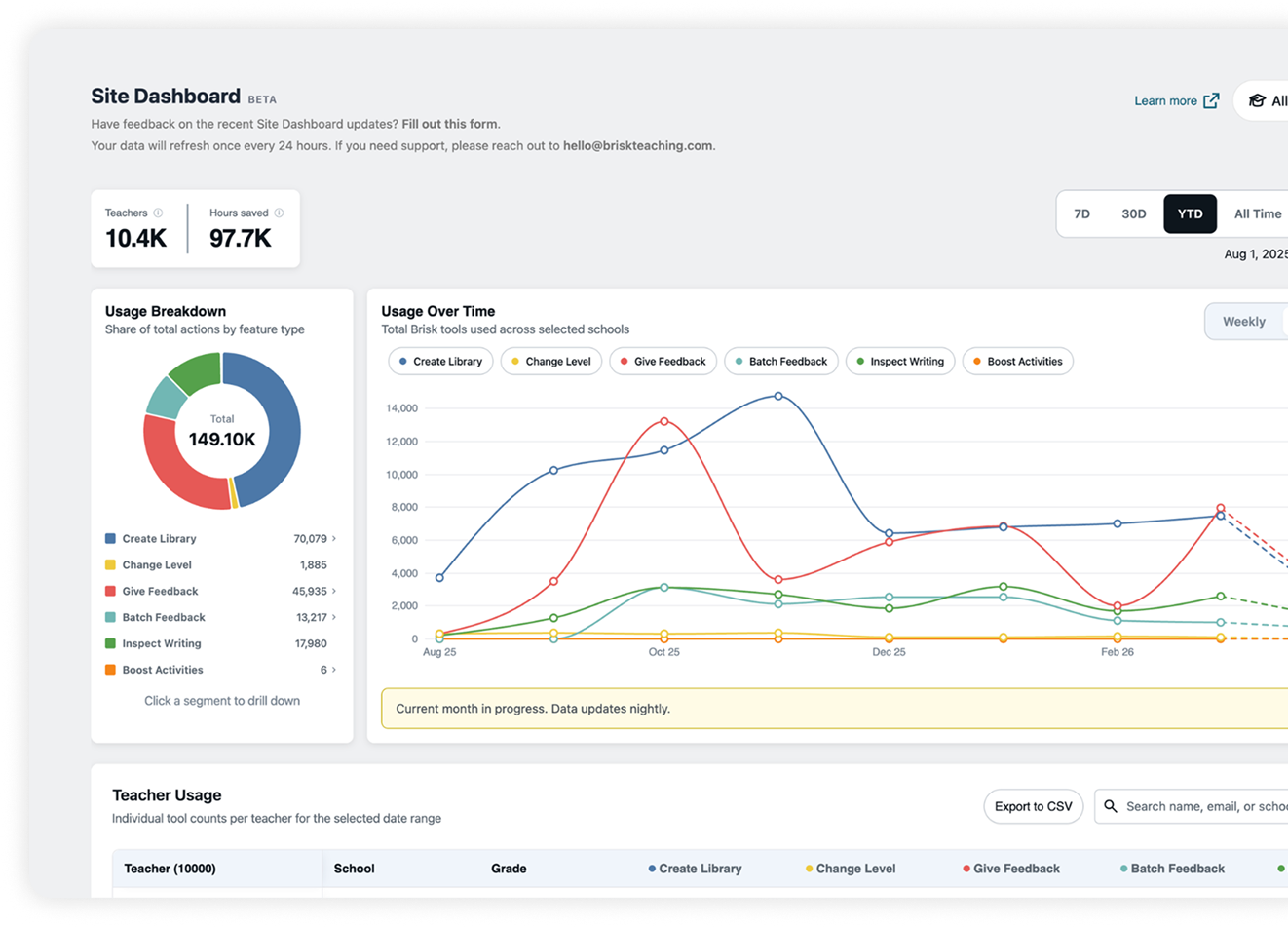
The administrative view shows usage across teachers. Image source: Brisk’s plans page; the sample values do not represent the district discussed in this article.
This also explains a pricing choice that may initially seem counterintuitive. Although teachers operate many of the features, Brisk prices school access by student enrollment. The company says district budgets are commonly allocated per student, and this model allows every teacher in a building to receive access instead of limiting the product to selected subjects. Brisk purchasing information
The free plan helps one person begin. The school plan addresses how an organization supplies, uses, and manages the product consistently. Those needs are related, but the paid product is not simply more copies of the same chat box.
In the Haverford purchasing discussion, one rationale from the district’s technology leader was not to introduce teachers to AI for the first time. It was to bring already scattered use of free tools into a more organized arrangement. The board also heard parent concerns about learning, screen time, and the boundaries of AI use. Coverage of the board discussion
The contract therefore demonstrates a willingness to pay for organization-wide use. It does not establish that AI improved student outcomes, and it does not represent all of Brisk’s revenue.
Teachers create demand, while procurement channels make the order possible
Between one teacher deciding to try a product and a district purchasing it lie budgets, quotations, and vendor selection.
Brisk has extended its route to market into education procurement networks. The Educational Service Centers of Indiana lists Brisk as a partner and offers members a 36% discount. That is a verifiable procurement channel, not an assumption that every partnership logo represents a completed sale. Indiana education service center partnership
Brisk also provides a ready-made email template for teachers who want to recommend the product to an administrator. The teacher describes the experience, the administrator attends a demonstration, and the vendor follows up. This is the sales path Brisk designed, not evidence that every district follows the identical sequence. Brisk administrator referral flow
For builders of AI education products, the important part of the Haverford contract is not that $22,260 is an enormous number. It is that the purchase happened after 97 teachers were already using the product for free.
User acceptance does not remove the need to give the buyer a reason to pay. Brisk made that reason management, curriculum configuration, and school-level service, rather than a stronger model alone.
Visit Brisk Teaching through the original article link.