

Vocal Image founder Nick Lahoika spent several weeks learning to pronounce the letter V in his own company name clearly.
He had recently moved to Europe and needed to pitch investors in English, a language he did not yet speak comfortably. In a 2025 interview, he recalled practicing for several hours every day with an early version of the product. The workflow was simple: watch a demonstration video, repeat it, record the result, and listen again. Interview with Vocal Image’s founder
Today Vocal Image puts that practice loop on a phone. It analyzes a voice, schedules guided exercises, and lets AI play the other side of a conversation.
The reported scale is substantial. In February 2026, IT Brief relayed the company’s statement that annual recurring revenue had reached $16 million. ARR describes the revenue run rate at that point; it is not the same as revenue already recognized over a completed year. Report citing Vocal Image’s disclosure
Paying users come from a different date. The company told TechCrunch that it had about 50,000 paying users in August 2025. TechCrunch report on Vocal Image
Everyone speaks every day, so why pay for an app to practice? The answer is easier to see in the structure of one exercise than in a feature list.
Can the user hear a difference after practice?
Vocal Image’s official media kit demonstrates an exercise called Yawn HA. The user does not begin with a page of vocal theory. The app presents an action: relax the lips, open the jaw slowly, and follow a demonstration. Vocal Image media kit
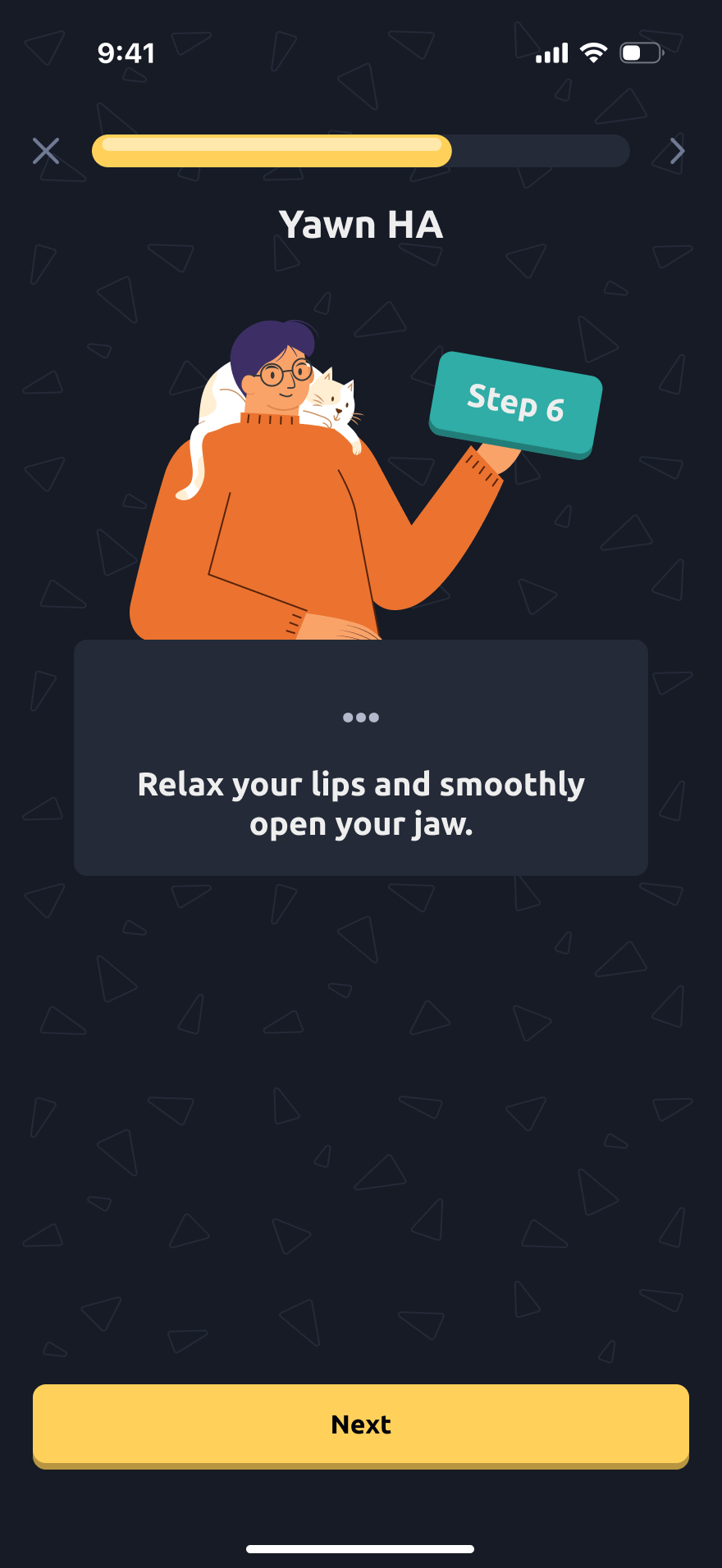
A lesson begins with a specific physical action. Image source: Vocal Image media kit.
The next screen shows a pitch curve and countdown with a prompt to watch and repeat. The user must actually make a sound and follow the example rather than tap a button that says the lesson is complete.
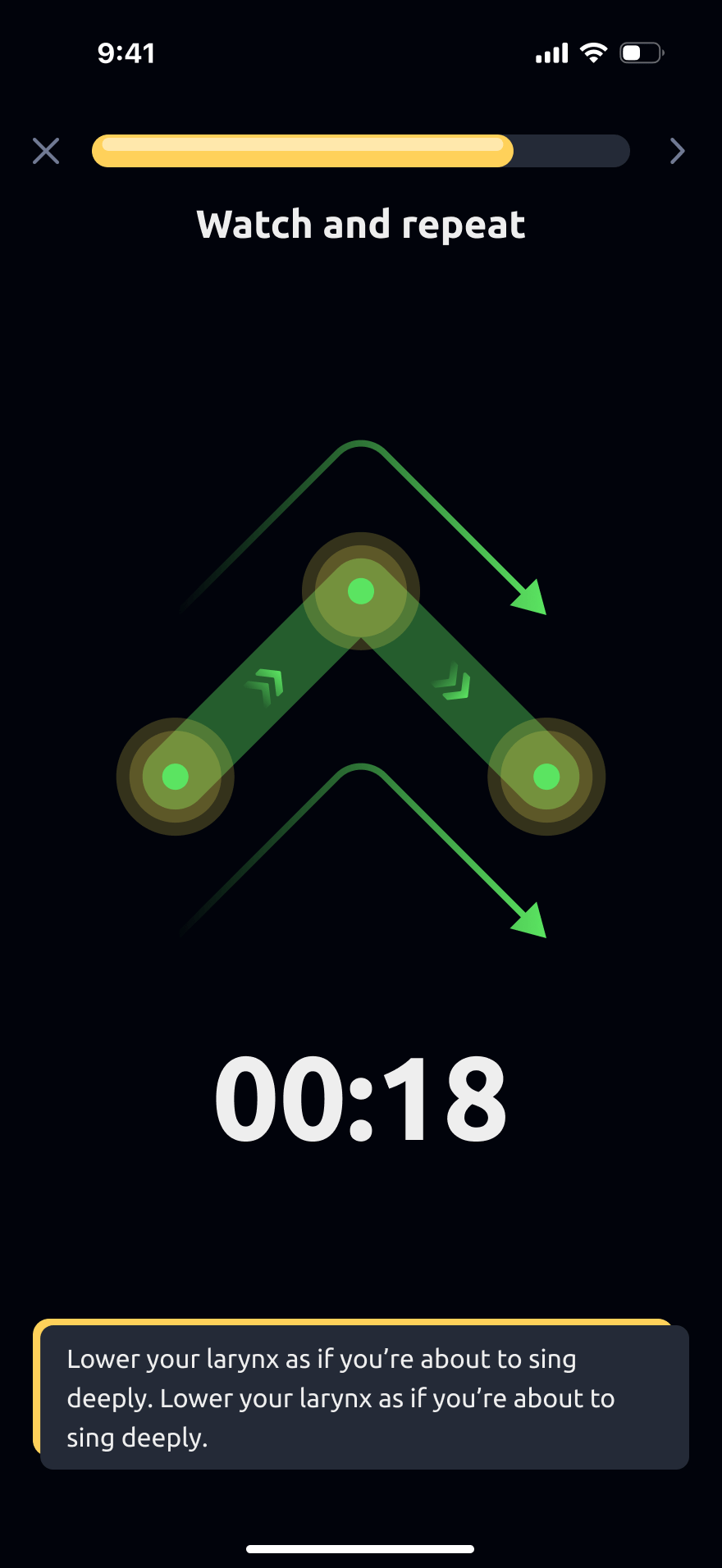
The learner repeats a demonstration instead of only listening. Image source: Vocal Image media kit.
The most revealing part of the demonstration is the playback screen. It keeps recordings from before and after the exercise in the same interface, and the user can play both. A change does not have to be explained entirely by one composite score. The learner can hear it. Vocal Image recording playback
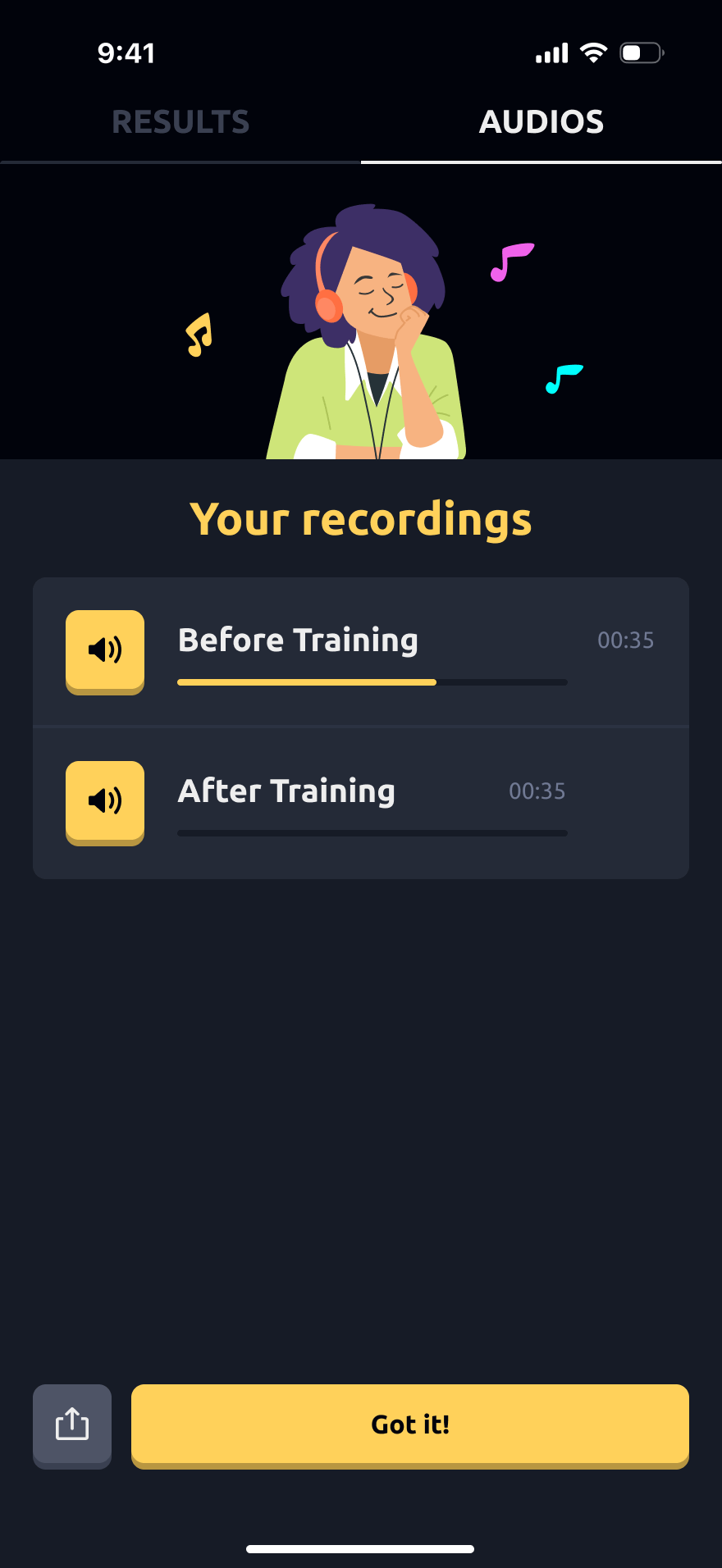
Both recordings remain available for playback. This official demonstration is not evidence that the exercise improved the author of this article.
The website also offers an easier free entry point: a tongue-twister test. The user reads a supplied sentence, and the official flow returns feedback on speed, clarity, and possible improvements. One prompt repeatedly combines English S and SH sounds. Vocal Image tongue-twister test
Practice therefore has a concrete target. Instead of asking someone to become more confident in general, the product lets the person hear one phrase, repeat one action, and inspect the next recording.
From practicing a voice to rehearsing a difficult conversation
Training a voice and preparing for a salary negotiation are not the same problem. The first focuses on pronunciation, pitch, and pace. The second requires the learner to handle questions from another person and decide what to say next.
Vocal Image added AI roleplay in a February 2026 release. Its China App Store listing describes scenarios including interviews, salary negotiation, and customer communication. AI plays the other person and provides feedback after the practice. By September, the product had also added text-only roleplay for moments when speaking aloud was inconvenient. Vocal Image China App Store listing and version history
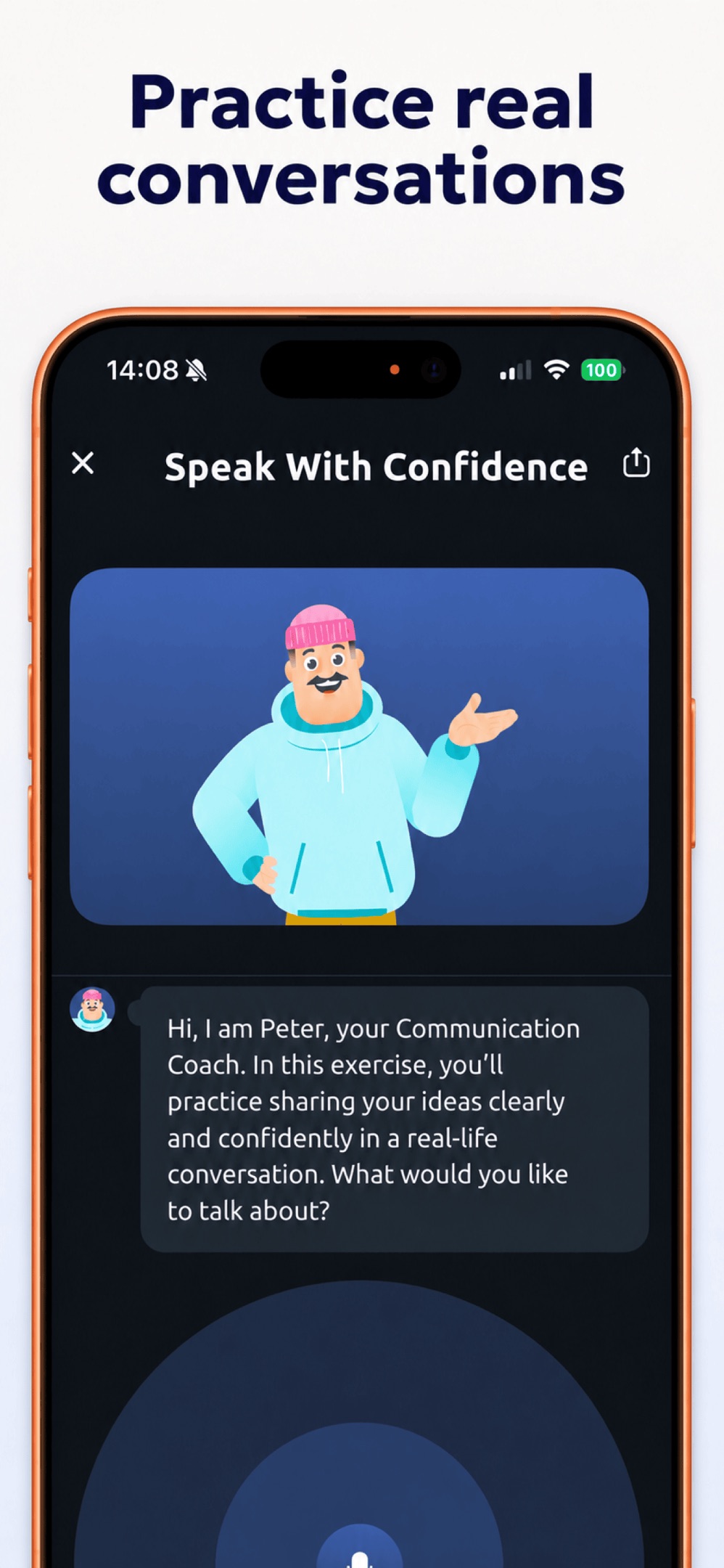
AI does not only give advice; it participates in the conversation. Image source: Vocal Image China App Store listing.
This expands the problem the product tries to solve. Voice training asks whether a sentence sounds clear. Conversation rehearsal asks what happens when the other person responds in an unexpected way. Both now live in one product, and the input has expanded from spoken recording to text.
The payment model follows continued practice. The China App Store page confirms that Vocal Image offers a trial and automatically renewing subscriptions. Paid access centers on training plans, courses, and exercises, while the exact offer is shown on the purchase screen. Vocal Image subscription information
The product is not selling a more polished script. It sells rehearsal that can begin at any time: a demonstration to follow, an action to repeat, a recording to replay, and another character that can answer back.
Community ratings later became useful for another purpose
Vocal Image also lets users place a recording in front of human listeners. In Voice Rating, people upload their voices and other users assign descriptions such as confident or monotonous. This differs from asking an AI model for another score. It captures how a listener interprets the sound. Vocal Image Voice Rating
In 2026, the company applied that listening method to research on synthetic speech. More than 10,000 people evaluated 20 text-to-speech models, recording preferences, skips, and perception labels. Vocal Image has published the resulting report. Vocal Image 2026 text-to-speech study
The research gives community evaluation another use. It can answer not only how a person’s voice feels to listeners, but also how people perceive different AI voices. The work demonstrates reuse of the evaluation method; it does not establish that the company won enterprise contracts from the study.
A first test can satisfy curiosity. To sustain a subscription, the product has to connect that score to a specific exercise and let the learner listen again: what, exactly, changed after this round of practice?