
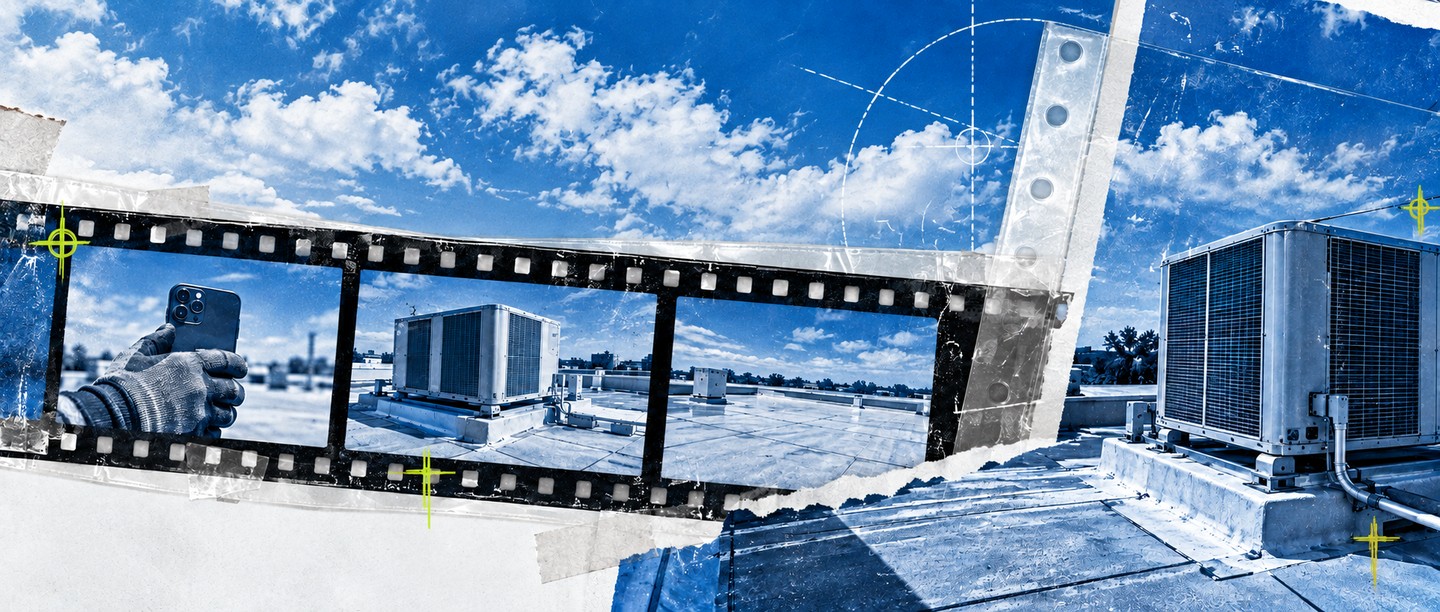
An air-conditioning system had been installed, but four months later water began leaking into the floor below. The contractor was accused of driving screws through the roof, and the estimated damage was about $75,000.
Bob Lange, owner of the US heating and cooling company Guardian, opened CompanyCam, an app that construction teams use to preserve jobsite photos, videos, and work records. He found a video recorded before his crew left the site.
According to Lange’s account in an official CompanyCam customer story, the video showed that the roof was intact when Guardian finished. The investigation later traced the damage to a satellite dish installed by another company. Guardian avoided the loss and went on to win a long-term maintenance contract for the property. CompanyCam customer story
The value of that video became obvious only after a dispute began. Most days, however, there is no accident. CompanyCam is using AI to make the same field records useful during ordinary handoffs, progress updates, and payment.
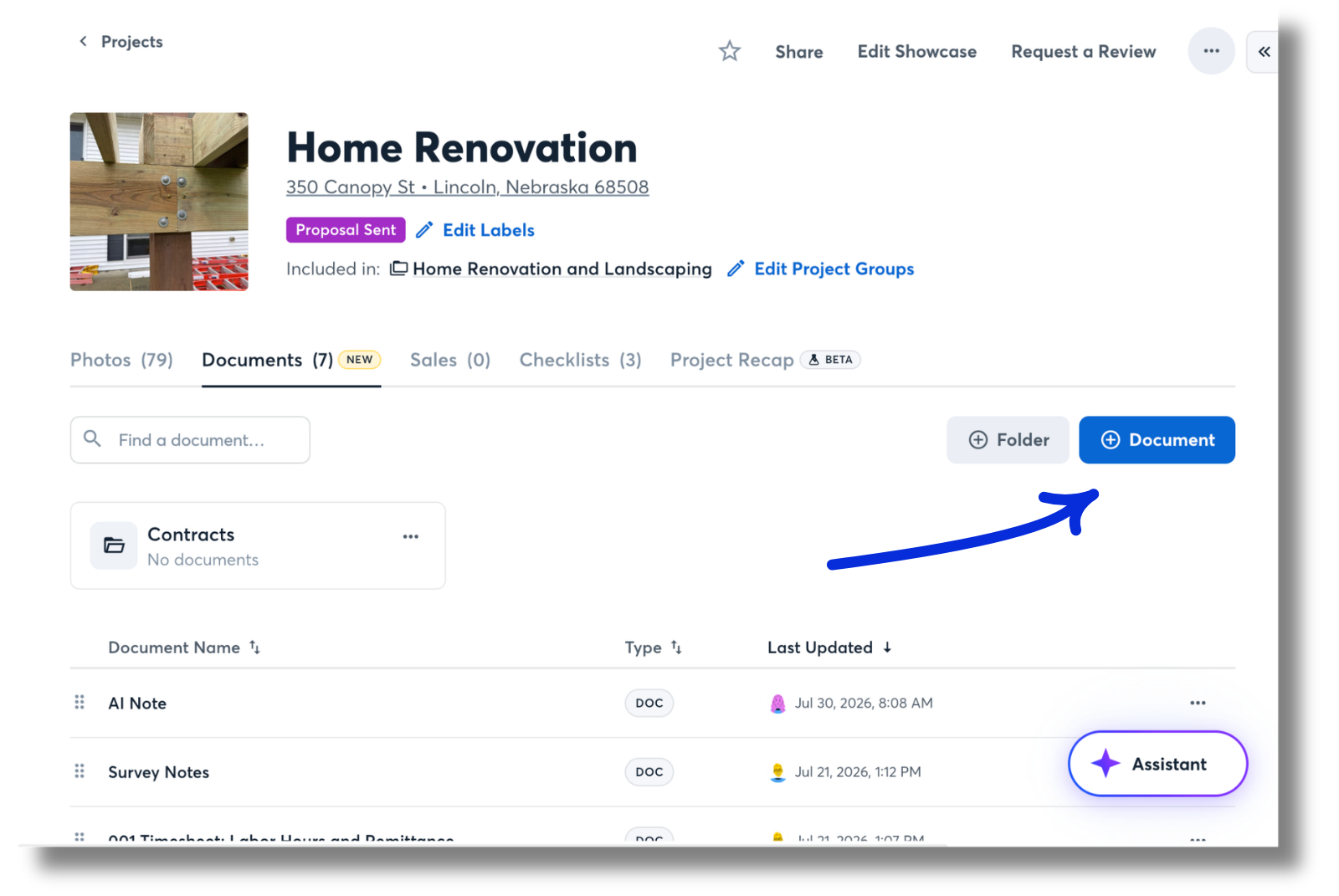
Photos, documents, sales material, and checklists live with the project. Image source: CompanyCam Help Center.
Why an owner pays for more than a free camera
Every phone already has a camera. CompanyCam charges by moving photos out of one worker’s camera roll and turning them into project material that the whole team can use.
The app organizes photos by project location, retains time and location information, and supports annotations, comments, and work notes. The next person on the job does not first have to ask who took the picture or which message thread contains it. CompanyCam App Store listing
That need appears well before a dispute. One person sells a project, another crew performs the work, and the customer may not be present when it is inspected. A single job can pass through several groups. If the photos remain on the photographer’s phone, their usefulness stops there too.
CompanyCam packages this workflow as a business subscription. Its public pricing page lists the annual Core plan at the equivalent of $63 per month for one user, with additional seats and higher-tier features sold separately. In March 2026, the company said tens of thousands of construction and home-service businesses were using its tools. CompanyCam pricing CompanyCam announcement
The buyer is not an individual who occasionally takes a few pictures. It is an owner or team responsible for explaining what happened on a jobsite.
AI removes the need to write everything again
Preserving field evidence solves half of the problem. The other half is turning a pile of photos into a progress update that a customer or office colleague can understand.
A CompanyCam customer story published in September 2026 describes an operator from The Grounds Guys landscaping network. He previously used a video walkie-talkie app to document sites, then replayed the videos later to copy dimensions and notes.
Now he walks the site while taking photos, adds measurements by voice, marks up images, and uses CompanyCam’s AI progress summaries to organize the material. Some franchise operators send those photos through their existing LMN business system with an invoice, allowing an off-site customer to see what was completed. The operator said this reduced the back-and-forth that happened before payment. The Grounds Guys customer story
The AI does not perform the construction. It takes over the work of organizing the field record.
That division of labor is visible in the product. The mobile Walkthrough feature lets a worker take pictures and speak while moving around a site. When the walkthrough ends, CompanyCam creates an editable document that can also become a work checklist. The worker does not have to record one long video and replay it later. CompanyCam AI document guide
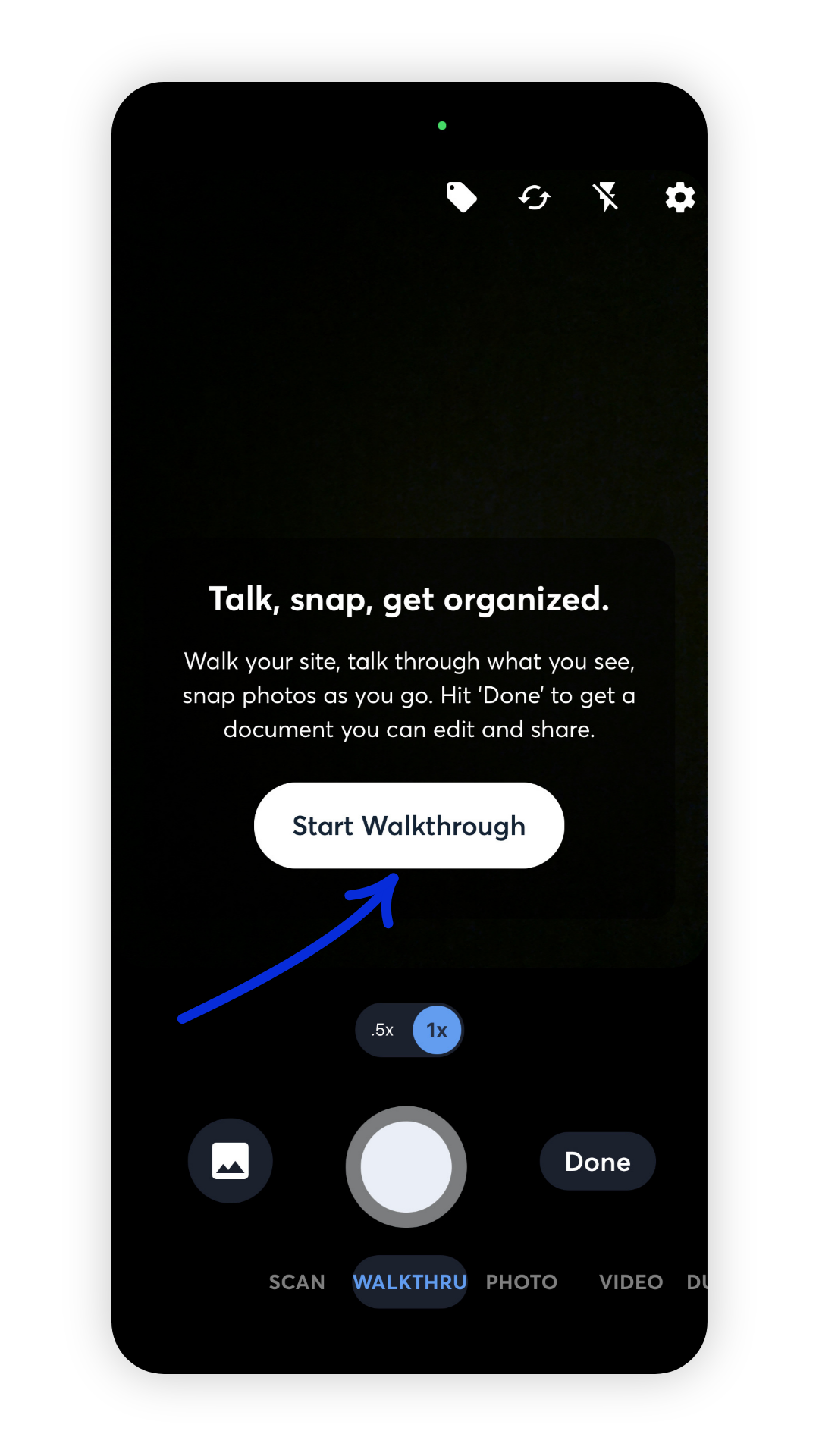
A worker can walk, photograph, and speak before the product organizes the material into a document. Image source: CompanyCam Help Center.
There is an important product choice here. The company does not require a field worker to learn prompt writing. It collects an explanation at the moment the person has already taken out a phone to inspect the site. Location, images, and narration remain attached to the project, so the office receives more than a set of pictures that invite another round of questions.
Photos still cannot replace a clear field explanation. CompanyCam’s documentation says an AI document can be blank when the photos lack enough description. A person must still supply the important details, and the generated result remains editable. CompanyCam AI document guide
Pricing follows depth of use. The public plan comparison lists 100 AI credits for Crew and unlimited AI usage for Scale. For a team that updates several jobs every day, report generation is not an occasional demonstration. It becomes recurring work that consumes capacity. CompanyCam plan comparison
The next destination for a photo is the invoice
CompanyCam did not stop at making reports faster.
In March 2026 it acquired Beam, software for construction estimates and payments. Founder Luke Hansen explained the connection directly in the announcement: CompanyCam helps contractors document work, while Beam helps them win jobs and get paid. The two products continued to be developed and sold independently. CompanyCam acquisition announcement
By September, the integration had a concrete workflow. Project photos and files could move one way from CompanyCam into Beam. A contractor creating an estimate, invoice, or expense record could select those attachments without exporting and re-uploading them. CompanyCam and Beam integration guide
That step matters for builders of vertical software. A customer does not need another demonstration of how polished an AI summary looks. At the moment of estimating or collecting payment, the customer needs evidence that explains the money.
A record product can extend toward a transaction without first replacing every system the buyer already uses. Grounds Guys franchisees carry photos into LMN, while CompanyCam connects project material to Beam. Making an existing record useful in the next business step is itself a route for expansion.