
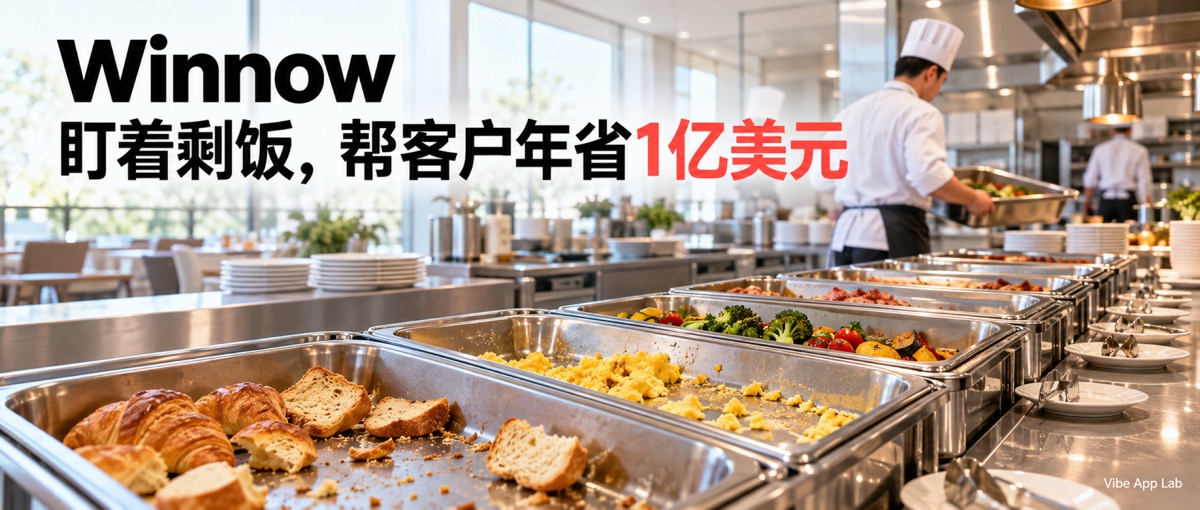
At an Aloft hotel in Shanghai Hongqiao, chef David Jiang used occupancy and the number of guests entitled to breakfast to decide how much food to prepare. But he found that as many as one in ten guests with breakfast included did not actually show up. To avoid running short, the kitchen still made extra food.
The team began using Winnow Foresight in June 2026. According to an interview Winnow published in October, breakfast waste per guest fell 67% during the first two months. The system was not asking guests to eat less. It was helping the kitchen avoid making food that would predictably remain uneaten. Winnow’s Shanghai hotel case study
Winnow has built a business around those leftovers. In its 2025/26 impact report, the company said more than 3,500 hotels, restaurants, and other sites using its technology now save over $100 million in food costs each year. That is Winnow’s estimate of customer savings, not Winnow’s own revenue. Winnow’s 2025/26 impact report announcement
The product is changing, too. Winnow first concentrated on the waste bin, showing chefs what they had thrown away. It is now moving earlier in the workflow and trying to answer a more useful question before service begins: how much should the kitchen make tomorrow?
The cost that procurement records cannot see
Purchasing records can tell a hotel how many eggs, loaves, and vegetables it bought. They cannot directly show which ingredients became breakfast, which dishes went unsold, or how much finished food eventually entered the waste bin.
Winnow’s VisionAI puts a camera and a connected scale where food is discarded. The system recognizes the food, records its weight, and aggregates the observations into reports. Instead of seeing only the number of rubbish bags produced that day, a kitchen can see which foods were wasted, when they were discarded, and what that waste cost. Winnow’s VisionAI and reporting overview
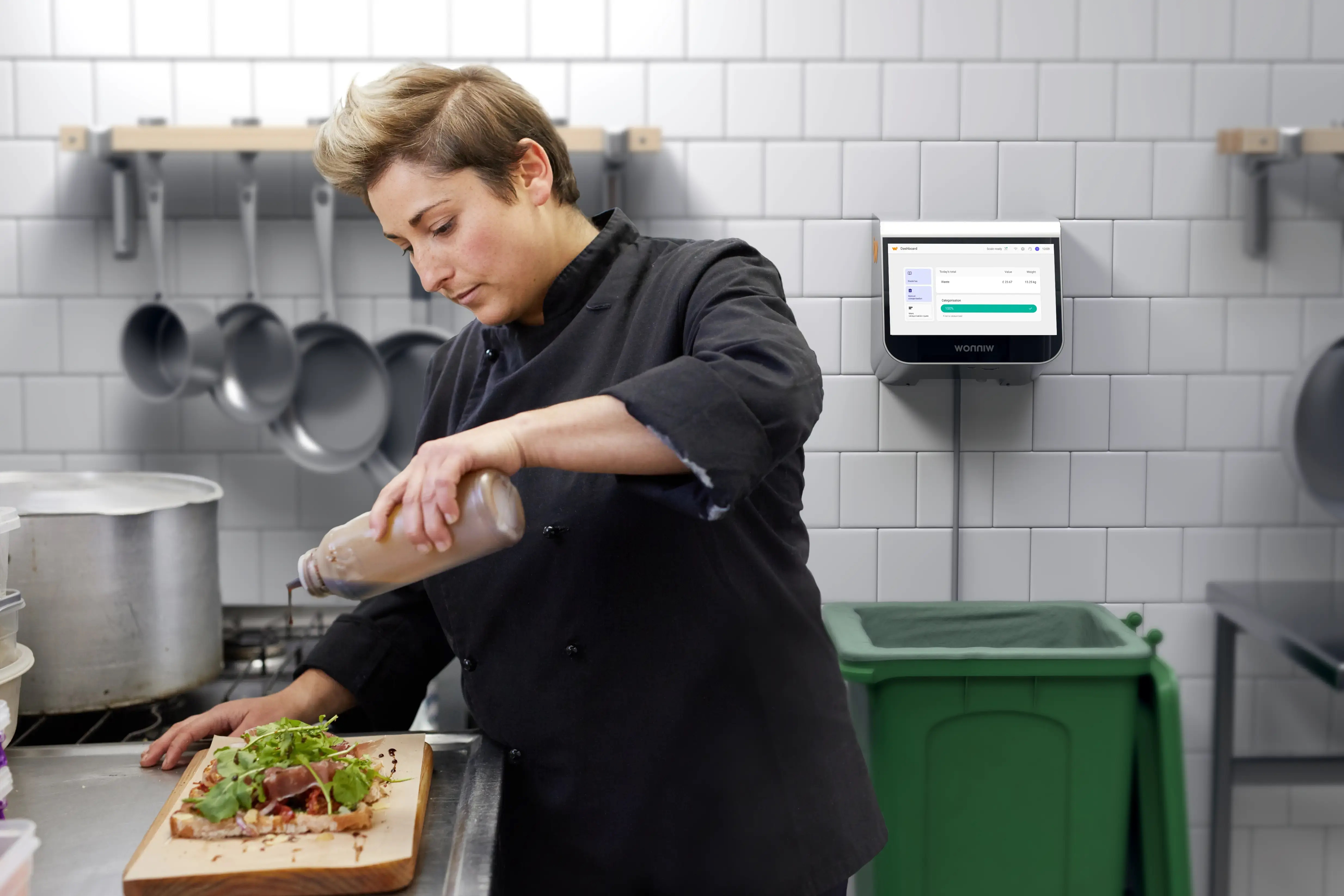
VisionAI records waste at the point where food is discarded. Image source: Winnow’s official website.
Seeing waste does not make it disappear by itself.
Hilton said in January 2026 that its Green Ramadan program with Winnow and other partners had expanded to 45 hotels across 14 countries. The hotels did more than install equipment. Teams reviewed results every week, changed some buffet dishes to live cooking, served smaller portions, and plated bread instead of leaving it for unrestricted self-service. AI supplied the record; kitchen and dining-room teams changed the operation. Hilton’s account of the 45-hotel program
Those details are closer to the reason a customer pays than an image-recognition accuracy score. Avoiding one unwanted tray requires chefs to trust the data and may require the service model to change. Recognizing a discarded plate is not the same as saving the cost of the next one.
A roughly $10,000 annual contract that also includes coaching
For VisionAI, an AWS Marketplace seller pricing document provides one useful reference point: an annual contract for one kitchen site is approximately $10,000, depending on the size and operational complexity of the kitchen. It is not a universal list price for every customer. AWS Marketplace listing for Winnow VisionAI
Winnow’s own pricing page describes a one-time setup charge plus an ongoing subscription quoted per site. Setup includes installation, team training, and initial support. The subscription covers the analytics platform, kitchen reports, and kitchen coaching. Winnow pricing and service scope
That structure explains why the company did not stop at selling a camera and a scale.
A single site needs someone to turn anomalies in a report into changes in production. A hotel group also needs to compare locations and see which kitchens have acted and which continue to repeat the same waste. Winnow Hub provides a cross-site view, comparisons, and continuing reporting. Hardware collects the observations, software makes the changes visible, and service helps kitchens act on them. Winnow product overview
The renewal question is therefore concrete: during the past month, did the system keep helping the kitchen change purchasing and production, or did it merely keep producing charts?
Hotels that do not want equipment can still begin
A complete camera-and-scale system is not the right starting point for every hotel with a smaller food operation.
Winnow formally launched Foresight in September 2026. Developed with Hilton chefs, it is intended for those hotels and converts occupancy information plus historical leftover data into a dish-by-dish production plan. It can be bought as a standalone product or added to an existing Vision deployment, without additional hardware installation. Winnow’s Foresight launch announcement
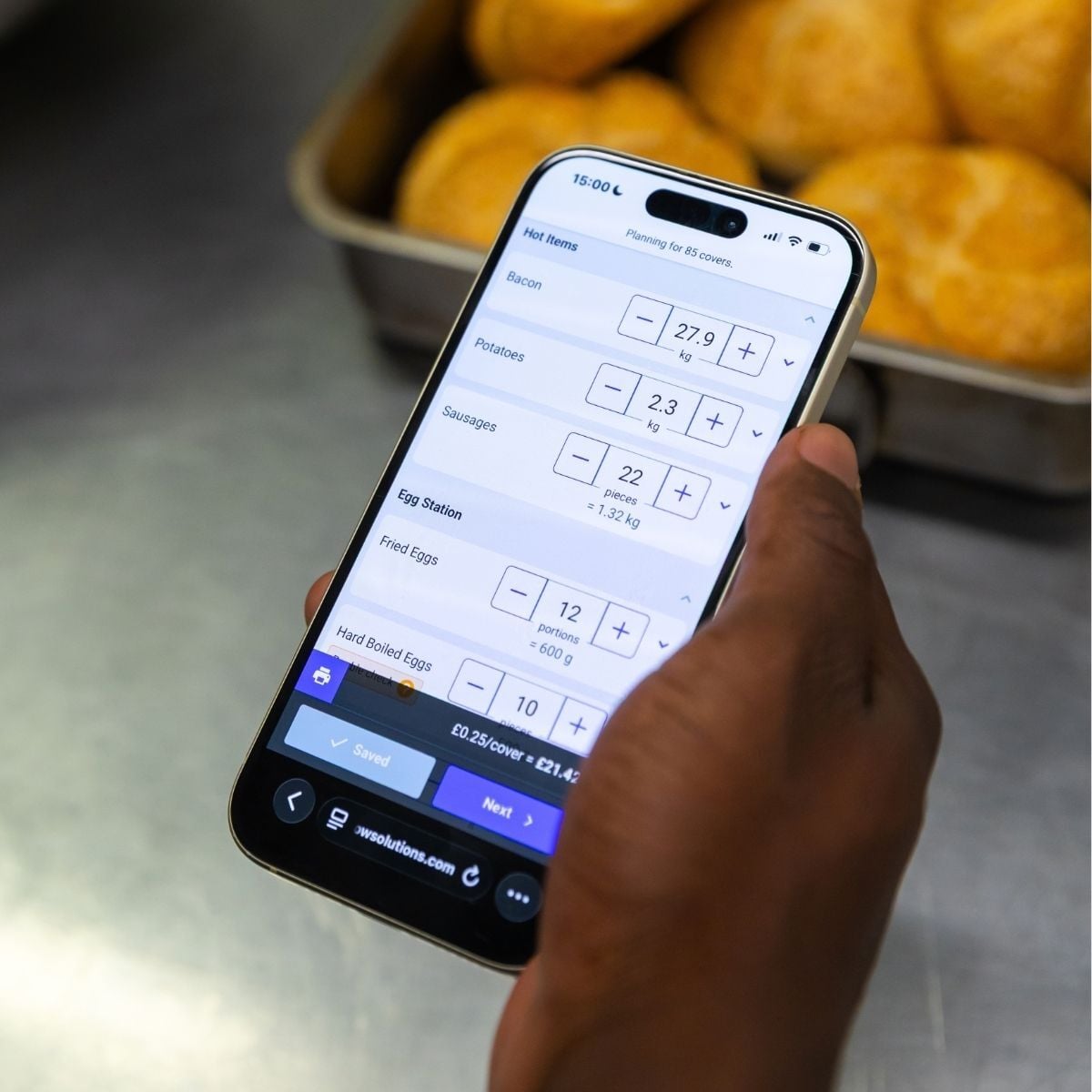
The plan specifies individual foods rather than only a total guest count. Image source: Winnow’s official website.
The workflow has two parts, before and after service. A chef first reviews the production plan for the next meal, edits individual items, and then prints or shares it with the shift. After service, the chef photographs the remaining dishes with a phone. The system estimates how much remains, the user confirms the result, and that observation becomes an input to the next forecast.
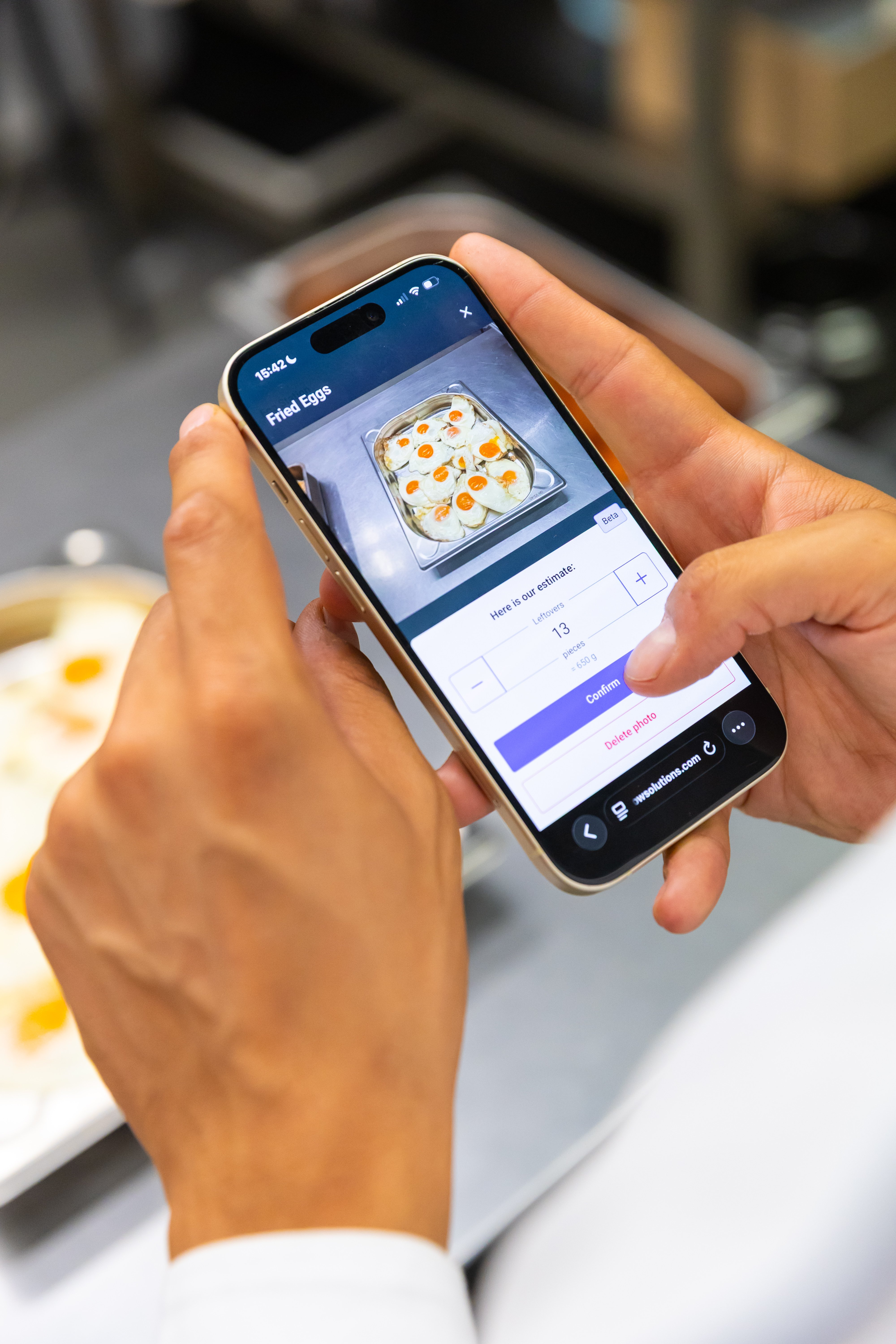
The record made after service becomes an input to the next production plan. Image source: Winnow’s official website.
This is different from telling a chef to make 10% less of everything tomorrow. In the Shanghai hotel case, leftover fried noodles fell 83% and leftover cabbage fell 78%. White-flesh dragon fruit, however, was popular enough that the kitchen needed to prepare more. The objective was not a uniform reduction. It was to allocate a limited amount of production more closely to actual demand. Winnow’s Shanghai hotel case study
Commercially, this widens the set of kitchens Winnow can sell to. Large operations can keep using installed equipment for continuous measurement. Smaller hotels can start with a production plan on a phone. Existing Vision customers also gain a module that is useful before service begins. The company has added another way to enter the kitchen, not merely another chart to an existing report.
Foresight preserves one important action: chefs can override the forecast before handing the plan to the team on duty. AI does not have to defeat decades of a chef’s judgment before it can enter the kitchen. It first has to produce a plan that the chef is willing to adjust and that colleagues can use immediately while preparing the next meal.