

Take a picture of a kitchen, swap in another countertop, backsplash, or cabinet finish, and preview the remodeled room before spending money. Renovate AI began as this kind of visualization app for homeowners. In a 2025 public post, developer Trial and Error said the product had reached $3.6 million in annual recurring revenue without venture funding and was using cash from the consumer business to expand into enterprise sales. ARR is an annualized measure of recurring revenue, not cash collected during the year and not profit. Renovate AI App Store listing Trial and Error company post
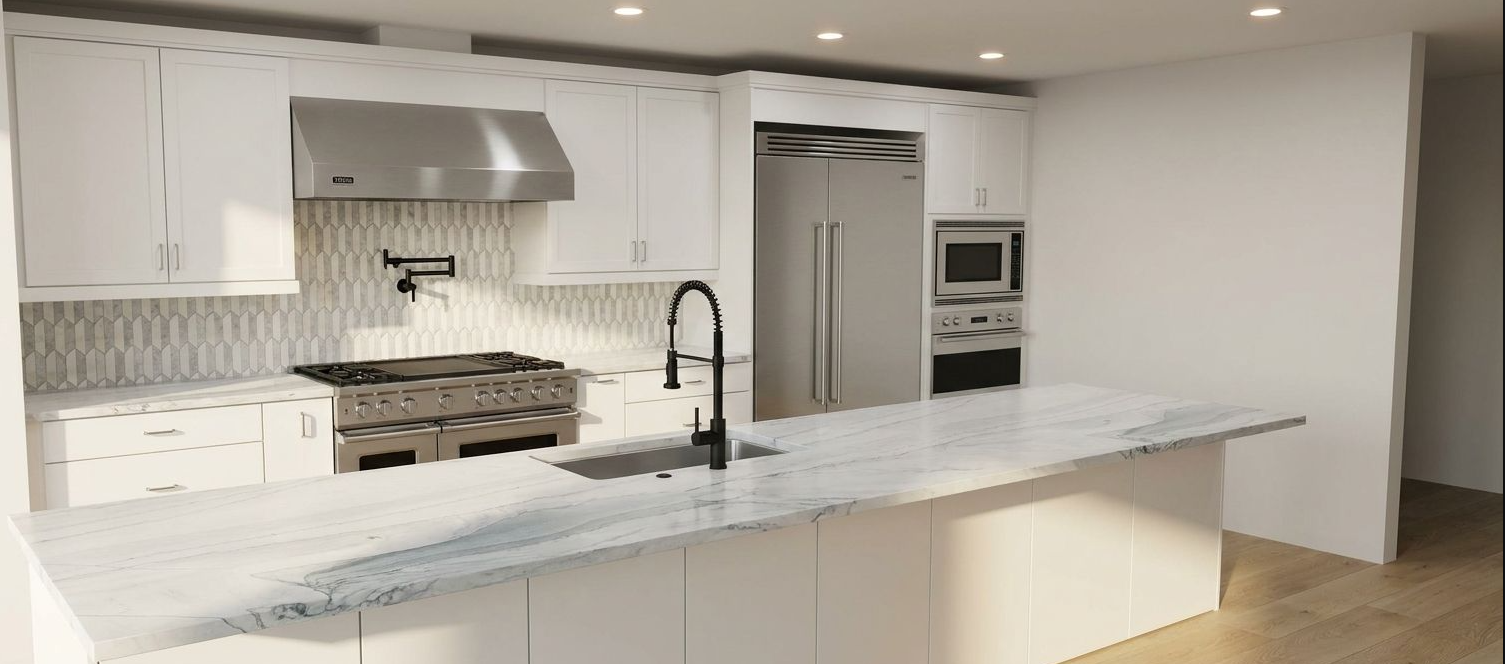
A kitchen visualization from a customer story, not a photograph of completed construction. Image source: Renovate AI.
The interesting part is not merely that customers pay for AI remodeling pictures. A homeowner uses the image to choose a look. A material supplier or design company needs the same generation capability to help a buyer select a specific product it can actually sell.
Moving from “show me a nicer kitchen” to “help the customer choose this countertop” requires more than adding an enterprise pricing page. It requires a different transaction workflow.
Start by Charging Homeowners, Not by Chasing Large Accounts
Trial and Error described an order that differs from the familiar venture-backed expansion story. For the first two years, the two founders did most of the work. They built the consumer product first, later expanded to a team of 15, and used the consumer business to support enterprise development. This is the company’s own disclosure, not an independent audit. Trial and Error company post
The initial use case was concrete. Homeowners did not need to learn modeling software or explain an imagined renovation in detail. They could begin with a photograph of the actual room and change a wall, floor, or exterior color. The US App Store lists a $9.99 weekly subscription and several annual purchases. These are different in-app purchase options, not one price shown to every customer. Renovate AI App Store listing
Mobile helps because the photograph can be taken in the room. Testing an idea against one’s own home makes the result easier to evaluate than browsing an unrelated showroom image.
But “I like this look” from a consumer is not yet “we can deliver this specification” from an enterprise buyer. A compelling generated image may invent a pattern or material that does not exist in the catalog. It can inspire a decision without creating an order.
Enterprise Customers Need Sellable Choices, Not More Pictures
Andrew Lauren Interiors serves residential projects in Southern California with flooring, countertops, tile, and window treatments. Its own website confirms those services and its design centers. The account of how it used Renovate AI comes from a named customer story published by the software company. Andrew Lauren Interiors
According to that story, Holly Novacek’s team had three days to prepare a full set of material presentations for a home. The previous process involved cutting supplier sample images into PDFs. The new process used wireframes and a material list to generate room visualizations. Renovate AI customer story
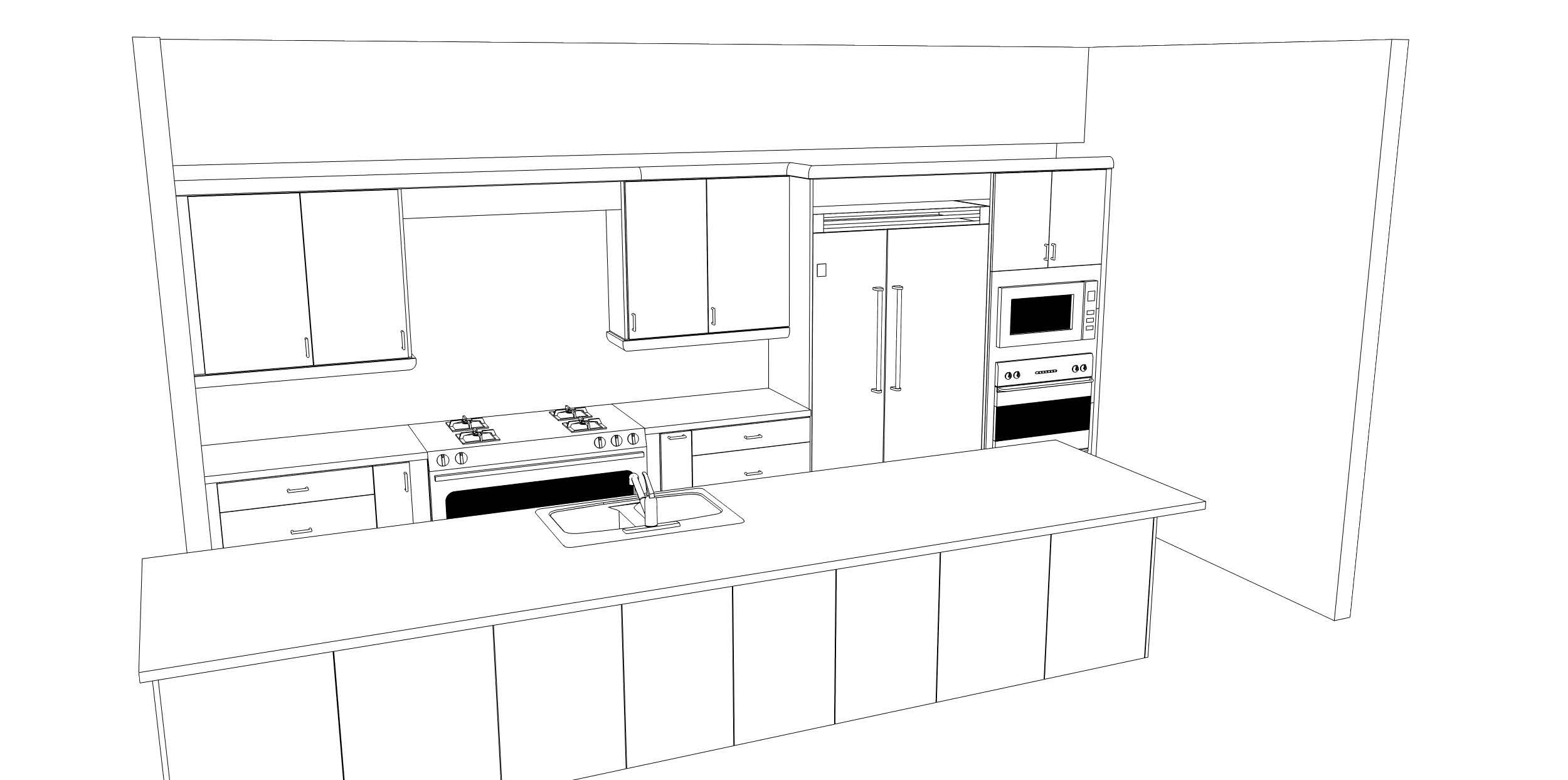
The wireframe input that corresponds to the opening kitchen image. Image source: Renovate AI.
The important detail was not that the marble looked more realistic. The visualization used finishes from the company’s own catalog. The buyer was no longer discussing an abstract style but a material available for sale. Novacek said the contract was signed that week and the customer requested visualizations for five additional lots. That is one customer’s statement, not a general conversion rate. Renovate AI customer story
The homeowner pays to “let me see it.” The enterprise pays to “help the customer choose it.”
The consumer cares about easy exploration. The business also needs to know whether the item can be purchased, whether selections remain consistent, and who approved the final version. Continued enterprise use may depend more on these quiet details than on the visual impact of the first image.
Generation Must Lead Into Selection and Approval
Renovate AI’s enterprise page presents three forms of deployment: a visualization component embedded in an existing product page, a branded design workspace, and a real-estate visualization tool. Manufacturers can connect their own SKU catalogs instead of offering only generic styles. Renovate AI enterprise product
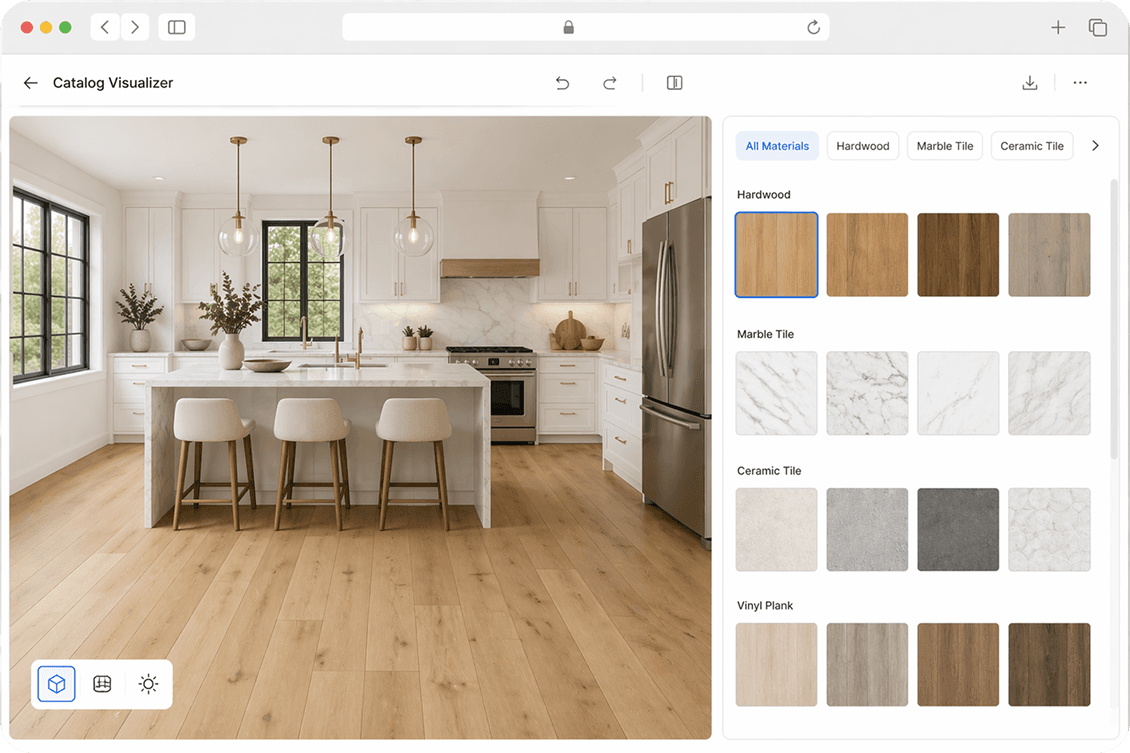
Materials are selected on the right and previewed in the room on the left. Image source: Renovate AI enterprise page.
That changes how the software enters the purchase journey. A standalone app asks the customer to open a separate destination. An embedded component can offer a preview while the customer is already examining materials on a seller’s site. The software joins an existing buying process instead of asking the enterprise to create a new traffic channel.
The Andrew Lauren story goes further by showing a material approval sheet. It puts the rendering, products, colors, locations, and a buyer sign-off area in one document. A concept shown during the sale can then inform procurement and installation instead of disappearing in a message thread. Renovate AI customer story
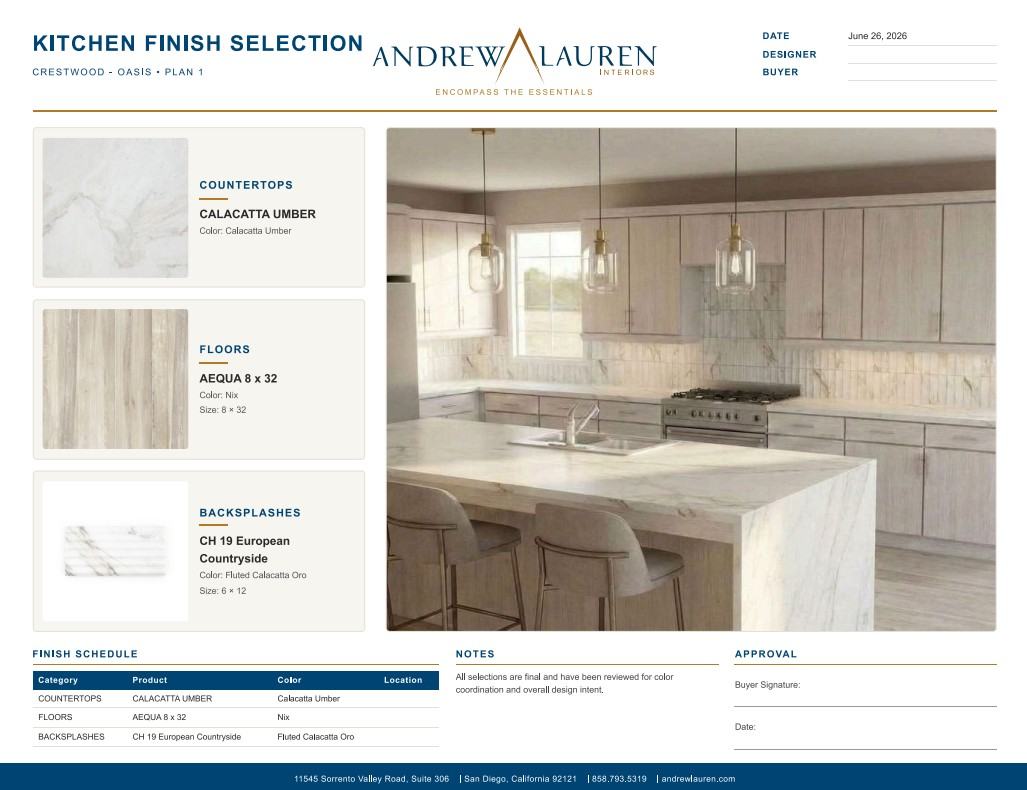
Kitchen rendering, material list, and buyer approval appear on one sheet. Image source: Renovate AI.
| The same remodeling generation | Homeowner | Enterprise customer |
|---|---|---|
| Main question | Would I like the room this way? | Will the customer choose this product? |
| Input | Room photograph and preferences | Project information and the company’s catalog |
| Next action | Save, compare, discuss with family | Confirm selections, then hand off to procurement and installation |
This difference also explains why enterprise pricing cannot simply copy an app subscription. Renovate AI says enterprise quotes vary with team size, usage, and customization and may include branded interfaces, model customization, and support. The buyer is paying not only for image credits but also for the work required to enter its existing sales process. Renovate AI enterprise product
Visual Appeal Starts the Sale; Consistency Determines Delivery
The closer a generative system gets to a real transaction, the less it can be judged only by whether an output looks impressive. A homeowner exploring styles may accept an unexpected variation. A supplier presenting a named item cannot casually change the texture, proportion, or product identity.
Renovate AI acknowledges that generated results can occasionally contain inconsistent furniture details or other image differences and may require editing or regeneration. A visualization is still not a construction drawing. It cannot replace checks of site dimensions, material availability, or installation conditions. Renovate AI website
Consumer revenue gave the company resources to continue building, but enterprise viability depends on another set of capabilities: accurate catalog connections, controlled revisions, and reliable handoff after a choice is approved.
Renovate AI is worth studying not because every consumer app should become enterprise software, but because it found an adjacent reason to pay: first help a homeowner decide what to buy, then help a business sell the exact product.