
Photograph a plate of food, let AI estimate calories and nutrients, and save the result in a food diary. Welmi sells subscriptions to this mobile app. But the more interesting part of the business is what happened after customers paid. In an Adapty case study, cofounder Sergey said some advertising campaigns recovered their acquisition cost within the first week, yet the team could not immediately increase its budget because the money was still waiting to be paid out by the App Store. Welmi App Store listing Adapty payout case study
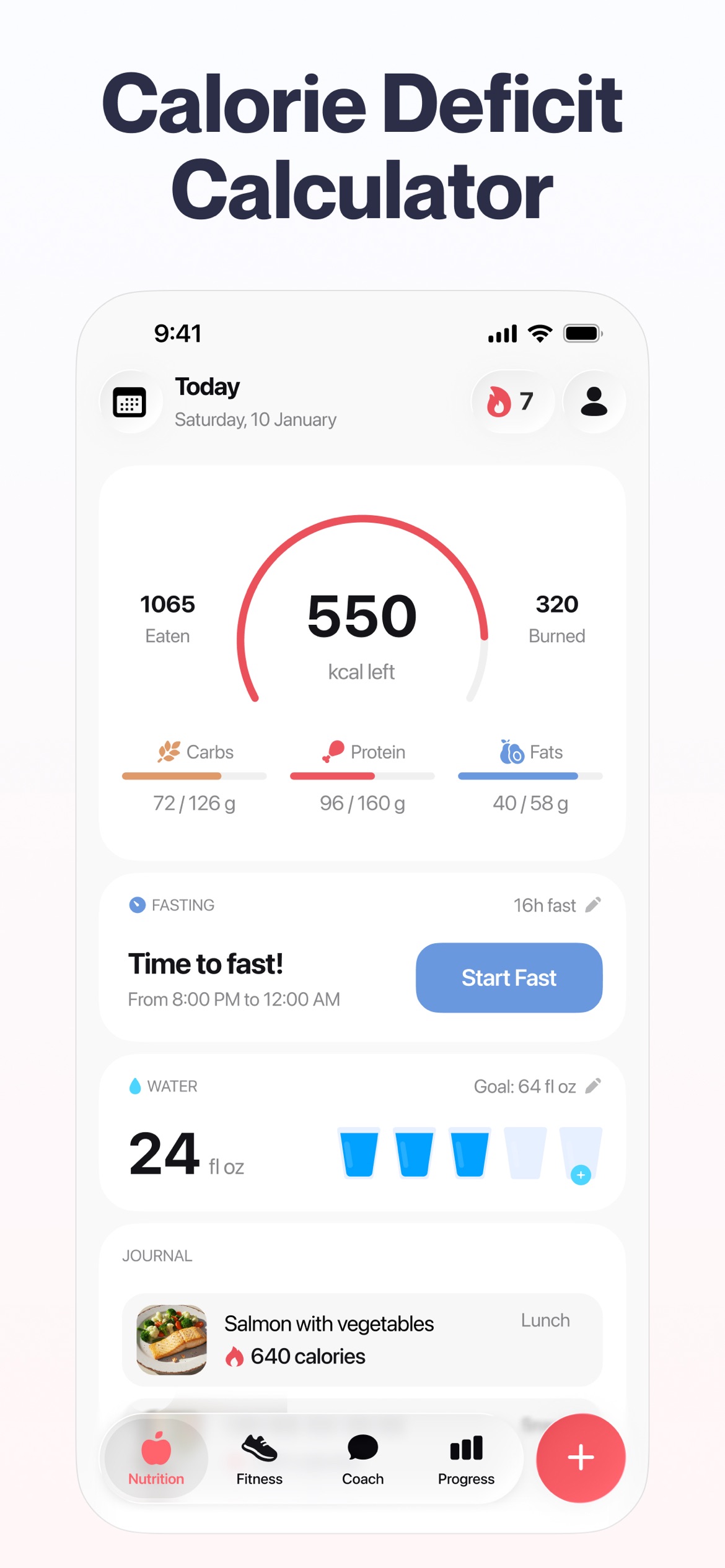
Welmi’s food diary. Image source: App Store.
The ad dashboard said the company could keep spending, while the bank balance said it could not.
That is the other side of Welmi’s business: after finding advertising that pays back, how does the company fund the next round of growth?
From $60K to $200K, First Identify Which Users Produced the Revenue
Another Adapty case study says Welmi launched in March 2025. Monthly recurring revenue was about $60,000 in August and exceeded $200,000 in November. MRR standardizes recurring subscription revenue by month. It is not net profit and not the amount that entered the bank account that month. Adapty attribution case study
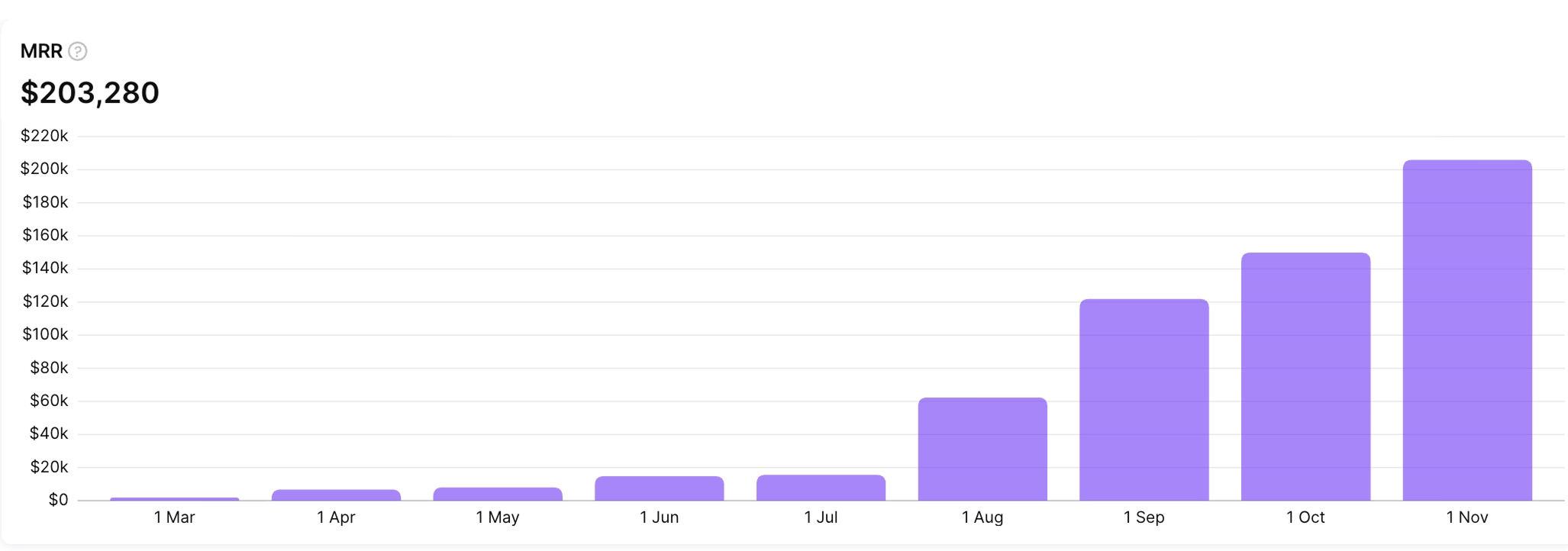
The chart shows historical 2025 MRR and ends at $203,280. It does not show bank receipts. Image source: Adapty.
For an app that acquires customers through advertising, the key question after revenue rises is not simply how many more installs to buy. It is which users are worth buying again. Two campaigns may each create an install, while only one produces a subscriber who keeps paying.
Welmi previously used Adjust for ad attribution and Adapty for subscription management. The source of a customer and the resulting revenue lived in different systems, forcing the team to reconcile them. It later moved both into one analytics chain. Sergey also said the attribution-tool cost per install fell from $0.04 to $0.02. That was a reduction in tooling cost, not in the cost of advertising to acquire a user. Adapty attribution case study
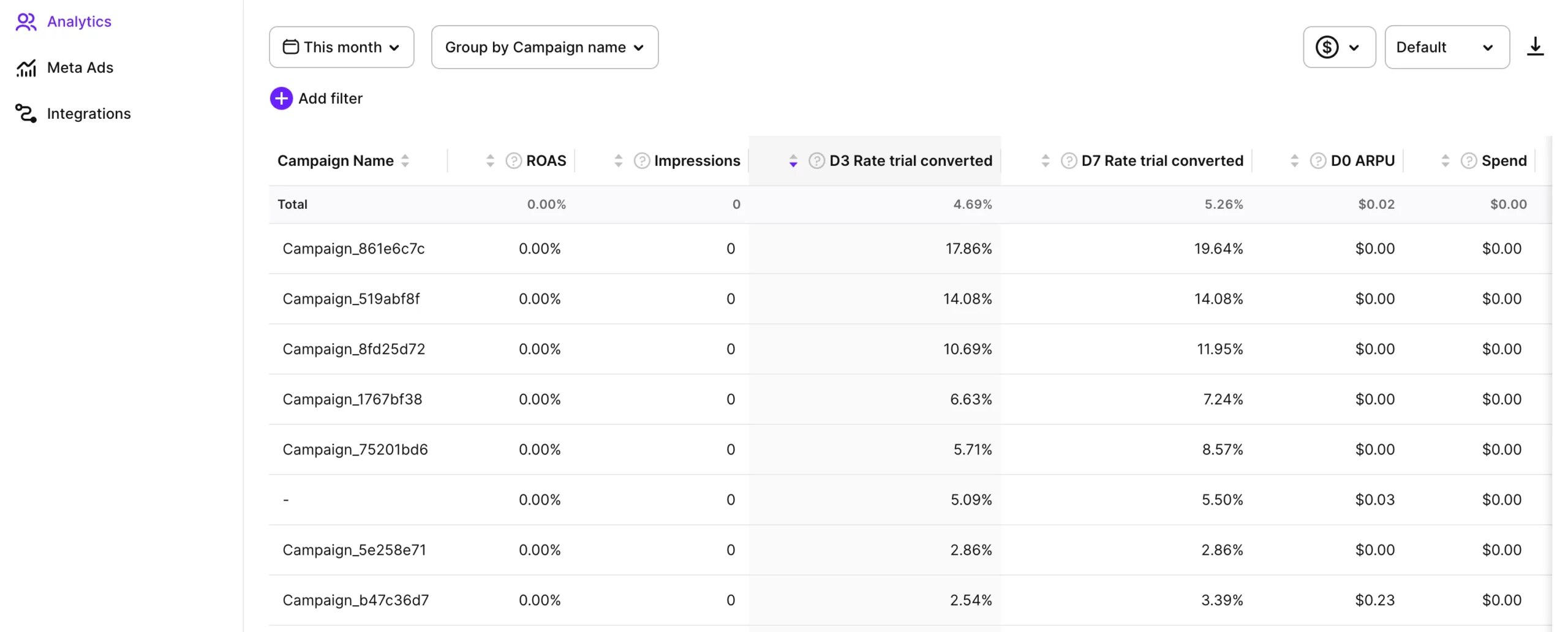
An attribution-tool example, not proof of Welmi’s actual campaign returns. Image source: Adapty.
Those few cents matter more when the underlying traffic is inexpensive. Cheap ads do not guarantee that the total cost of identifying and serving each user is low. Connecting ad source, subscription revenue, and tooling expense is necessary before deciding that a channel can scale.
Seeing the return is still only the first step.
A Campaign Can Pay Back in a Week Without Funding the Next Week
Sergey described some of the best-performing campaigns as paying back within their first week. That does not establish that every Welmi campaign made money or that the company as a whole was profitable. It is enough to create a specific operating problem: the team had identified spending worth repeating, but the money needed to repeat it was still in transit. Adapty payout case study
When a customer buys an App Store subscription, the transaction can appear in a revenue report before the proceeds reach the developer. Apple’s published rule says that, assuming agreements, banking details, and payment thresholds are satisfied, proceeds are paid within 45 days after the end of the fiscal month in which the transaction occurred. It is not a fixed 45-day wait after every individual order. Apple payment overview
Consider a simplified example that is not Welmi’s actual account. A company spends $1,000 on ads and, within a week, the acquired users generate enough proceeds to cover that spend. If those proceeds have not arrived, the next campaign still needs to be funded from cash the company already holds.
Pausing slows a channel that has shown positive returns. Continuing requires enough additional cash to bridge the settlement period. Payback time and payout time are different measurements.
| Stage of growth | Question to answer |
|---|---|
| Find effective ads | Which channel produced subscriptions, not just installs? |
| Decide whether to increase the budget | Does the return cover the relevant costs? |
| Execute the next campaign | When will the cash arrive, and can it fund the next cycle? |
The first two questions live in performance reports. The third lives in the bank account. Looking only at advertising return can understate how much working capital expansion requires.
Change the Payout Schedule Without Changing the Advertisement
Welmi tested Adapty Finance, which advances part of app-store proceeds that have already been earned but not yet settled. The case study says the first transfer arrived within 48 hours. The team then moved to weekly payouts, reinvested the money in advertising, and increased budgets in regions where campaigns already showed positive returns. These operating outcomes come from a vendor-published customer case study. Adapty payout case study
This change did not improve the AI feature or make advertising cheaper. It changed what happened after a customer paid. Part of the proceeds from the previous group became available sooner, allowing the company to buy the next group.
It would be misleading to describe this as borrowing against a speculative year of future subscription revenue. Adapty describes an advance against earned but unsettled proceeds, usually up to 85%. When the app store settles on its normal schedule, the provider recovers the advance and fee, then sends the remaining balance. The product page lists a typical one-time fee of 2.5% to 3.25% of the advance, while actual terms vary by business and risk. Those numbers are not Welmi’s disclosed contract terms. Adapty Finance
The service does not create additional profit. It charges a fee to make existing proceeds available sooner.
Before Scaling Ads, Calculate the Last Cost
For a subscription app, faster settlement is useful only if the next advertising cycle produces enough value. Revenue from newly acquired users must cover the new ad spend, product and service costs, and the fee for receiving proceeds early.
A small campaign that pays back does not prove that a doubled budget will do the same. Expansion may reach users who cost more to acquire or are less willing to subscribe. Strong early revenue also does not replace analysis of refunds, renewals, retention, and the cost of AI food recognition.
Welmi’s reusable lesson is therefore not a specific finance product. It is the order of decisions: first connect advertising to subscription revenue, then decide how much spending deserves to expand, and finally verify that payout timing can support the next cycle.
AI gives the user a reason to pay by reducing the effort of food logging. Once people are paying, however, the next growth constraint can sit between “the customer paid” and “the company received the cash.”