
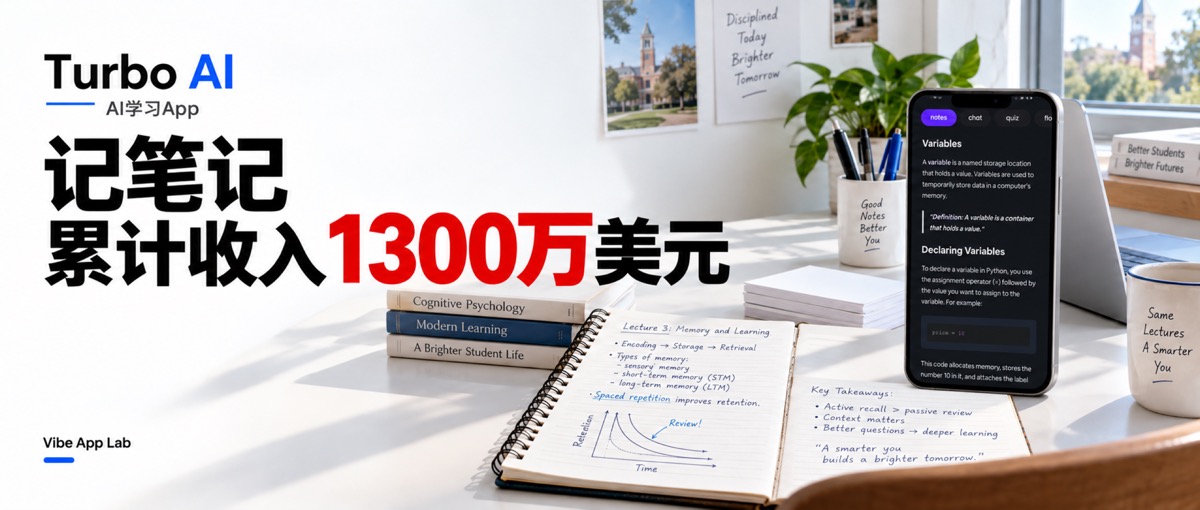
Give an AI a lecture recording or a PDF, and it can turn the material into notes, flashcards, and quizzes. Then show that transformation to another student. Turbo AI built a learning app around this immediately understandable workflow and has generated more than $13 million in cumulative revenue. According to a July 2026 founder interview in Inc., the company had only ten full-time employees at the time. The $13 million figure is cumulative revenue, not annual revenue and not profit. Inc. founder interview
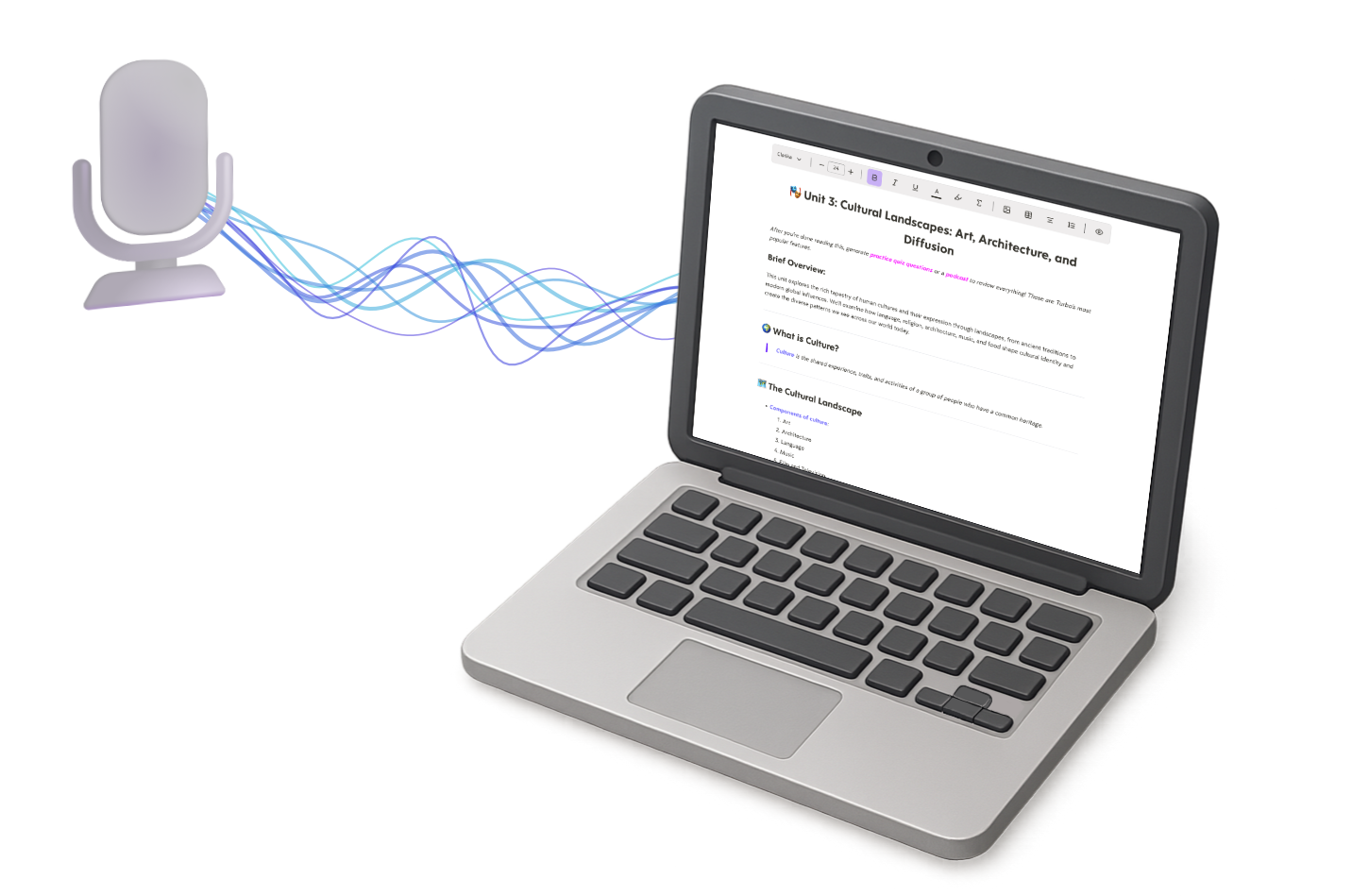
A lecture recording becomes structured notes. Image source: Turbo AI.
Why did a note-taking product generate that much revenue? The answer is not just the model it uses. It is also how the product gets a student to try it once, return to it later, and eventually pay.
The First Users Came in Exchange for Snacks
Founder Sarthak Dhawan was studying at Duke University when he saw classmates repeatedly copying notes by hand. The early version he built with Rudy Arora was rough, but it could already turn PDFs into notes and study material.
Dhawan wrote in a company retrospective that the founders handed out donuts and cookies in a freshman dining hall to find their first 100 users. They also put flyers in bathroom stalls. By October 2025, Turbo AI said it had reached five million users. Turbo AI founder retrospective
The lesson is not that snacks are a scalable acquisition channel. The founders started with people who were already attending lectures, organizing course material, and preparing for exams. Those students had their own files ready, so they could quickly judge whether the output helped.
The first experience did not need to begin with an empty prompt box. A student did not have to learn prompt engineering. They only had to provide a lecture or handout. Whether the product saved an hour of organization was visible in the first result.
Short-Video Growth Does Not Stay Free Forever
The Inc. report says Turbo AI gained its first 300,000 users and earned its first $500,000 before it bought paid advertising. Arora first filmed product demonstrations himself. The team then recruited friends and small creators, initially paying $5 per video and adding bonuses when a post performed well.
By the time of the interview, creator payments had grown to hundreds of thousands of dollars per month. They were the company’s largest expense, ahead of payroll and model inference. Inc. founder interview
That makes “free viral growth” the wrong description. A more accurate sequence is that founders first discovered a demonstration format that traveled well, then paid to expand the supply of those demonstrations.
The workflow fits short video because the before-and-after change is visible. The input is a long recording or stack of course material. The output is organized notes and questions a student can answer immediately. Viewers do not need to understand the underlying model to decide whether the result is useful tonight.
Reach and business efficiency are still different. Views show that the content attracts attention. Subscription conversion and retention show whether the audience is worth buying. Once creator spending becomes the largest cost, the team must keep asking whether the revenue from new subscriptions covers the continuing cost of producing content.
Let Students Receive a Result Before Asking Them to Pay
Turbo AI offers a free tier with note generation, flashcards, and quizzes, then sells upgrades for more capability. Its US App Store listing includes monthly purchases at $14.99 and $19.99, plus several annual options. These are different listed in-app purchases, not a promise that every user sees the same price. Turbo AI website Turbo AI App Store listing
The structure lets students make an initial judgment using their own material before deciding whether to pay.
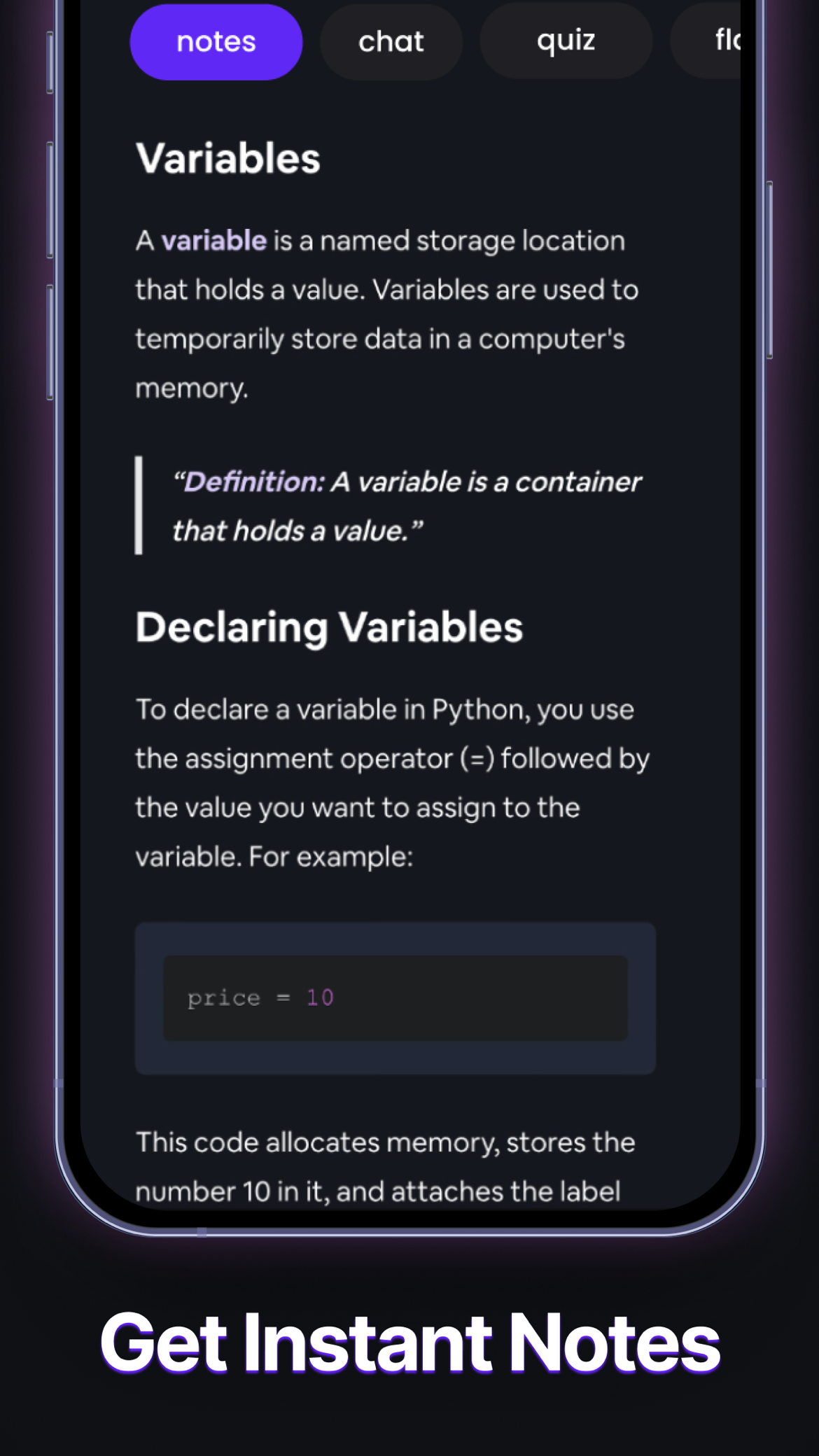
Generated notes can lead into chat, quizzes, and other study modes. Image source: App Store.
The point is not that a general-purpose chat product cannot perform any of these tasks. Turbo AI packages several operations into one place, so a student does not have to upload the same context repeatedly and ask for a different format each time.
| What the student needs to do | Product format |
|---|---|
| Recover details missed during class | Notes generated from recordings |
| Remember key concepts | Flashcards |
| Check understanding | Quizzes generated from the material |
| Continue studying while commuting | Audio podcasts |
These formats appear in the official product description. Together, they let the same course material serve several moments. The lecture provides the input, but review after class gives the student a reason to reopen the app. Turbo AI App Store listing
Users Can Value the Output and Still Reject the Paywall
An App Store reviewer named Mpatel32 left two revealing reactions on July 1, 2025. The reviewer called the notes “spectacular amazing” and said they understood the material well, but also complained that the app would not allow another video upload. This is one person’s experience, not evidence about every customer. It does show the central tension in a free-to-paid study product: the more useful the first result feels, the more noticeable the next limit becomes. Turbo AI App Store listing
A paywall cannot be judged only by whether it appears at a moment of high need. The clarity of usage limits, renewals, and cancellation also affects whether a purchase leaves confidence or frustration. Turbo AI’s terms allow a canceled subscription to remain active through the current billing period and set limits on refunds. Turbo AI terms of service
After Ten Million Users, the Product Cannot Wait for the Next Lecture
On July 8, 2026, Turbo AI announced that it had reached ten million users and introduced Learn Mode, which creates a structured course from a short topic prompt. The ten million figure is a company-reported total user count, not the number of paying subscribers. Turbo AI ten-million-user announcement
The update moves the product’s starting point earlier. Previously, a student needed a lecture recording or PDF. Now the student can begin with a subject they want to learn. That may reduce dependence on the academic calendar, although a feature launch alone does not prove better retention during school breaks.
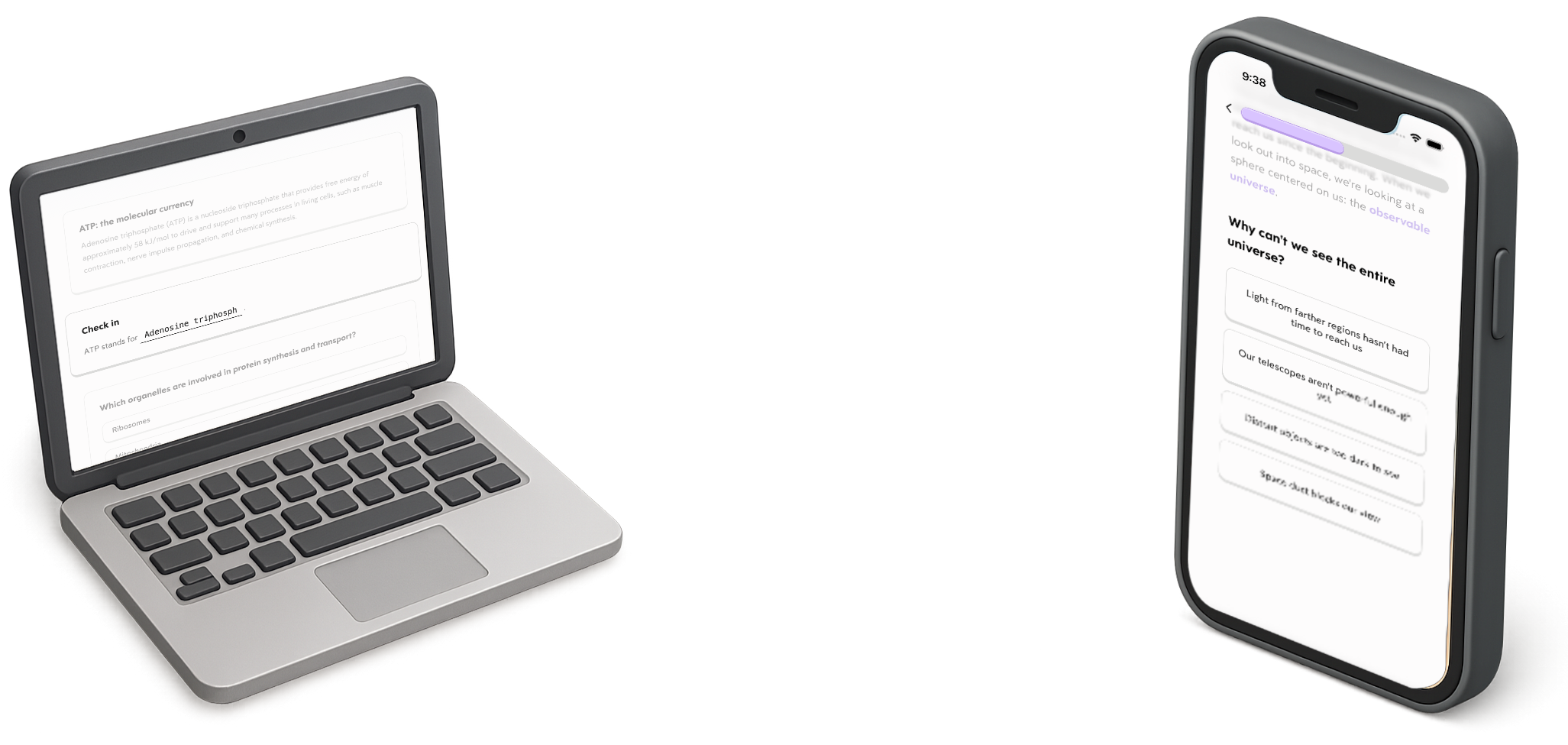
The same study system spans desktop and mobile. Image source: Turbo AI.
Syncing web and mobile also covers different situations: organizing material on a computer and continuing a quiz on a phone. Mobile matters because it catches spare study time, not because it merely shrinks a desktop page. Turbo AI website
The ability to record a class does not automatically grant permission to upload it. Turbo AI’s own terms require users to follow school and instructor rules, obtain permission for copyrighted material, and avoid using the product to cheat. Automated notes are not a shortcut around course policies. Turbo AI terms of service
Turbo AI’s commercial advantage is that the product demonstration and acquisition content are nearly the same thing. A creator video shows exactly what a student will do after installing the app.
Its cost structure carries the corresponding warning. AI made study material easier to generate, but it did not make customers arrive automatically. Building “recording to notes” was the beginning. Repeatedly selling that result to students when they need it still requires spending and constant measurement.