
Take a photo of the skincare products on a bathroom shelf and Skin Bliss will analyze them as a set. It can flag repeated ingredients, point out combinations that deserve attention, and arrange the products into a routine. The iOS app began as a way to investigate individual products. Its larger ambition is to manage what happens after those products come home. Skin Bliss website
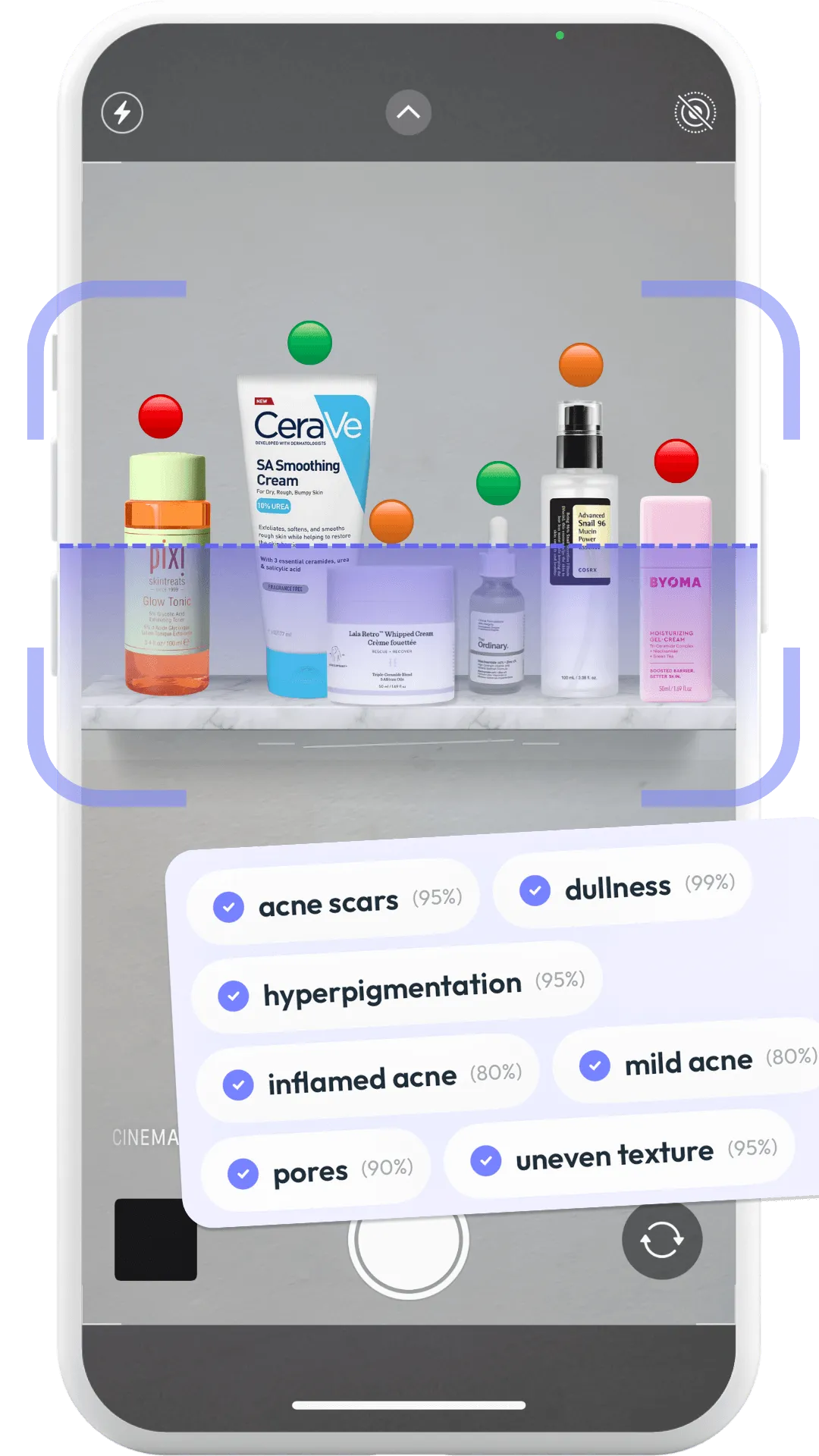
The shelf scanner brings several products into one analysis. Image source: Skin Bliss.
Advertising and sponsored recommendations are obvious revenue sources in beauty. Skin Bliss publicly stated in April 2026 that it does not accept brand sponsorships or sell recommendation placement. It says subscriptions fund the product instead. Skin Bliss | How the company makes money
That makes the commercial question unusually specific. If ingredient lookup remains free, what does a user actually pay for?
Search One Product for Free, Pay to Manage the Set
The free version is not limited to a single trial scan. According to the company’s feature comparison, free users can search and scan products without a stated scan limit, read individual product reports, and build one personal skincare routine.
Pro expands the job from examining products one at a time to comparing a collection, checking how a routine fits together, and keeping a more useful history. Skin Bliss | Free and Pro features
| What the user needs to solve | Free version | What Pro adds |
|---|---|---|
| Is this product suitable for me? | Product reports and scanning | More personalized analysis |
| How should the full routine fit together? | One custom routine and basic templates | Multiple routines, shelf analysis, and compatibility checks |
| What changed after using the routine? | One progress photo per day | Photo comparison and fuller tracking tools |
The boundary is deliberate. A person can look up a moisturizer and leave. Once that person starts managing an entire shelf, new questions keep appearing: Which products belong in tonight’s routine? What changes when one item is replaced? Where are the photos and notes from the previous month?
Skin Bliss does not lock every lookup behind a subscription. It charges for the more complicated work of managing a routine over time.
That also explains why placing ingredient knowledge in a general chat window would not create the same product. A chat can produce advice, but retaining a product collection, arranging repeatable steps, and retrieving a visual history require persistent structure around the answer.
The 2025 Rebuild Added a Reason to Open the App Tomorrow
Version 5.0, released on June 14, 2025, marked a clear product shift. The release notes described a rebuilt app with routine creation, step-by-step execution, a skin diary, AI-assisted photo comparison, and shelf scanning. By August, fixes addressed details such as evening-routine display and whether a product appeared as used. Apple App Store | Skin Bliss version history
Those details reveal more than the phrase “new AI features.” The product is no longer trying only to generate an answer. It is trying to help the user follow that answer the next day.
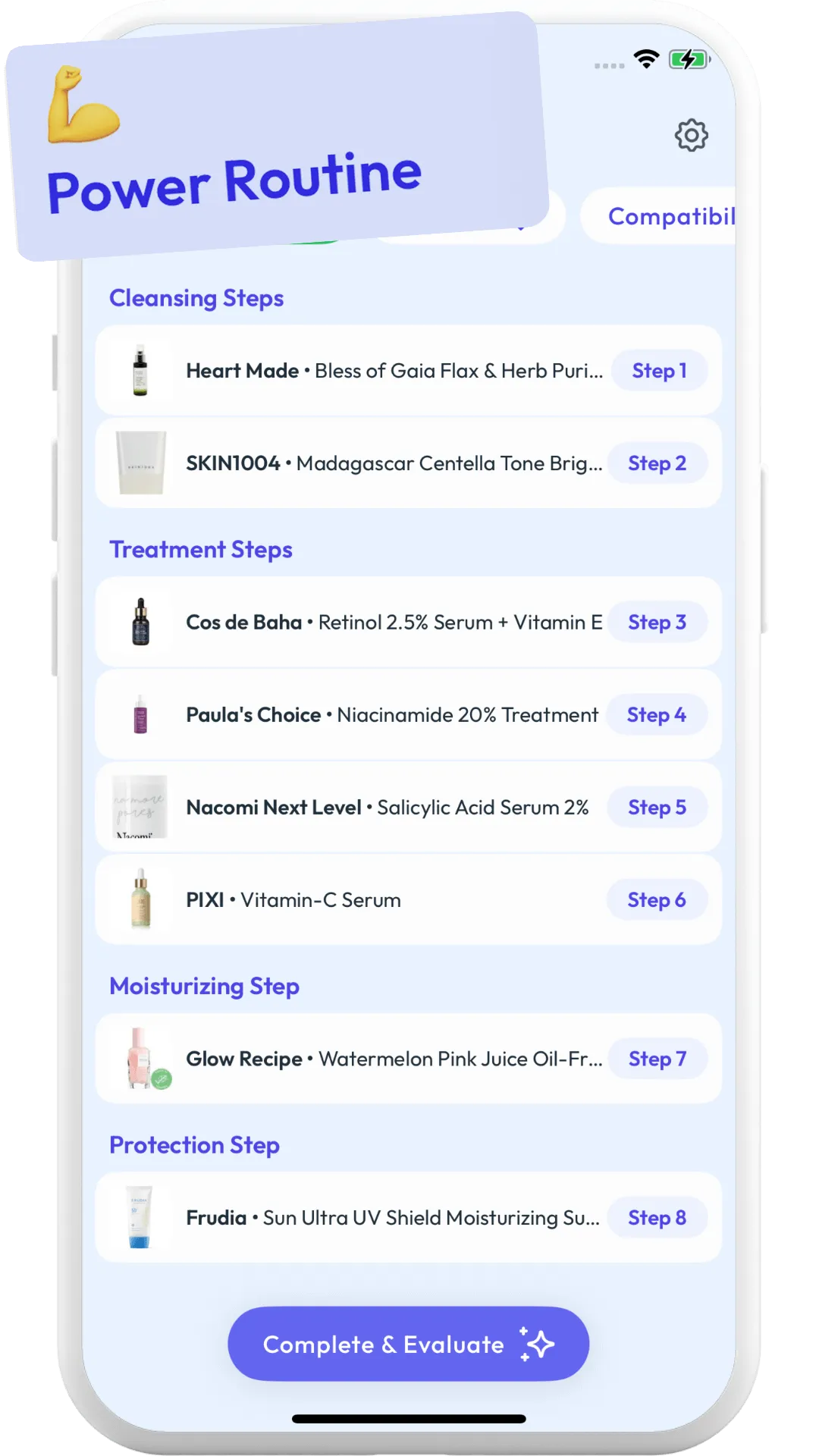
The routine view turns a recommendation into ordered steps. Image source: Skin Bliss. Products shown are examples, not endorsements.
A step list addresses sequencing. Usage records address execution. Photo comparison addresses reflection. Each capability may be too small to justify a subscription by itself. Together, they form a system that can remain useful after the first product scan.
The sequence matters commercially. Ingredient analysis is easy to treat as an occasional utility: open it before buying something, check a label, and close it. A routine manager can become part of morning and evening behavior. Every saved product and progress image also raises the practical cost of moving the history elsewhere.
None of this proves that the rebuild improved renewal rates. Public material shows what changed in the product, not the resulting conversion or retention. The design does, however, show which behavior Skin Bliss is attempting to monetize: repeated management rather than isolated curiosity.
If Brands Do Not Pay, the Subscription Must Offer More Than Ad Removal
In the company’s business-model explanation, co-founder Maria Otworowska states that brands cannot pay to improve their scores or buy recommendation positions. Subscription revenue supports the team, the ingredient database, and the service. Skin Bliss | How the company makes money
That decision is closely tied to the product’s promise. Someone asking whether a product fits their skin needs to understand whose interest the recommendation serves. If a brand can purchase visibility inside the answer, the user must evaluate both the skincare advice and the commercial influence behind it.
Avoiding sponsorship can reduce that ambiguity, but independence alone is not a durable reason to pay. The user still needs practical value from the app. Skin Bliss therefore sells both analysis and organization: it helps place products into a routine and keeps the resulting history in the same system.
The US App Store currently lists Pro purchases at $6.99 per month and $34.99 per year. Actual checkout prices and promotions can vary. At the listed rates, the annual plan costs roughly five months of the monthly option, making the discount for a longer commitment conspicuous. Apple App Store | Skin Bliss subscriptions
This pricing structure creates two tests. First, the free product must demonstrate enough credibility before the upgrade prompt appears. Second, the paid workflow must remain useful well beyond the first month. A deep annual discount can encourage commitment, but it cannot substitute for recurring utility.
Some Users Need a Manager; Others Only Want a Free Lookup
Skin Bliss says it had passed three million cumulative downloads by March 2026. That figure describes downloads, not three million active or paying users. Skin Bliss website
Downloads bring people to the product, while a paywall can send them away. One 2024 App Store review carried the title:
This app is just a huge PAYWALL!!!
The review was posted by Destiny Desiree on July 27, 2024. Apple App Store | Skin Bliss reviews
This is feedback about an older version and cannot describe every part of today’s free offering. It still exposes a recurring freemium risk. People arriving for a quick ingredient check may have no intention of buying a long-term management service. If the upgrade prompt arrives before the difference is clear, they may interpret the whole product as blocked.
The current comparison page is a stronger explanation than a generic promise to unlock premium features. It tells users what remains possible for free and identifies the additional job that Pro performs. That distinction helps the product avoid charging for the same moment that acquired the user.
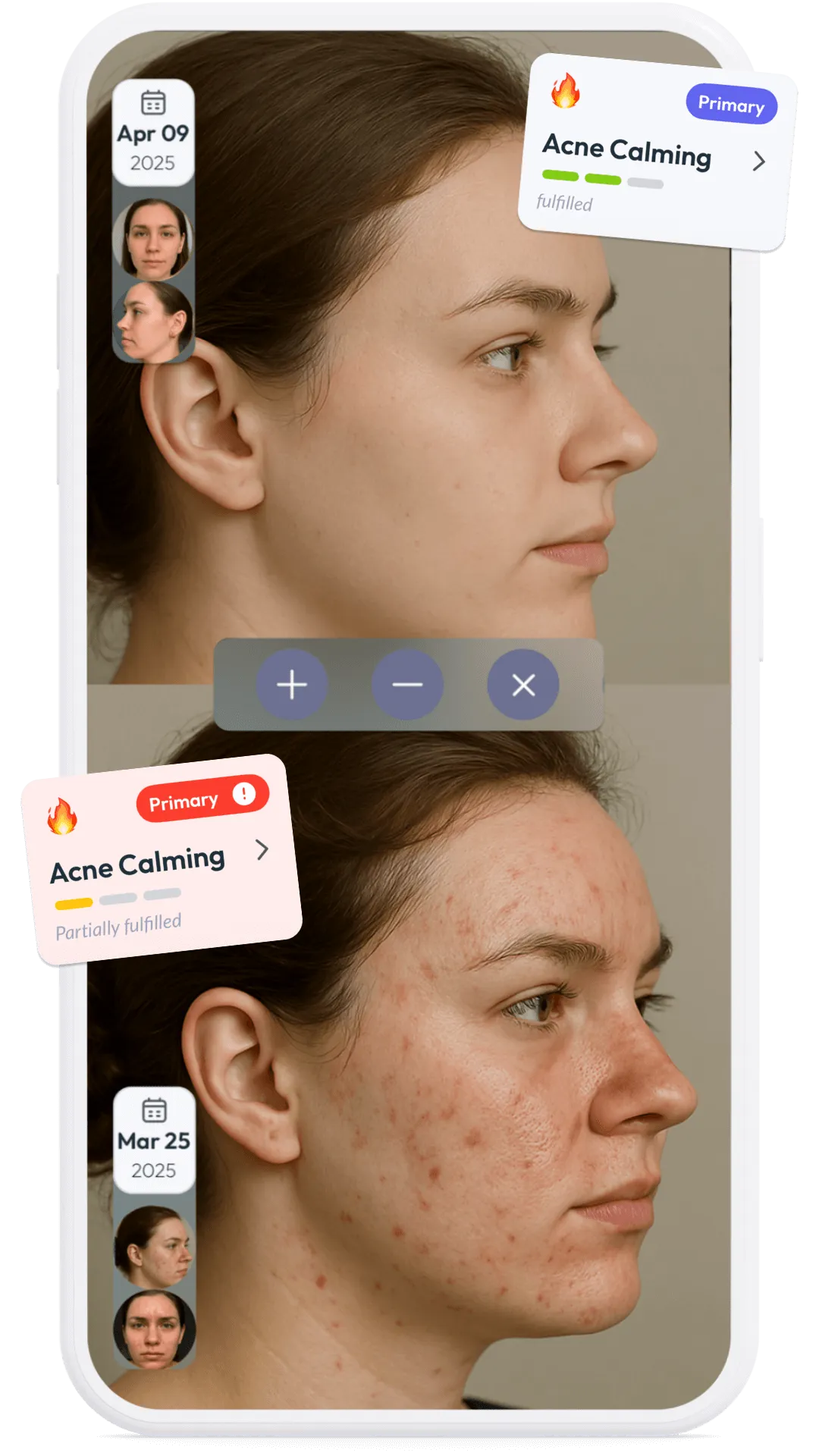
The comparison view places progress photos side by side. Image source: Skin Bliss. The screen is a product demonstration, not clinical evidence.
The photo feature illustrates both the attraction and the limit of this model. A timeline can make gradual changes easier to review and can encourage consistent use. Yet lighting, camera angle, and normal skin variation can affect what a photo appears to show. An organized visual record is not a diagnosis, and a product illustration is not evidence that a routine caused an improvement.
The Product Lesson Is What Happens After the Answer
Skin Bliss is interesting not because it can analyze another face or ingredient list. Its more useful product decision is finding something to sell after the analysis: a system that manages a collection of products and a routine that changes over time.
The free lookup performs acquisition. It answers a narrow question with low commitment and gives the company an opportunity to establish trust. Shelf analysis expands the scope from one item to a collection. Routine execution creates repeat use. Tracking and photo comparison give the user a reason to preserve history. The pieces form a progression rather than a random bundle of premium features.
For builders, the pattern is transferable beyond skincare. An AI answer can attract attention, but a subscription needs an unfinished job that returns. The paid layer can store context, coordinate several objects, schedule the next action, or make change visible. The strongest boundary is usually not “more AI.” It is the difference between receiving an answer once and managing an outcome repeatedly.
Skin Bliss also shows the constraints of that pattern. Ingredient warnings and photo comparisons cannot replace medical diagnosis, and real outcomes cannot be inferred from company screenshots. The business ultimately depends on a simpler behavioral question: after checking the first product, will users still find enough value to come back every day?