

On August 31, StudyFetch updated its calendar. The study app, which can turn lecture recordings into notes and practice questions, began putting exam dates, topics due for review, and original course materials in the same place. A student can open a study schedule once and see what to learn today and where the relevant material is stored. StudyFetch also connected the schedule to Google Calendar, placing study tasks inside a calendar the student may already use.
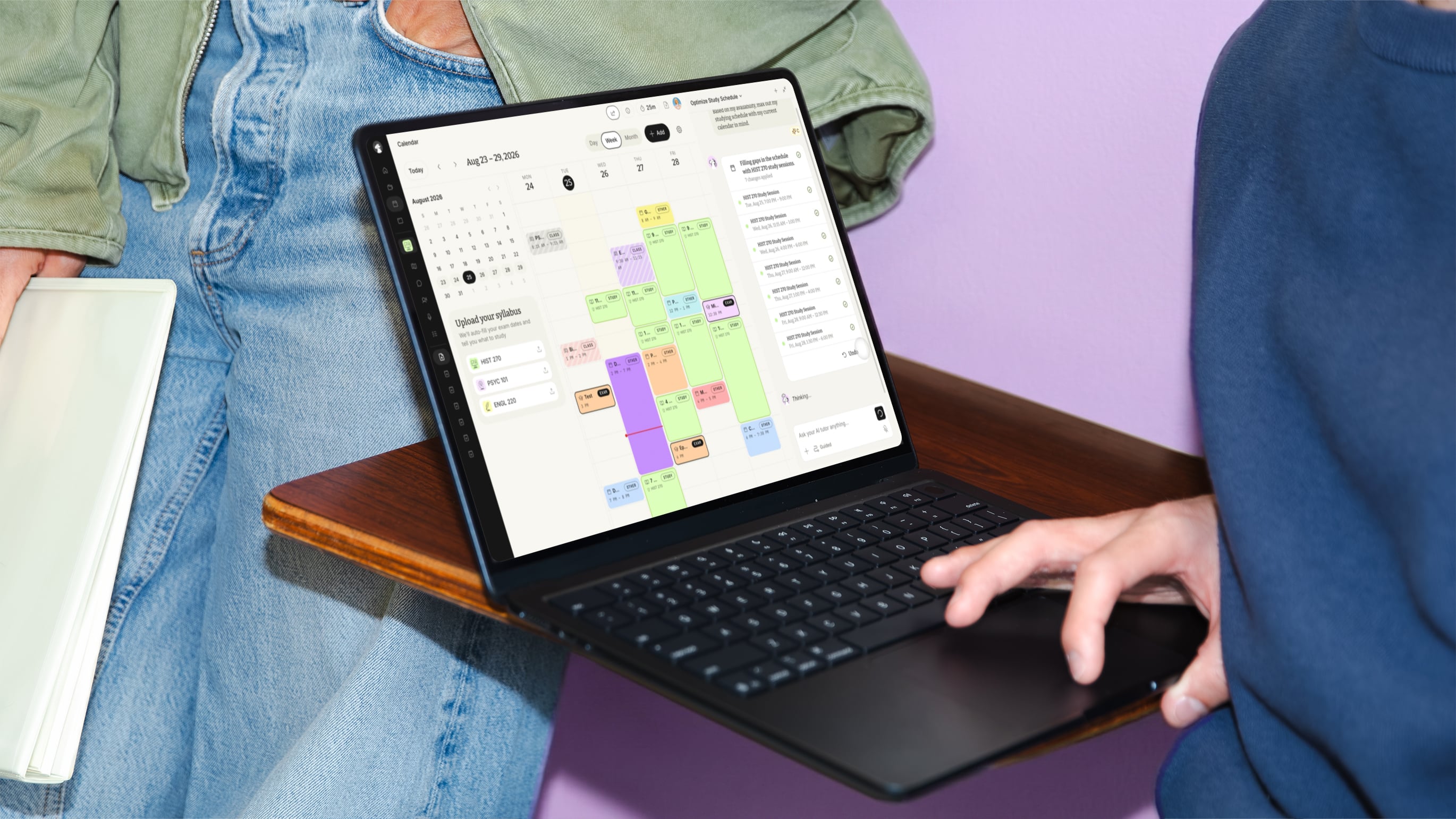
Study schedules and course materials appear in the same calendar. Image source: StudyFetch.
That goes one step beyond turning a recording into notes. Recording solves the problem of not being able to write everything down during class. A study plan addresses the problem that appears afterward: not knowing where to begin. The first capability can persuade someone to try the product once. The second has a better chance of bringing that person back.
StudyFetch is worth examining not because it generates one more kind of content, but because it is trying to answer a more consequential question: after AI organizes all this material, what exactly should the student do next?
Recording the Lecture Is Only the First Step
StudyFetch’s live-lecture feature records and transcribes a class while allowing the student to add personal notes. After class, the student can generate either concise or detailed notes. The recording, transcript, and organized notes remain attached to the same lecture. That material can then become flashcards, practice tests, or an audio recap.
This is not merely a general-purpose recorder with a student-themed interface. A meeting recorder can reasonably finish its job after documenting what happened. A lecture recorder has to keep serving a different objective: helping someone learn. The same material must first be understood, then remembered, and later used to reveal what the student still does not know before an exam.
More generation, however, is not automatically better. Ten lectures can become ten sets of notes and then hundreds of flashcards. The student’s task may shift from organizing course material to organizing material generated by AI. The volume has not disappeared; it has only changed form.
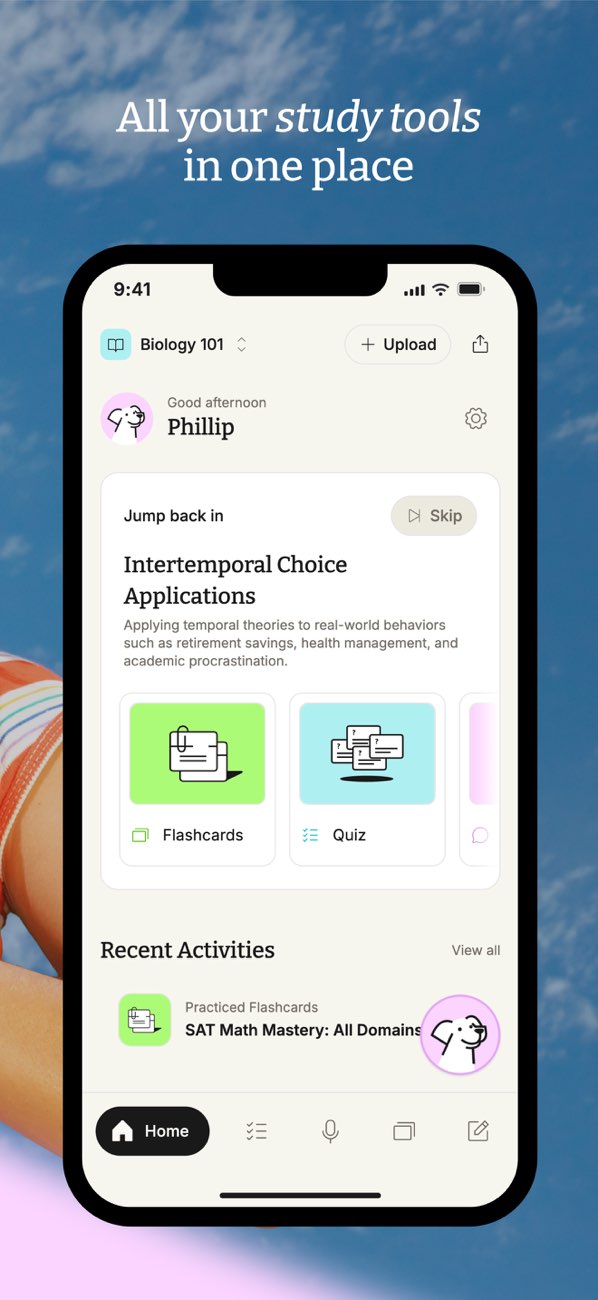
The course home lets students continue a session or open flashcards and quizzes. Image source: StudyFetch App Store.
This creates an easy trap for product builders. In a demo, a long recording becoming polished notes in seconds looks impressive. In actual use, the student is facing tomorrow’s exam, limited time, and a backlog of unread material. Demonstrating generation speed and helping someone begin studying are not the same product outcome.
From a Pile of Material to the Next Thing to Learn
StudyFetch redesigned its study plan on June 16. The new design separates material a student has encountered from material the student has mastered. It offers cram, regular, and deep-study modes, and lets topics follow the source material, the exam scope, or a recommended order.
Those choices reflect real constraints. With a month before an exam, a student can work through a course in sequence and reinforce the foundation. With two days remaining, presenting every topic as an equal item is much less useful. Completing one question should not automatically mean that the underlying concept has been mastered.
Two days later, StudyFetch introduced guided chatting. A student describes a goal, the AI proposes an editable plan, and the conversation moves directly into activities such as flashcards or quizzes. When the student gets stuck, questions can remain connected to the current source material instead of forcing the student to leave the exercise and open a separate chat window.
In July, spaced review was consolidated into a single hub. Students previously had to find flashcard sets one by one. They can now see reviews that are due, newly added cards, and material scheduled for later. Rating a card as Again, Hard, Good, or Easy changes when it returns.
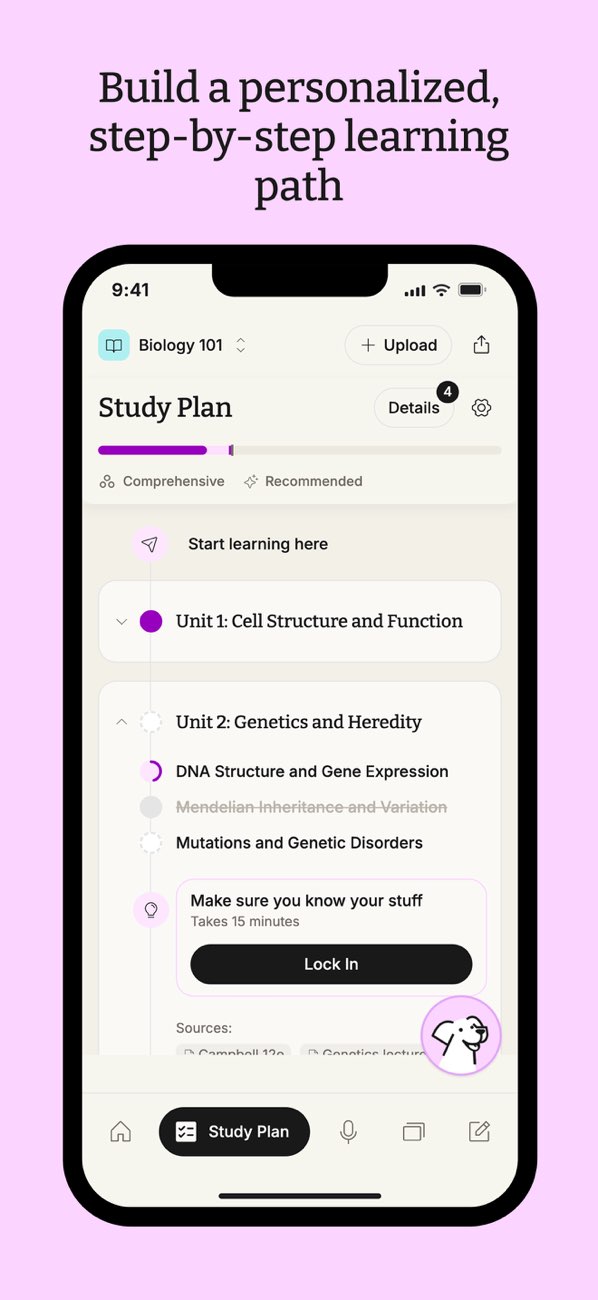
The study plan groups topics by unit and displays progress. Image source: StudyFetch App Store.
These updates do not ask students to upload another file type. Instead, they remove several decisions: which chapter to study first, what has been forgotten, and whether a topic should be repeated today.
| Student problem | Product response |
|---|---|
| A lecture was recorded, but the student does not know how to review it | Generate practice from the lecture material |
| There is too much material to choose what comes first | Order topics by exam scope and mastery |
| Flashcards are scattered and reviews are easy to miss | Show due reviews in one place |
| A plan exists but has no place in the day | Put study tasks on the calendar |
The subscription value is not another organized document. It is having a clear next action whenever the product opens.
What Does $19.99 a Month Buy?
The US App Store lists StudyFetch subscriptions at $19.99 per month and $96 per year. At the monthly price, it is clearly not a cheap recorder. But when notes, question generation, flashcards, and tutoring are assembled into one study process, the comparison is no longer limited to transcription tools.
If a student must continually move material among a recording app, documents, a chatbot, and flashcard software, several individually inexpensive tools may still be costly to use. StudyFetch is trying to let the same lecture material work repeatedly rather than leaving a transcript in a folder after processing ends.
The phone is not merely a companion version. Recording a lecture, completing several flashcards between classes, and checking tomorrow’s plan before bed are actions distributed across a day. Keeping them under the same course makes short periods of time usable. A web version remains available for longer material, so every task does not have to fit on a phone screen.
Public subscription prices do not reveal how many people pay. The App Store shows roughly 14,000 ratings and a 4.8-star average, which demonstrates a meaningful amount of real user feedback. It does not support inferring subscription revenue, and the number of ratings cannot be treated as the number of paying users.
Exams Create Usage and Seasonality
In a January 2026 annual review, StudyFetch said six million students used the product during 2025. It also said that during December finals, almost one in six users completed at least three study sessions and weekly active users rose as much as 50% week over week. These are company-reported usage figures, not paid-subscriber counts.
The figures support a narrow conclusion: when exams approached, some users returned repeatedly. They do not show that students remained active throughout the semester. They also cannot demonstrate that the newer calendar improved retention, because the reported activity occurred before that feature shipped.
Exams provide a strong reason to use a study product, but they do not happen every day. Subscribing for a month before an exam and canceling afterward can be rational for a student. To sustain subscriptions, an education product needs reasons to return during ordinary weeks, not only the initial surprise of generated notes.
That makes the June-through-August product changes commercially relevant. Review can begin before the final rush, forgotten material has a scheduled time to reappear, and an exam date can reshape the order of the plan. StudyFetch is attempting to turn an occasional rescue tool into a service used throughout the semester. Whether it has succeeded will require later usage and payment evidence.
The Hardest Problem Is Avoiding the Wrong Lesson
This product path has a gate more important than feature count: reliability.
App Store reviewers have complained that course material was divided into too many small pieces to finish before an exam. Another reviewer said the AI failed to obey an instruction to use only designated sources. Individual reviews do not establish how often either problem occurs, but they identify concrete failure modes that the product must address.
In a classroom, being correct means more than producing generally true information. The answer also needs to fit the scope, terminology, and expectations of a particular course. A fluent explanation that introduces material outside the exam may not help. Keeping a study plan connected to original files is therefore more than a retrieval convenience; it gives the student a way to verify the output.
For builders studying products such as Coconote, the useful benchmark is not “recording plus every available AI feature.” StudyFetch is more instructive as a sequence of three connected actions: retain the lecture, tell the student what to do next, and let the result of each practice session change the next step.
Recording creates the first reason to open the app. Every later opening needs a new reason of its own.