

In August 2026, the ski-coaching app Carv announced an important change in its iOS release notes: skiers could now use it without sensors. Put a phone in your pocket, ski as usual, and after each run the app produces a technique score and coaching suggestions. New users can try it free for three days. Previously, accessing the same coaching system meant fitting dedicated hardware to a ski boot.
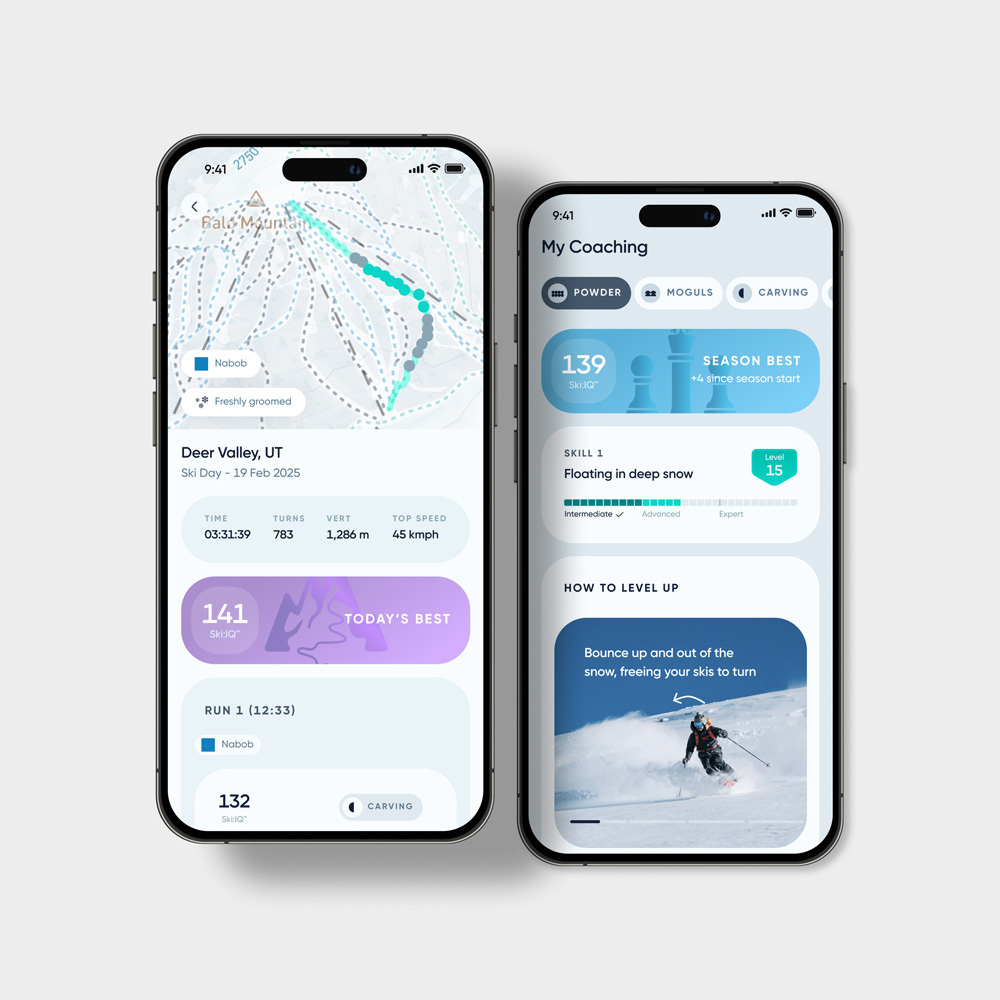
Carv’s run tracking and coaching interface. Image source: Carv.
This is not a chatbot placed next to a skiing video. Carv is trying to observe how someone just skied and tell that person what to practice on the next run.
The interesting part is that the change was not driven by algorithms alone. Carv realized that its buying process could take longer than a customer’s ski holiday.
When the Hardware Arrives After the Holiday Ends
Carv describes a specific problem in its company story. A skier hears about the product on a chairlift and becomes interested, but by the time the hardware arrives, the trip is already over. The team began asking whether a phone could provide useful coaching without making the skier wait for equipment.
This is not an ordinary ecommerce problem that can be solved by making shipping slightly faster.
Demand for ski coaching is tied to a precise time and place. A skier reaches the mountain, finishes a run, notices an unstable stance or an awkward turn, and wants feedback immediately. Asking that person to wait until after returning home to receive and install a device weakens the reason to buy. The next opportunity to ski may be months away.
Carv had already simplified its hardware once. Carv 2, announced on October 14, 2024, replaced insoles placed inside ski boots with sensors clipped onto the boot straps, eliminating the need to occupy space inside the boot. At launch, Carv bundled the devices with an annual pass: customers who bought the $249 annual plan received the sensors. That was the offer at the time, not the company’s current pricing.
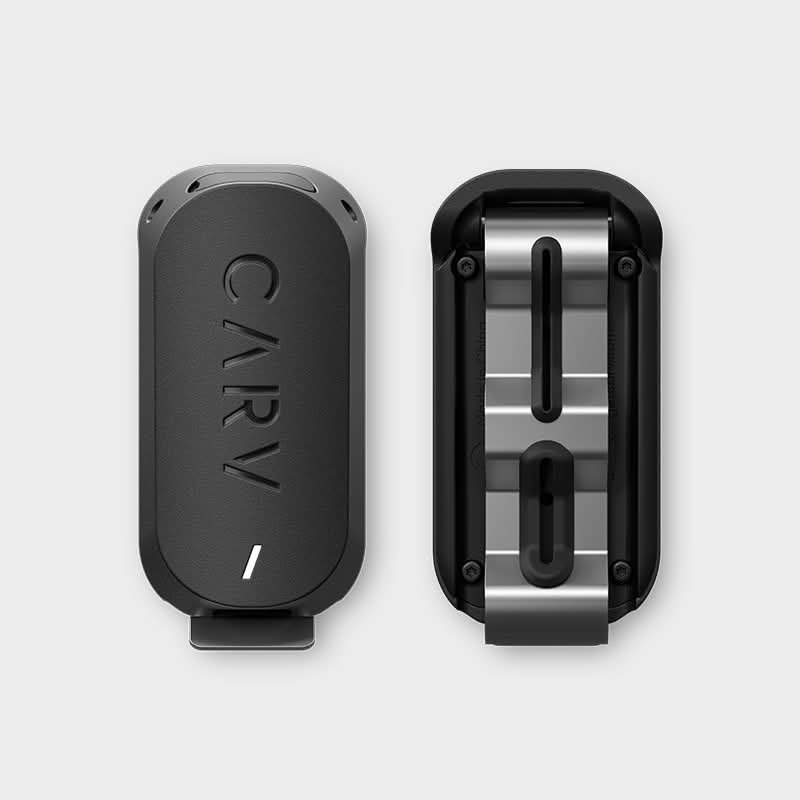
Carv 2 sensors clip to the outside of a ski boot. Image source: Carv.
The progression from installing something inside a boot, to clipping on a sensor, to trying the service with only a phone shows a consistent effort to remove preparation before first use.
Bundling hardware with an annual plan removed a separate equipment purchase. Phone mode also removes shipping, charging, and fitting. A skier can decide during the current trip whether the coaching is useful, rather than buying on faith for a future trip.
How a Phone Became a Ski Coach
The answer lies in the data produced by Carv’s earlier hardware.
According to Carv, its original insoles recorded pressure and motion at the same time, allowing the team to learn how those signals corresponded. Later, skiers wore boot sensors while carrying phones in their pockets, so a single run created two synchronized datasets. Those paired records gave Carv training data for models that infer ski performance from the phone’s motion alone.
The phone did not suddenly acquire pressure sensors under the skier’s feet. Instead, the system uses historical comparisons to infer movement indirectly.
That makes Carv different from asking a general-purpose model a question about skiing. A general model can explain how a turn should work. Carv has to determine how a specific turn actually went. The challenge is not only whether the advice sounds like it came from a coach, but whether the underlying assessment is dependable.
Inside the app, technique is summarized as a Ski:IQ score across balance, edging, rotary movement, and pressure. Carv is explicit that boot-mounted sensors remain the more accurate measurement method. Phone mode trades some detail for easier access. Scores recorded without sensors can appear on leaderboards among friends, but while testing continues, they are excluded from the public global leaderboard.
Using the same score does not mean collecting the same level of detail. Keeping that distinction visible is essential to understanding why Carv still sells hardware.
The Phone Gets Skiers Started; Sensors Make Coaching More Precise
Carv has not replaced its complete product with a phone app. It has divided the experience into two levels of depth:
| Experience | Carv with a phone only | Carv Pro with sensors |
|---|---|---|
| Getting started | Download the app and try it free for three days | Requires Carv 2 boot sensors |
| Main feedback | Run-level scores, chairlift coaching, and end-of-day advice | Adds turn-by-turn analysis and live audio feedback while skiing |
| Training depth | Review overall performance and choose what to improve | Inspect a fuller set of metrics and use drills that respond to each turn |
This division follows Carv’s official membership description. After the phone trial, the phone plan is billed annually. Pro offers both plans based on the number of ski days and a season pass.
The two versions serve different levels of commitment. Someone who simply wants to understand what went wrong can begin with a phone. A skier who wants to inspect every turn and repeatedly train against a specific metric has a reason to consider the sensors.
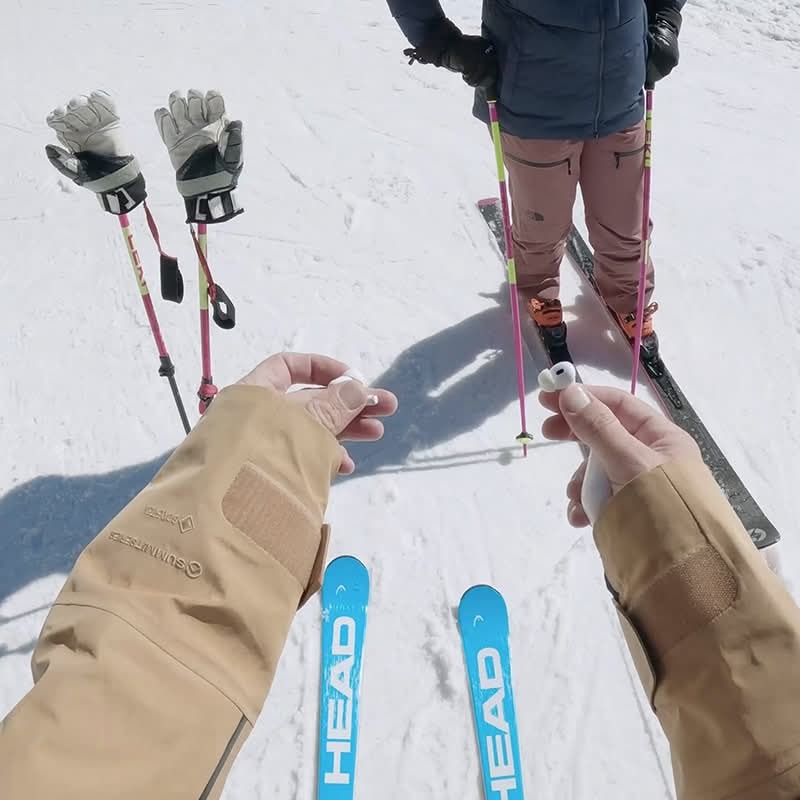
Audio coaching on the mountain. Live turn-by-turn feedback is a Pro feature. Image source: Carv.
The training experience is not limited to announcing scores. Carv says its coaching framework was developed with ski instructors, while its AI combines the skier’s context with spoken and written feedback. With sensors, skiers can also choose targeted drills, metric challenges, and a mode that reads out the score for every turn.
For a product like this, a day of passive tracking can easily be the end of engagement. A specific action to try on the next run gives the skier a reason to open the app again.
Carv also lets customers move between membership levels, although its help center says they must contact support to make the change. Trying phone mode does not require an immediate hardware purchase, and owning the hardware does not force a customer to stay on Pro forever.
An Annual Plan Has to Prove Itself Next Season
Carv is not a newly built demonstration app with no established audience. Its website says the community includes more than 56,000 skiers. The US App Store page shows roughly 2,800 ratings and an average of 4.8 stars. The first number is the company’s reported community size and the second is an app-store rating count; neither should be interpreted as a paid-subscriber total.
Removing the hardware barrier does not remove skiing’s seasonality. The trial happens on the mountain, but a renewal decision may come much later. Novelty during one ski day is not enough to persuade someone to keep paying every year.
Carv memberships renew automatically each year, and billing for the phone plan begins after the three-day trial. The company presents seasonal updates to its scoring models, training content, and coaching as reasons to maintain a subscription. Another rule is easy to overlook: after cancellation, historical runs and coaching remain on Carv’s servers, but a former member must buy a membership again to view them.
That policy can make an accumulated multi-year record more valuable to the skier, but it also raises the standard Carv must meet. Saving what happened yesterday is not enough. The guidance offered next season has to be worth paying for again.
The central change in Carv’s latest product is the timing of the first experience. Previously, a skier had to trust the promise, buy equipment, and then verify its value on the mountain. Now the skier can test the coaching on the mountain first, then decide whether to pay and whether more precise training is worth adding sensors.
Carv has not abandoned those sensors. The phone is the fastest path into the product. The device on the boot remains for skiers who want finer-grained feedback.