

One customer first bought a one-week membership, photographed the old objects around the house, and then returned to switch to an annual plan. The customer described that sequence in a January 2025 review on the US App Store. Curio is an app for identifying antiques and vintage objects from a photograph: take a picture, investigate the object’s possible origin, and compare it with similar items offered for sale. The review, product history, and in-app purchases appear on Curio’s App Store listing.
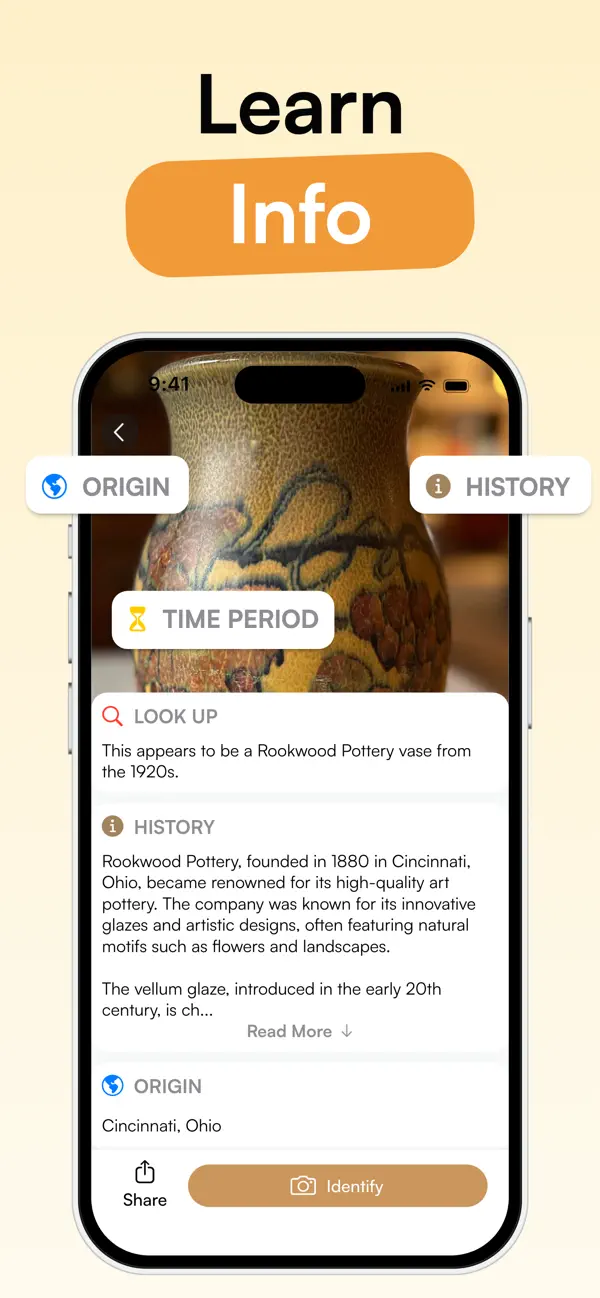
Image source: Curio product screenshot published on the App Store.
The business does not begin by turning ordinary people into expert appraisers overnight. It begins with a much more common question: should this old object at home be kept, sold, or simply cleared out?
At the time of this review, Curio said on its website that it had more than 750,000 users, while Google Play showed more than 100,000 Android downloads. Those figures use different definitions. They should not be added together, and neither is a count of paying customers. They do show that photographing an old object to research it is more than a product concept. Curio describes the workflow and user count on its website, while the Android download range and feature description appear on Google Play.
First Help the User Discover What to Search For
Recognizing a cup and knowing how to investigate that cup are two different tasks.
A search engine can retrieve a great deal of information, but only after the user knows the right terms. Someone who does not know the maker, period, or material can spend a long time searching for variations of “grandmother’s vase.” Image search removes one step, yet the user still has to decide which visually similar results are meaningful comparisons.
Curio turns that uncertainty into a fixed sequence. It identifies the object, offers clues about its origin and age, and then presents similar items found online. The user receives more than a name. The comparable objects provide a path for checking whether the first answer makes sense. That sequence is shown on Curio’s website.
For a household, this can be the first step in sorting inherited or accumulated belongings. For someone who shops at thrift stores and resells purchases, it happens before the buying decision. While an object is still on the shelf, the buyer can investigate what it might be and decide whether it is worth taking home.
This is where the phone form factor matters. A user does not have to return home, transfer photographs to a computer, and begin a separate research session. The camera is already at the point of decision. Identification can lead directly into research without leaving the object behind.
Photography does not eliminate the value of expertise. Curio’s store description says users can add details such as a backstamp, signature, or pattern name and then update the description and valuation. That design choice is easy to overlook: the photograph is the starting evidence, not the entire case. Curio explains those editable details in its Google Play listing.
People Were Already Paying to Solve the Same Problem
AI did not create demand for antique research and valuation. WorthPoint has already turned historical prices, makers’ marks, and collecting references into a subscription database. Its US App Store purchase list shows a price-guide plan at $26.99 per month or $249.99 per year. A bundle that also includes marks reference material is listed at $399.99 per year. Those prices appear on WorthPoint’s App Store listing.
WorthPoint demonstrates that people will pay to research old objects. Curio is trying to lower the threshold for using that kind of information.
The distinction is not simply that a cheaper app replaces an expensive database. Looking up what an object from a known maker sold for and holding up a photograph to ask “what is this?” are connected tasks, but they occur at different stages.
| Product | Main entry point | What the user does first |
|---|---|---|
| WorthPoint | Historical prices, marks, and collecting references | Searches records with an existing clue |
| Curio | Photo identification plus comparable-item valuation | Photographs an unfamiliar object |
| Relic | Photo-generated object details and price guidance | Uses a photo to create an item record |
Relic is a direct competitor in the same category. Developed by Sans Software, it had roughly 7,500 ratings on the US App Store at the time of this review, and features including AI identification require a subscription. The product, rating count, and subscription terms are visible on Relic’s App Store listing.
The useful question is therefore not whether anyone serves this need. It is whether a new app can persuade people without specialist knowledge to begin paying for research that previously felt inaccessible.
From Photographing One Object to Organizing a House
A single identification session can end quickly: read the answer and close the app. Curio’s later releases began to capture what happens after identification.
In June 2025, Curio added PDF export for individual items. Custom collections arrived in August. Accounts, backup, and cross-device synchronization followed in November. The chronology appears in Curio’s App Store version history.
None of those updates made the camera recognize an additional kind of porcelain. They changed where an identification result could go.
A PDF can be handed to a relative or printed for a physical file. Collections prevent dozens of objects from accumulating in one undifferentiated history. Backup means the work of cataloging a household does not disappear with one phone. For someone clearing a parent’s home, the job changes from “identify this vase” to “make sense of this entire room of belongings.”
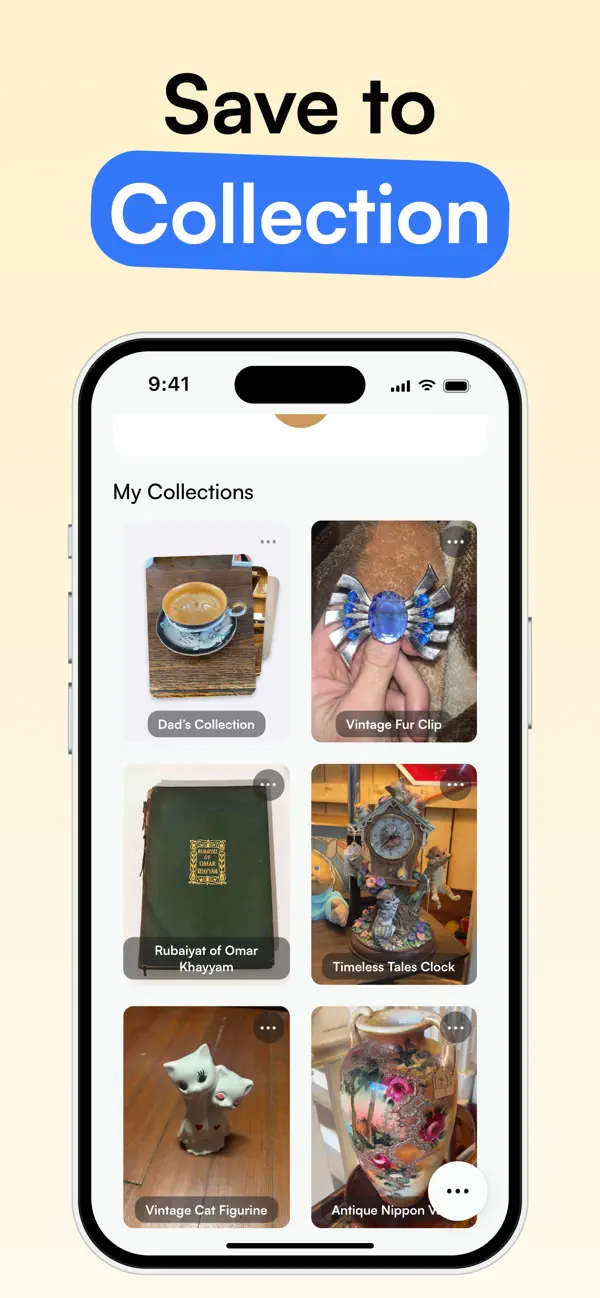
Image source: Curio collection interface published on the App Store.
That is a more credible reason to return than asking the user to photograph one random object every day. Sorting an estate may not be a daily lifelong habit, but the work can continue for weeks. A reseller encounters another batch of unknown inventory every time new stock arrives.
Both groups may use the app repeatedly, but for different reasons. The household user is trying to finish a project with a clear endpoint. The reseller performs the same kind of investigation over and over. A willingness to start a trial does not mean both groups will renew in the same way.
Curio currently offers limited free use and charges for unlimited identification. Its US in-app purchase list also includes a $99.99 lifetime Premium option. The access model is described on Google Play, and the lifetime item appears on the App Store.
The customer who moved from a weekly plan to an annual plan provides one concrete purchase signal. The user first tested Curio against familiar possessions, then decided whether longer access was worthwhile. That review cannot represent every conversion path, but it highlights a central constraint for this category. Users possess the physical evidence and may already know part of the answer. A fluent description alone will not sustain their trust.
A High Estimate Does Not Mean the User Can Earn That Price
Curio’s valuation interface can create the expectation that one photograph reveals exactly what an object is worth. The company’s website says its estimates rely on similar items listed online. An asking price and the amount a buyer ultimately pays are not the same evidence. Curio describes its comparable-listing approach on its website.
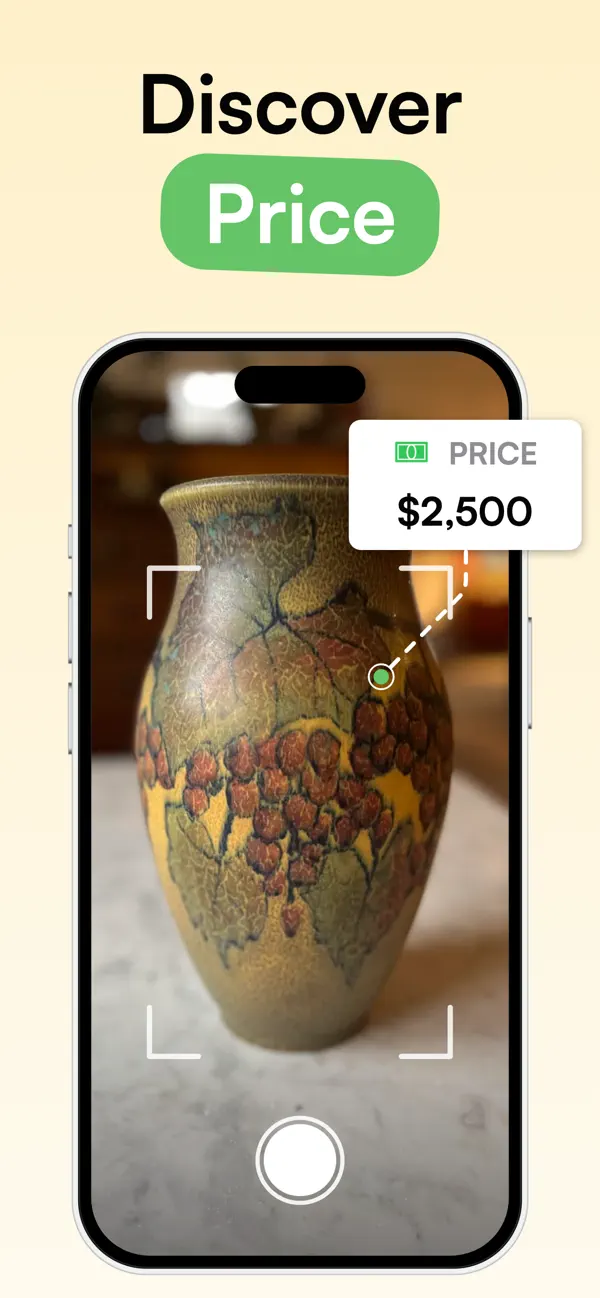
Image source: Curio valuation example published on the App Store; the amount shown is not a completed sale.
That distinction directly affects how the product should be sold.
For someone sorting household possessions, learning the object’s name and finding useful comparisons may be enough to continue. For a reseller, an estimate that runs high can lead to overpaying for inventory. Misidentifying a reproduction as an antique is more serious than a minor experience error.
Curio’s own inventory guide for resellers says that after receiving an estimate, users should inspect sold comparables and compare condition rather than relying only on active listings. That advice appears in Curio’s reseller inventory guide.
The guidance defines a practical product boundary. Helping a user begin an investigation is not the same as authenticating an object or making the transaction decision. Strong links to comparable evidence, a clear explanation of where a price came from, and an easy way to add details are more useful than an amount that merely looks precise.
Where the Opportunity Remains
Anyone building another photo-based antique identifier cannot stop at upload, description, and subscription prompt. Curio already offers that basic loop, and Relic is competing for the same users.
The more useful lesson lies in what Curio added afterward. Once an object is identified, the user needs to verify, classify, preserve, and perhaps share the result. The more completely the product supports those actions, the less its revenue depends on the novelty of a first scan.
Household organization and professional resale should still be treated as different initial markets. A family needs an inventory that relatives can understand, save, and pass around. A reseller cares more about comparable evidence, the basis for each price, and the speed of moving to the next item. It is easy to mention both audiences on a marketing page. Completing the work for one of them is what creates a credible reason for the next payment.