
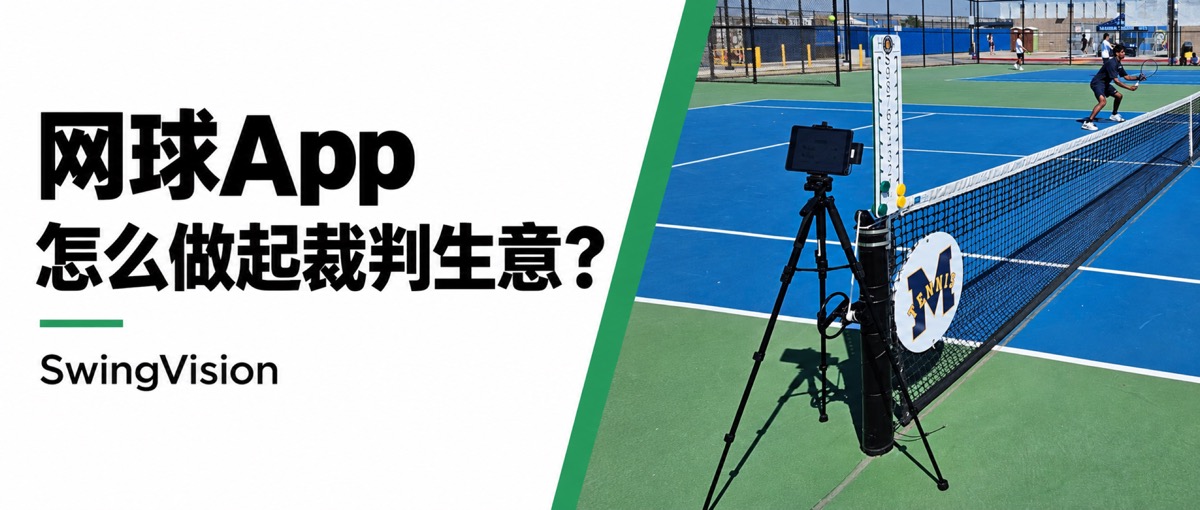
On March 21, 2025, tennis teams from two American high schools met with SwingVision running across all six courts. The mobile app originally helped players record matches and measure their shots. At this event, it gave players a way to review disputed in-or-out calls, according to the USTA Southern California event report.
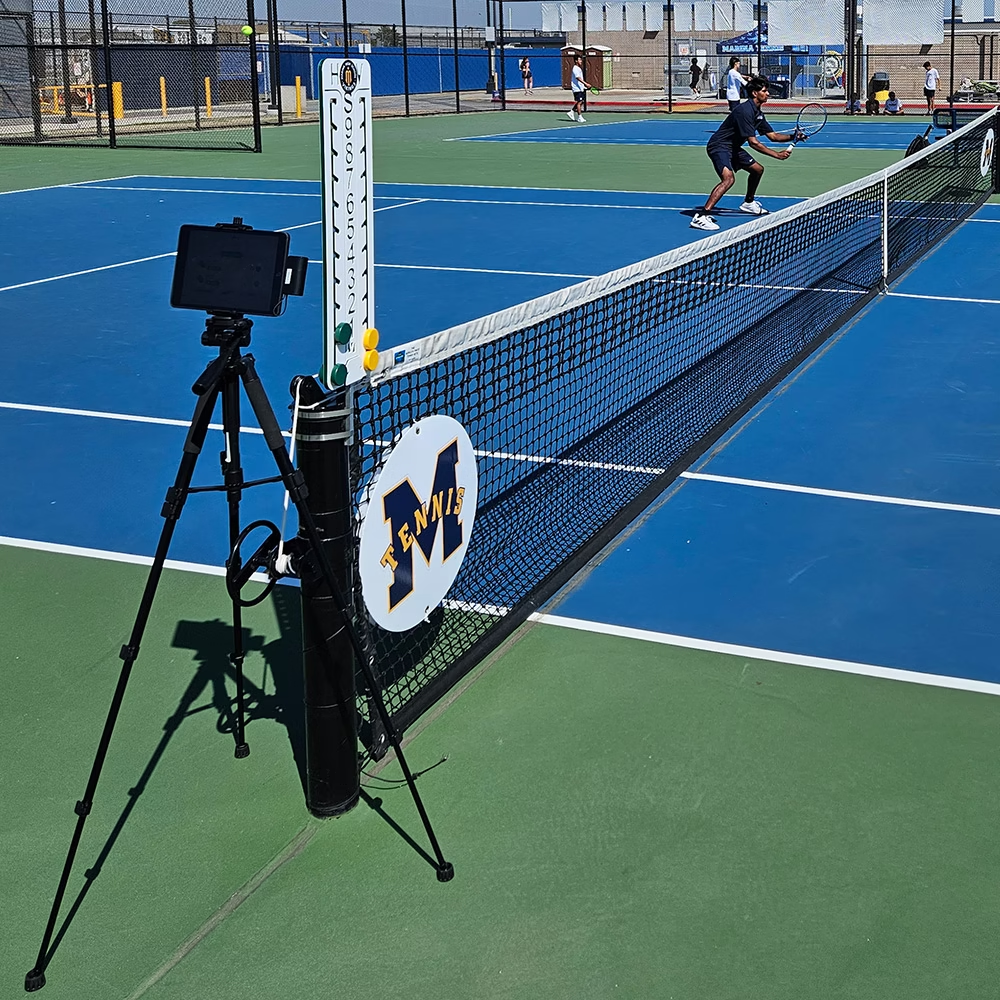
That is a concrete product transition. During practice, the AI tells one player how they performed. During competition, it helps both sides answer a shared question: was that ball out?
The buyer changes with the question. Individual players can purchase annual subscriptions. A tennis facility can buy an annual package that includes hardware, software, installation, and support. An iOS app is no longer waiting only for consumers to pay in the App Store.
From Reviewing Your Own Shots to Reviewing Them Together
SwingVision’s company team formed in 2019. Its basic workflow is easy to understand: mount a phone beside the court, record a match, and let computer vision identify the ball and players before generating statistics and highlights. An amateur no longer needs to scrub through a full recording to find a rally. A coach can discuss a specific clip instead of relying only on memory. The company describes that origin in its team overview.
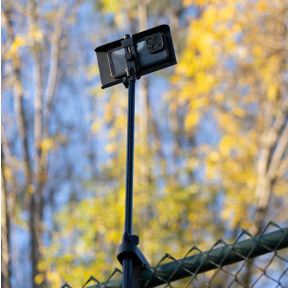
This is not a chat window added to an existing sports app. The camera captures the match, computer vision analyzes it, and a watch or courtside screen gives people a way to operate the system during play. Phone placement and recording reliability affect everything that comes afterward.
Tournament use created a different context from practice.
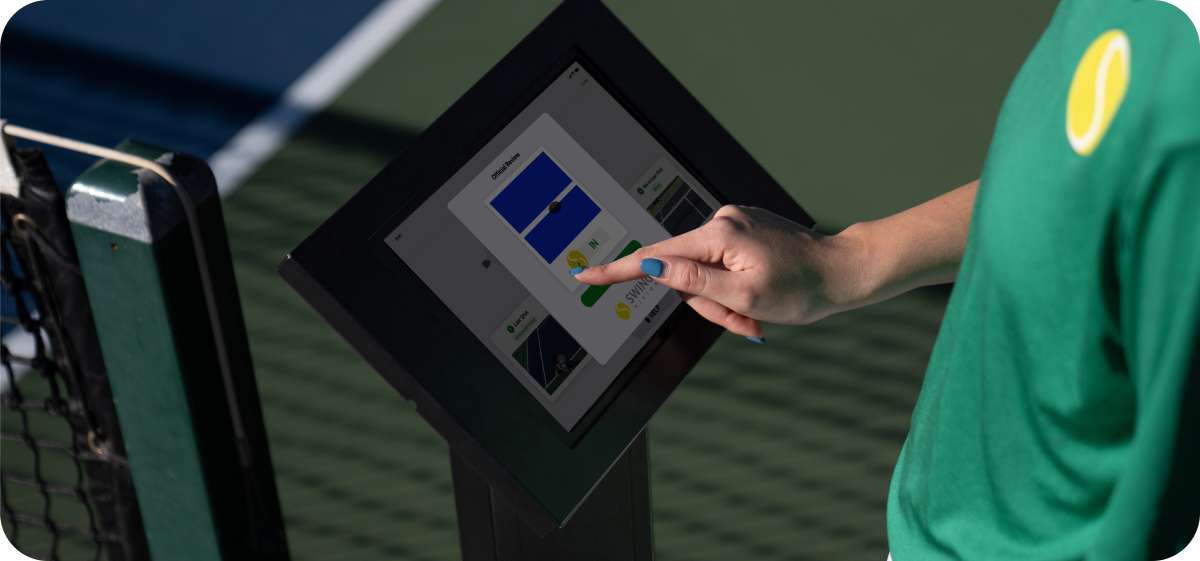
In December 2024, Tennis.com reported that SwingVision and USTA Southern California were testing electronic line review at events across four locations. An iPhone behind the baseline recorded the match, while an iPad beside the net let players review calls. When one player challenged an out call, both sides walked to the screen and reviewed the agreed point. The trial rules allowed three unsuccessful challenges per set, according to the Tennis.com report.
The same video serves two different jobs. During individual training, it is material for analysis. During a match, it becomes evidence that both sides can inspect.
That is why the screen near the net matters. The result does not stay on one player’s private phone. It appears in a place both competitors can use. The product must handle more than estimating where the ball landed. It must also define how people review a disputed point and then continue the match.
Selling to a Facility Requires More Than a Download Link
SwingVision sells subscriptions to individuals. For facilities, it offers a permanent product called Swing Court. Cameras and an operating terminal remain at the venue, and a player taps the courtside screen to start recording. The annual license includes hardware, software, installation, onboarding, and continuing technical support. Pricing is available only by request on the Swing Court venue page.
The buyer is no longer simply a player who wants to inspect personal technique. It is an operator managing courts, lessons, customers, and competitions. When the buyer changes, delivery must change too.
An individual can bring a phone and attach a mount. A facility needs different customers to use the same installation throughout the day. Staff also need help when a camera, terminal, or network connection fails. Installation, onboarding, and support therefore become part of what the venue purchases rather than incidental work outside the app.
SwingVision also presents video analysis, live streaming, and tournament line review as facility features. It suggests commercial uses such as charging for recorded matches, upgrading lessons, and selling video. Those are the company’s recommendations to operators, not verified revenue results. They still show the budget SwingVision is trying to reach: not only personal entertainment spending, but also venue operations and coaching. The proposed uses are listed on the same facility product page.
Six high school courts using the product at once show that the venue and event path exists beyond a product brochure. The event does not reveal how many licenses a school or organizer purchased. It does show that an organization was willing to put the app inside the match workflow.
A Stronger Free Tier Makes the Paid Reasons More Specific
On the consumer side, SwingVision has not hidden every attractive feature behind a subscription.
In January 2026, it increased the free plan’s monthly recording allowance from two hours to eight. The free tier also gained high-definition video, Apple Watch line-call challenges, and live spoken line calls. Free users, however, can access only their latest seven days of recordings, export highlights of up to five minutes, and see a small number of advertisements. SwingVision explains the changes in its free-tier announcement.
The design lets a free user complete the core loop: record a real match, receive analysis, and try the line-calling experience. Long-term storage, deeper analysis, and higher usage remain reasons to upgrade.
The company’s current comparison page divides paid access into three levels on its subscription plan table.
| Plan | Monthly recording allowance | Main differences |
|---|---|---|
| Plus | 16 hours | Video editing, shot statistics, heat maps, and cloud storage |
| Pro | 30 hours | Adds shot-by-shot analysis, score and match statistics, and full-court line calling |
| Max | 60 hours | Adds tactical analysis, 4K video, and family sharing |
The US App Store lists annual in-app purchases of $95.99, $179.99, and $299.99 for those tiers. These are App Store prices, not audited revenue and not necessarily identical to offers on the website. The amounts appear in the US App Store listing.
During this review, SwingVision’s website displayed a Pro annual offer of $143.99 for the first year and $179.99 for the second. The same purchasing flow offered a Swing Stick phone mount with the first-year subscription on the website comparison page.
The mount is not unrelated merchandise. It addresses a prerequisite for the software: the phone must remain stable and correctly positioned beside the court. A user who successfully records the first match can experience statistics, replay, and line review. Bundling the mount with a subscription sells software while reducing the setup failure that could prevent the user from seeing its value.
Family sharing gives the highest plan another purchasing reason. A late-2025 version update allowed Max to be shared with up to five family members. That can appeal to households with several tennis players and makes the premium tier about more than higher video quality. The change is documented in the App Store version history.
Feature tiers and pricing show how the company wants to sell. They do not prove that users upgrade or renew because of those choices.
The Hard Part Is Getting Competition to Trust the Product
Moving from personal analysis into match review increases the product’s responsibility.
If training software misreads one shot, a player can revisit or correct the analysis later. A disputed call during a match can affect both competitors’ trust in the result. Tennis.com’s trial report noted that the system still needed on-site maintenance, reliable connectivity, and backup power. A single camera could not make a decision in every situation. Those limits are part of the same independent tournament account.
“A phone can help review line calls” is therefore not the same claim as “a phone can replace a professional officiating system without conditions.”
Another distinction involves certification. SwingVision appears on the International Tennis Federation’s list of approved player-analysis technologies, with an approval date of October 31, 2025. Approval as player-analysis technology is not certification as an electronic line-calling system. During this review, SwingVision did not appear on the ITF’s separate electronic line-calling list. The two official references are the approved player-analysis technology list and the classified electronic line-calling systems list.
Those statuses must remain separate. An event can trial a product, and the product can receive approval in one technical category, without gaining every credential required for every level of competition.
SwingVision’s demonstrated commercial progress is that one mobile computer-vision system now has several buying paths. A player pays a subscription to record and understand personal matches. A facility buys an annual package for shared use. Event organizers connect the system to a process for reviewing disputed points.
The next challenge is not simply generating more downloads. SwingVision must persuade organizations to keep entrusting part of the competition workflow to its system. That decision is harder than adding another AI feature, because it depends on reliability, shared procedure, support, and trust.