
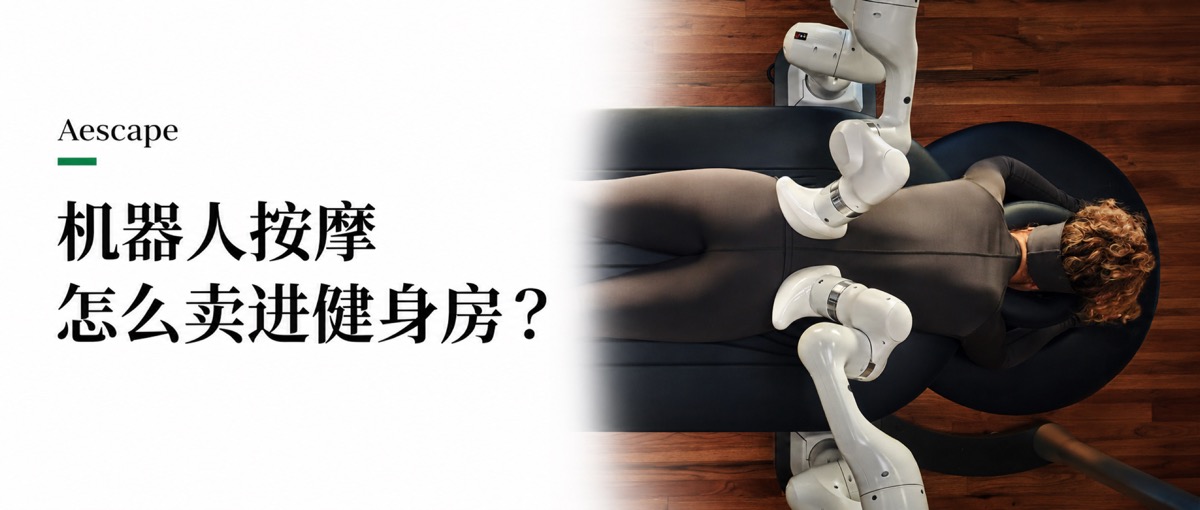
At Equinox gyms in the United States, members can book a massage without a massage therapist. They change into close-fitting clothing supplied by the club, lie on a table, and let a machine scan their body before two robotic arms begin working. If the pressure feels wrong, they do not have to explain it to anyone. They adjust it themselves on a screen. Equinox also offers members one free 30-minute trial, according to its Aescape experience guide.
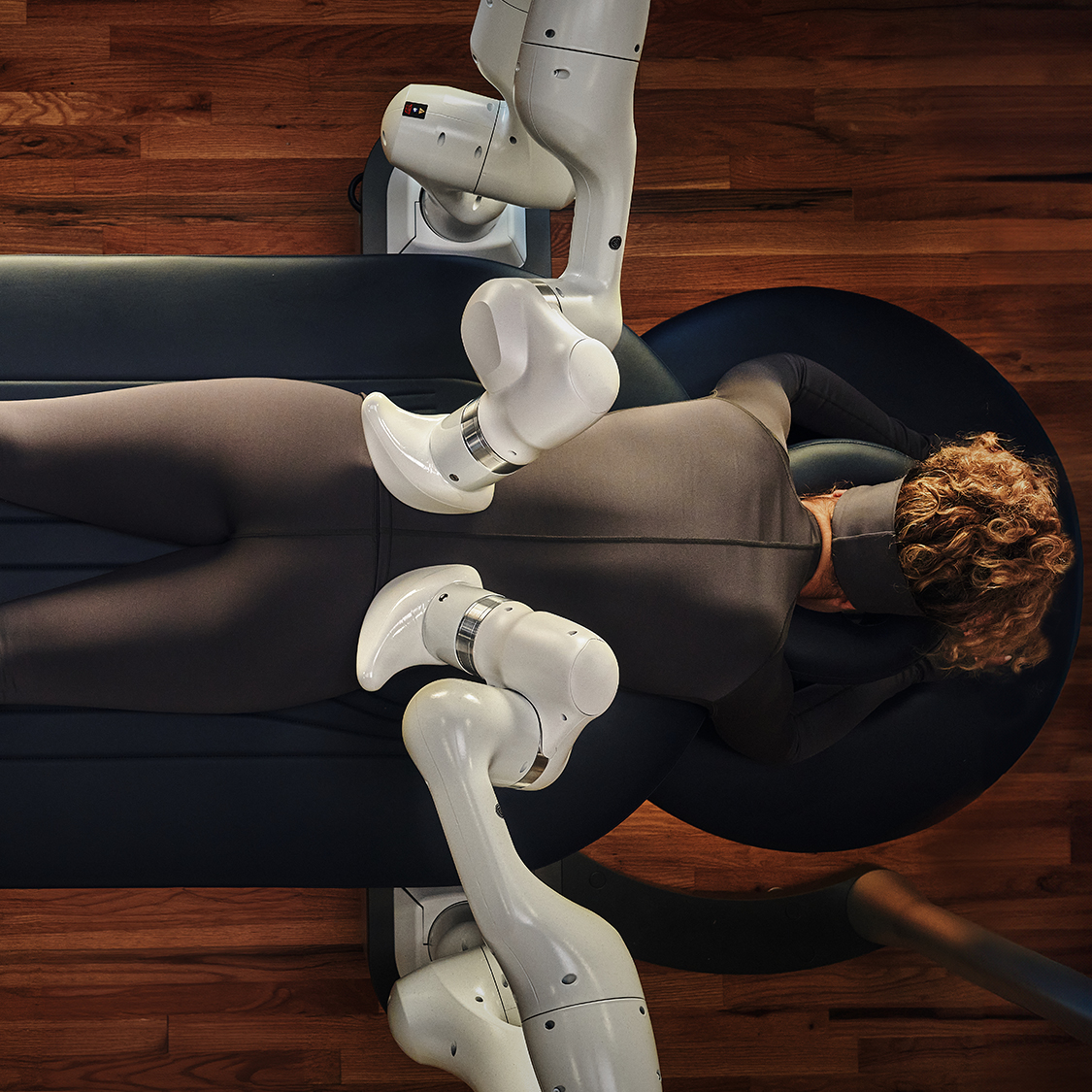
The machine is called Aescape. On the surface, the company sells robotic massage. Its prices and booking paths reveal a broader commercial system: Aescape first sells expensive equipment to a venue, then helps that venue sell individual massages to consumers.
That distinction matters for physical AI. Delivering a robot is only the first transaction. The business works only if enough people keep booking the service after the hardware has been installed.
Start Where Customers Already Are
Aescape is not a newly formed robotics company. Founder Eric Litman started it in 2017. When the company publicly introduced its commercial product in 2024, it partnered with Equinox and planned an initial rollout across ten New York locations instead of opening a chain of Aescape-owned massage studios. The plan was described in the product launch announcement.
By December 2025, Axios reported that Aescape was available in more than 60 Equinox clubs. Its reporter paid $39 for a 30-minute session at a Washington location and also received access to the gym for the day. That first-person account appears in Axios’s Aescape review.
The channel choice is more useful to study than the abstract question of whether a robot can replace a massage therapist.
Opening a new massage studio would require Aescape to attract people to an unfamiliar location and then persuade them to trust an unfamiliar machine. A gym partnership starts with people who already visit the venue, already spend money on exercise, and already associate the operator with physical performance. The floor space, customer habit, and brand relationship are already present. Aescape adds a new service to that environment.
The free first session has a specific commercial purpose. A robot touching a customer’s body requires more trust than installing an app. Letting members try the controls and pressure before asking them to make a second booking puts experience before commitment. Public information does not show how many free trials convert into paid sessions, so the trial should be understood as a sales mechanism rather than proof of retention.
Sell the Moment After a Workout, Not Generic Relaxation
By 2026, Equinox was no longer presenting Aescape as one generic massage. Its program list included pre-run and post-run sessions, along with options associated with strength training, high-intensity training, yoga, and Pilates. Equinox describes those programs in its training-linked Aescape guide.
This is a change in both product naming and sales context.
“Would you like a massage today?” creates a separate purchasing decision. “Would you like a targeted session after your leg workout?” attaches the service to an activity the customer just completed. Staff gain a concrete reason to introduce it, while customers choose among a few programs related to their workout instead of interpreting a long list of unfamiliar treatments.
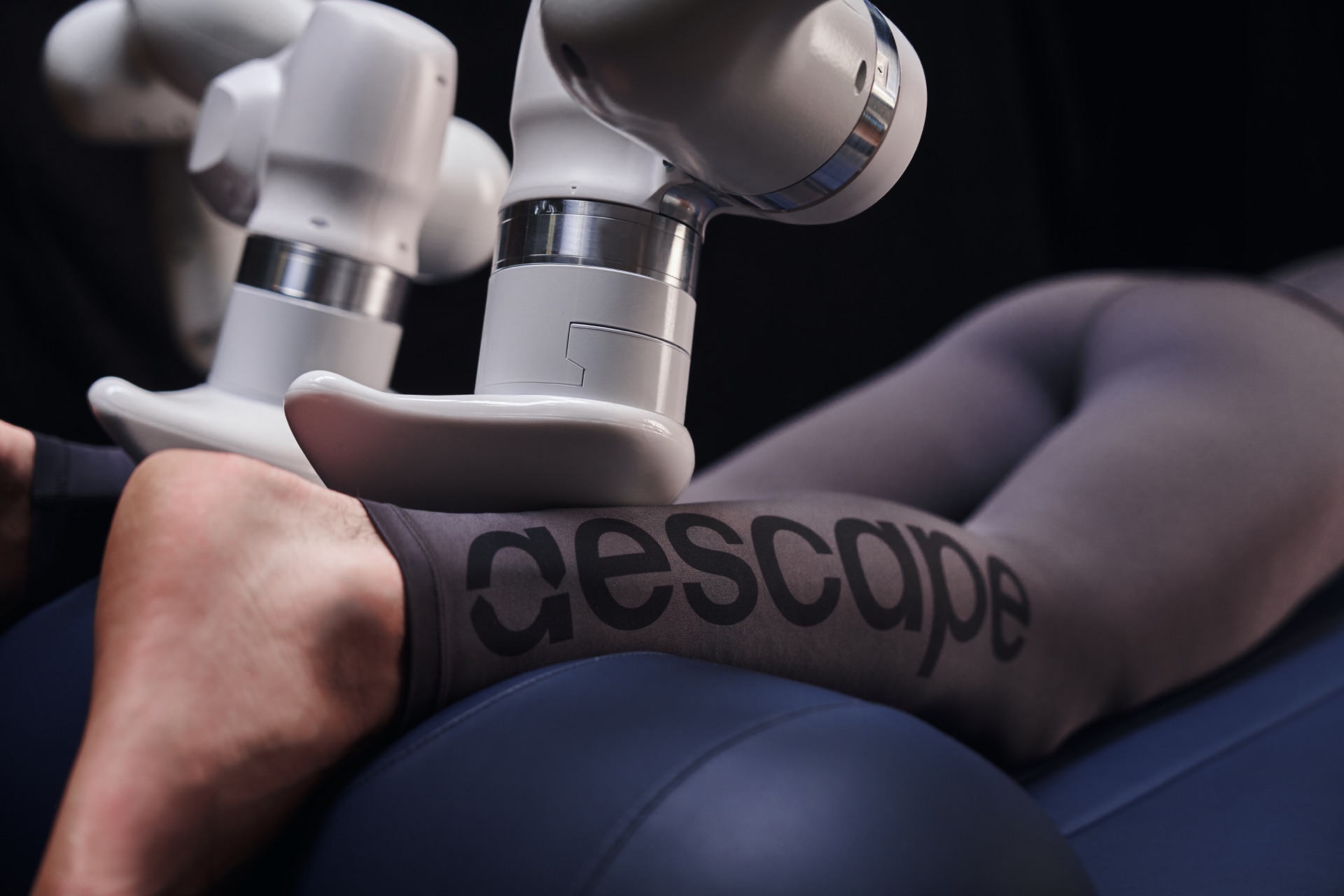
The programs are not improvised by a model. Equinox says licensed massage therapists first demonstrate techniques on people. The team captures movement, force direction, and pressure, converts those inputs into routines the robotic arms can execute, and tests the result repeatedly. AI and robotics adapt the routine to the customer’s body, while human expertise remains part of program design.
Aescape also differs from a conventional massage chair in more than the number of arms. TIME described body scanning and machine learning as inputs to a personalized massage, with customers choosing body areas and pressure on a touchscreen in its 2024 product profile.
The commercial advantage is that one installed system can carry multiple programs. A venue does not need a different machine for runners, strength-training customers, or Pilates members. New programs can create new reasons to book the same asset. Whether those programs actually increase repeat use still depends on customers deciding that another session is worth paying for.
The Venue and the Customer Receive Different Bills
Aescape’s public partner pricing separates its revenue streams clearly on the company pricing page.
| What the venue buys | Public price | Charging model |
|---|---|---|
| Massage system | From $125,000 | Equipment purchase, with financing available |
| Software, service, and support | $10,000 per system per year | Required annual fee |
| Optional customer acquisition | 30% for new customers; 15% for returning customers | Performance fee, subject to partner terms |
Payment does not end when the venue buys the machine. Software, support, and operating tools create recurring annual revenue. If the venue also uses Aescape’s customer-acquisition service, it pays commissions tied to bookings.
This means Aescape is not relying only on hardware delivery. It has put ongoing service and help generating demand into the revenue model. The venue has a different calculation: how many sessions must be booked each day for massage revenue to cover the equipment, annual fees, floor space, and operating work.
The pricing page includes a return calculator, but it produces estimates from assumptions such as utilization and price per session. It is not an audited report of partner profitability. Aescape also notes that actual performance depends on utilization, pricing, and operating conditions. A projected payback period should therefore be treated as a planning scenario, not evidence that every installation has already reached it.
That is the central difficulty in service robotics. Reliable operation solves delivery. Continued customer purchases solve the business. By pricing customer acquisition as a separate service, Aescape at least acknowledges that installing equipment is not the end of selling.
Move From One Trial to a Monthly Booking Habit
Aescape uses a different package on the consumer side.
Its Equinox-specific subscription page lists three 30-minute massages for $99 per month. The plan renews automatically and can be paused or canceled before the next renewal. During this review, the package was marked sold out, so it should not be interpreted as continuously available at every club. The offer and its current status appear on the Equinox monthly pack page.
The plan attempts to change purchase frequency. Instead of reconsidering the full price before every session, a customer buys a month’s allowance first and then schedules the included visits.
For a venue, that structure could make demand more predictable. For a customer, it can place massage alongside recurring training appointments. However, putting a subscription on sale is not the same as proving long-term renewal. The public page shows how Aescape wants to sell repeat use; it does not reveal how many customers maintain the habit.
A page for Equinox Woodbury in New York shows another configuration. It lists 30-, 45-, and 60-minute appointments beginning at $39, $54, and $69, includes day access to the gym, and does not require an existing Equinox membership. Those details are specific to the Woodbury booking page and should not be generalized to every location.
The same robotic service can therefore be sold to existing members or used as a reason for non-members to visit. The first model borrows an established customer base. The second bundles massage with access to the wider venue. The machine does not change, but the audience, price, and package can.
The Robot’s Advantage Can Also Be Its Weakness
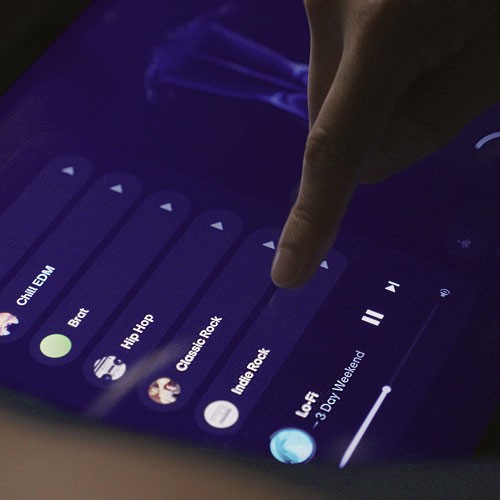
Direct control is one of Aescape’s clearest experience choices. Customers use a screen to select options, and preferences can be stored in a profile for a later visit. For people who dislike explaining pressure or body areas to an unfamiliar therapist, that autonomy may be attractive. Equinox describes the controls in its personalized experience overview.
The same standardized experience will not satisfy everyone. The Axios reporter found the interface easy to use but still preferred a human massage, describing the robotic contact as relatively hard. That judgment is one person’s experience, not a universal verdict, but it marks an important limit: being bookable and reaching dozens of chain locations does not mean the robot is better than a person on every dimension.
Aescape is commercially interesting because it did not stop at a technical demonstration. It found gyms with existing traffic, offered a first trial, connected programs to specific workouts, and experimented with monthly session packs. For venues, it separated equipment, recurring software and support, and customer acquisition into different charges.
For builders of physical AI products, this operating design matters more than the novelty of robotic arms learning to massage. Sales continue after the machine arrives. The next unit of value is created only when a customer makes another appointment.