

Swyx, the host of the Latent Space technology community, used to preserve a good passage from a podcast by noting the timestamp, downloading the audio, and cutting the clip himself. He later replaced Overcast with Snipd. When something worth remembering plays, one press on his headphones saves the relevant passage and lets AI organize it into a note. In a March 2025 interview, he described Snipd as one of the most-used apps on his phone. His workflow appears in the Latent Space interview with Snipd’s founder.
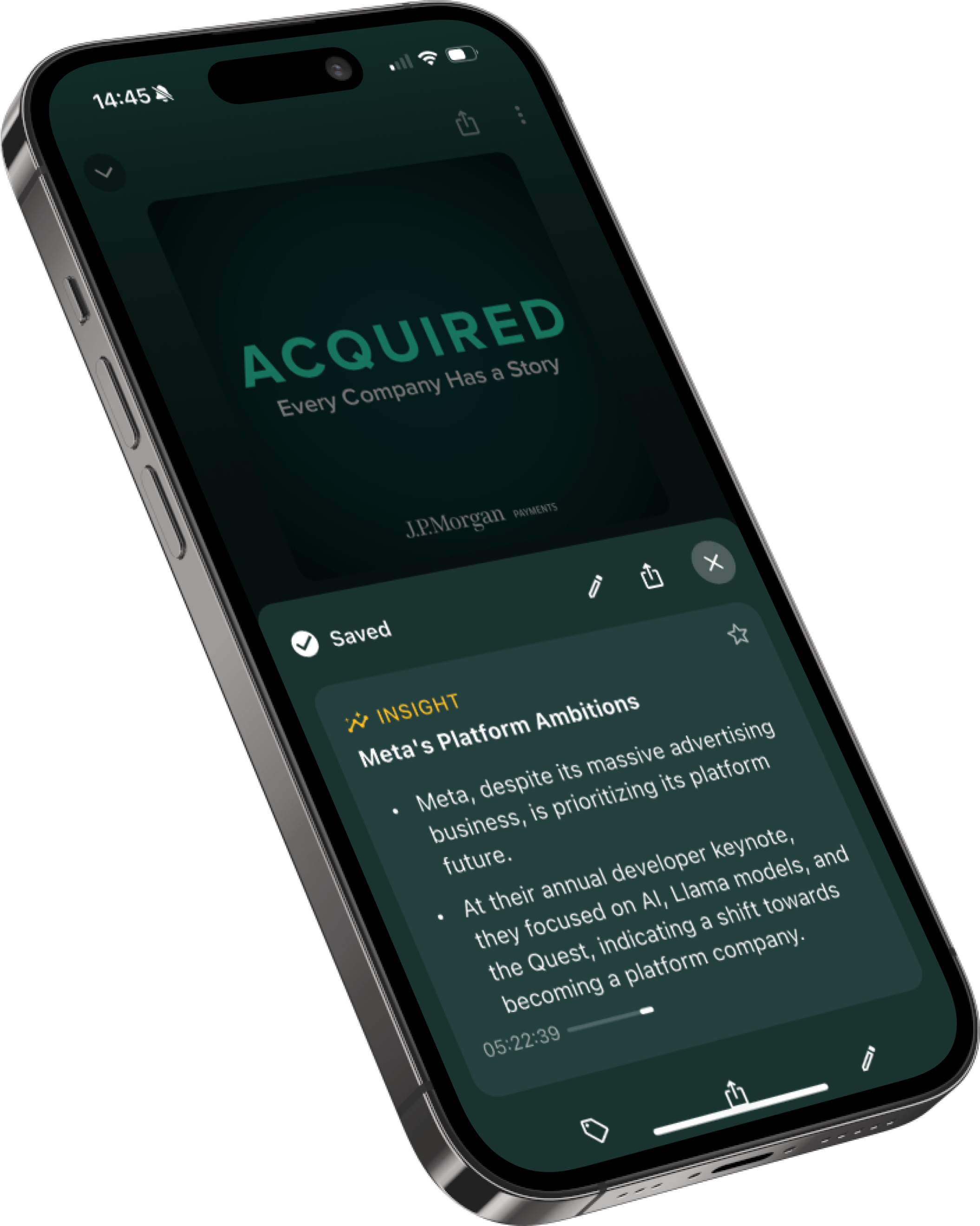
The podcasts did not change. The listener changed players.
That is the interesting part of Snipd’s business. It does not sell exclusive shows, and it does not require payment before someone can listen. It addresses a different problem: after an hour of listening, how much of the useful material can a person actually keep?
It Started With Sharing, but Users Wanted Notes
Snipd was founded in 2021. It has several years of product history and has continued to expand its AI features over the past two years rather than appearing as a brand-new player. EU-Startups covered the company’s founding and early financing.
Founder Kevin Smith has said that the team initially wanted to build a sharing product around podcast clips. People would discover a compelling moment and then listen to the full episode. The founders expected the main challenge to be persuading users to cut and share audio.
Actual behavior pointed elsewhere. Users were willing to save clips, and many of them liked long-form shows. Rather than build a social feed of short excerpts, the team found a more committed audience in people who listened carefully and wanted to remember what they heard. Smith described that early adjustment in the same Latent Space conversation. It was not a pivot announced after a financing round; it emerged from watching the first users.
The central action therefore became “keep this passage,” not “send this to a friend.”
A normal bookmark saves an entire episode. A timestamp saves a location. Snipd tries to preserve the audio, its surrounding context, and an organized written note at the same time. When users return, they do not have to guess why a sentence mattered to them.
That distinction also clarifies the product’s buyer. A casual listener already has many free podcast apps. Snipd is for someone who treats listening as research, education, or a durable input to other work.
The Product Matters Most When the Phone Is Out of Reach
People often listen while walking, commuting, exercising, or doing chores. If keeping an idea requires stopping and typing, the note is likely to disappear.
Snipd moves the capture action to the headphones. After saving a moment, a user can adjust the note length and the audio boundaries. AI can find an appropriate start and end, or the user can choose a fixed duration. The Snip customization guide shows that the product does more than cut a few seconds around the button press.
In November 2024, the company added automatic extraction. When enabled, AI selects notable parts of an episode and creates notes. User-made clips and AI-selected clips remain separate, and a listener can still save anything the automatic pass missed. Snipd explained the behavior in its Auto-Snipping release note.
Manual and automatic capture do not cancel each other. Manual capture answers, “What mattered to me?” Automatic capture adds, “What else might I have missed?”
The notes can then support questions about the episode: what were the main arguments, and did the listener overlook an important point? A problem that previously required replaying the audio gains a searchable written interface.
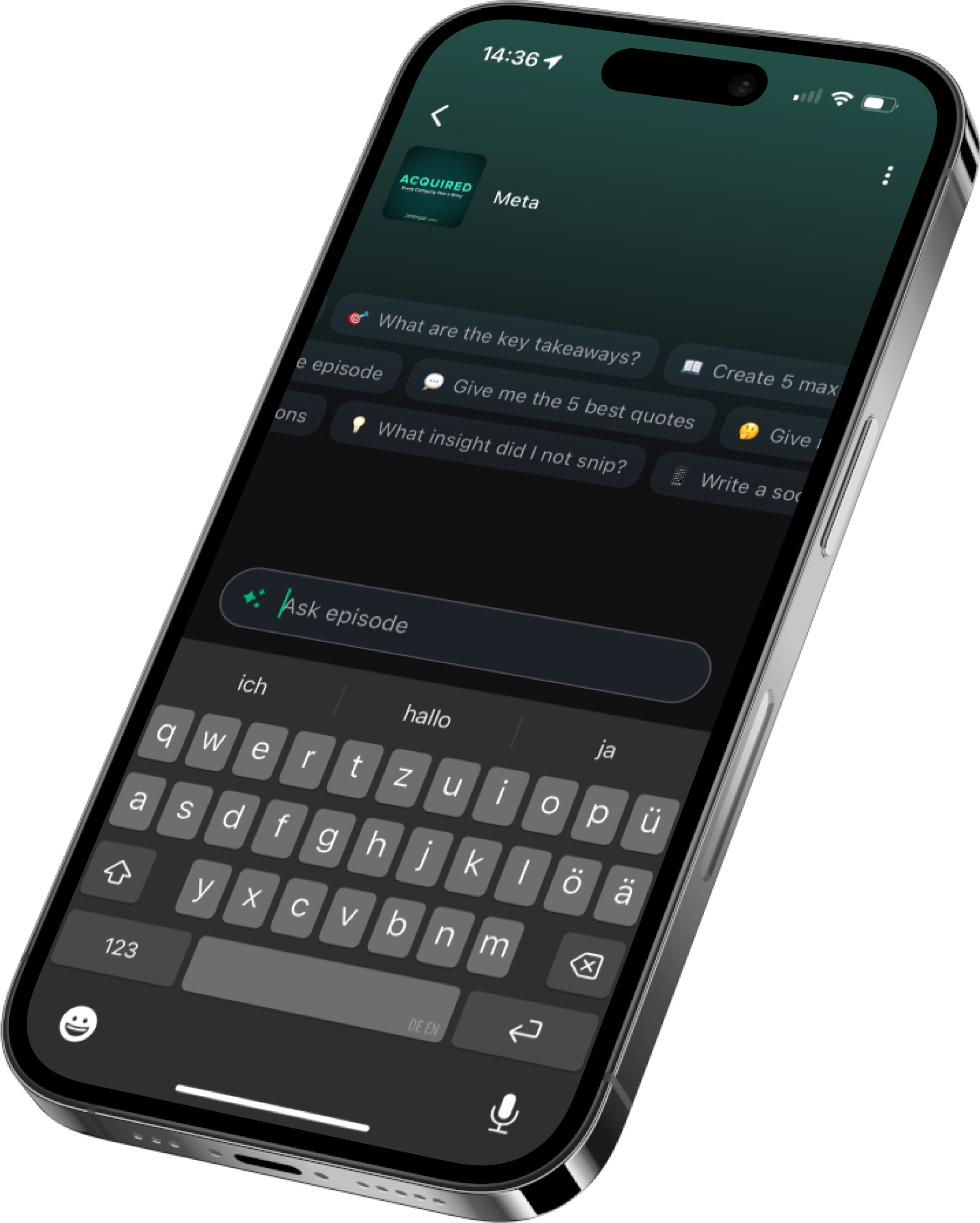
AI is not a generic chat box placed beside a player. It continues working on the same audio and extends the listening action the user just completed.
Listening Is Free; Processing Is Paid
Snipd preserves free podcast playback. It also lists note export and synchronization with external note-taking tools among the free core features. The product does not turn access to a user’s own notes into the paywall. The distinction appears on Snipd’s pricing page.
The paid tier is separated by AI processing. Subscribers can use AI features without a limit on episodes that Snipd has already processed. For audio that has not yet been processed, they receive 900 minutes each month. Free users can try AI features on two episodes per week.
The 900-minute figure is easy to misread. It does not mean that a subscriber can listen to only fifteen hours of podcasts in a month. It is an allowance for applying AI to audio that has not been processed before. The site currently displays a price of $6.99 per month, while the exact billing term and regional price remain subject to checkout. Both the allowance and the displayed offer are documented on the pricing page.
The two kinds of audio create two cost paths. A user does not repeatedly spend a personal allowance on an episode already available in processed form. An unprocessed show consumes part of the 900 minutes.
This makes the paid object specific. Listeners are not paying for the show itself. They are paying to turn the shows they choose into notes, question-answering material, and searchable text.
The US App Store currently shows roughly 1,200 ratings and a score of 4.7. That is a regional rating snapshot, not a download count or a subscriber count. One heavy user’s review nevertheless identifies the next pricing problem: 900 minutes was not enough, and the reviewer contacted support asking for more. The current evidence is visible on the US App Store listing.
Getting someone to subscribe and giving the heaviest subscribers a way to spend more are different product problems.
Snipd Also Wants to Change How People Listen
On March 26, 2026, Snipd introduced AI DJ. The feature does not replace an entire episode with synthetic narration. It selects important passages from the original program and uses short spoken transitions to connect them. The guest’s voice still comes from the source recording, and users can leave the mode and return to the full episode. Snipd described that design in its AI DJ announcement.
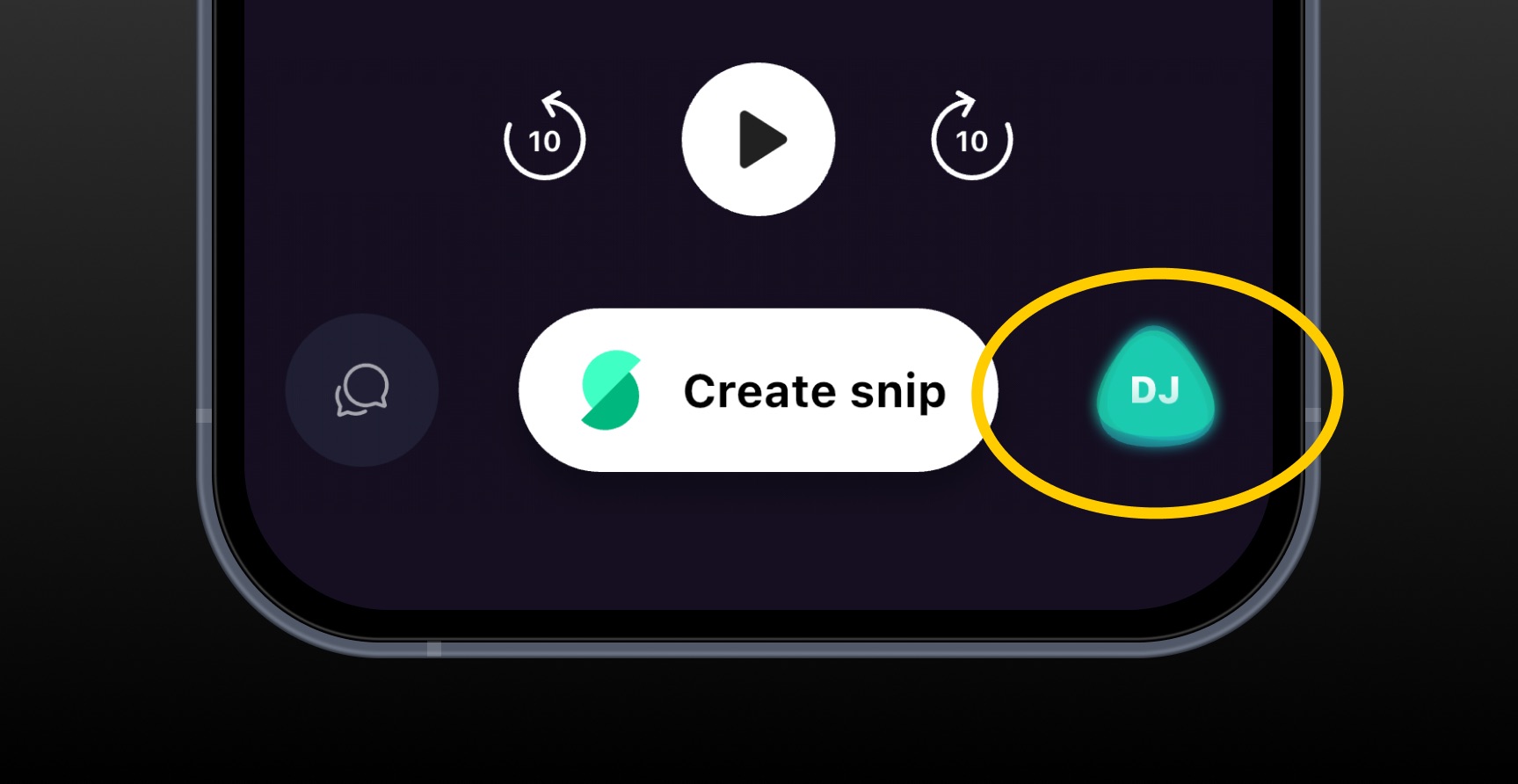
This differs from producing a written summary because it does not require the listener to abandon the listening habit. Someone who wants a faster overview can keep wearing headphones. When a passage deserves to be kept, the same clipping workflow remains available.
Original audio, condensed listening, notes, and questions now form one loop inside the player. Those features may be unnecessary for someone who listens casually. For a person who uses podcasts as source material, changing players is no longer only a change of interface.
The feature also creates a commercial tension. Sending more audio through the AI workflow can help users discover more value, but it can also consume the allowance faster. Usage is both the proof of product value and the reason the customer reaches the next paywall.
The Last Purchase No Longer Requires a Support Email
On June 16, 2026, Snipd announced through its official update show that users could buy additional AI processing time directly in the app. They no longer needed to contact support. The purchase entry point appears near the episode that requires processing. The change was documented in the Snipd product update episode.
The update is less dramatic than a funding announcement, but it says more about how the product makes money.
The funnel begins with free listening. A user hears something worth keeping and tries the AI workflow. A subscription supports continued use. When a heavy listener reaches an unprocessed long-form episode after exhausting the monthly allowance, extra minutes have an immediate reason to exist.
The content that needs processing is already on screen. The next step changed from writing to support into making a purchase.
Snipd’s lesson is not that every free media product should add a summary button. It found a task that begins at the exact moment attention would otherwise be lost, made that task available from the headphones, and carried the result into notes and questions. It then priced the costly part of the workflow rather than the freely available media. The podcast remains free; making it useful after playback becomes the product.