

Keri gave her mother two different memoir services. With the first, her mother had to write down her memories. With Remento, she could speak into a phone, let AI organize the recording into prose, and receive the result as a printed book. In a September 2026 comparison, Keri showed the finished book and said her mother had already started a second one. The SheSaved review of memoir services includes a promotional code, but its account of the workflow is concrete: the storyteller no longer has to become the writer.
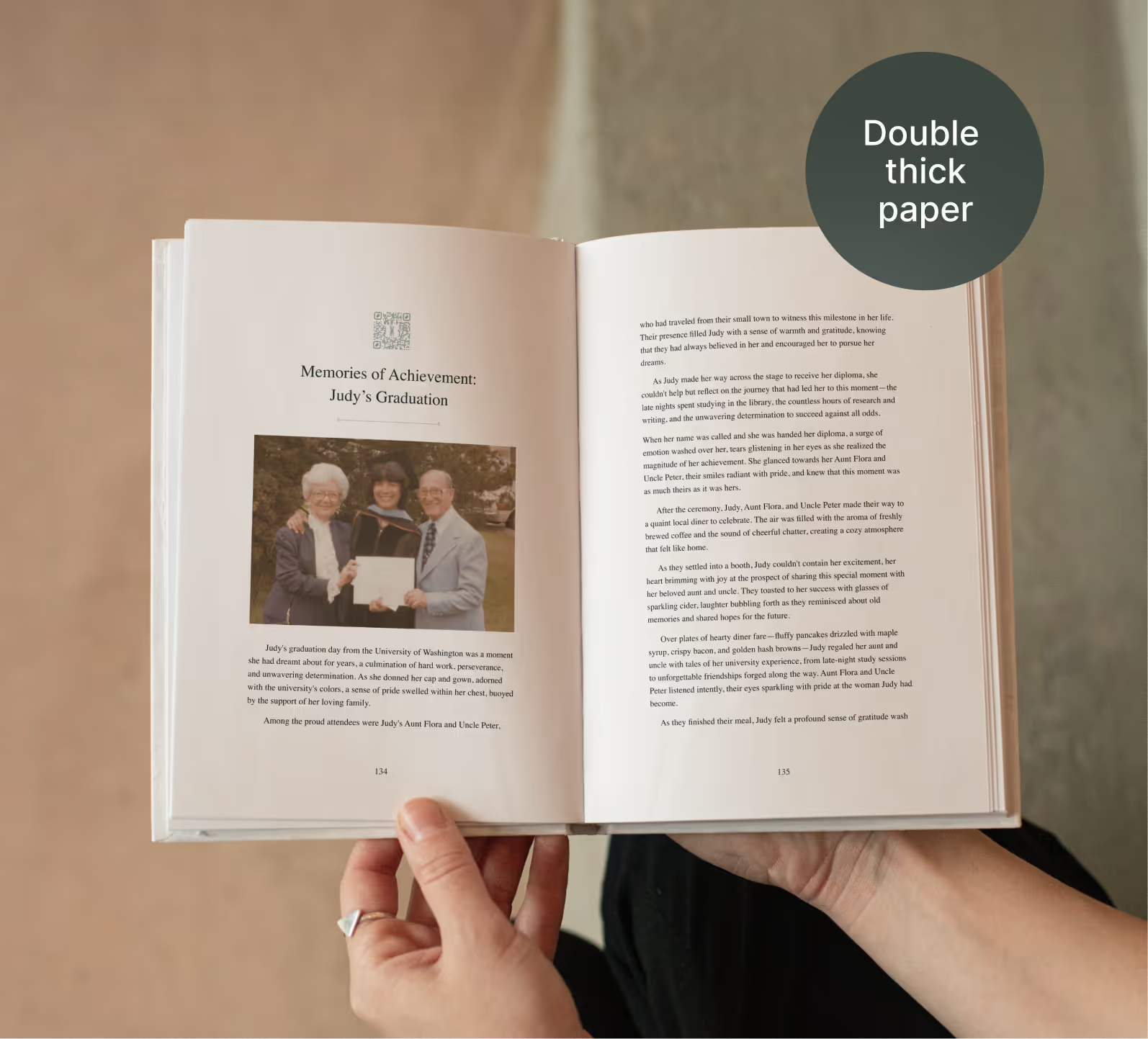
Remento’s entry offer is currently $99. It includes one year of recording service and one full-color hardcover book. When relatives later turn to a page, they can scan a QR code and hear the original narration. Remento’s product site presents the service as a gift for parents, not as writing software that parents must research, configure, and purchase for themselves.
The most useful part of the business is the separation of roles. The person who pays, the person who tells the stories, and the people who eventually receive the book can all be different members of the same family. Remento’s product design is organized around those three roles.
Children Buy; Parents Only Have to Speak
Remento founder Charlie Greene says in the company’s origin story that he began recording his mother’s memories after her cancer diagnosis in 2017. He had previously given her a fill-in memoir that asked her to write her life story. He and a cofounder started Remento in 2021, and the company sold its first book in 2023. The product is therefore not a new model wrapper. It is an older family-memory idea redesigned around speech and AI.
A blank memoir hands the recipient a writing assignment. Remento breaks that assignment into a smaller action: receive a question and tell one story.
According to the official explanation of how Remento works, prompts arrive by email. The storyteller follows a link and records on a phone, tablet, or computer. There is no app to install and no new password to remember. Family members can choose the questions or upload an old photograph and ask the storyteller to begin with the event behind it.
The design removes more than typing. One relative starts the project, a parent speaks, and other relatives can help add context or organize the material. Most of the technical work sits with the buyer. The recipient begins with an activity that already feels familiar: talking.
In a company-published story about Laraine’s family, Laraine started recording after her daughter gave her the service. Her daughter invited two siblings. A son living in Italy called after listening to one of the recordings. The account is vendor evidence and has not been independently audited, but it shows an important behavior: the family began sharing memories before the book was printed.
That early value matters. A product that takes months to reach its final artifact needs smaller rewards along the way. The recording itself becomes something relatives can hear now, while the finished book remains the larger goal.
AI Can Edit the Prose, but It Does Not Replace the Voice
Raw speech does not automatically make a readable book. People pause, repeat themselves, and jump between decades. Remento uses AI to turn those recordings into prose suitable for a printed page.
It does not offer only a vague “polish” button. The AI story-editing guide describes three treatments: a transcript that preserves the speaker’s wording while removing verbal fillers, a first-person narrative written as “I,” and a third-person narrative written as “he” or “she.” Users can adjust the length and directly edit the text.
Those options map to a real family disagreement. Some relatives want a smooth story. Others care more about the speaker’s original phrasing. Remento leaves the choice with the family instead of asking AI to decide which version deserves to survive.
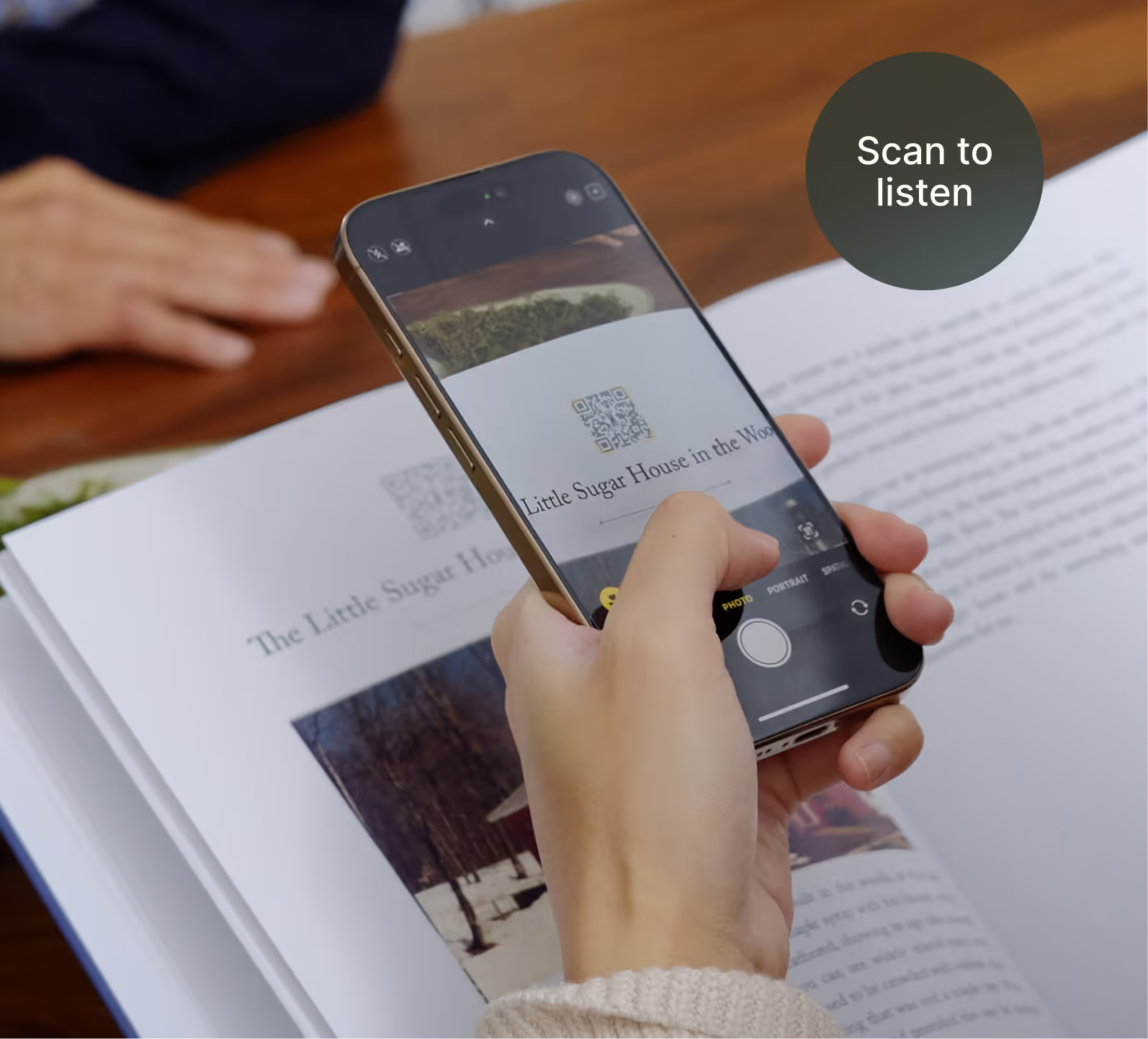
Whatever happens to the prose, the source recording remains unchanged. A relative can read the organized version and then return to the way the person actually spoke. The pauses, accent, and rhythm belong to one particular person; a cleaner AI-generated paragraph cannot replace them.
Before printing, users still need to review each story, change the order, and arrange photographs. Remento handles transcription, editing assistance, layout, and printing, but the family approves how the story appears. The paid artifact therefore has a clear boundary: it is a family memoir that its owners have reviewed, not a book autonomously authored by a model.
This is also the product’s trust design. AI makes the material easier to read, while the preserved recording provides a reference when the edit feels too neat. The system can improve presentation without claiming ownership of memory.
How One Book Creates the Next Order
The first $99 purchase covers one storyteller, one year of service, and one book credit. Many relatives can participate, but adding another storyteller requires another $99 package with another year and another book. The official pricing guide lists extra copies at $69.
Those payments correspond to different jobs. If a mother’s stories are complete and three siblings each want a copy, the family orders reprints. If the family wants to record the father’s life next, it starts a new storyteller project.
That unit is easier for a buyer to understand than a monthly allowance of generated words. A first book for a mother, a second project for a father, and several copies for siblings are all extensions of the same family need. Remento can sell repeatedly without assuming every relative will keep a permanent subscription.
Renewal rules add another layer. After the first year, the account renews automatically unless the customer turns renewal off. Public pricing is $99 per year or $12 per month. Renewal preserves the ability to keep recording and editing; it does not automatically include a new printed book each year.
More importantly, customers who do not renew can still view existing stories, play recordings, and order books. Recording new material, editing existing stories, and changing photographs require an active subscription.
That distinction lets a project actually end. A family can finish a mother’s memoir, stop paying, and continue to use what it created. When new stories need to be recorded, it can return. For a gift intended to last for decades, confidence that the archive will not disappear with the subscription directly affects whether a buyer feels safe starting.
In September, One Story Left the Book and Entered a Frame
In September 2026, Remento introduced StoryFrame: a framed photograph with a QR code that opens a related written story and the original audio.
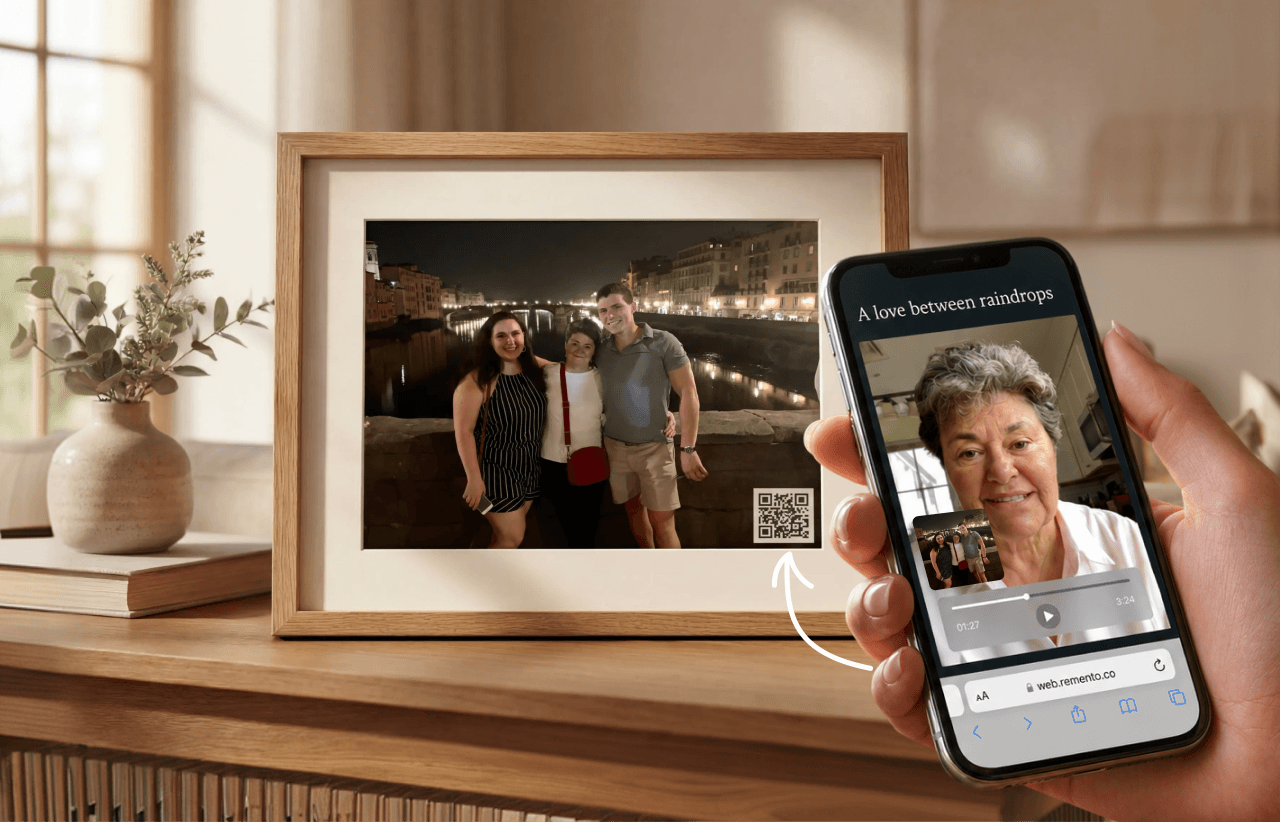
The company first opened the product to existing customers. A user signs in, chooses a photograph from a recorded story, and starts the order from material already in the account. Remento says customers wanted individual memories to become physical objects without waiting for an entire book.
That change shortens the distance between recording and completion. A memoir requires enough material, text review, chapter order, and final layout. A frame needs one story that has already been told clearly. The photograph and recording are already stored, so the family does not have to conduct a new interview.
Existing content gains another physical outlet. A book gathers a life in one place. A frame can sit in a home or become a separate gift. The new purchase begins beside work the user has already completed: after investing time in a recording, the family decides which memory should become which keepsake.
Remento’s definition of “finished” has therefore become more flexible. A family does not have to record an entire life before receiving something tangible. One memory, one photograph, and one preserved voice can be enough to make a gift.
The broader product lesson is not simply that AI can write memoirs. Remento makes the model serve a three-sided family workflow: one person buys, another narrates, and many people share the result. It keeps the irreplaceable recording intact, gives the family editorial control, and attaches clear prices to each physical outcome. The AI reduces the labor of writing; the business grows by turning completed memories into objects people understand how to buy.