
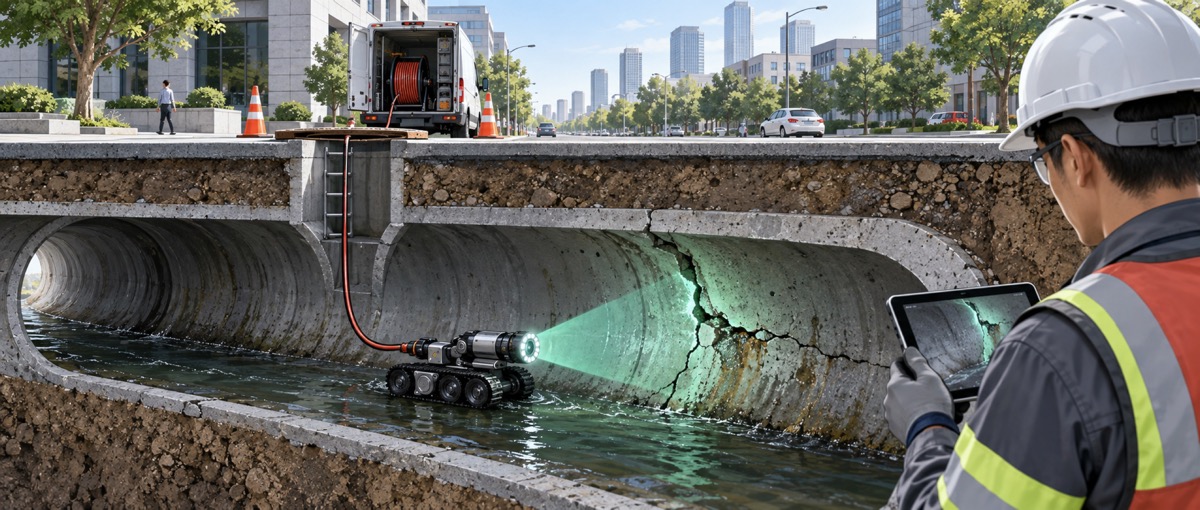
In April 2026, Houston City Council approved a purchase that did not look much like a typical AI deal: processing sewer inspection data. SewerAI received authorization for a three-year contract with two optional one-year renewals and a maximum value of $5.72855 million. That figure is the approved ceiling, not revenue already received. The public record appears in the Houston City Council agenda.
SewerAI analyzes video recorded by cameras traveling through underground pipes, marks possible defects, and sends the results for human review. The commercial question is not simply why a company would apply AI to sewers. It is why a city would create a multi-year purchasing path for it. The answer lies in the work that begins after the camera finishes recording.
Recording a Pipe Is Not the Same as Understanding It
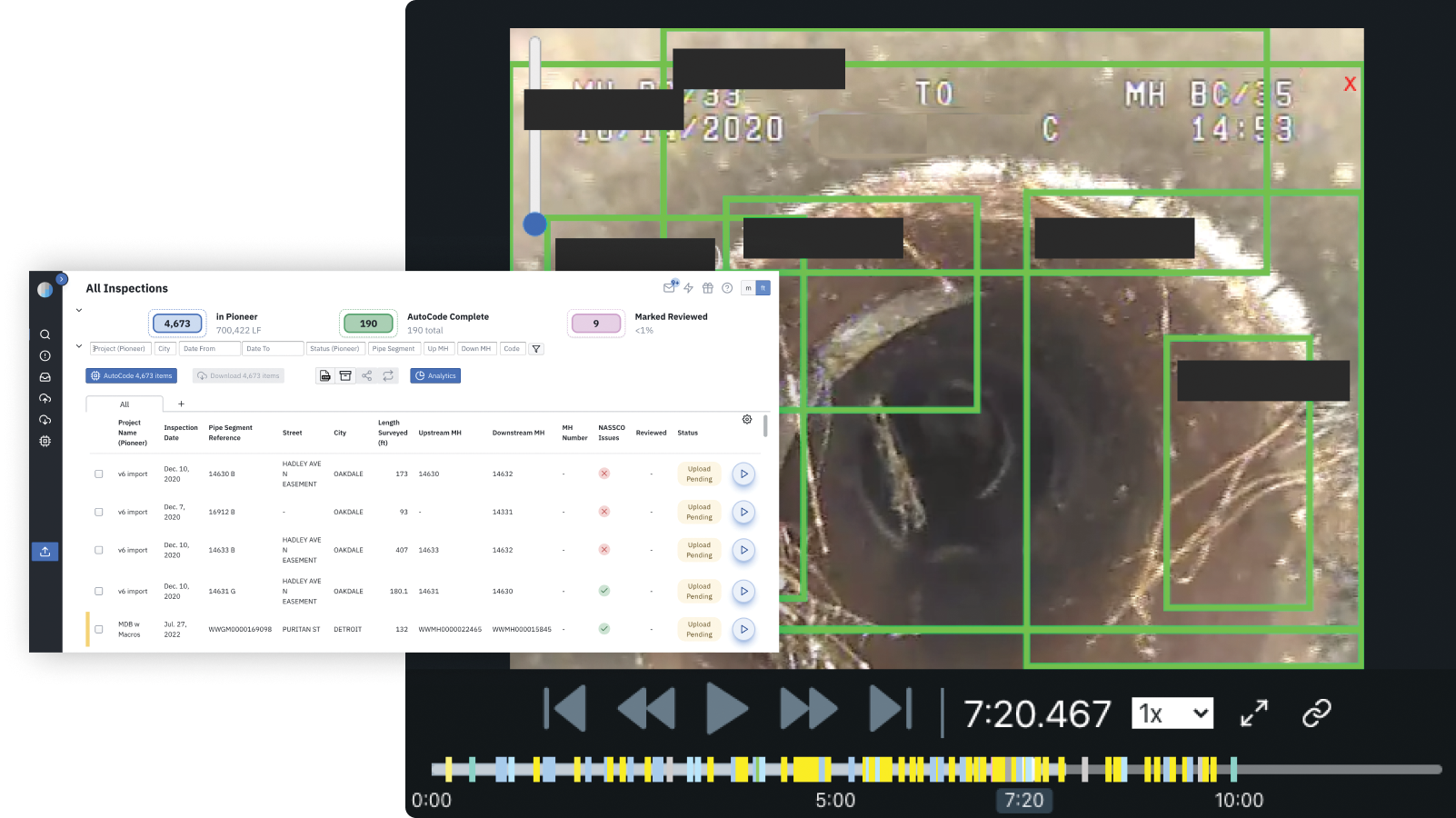
A sewer inspection does not end when the video reaches a hard drive. Someone still has to identify cracks and leaks, classify each defect, judge its severity, and turn the findings into a record that can be checked and delivered. Without that work, a large video archive cannot answer the question that matters to a public works department: where should this year’s repair budget go first?
SewerAI’s AutoCode product begins at this point. It processes footage from equipment the customer already uses, codes the findings against industry standards, and returns results after the company’s team has checked them. A customer does not have to replace its entire camera fleet before using the software. What the buyer purchases is analysis after capture rather than a new set of recording hardware. SewerAI’s AutoCode product page describes that workflow.
The machine is not given the final word. A 2026 procurement report from the San Bernardino Municipal Water Department explicitly retains human verification. AI processes pipe and manhole video, flags defects, and proposes risk-based rehabilitation priorities. People confirm the output before it becomes an accepted result. The division of responsibility is recorded in the department’s procurement agenda and staff report.
Calling this system an assistant is therefore not polite marketing language. Repair priorities affect public infrastructure and public spending. The customer needs evidence that can be reviewed, disputed, and traced back to the original footage. A confident prediction without an auditable record is not enough.
The Harder Product Is a Common Delivery Standard
SewerAI did not stop at defect recognition. Its PIONEER platform connects upload, analysis, review, and delivery. Teams can view assets on a map, manage inspection materials, and track what has been submitted. Contractor footage no longer has to remain scattered across hard drives and email attachments. A finding can stay attached to the pipe segment it describes instead of surviving only as a standalone report. The PIONEER product page presents those management and delivery functions.
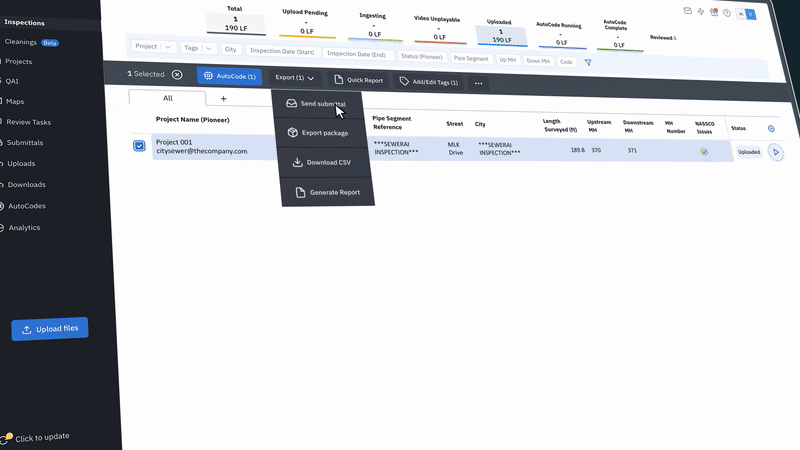
That changes where the product sits inside the customer’s organization. A recognition tool might be used by one inspector. A delivery platform touches contractors, engineers, quality reviewers, and the city department that receives the work. The product is now responsible for whether all of those parties can submit and accept work through a consistent process.
According to a Houston customer story published by SewerAI, the relationship began in 2021. In 2023, the city changed technical requirements for inspection contractors so that PIONEER and AutoCode were used in the process, with quality checks included in the service. In 2025, the evaluation scope expanded to include service laterals. These operational details come from the vendor’s City of Houston customer case, and its outcome figures have not been independently audited.
The important sequence is more concrete than the phrase “more AI.” The software first helped inspect footage, then entered contractor delivery requirements, and later covered more of the network. Once software participates in acceptance, the supplier maintains more than a model. It maintains a working method shared across several organizations.
That does not prove that the technical requirement caused the later contract value or expansion. The public evidence confirms changes in service scope and a new multi-year authorization in 2026. It does not isolate the revenue effect of any one product decision.
Why a City Cannot Postpone the Problem Forever
Houston is not treating sewer inspection as an optional digital experiment. The city publishes information about a wastewater-system consent decree reached with the US Environmental Protection Agency and the State of Texas, including continuing reports related to sewer overflows. The Houston Public Works consent-decree page documents that operating context.
When inspection results feed repair schedules and regulatory reporting, a buyer asks questions beyond model accuracy. Were all required records delivered on time? Can footage from different contractors be compared? If an engineer challenges a finding, can the team recover the relevant video, code, and review decision?
SewerAI sells the connection among those questions. AI extracts information from footage. The platform makes that information reviewable, deliverable, and usable in planning. Recognition provides efficiency, while the workflow provides a reason for procurement.
This is why the better way to understand the business is to examine what cities buy before examining how much the company has raised. SewerAI was founded in 2019, so it is not a newly launched model wrapper. CB Insights lists the company’s founding year. The recent development is that the product has moved deeper into the operations of customers it already serves.
The distinction matters for vertical AI. A model can demonstrate that it detects a crack. A public works organization needs a defensible chain from the recording to an accepted condition assessment and then to a repair decision. The budget follows that chain of work, not the novelty of the model alone.
How One Contract Can Help the Next City Buy
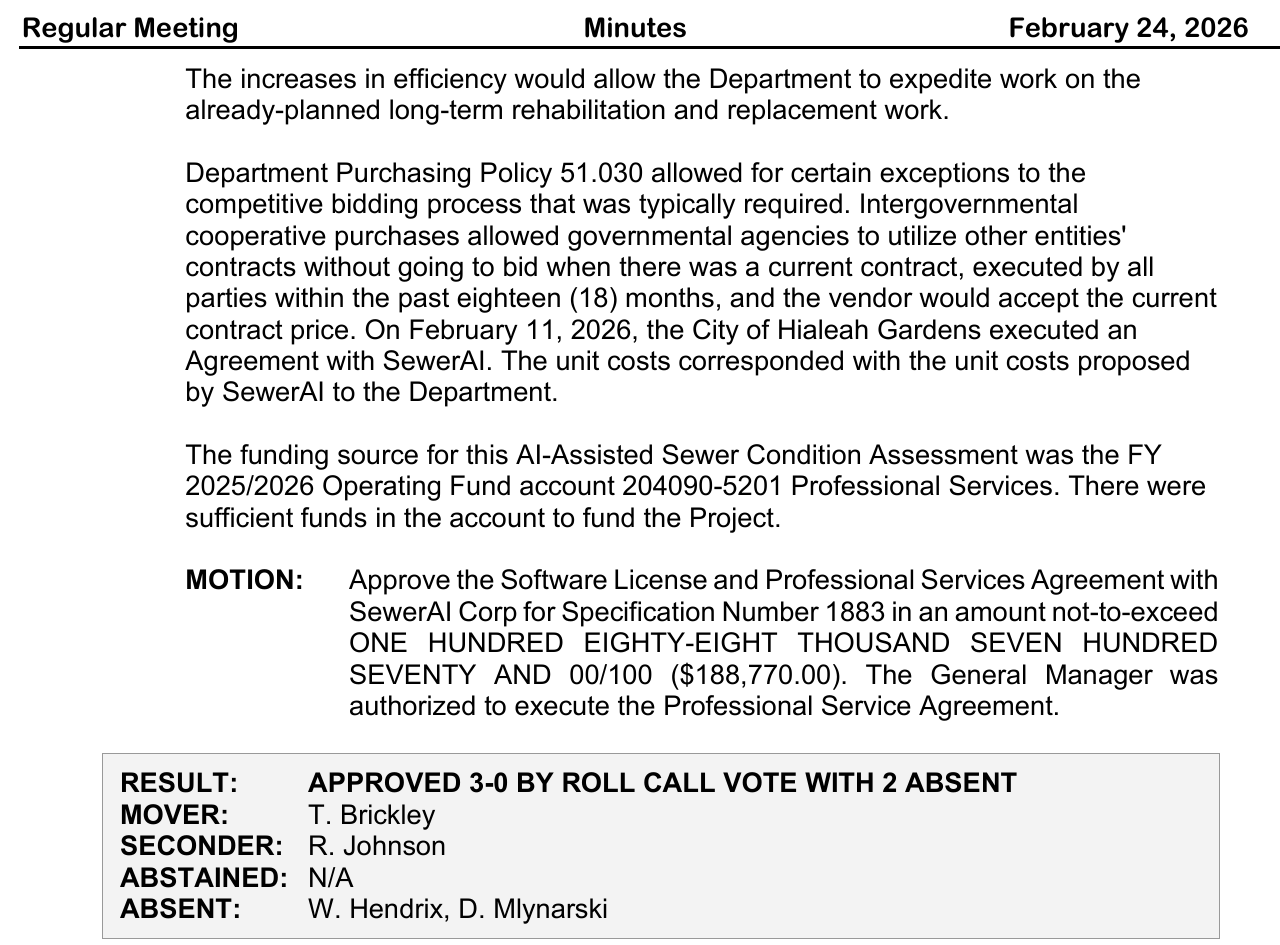
In February 2026, the San Bernardino Municipal Water Department’s board approved a SewerAI software license and professional-services agreement with a ceiling of $188,770. The vote was three in favor, none opposed, with two members absent, and the general manager was authorized to sign. Those details appear in the February 24 meeting minutes included in the March 10 agenda. Authorization to sign is not proof that the entire ceiling has been spent or paid.
The purchasing route contains a detail that matters as much as the amount. The staff report says the department may use cooperative purchasing when another government agency’s contract meets specified conditions. The underlying contract must have been executed by all parties within the prior eighteen months, and the supplier must accept the same contract price.
The report cited an agreement that the City of Hialeah Gardens had signed with SewerAI on February 11, 2026, and said the proposed unit rates matched that agreement. The department explained the policy and comparison in its procurement staff report.
For enterprise software builders, the implication is practical. A first government contract can do more than generate a transaction. Under the right rules, it can give the next agency an accepted purchasing reference.
This is not a shortcut available to every city or every contract. The timing, price, and policy conditions are specific. In this case, however, part of the sales process had shifted from proving that AI could detect defects to showing an agency how it could legally purchase the service. A model demonstration and a contract that can support cooperative procurement are very different sales assets.
Government buyers still have to verify scope, price, approval authority, and local policy. The reusable part is not a universal exemption from procurement. It is a precedent that reduces the amount of procedural invention required for a similar purchase.
One Workflow, Several Pricing Units
SewerAI’s public packaging also shows what the customer is buying. PIONEER carries an annual per-seat subscription. AutoCode is priced by usage. Risk & Rehab is priced according to population, and customers must contact sales for exact quotes. SewerAI’s pricing page separates the products by these units.
This is not a consumer subscription offering one unlimited bundle for a monthly fee. Inspection-record management maps to ongoing users. Video analysis maps to work volume. Rehabilitation planning maps to the scale of the service area. Each part of the same operating chain is attached to a unit that a municipal buyer can understand.
The later-stage planning product also offers a free preliminary plan. A prospect provides its own inspection data and receives an initial view of high-risk assets and estimated rehabilitation costs. This is not a playground where someone experiments with a few prompts. It asks the buyer to bring a real network problem into the sales process.
The public product page cannot establish whether the free plan increases conversion or how profitable each pricing unit is. It does show a sales design built around the buyer’s task. The prospect begins with its own footage, asset risk, and budget question rather than with a generic AI demonstration.
The lesson from SewerAI is not that every obscure industry automatically deserves an AI startup. The company connected a narrow recognition capability to inspection, acceptance, repair planning, and procurement that cities already have to complete. Customers have footage, operating responsibility, budgets, and delivery rules. The product’s job is to make those pieces work together.
A sewer department does not need a conversational entry point. It needs recorded video to become defensible evidence for the next repair decision.