
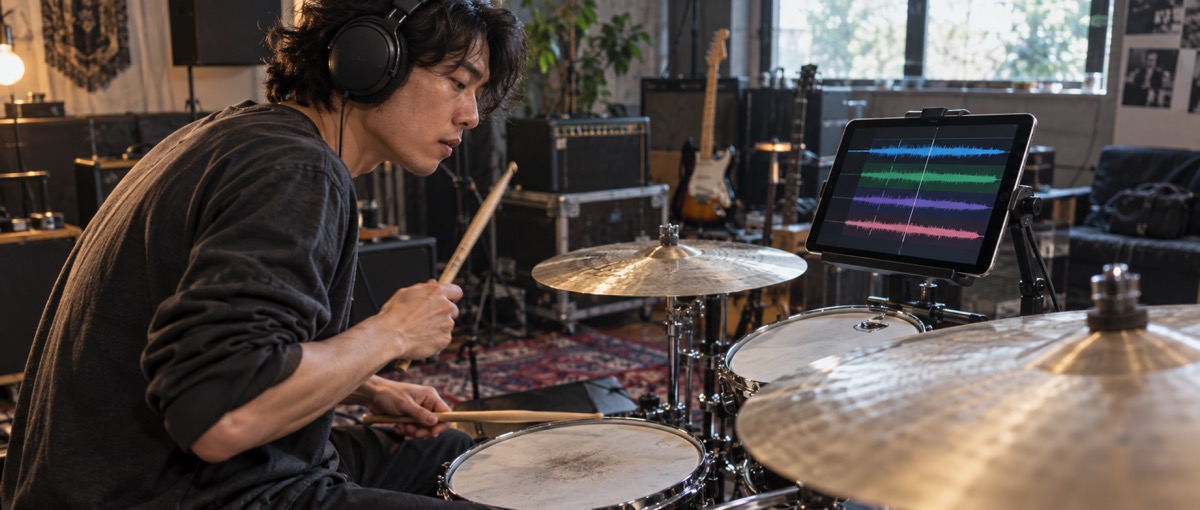
Before joining Slipknot, drummer Eloy Casagrande had only a few days to learn thirty-two songs. He loaded the recordings into Moises, isolated the drum parts, replayed the difficult sections, and practiced against the original tracks. The detail comes from Apple’s story about its 2024 iPad App of the Year. Moises did not play the drums for Casagrande. It separated an existing recording so he could hear exactly what he needed to perform.

Moises began on the web in 2019 and reached the App Store the following year. It started with an old problem for musicians. A bassist trying to learn a song has to pick the bass out of a dense mix. A singer who wants accompaniment needs a version without the original vocal. Moises uses AI to separate vocals, drums, bass, and other stems. It can also slow a song down, change its key, identify chords, and turn the recording into material that can be studied repeatedly. Apple editors tested those interactions before naming it the 2024 iPad App of the Year. Apple’s description of the separation and practice workflow explains the initial product more clearly than the phrase “AI music platform.”
Founder Geraldo Ramos is a drummer himself. In an Apple Developer interview, he said the original wish was simple: remove the drums from a song so he could play along with the other instruments. In 2019, he used a publicly available stem-separation model from a French research team for a weekend project. The model worked, but ordinary musicians had no usable interface for it. Ramos built a web product and, by his account, saw fifty thousand registrations in one week. The figure is a founder recollection rather than an audited metric. The entry point is still important: let a musician try the product on one song before asking for a larger commitment.
Let People Practice First, Then Charge for Better Practice
The free version of Moises can already separate common stems and detect chords and beats. The current US App Store listing shows Premium at $5.99 per month or $39.99 per year, while Pro costs $29.99 per month. Premium unlocks unlimited AI audio separation and more detailed instrument splits. Pro adds higher-fidelity models, professional stem modules, and longer processing limits. The store contains several historical in-app purchase entries, so the amount a user actually pays still depends on the region and checkout page.
This pricing does not charge for generating a complete song. It charges according to the limits musicians encounter while practicing and producing. Someone who occasionally wants an instrumental version can test the free product. A guitarist who frequently needs lead and rhythm parts separated, or a producer who wants to move clean stems into production software, is more likely to reach a paid boundary. Moises has not disclosed the share of free users who subscribe. The price and feature tiers establish the transaction model, not the realized conversion rate.
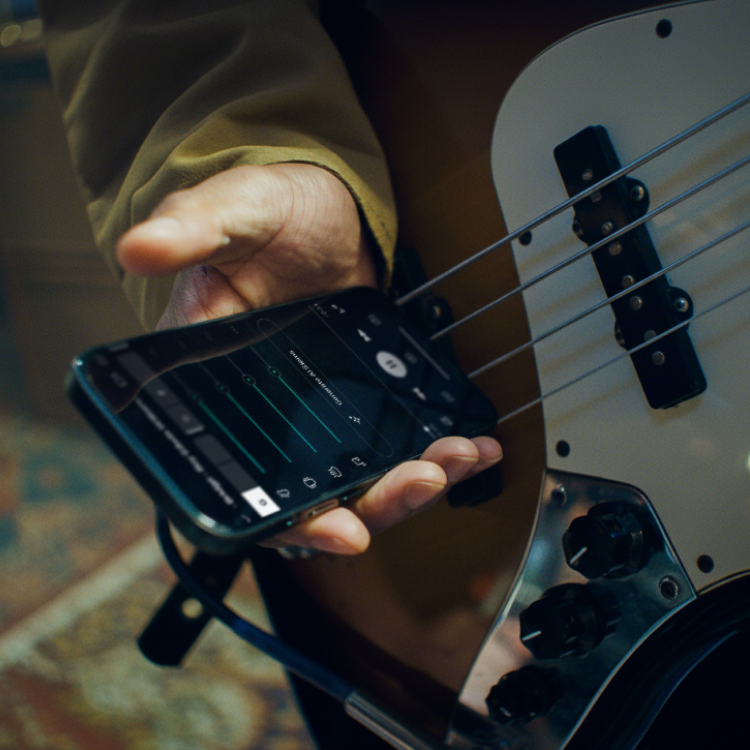
Phones and tablets are not merely smaller versions of the website in this workflow. A musician may be holding an instrument while trying to mute one part, loop a few bars, or reduce the tempo. When Moises launched its dedicated iPad app, the team said it had noticed users installing the iPhone version on their tablets. Follow-up questions revealed that musicians wanted a larger control surface for rehearsals and performances. The decision to build around that observed behavior shows the company following the physical actions of musicians instead of presenting model capabilities as a static feature list.
More precise separation also demands additional data work. In Apple’s interview, the team explained that most popular recordings use common time, so models trained mainly on those songs struggle with complex rhythms found in jazz and other genres. Moises commissions musicians to record material in time signatures such as 5/4 and 6/8, then has internal specialists label the recordings and compare separation results. Apple described that recording and annotation process. It is the company’s account of its own methods and does not prove that the model outperforms every competitor. It does show some of the continuing expense behind the promise of cleaner, more detailed stems in a paid tier.
As the Practice Audience Grew, the Algorithm Left the App
In January 2025, Music Business Worldwide reported a company claim that Moises had fifty million registered users. By the end of that year, Moises said it had reached seventy million cumulative users, added more than fifteen million during the year, and processed 1.2 billion minutes of audio. The January figure reported by Music Business Worldwide and the year-end figures published by Moises refer to different dates and measures. In September 2026, the company said in a product announcement that it had eighty million users. That latest number is also company-reported, unaudited, and not equivalent to monthly active or paying users.
The more useful question is what those people do after opening the product. Apple’s Casagrande example shows a professional drummer separating songs for an audition. In a Moises story about its partnership with Berklee College of Music, one student said he used the app about twice a day while preparing lessons and performances. The Berklee student’s account appears in a supplier-published partnership story and cannot establish a typical usage frequency. It does make the next actions visible: listen, practice, and try again.
The same algorithm eventually entered professional software. In 2025, Ableton announced that stem separation in Live 12.3 would be powered by the technology of Music AI, the company behind Moises. Live users can separate vocals, drums, bass, and other sounds without uploading a file to Moises and importing the result back into their project. Ableton’s own product announcement confirms the technology adoption. It does not disclose the contract value, licensing fee, or revenue share. The evidence establishes a new distribution surface, not the amount of revenue attached to it.
Fender followed in June 2026 by integrating Moises Studio into Studio Pro 8.1. Ableton primarily uses the separation technology. Fender brought separation, voice transformation, and the generation of complementary tracks from an existing recording into the same production workflow. Fender’s release notes and Moises’ description of the integration corroborate the feature scope, while the commercial terms remain private.
Fender also connected the trial to Moises’ existing subscriptions. According to Moises’ integration announcement, Studio Pro users can try Moises Pro features for fourteen days without creating a separate registration, while current Moises subscribers can sign in with the account they already have. That creates a more concrete path than brand exposure alone: a musician encounters the product inside professional software, tries the higher tier, and can then decide whether to pay for it. The conversion rate after the trial, the party that collects payment, and any revenue split have not been disclosed.

Why It Is Not Rushing to Write the Entire Song
These integrations place Moises somewhere different from an app that depends only on store search for downloads. A musician is already working in Ableton or Fender when the separation capability appears in the existing production interface. That does not mean every professional-software user will become a Moises subscriber. Algorithm licensing, product integration, and individual subscriptions may involve different contracts and payment flows, and public information is not sufficient to combine them into one revenue model.
The partnerships also force Moises to address copyright and model data. In the Apple interview, the company said its training material came from licensed music and tracks it recorded itself. For the Fender integration, Moises said the voice models involved real artists who receive royalties. These are company descriptions, not an independent audit of every training input. For partners that put the capability inside their own products, however, the origin of the data and the rights attached to it are no longer only internal engineering questions.
In September 2026, Moises launched a browser-based Studio where several people can edit the same project together. It connects separation, recording, and complementary-track generation to a collaborative workflow. The product announcement says paid plans begin at $5.99 per month in the United States, but does not disclose the number of paying Studio users. The company is trying to extend the initial act of separating one song for practice into continuing work on the same recording.
Unlike products that generate an entire song from a prompt, Moises does not remove the musician’s performance. Casagrande still had to learn all thirty-two songs. The Berklee student still had to prepare his performances. A producer in Ableton still decides what to do with the separated tracks. Because those actions remain with the musician, Moises has a reason to exist both on the phone used for individual practice and in the menu of professional production software. Both distribution paths are now visible. Public evidence still does not show which one will ultimately produce more revenue.