

A dog can bark at the door for three different reasons, and most owners do not have time to read a long training essay while it is happening. They reach for the phone first. Is the dog excited, afraid, asking to go out, or reacting to something the owner missed?
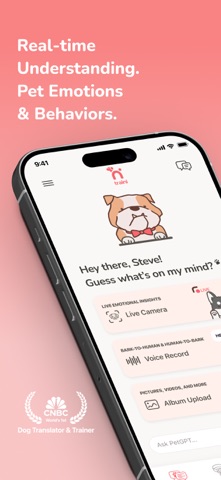
Traini is built around that immediate question. On iPhone, the app lets a user use the camera, audio, or a written description to capture what the dog is doing, then returns behavior clues and routes the user toward training advice, courses, PetGPT Q&A, progress tracking, and expert support. Apple’s public lookup metadata shows version 1.3.0 was released in August 2026, with the product still improving real-time experience and training flow.
This is not a case about whether AI can literally translate a dog’s thoughts. Traini’s own store descriptions place this kind of interpretation in an educational and entertainment frame. The more useful business question is different: how does a high-curiosity mobile entry point become a workflow people may revisit and pay for?
The Answer Is Only The Entrance
Many AI apps are good at producing an answer. The user asks, reads, and leaves. Traini tries to attach something before and after that answer.
The first part is capture. The user can open Live Camera, record sound, or describe what just happened. The app does not ask the owner to begin with training vocabulary. It begins from the ordinary moment of uncertainty: something is happening right now, and the owner wants to know what to do.
The second part is where the product becomes commercial. Traini’s public product description combines AI behavior clues with training plans, video courses, PetGPT, progress tracking, and a network of experts. The AI output is not positioned as the end of the session. It is a router into the next training action.
That changes the paid logic. If the product only explains what a dog might be feeling, it looks like a one-off entertainment feature. Once the explanation connects to “practice this next step,” “try this when it happens again,” and “track whether the behavior changes,” the app has a reason to be opened again. The user is not paying for a clever paragraph. The user is paying for less helplessness and more executable training.

Curiosity Opens The App, Training Keeps It Useful
Traini’s first move is simple and strong: it turns abstract pet AI into a question almost any dog owner will try once. Why is the dog barking? Is the dog afraid? What does this posture mean? The question has low technical friction and high emotional relevance because the animal is right in front of the user.
That entry point is not enough by itself. Consumer AI products often spike on the first demo and fade when the user has no next behavior. For Traini, the next behavior is training.
The U.S. App Store currently lists subscriptions starting at $12.99, along with annual purchases at $79.99 and $119.99. The public page does not explain every entitlement in every tier, so it would be wrong to assign a specific AI feature to a specific price. What the page does establish is that Traini is not relying only on the first download. It is using subscriptions to capture ongoing training demand.
That is the portable lesson for iOS AI builders. Do not only ask whether the first AI output is impressive. Ask whether the output creates one thing the user can do immediately and one reason to come back when the same problem happens again. The action can be practice, review, logging, revision, sharing, or the next round of input. Without that action, an AI feature remains a fun launch-day moment.
The iPhone Is The Scene, Not Just The Channel
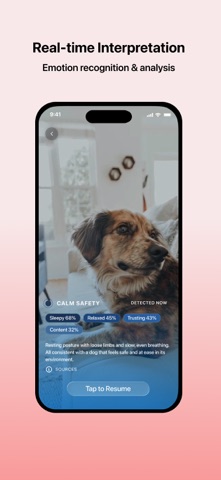
This workflow is hard to replace with a web page. A dog’s behavior is immediate. Sound, body posture, room context, and the owner’s reaction can all change within seconds. The phone’s camera and microphone put the product in the same scene as the problem.
That is why the mobile workflow matters. The iPhone version puts live camera, audio capture, behavioral interpretation, and training advice in one path. The user does not need to organize media first or wait until they are at a computer. The product can be used while the bark, movement, or anxious behavior is still happening.
Android adds a useful adoption signal. Google Play’s public listing shows more than 5 million downloads. That does not prove active users, revenue, or iOS scale. It does show that the “capture now, ask now, train next” use case has moved beyond a tiny experiment.
The Boundary Matters More Than The Demo
Pet emotion and behavior are not domains where a product should casually promise certainty. Traini’s store language frames the interpretation as educational or entertainment content. That boundary should be part of the product, not small text at the edge of the page.
The stronger claim is not that AI has replaced trainers or veterinarians. The better claim is that AI can help an owner organize an observation, reduce confusion, and move toward appropriate training material, expert help, or a next action.
That boundary also makes the subscription more durable. If the product overclaims, it raises trust and safety risk quickly. If the product stays bounded and useful, the owner can treat it as a structured support layer rather than a magical authority over the dog.
What Builders Should Copy
The lesson is not “make a pet translator.” The useful pattern is the connection among three parts.
First, choose a real moment where the user is willing to open the phone immediately. Second, give an AI explanation that reduces anxiety without pretending to be definitive. Third, connect the result to a repeatable service that can be practiced, tracked, or revisited.
Separated, the first two parts become a demo and the third becomes a course library nobody opens. Connected, they give AI a path from first curiosity to recurring value.
Traini’s answer is concrete: let the owner open the app during a bark, then show what to train next. For consumer AI apps, that is more valuable than simply finding a feature for the model.