

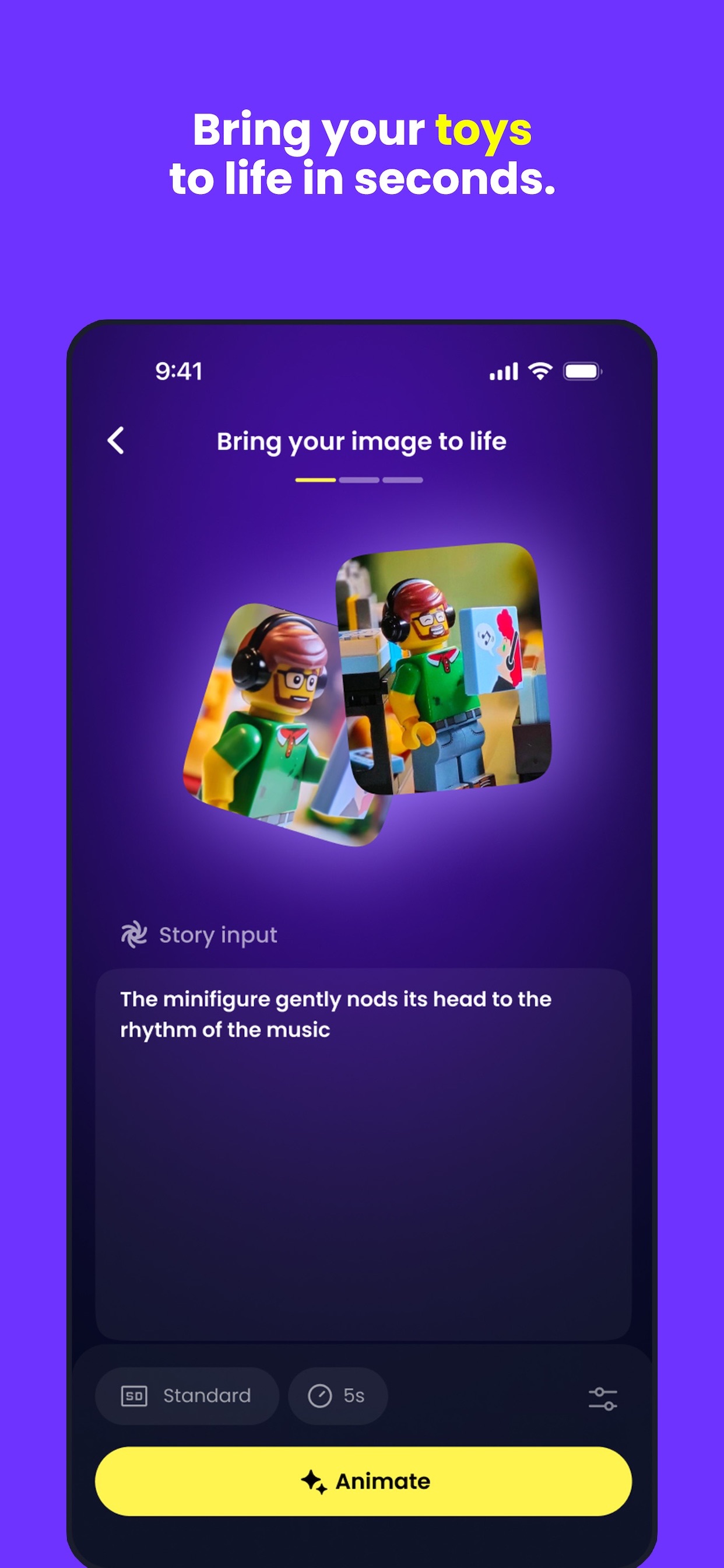
A NaukNauk user starts with something unusually specific: a collectible, toy, plush, figure, model, or Lego object that already matters to a fandom. The user uploads a photo, describes an action, and the app generates a short AI video with sound. The surprising part comes later. When the user wants to save the result to the phone, NaukNauk asks for one more step: publish the work into the NaukNauk community first.
That is not a small interface choice. In many creative tools, download is the moment when the user takes control back from the product. NaukNauk turns that moment into a supply rule. According to Axios, generated videos can be downloaded only after they have been posted publicly inside the community. For a product that handles personal photos and paid generation credits, that is a risky gate. For a community that needs a steady stream of fresh work, it is also a direct solution to the cold-start problem.
The Download Button Becomes Supply
NaukNauk is not trying to be a generic AI video studio. Its narrower wedge is fandom and collecting. The user is not starting with a blank prompt. They are starting with a physical object that already has identity, ownership, and an implied audience. A figure collector, Lego builder, or plush owner is more likely to care about the specific object than about an abstract video generation demo.
That specificity changes the community problem. Most AI video products need users to decide what to share after generation. NaukNauk begins with artifacts that are already social. One person’s toy animation is relevant to other people who collect similar toys, follow the same characters, or enjoy remixing physical objects into short clips. The product does not need every user to become a public creator in the broad social-media sense. It needs enough users to treat their collectibles as material for fandom expression.
The download rule pushes that behavior into the default path. If a user wants the finished clip outside the app, the community receives a post first. The next person who opens NaukNauk sees not just a generation button, but a feed of other collectors’ battles, jokes, scenes, and stories. That feed can create prompts, taste, and reasons to return. It also gives the product a visible surface that a pure tool would not have.
The scale signals are meaningful, while still needing caution. Axios reported that the company said it had more than one million beta users, and Google Play shows more than one million downloads and roughly 11,500 reviews. The beta-user number comes from company disclosure, not an audited filing. The Google Play number is a range, not a precise active-user count. Still, both numbers suggest that this high-friction rule is being tested against real consumer behavior, not only a small design prototype.
Generation Spends Money And Control
NaukNauk monetizes through subscriptions and credits. The US App Store listing shows a Pro monthly plan at $9.99, an annual plan at $95.99, and credit packs from $4.99 to $99.99. Axios also reported that Pro offers more generations and removes the watermark.
That business model collides with the hardest part of generative video: the output is uncertain. A user can spend credits and receive a clip that does not follow the prompt, distorts the object, or fails to capture the intended action. If the product then requires public posting before download, the user is not only paying for an imperfect result. They are also being asked to give the platform distribution rights inside the product experience before they can use the asset personally.
This is why the rule is commercially interesting and emotionally delicate. From the platform’s point of view, it aligns several needs. Generation creates the asset, publishing fills the feed, feed content gives other users inspiration, and Pro or credit purchases fund additional attempts. The same action supports creation, distribution, and monetization.
From the user’s point of view, the exchange can feel much less clean. Some reviews complain that failed generations still consume credits and cannot be edited or refunded. Other users object to posting private or family-oriented videos publicly just to save them. Those objections are not edge cases. They reveal the central trade: NaukNauk asks users to pay with money and with control over where the work appears.
That trade can work only if the community creates enough value in return. If publishing brings comments, inspiration, status, or discovery among like-minded collectors, the download gate can feel like part of the product. If the feed is not useful enough, the same rule feels like a roadblock placed in front of the asset the user already paid to create.
Fandom Gives The Mechanic A Chance
The reason NaukNauk can attempt this at all is the source material. A generic family video, private pet clip, or work-in-progress creative experiment is often personal. A collectible is different. Many collectors already display, trade, photograph, and discuss their objects in public communities. The object carries identity, but it may not carry the same privacy expectations as a family recording.
That does not remove the privacy risk. It narrows the segment where the exchange is more plausible. A user animating a toy robot battle may be more willing to post publicly than a user animating a child or a private gift. NaukNauk’s product boundary matters here. The more it stays close to fandom objects, the more the community rule looks like a contribution norm. The more it expands into general photo animation, the more the rule looks invasive.
This creates an important lesson for AI consumer products. Community is not just a growth channel that can be added after the tool works. It changes the promise of the tool. If a product wants user-generated outputs to feed a network, the act of generation must already feel socially legible. NaukNauk’s narrow fandom focus gives users a reason to believe that other people will understand the post.
The Small Team Advantage And Burden
Axios reported that NaukNauk raised $20 million and had fewer than 20 people at the time. That is a useful lens for the product decision. A small team operating an AI video system, subscription business, moderation surface, and consumer community has to compress work. A forced-publish download rule compresses several operating needs into one user action.
The burden is that every compressed rule creates support and trust costs. Video generation quality must improve because failed outputs consume paid credits. Moderation must work because the platform is encouraging public posting. Privacy expectations must be clear because users may not realize the save path includes a public step. Pricing must feel fair because credits, subscriptions, watermark removal, and download rights are all entangled in the same workflow.
The product bet is simple to state: collectors will accept one public contribution in exchange for a downloadable AI animation, and that contribution will make the next user’s session better. If the exchange holds, NaukNauk is building more than a video generator. It is building a fandom content loop where physical ownership becomes AI media supply.
If the exchange fails, users will remember the friction more than the community. The line between clever supply design and coercive gating is thin. NaukNauk’s case is valuable because it shows both sides at once. In consumer AI, the best growth mechanic is often sitting inside the product’s most obvious utility button. The hard part is making the user feel that the platform earned the right to put it there.