

When a student tapped “cancel subscription,” Coconote first tried the most common response: offer a discount. It did not work very well. The team then changed the move. Instead of making the product cheaper, it gave the student seven more trial days. In a RevenueCat interview, the founder said that change retained 25% of canceling users.
The point was not that students suddenly stopped caring about price. It was that many of them had not yet reached the part of the product where the promise becomes obvious.
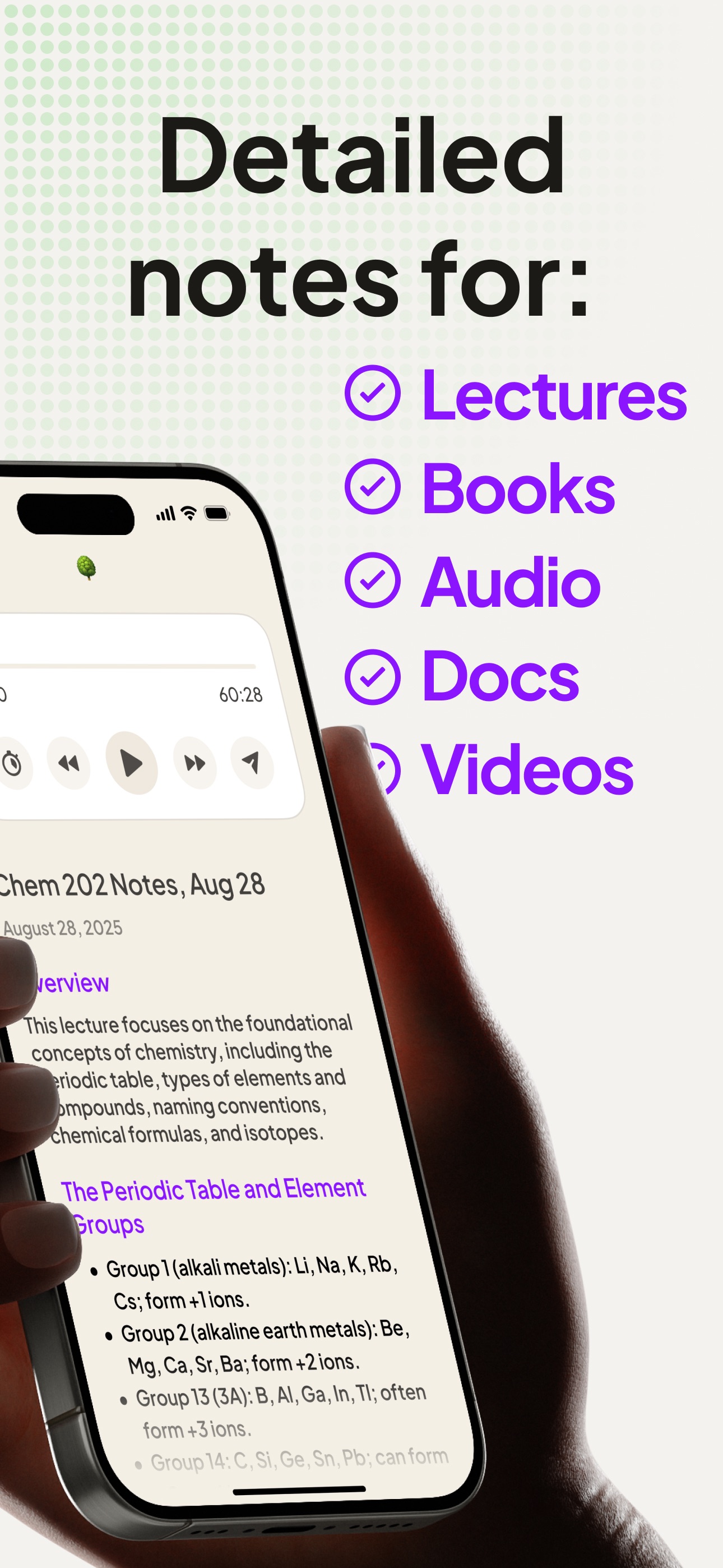
A recorded lecture becomes structured notes, then flashcards, then quizzes. That workflow rarely proves its value in two or three days. A student may open the app for the first time and see only an automatically organized handout. The stronger moment arrives later, when a test is approaching, when the student reviews questions again, or when the chat feature helps explain a concept from the material. Coconote’s App Store positioning is deliberately plain: record a class, then generate study guides, quizzes, and flashcards from class notes. The product is really selling that later cycle of repeated use.
That makes “give seven more days” a more precise save offer than a discount. A discount says the product may not be worth the original price. An extended trial says the user has not had enough time to use the product where it becomes valuable.
The Product Needs A Learning Cycle
Coconote is not just a transcription app with a student skin. Its commercial promise depends on the whole path from capture to recall. A lecture is only the first input. The student records audio, imports a document, or adds learning material. The app turns that input into notes. Then those notes become study guides, flashcards, quizzes, and a place to ask follow-up questions.
That matters because studying is not a single-session behavior. The user does not know whether the app is useful the moment a transcript appears. They know after they come back to the same material, try to remember it, discover a gap, and use the generated structure to move forward. The product outcome is not “I have text.” It is “I am more ready for the exam than I would be if I had organized this myself.”
This is why a short trial can understate value. The student may install Coconote between classes, record one lecture, glance at the notes, and then ignore the app until there is real pressure to review. If the paywall arrives before that pressure, the user is asked to pay before feeling the product’s best moment. A cancellation flow that offers more time is not generosity for its own sake. It is an attempt to let the value cycle finish.
Education products have a distinct activation problem. Many consumer apps can show value immediately: edit one photo, identify one plant, generate one avatar, or summarize one email. A study app often needs the calendar to do part of the work. A class, a homework deadline, a quiz, and an exam create the moments when the product becomes useful. The best onboarding cannot fully compress that rhythm into a single first session.
Coconote’s lesson is that retention design has to match the user’s real work cycle. If the customer buys an outcome that unfolds over several days, the trial and cancellation flow should not behave as though value appears instantly.
Longer Onboarding Can Reduce The Wrong Friction
The same logic explains why Coconote was willing to make its registration path longer. The team expanded onboarding from a short flow to 15 screens, according to the RevenueCat interview, so that users could see value tied more closely to their course, study habits, and intended use before starting a trial. That sounds like more friction. The reported result was the opposite: trial starts increased 16%.
Another small change was even more direct. The team moved login from the beginning of onboarding to after the paywall, reducing drop-off by 10%. Many consumer apps treat account creation as the required doorway into the product. Coconote pushed it later because the student did not yet know whether the account was worth creating.
That choice is useful because it separates two forms of friction. Bad friction asks for trust, time, or identity before the user understands the reward. Good friction helps the user picture the reward more clearly. A 15-screen onboarding flow can be a mistake if it is just a decorative questionnaire. It can work if each screen makes the user feel that the product understands their class, their exam anxiety, their study method, and the work they are trying to avoid.
Coconote’s student is not primarily asking, “Can this app transcribe?” The more urgent question is, “Will this help me tomorrow when I have to review?” If onboarding answers the second question, it can earn permission to ask for a trial. If login blocks that answer, it becomes the wrong kind of friction.
This pattern is especially relevant for AI products because many of them still use generic demo-first onboarding. They ask users to admire capability before they understand a concrete personal outcome. Coconote’s changes suggest a stricter rule: do not make the user pay an administrative cost until the product has clarified the job it will do.
The Subscription Sits Behind Repeated Study
Coconote’s business model is visible in public surfaces. The App Store listing shows Coconote Pro in-app purchases ranging from $9.99 to $152.99. RevenueCat’s case interview says the company reached $1 million ARR in four months, later reached $6.7 million ARR in less than two years, and was acquired by Quizlet. Those figures come from founder and case-study disclosure rather than audited financial statements, but they still describe a serious consumer subscription business.
The key is that the product is not priced around a single transcript. It is priced around the recurring need to keep turning class material into something reviewable. Each course creates more audio, notes, concepts, and deadlines. Each exam creates another reason to turn old input into active recall. The subscription is attached to a loop: capture, organize, review, test, and ask.
That loop is a stronger commercial unit than “AI note taking” by itself. A note can be a static artifact. A learning loop creates reasons to return. The student who only wants a transcript may churn after one assignment. The student who trusts the app as part of a study routine has a clearer reason to keep paying.
There is also an important product boundary here. Generated notes, flashcards, and quizzes are only valuable if they are reliable enough to study from. The product has to make structure without erasing nuance. It has to handle lectures, books, audio, documents, and videos in ways that students can inspect and correct. If the app creates confident but wrong study material, convenience turns into risk. That is why the best commercialization story is not merely “AI saves time.” It is “AI reduces setup work while still letting the student stay in control of understanding.”
Distribution Was Built Around Specific Student Pressure
Coconote’s growth story also avoided the obvious influencer playbook. According to RevenueCat, the team did not depend on celebrity creators. Instead, it organized roughly 25 part-time content creators and looked for people with 5,000 to 10,000 followers who had not yet been signed by agencies.
That is a specific distribution strategy. It buys repeatable testing rather than one large burst of attention. A student app has many possible hooks: a late-night study session, a lecture that moves too fast, a missed class, a dense textbook, a chemistry exam, a language course, or the anxiety of having too much material and too little time. Smaller creators can test those angles quickly and cheaply. The useful question is not just whose audience is bigger. It is who can make the pressure feel familiar enough that another student installs the app before the next class.
This is also why Coconote’s product and distribution fit together. A tool that sells a full study loop needs acquisition messages tied to real study moments. “AI note taker” is a category. “Turn this lecture into tomorrow’s quiz prep” is a situation. The latter is easier for a student to recognize.
Consumer AI products often fail when their acquisition promise is broader than their retained behavior. A user may install because the demo is impressive, then churn because the product does not connect to a recurring need. Coconote’s strongest signals point in the other direction. The growth hooks, onboarding questions, trial design, and cancellation save all orbit the same idea: the product needs the student to experience one complete learning cycle.
The Seven Days Are Not The Lesson
This does not mean every subscription should extend trials. A photo editor that produces value in seconds may not benefit from more time. A weather app, a quick utility, or a single-use generator may simply show whether it is useful on first open. Extending the trial can become an expensive way to postpone churn if there is no deeper cycle to reveal.
Coconote is different because the product outcome takes time. A lecture has to be recorded. Notes have to be generated. The student has to return. A quiz or exam has to create pressure. Only then can the user feel whether the app helped transform passive material into active study. The extra seven days matter because they cover more of that natural rhythm.
The practical builder lesson is to diagnose cancellation before choosing the save offer. If users have already reached the product’s valuable moment and still cancel, price, positioning, or quality may be the issue. If users cancel before that moment, a discount does not solve the right problem. The product has to help them cross the missing experience.
Coconote’s cancellation experiment is interesting because it reframes churn as unfinished evidence. The student has not necessarily rejected the product. They may have only rejected paying before they understood the outcome. The correct intervention is therefore not always a cheaper subscription. Sometimes it is one more chance to finish the job the product promised.
For AI products, that is a useful discipline. Do not assume users cancel because they are unwilling to pay. First ask whether they have seen the product’s most valuable result. If the answer is no, lowering the price just weakens the signal. Letting them experience one complete result may be the better path from trial to renewal.