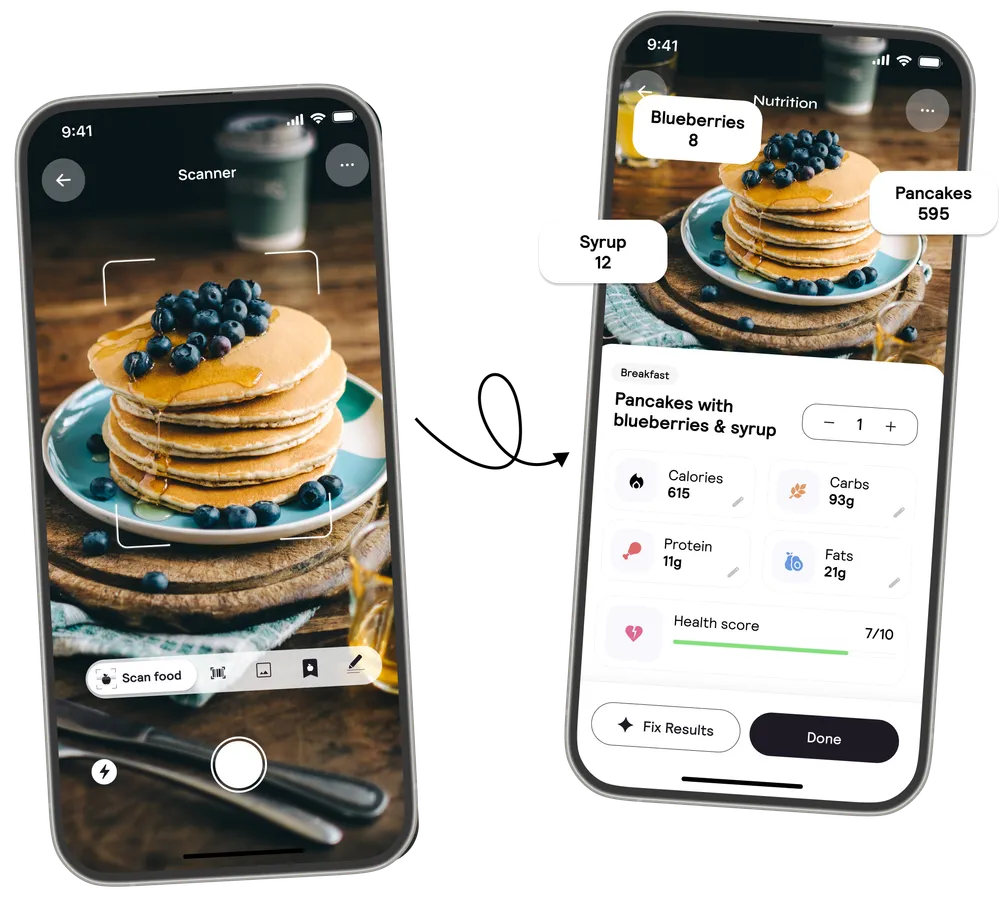
MyFitnessPal did not notice Cal AI because another calorie app claimed to understand food better than a dietitian. It noticed Cal AI because the app kept climbing the App Store charts with a simpler promise: take a photo of a meal, get calories and macros, and move on.
That sounds small until you compare it with the traditional calorie-tracking workflow. A user usually has to search for every ingredient, choose a database entry, estimate serving size, adjust grams or cups, add sauce, check the meal total, and repeat the process several times per day. The product category has always had an adoption problem hidden inside an input problem. People may want the data, but they do not want the logging work.
Cal AI attacks that problem directly. The user points the camera at a plate. The product identifies likely food items, estimates calories and macronutrients, and records the meal. The output can still be wrong, and users still need judgment, especially when sauces, oils, hidden ingredients, and portion weight matter. But the first interaction is radically lighter than the old form-based flow.
That is why the acquisition by MyFitnessPal matters. TechCrunch reported that MyFitnessPal acquired Cal AI after less than two years on the market, with Cal AI saying it had passed 15 million downloads and more than $30 million in annual revenue. The company also said the talks had been running for about a year. MyFitnessPal kept the Cal AI brand independent and connected it with its large food database, which the acquirer says includes about 20 million foods.
The strategic question is not whether a meal photo can measure nutrition perfectly. It cannot. The more useful question is why a large incumbent would buy a younger, less complete tracker. The answer is that Cal AI owned the moment before the user gives up.
The Product Sells Fewer Decisions
Calorie logging is a classic consumer-health paradox. The value compounds through consistency, but the cost is paid immediately and repeatedly. The first day feels manageable. The tenth day begins to feel like unpaid clerical work. Even motivated users can lose patience when a meal has multiple ingredients or when the app asks them to translate real food into database records.
Cal AI changes the user’s job from data entry to confirmation. A photograph becomes the starting point. The system can infer that the plate contains eggs, rice, chicken, salad, pasta, or a sandwich, then produce an estimated nutrition record. The user may adjust the result, but the app has already done the most annoying part: it has turned a messy meal into a structured first draft.
That first draft is the product. It is not only an AI feature. It is a behavioral unlock.
In consumer AI, many products describe themselves as smarter than the previous tool. Cal AI’s stronger claim is that the user has to decide less. Less searching. Less typing. Less weighing. Less context switching. The app can be wrong in a way that is still useful if the alternative is no log at all. For many everyday users, an approximate record created in three seconds beats a precise record that never gets entered.
This is also why the category fits mobile distribution. Food happens away from a desk. The phone is already present when the meal arrives. A camera-first interaction uses the device behavior people already understand. It avoids asking users to adopt a spreadsheet-like habit on a small screen.
The product lesson is blunt: if a workflow must happen several times every day, the first successful action has to feel almost too easy.
The Paywall Sits Behind The Scan
Cal AI’s App Store listing makes the commercial shape visible. The app can be downloaded for free, but AI meal scan analysis is tied to subscription access. Public in-app purchase listings show multiple price points, including smaller weekly or monthly options and larger annual or family-plan tiers. The details can vary by market, but the pattern is clear: the product monetizes the repeated scan habit.
That matters because the paid value is not a static nutrition guide. A food database, a calorie target, or a diet article can be treated as reference material. A scan is a recurring action. Breakfast, lunch, dinner, snacks, restaurant meals, and travel days all create new opportunities to use the product. If the scan is fast enough and the result is credible enough, the subscription can attach itself to a daily rhythm.
The visible adoption signals were strong enough to attract attention. Cal AI’s App Store page showed a high health-and-fitness ranking and hundreds of thousands of ratings with a high average score. TechCrunch reported the company’s 15-million-download and $30-million-revenue claims. These numbers should still be treated carefully because they come from company and acquirer statements rather than audited filings. But they are commercially important signals in a consumer category where many wellness apps struggle to turn curiosity into paid retention.
The business does not require every user to become a perfect quantified-self athlete. It needs enough users to feel that the app removes the most frustrating step from a repeated behavior they already care about. That is a narrower and more defensible promise.
Why MyFitnessPal Bought Speed Instead Of Precision
MyFitnessPal already had brand awareness, a large food database, a long operating history, and a user base familiar with manual tracking. From the outside, Cal AI looked less complete. It did not have the same depth of historical food records or the same incumbent credibility. But it had a sharper acquisition and activation surface.
That is a common incumbent problem. Mature products often become accurate, configurable, and trusted by power users, while the entry path becomes heavier for new users. The old workflow is not obviously broken to people who have already built the habit. It is broken to everyone who quits before day three.
Cal AI served that second group. It offered a shortcut for users who want insight but do not want to become database operators. MyFitnessPal’s move can be read as a way to own both ends of the market: precision for users who want detailed control, and speed for users who primarily need a lighter logging habit.
The database integration also changes the product ceiling. A photo-based app improves when it can map visual guesses into cleaner food records. A broad nutrition database gives the scan a stronger backend reference layer. The result is not magic accuracy, but a better path from image recognition to usable nutrition data.
This is the commercialization pattern worth noticing. AI does not replace the old asset. It changes the input layer, then benefits from the old asset behind the scenes. The user sees a photo scan. The business still needs a database, nutrition taxonomy, subscription operations, App Store distribution, and trust.
Accuracy Risk Is The Product Boundary
Cal AI sits in a sensitive area because food, weight, health, and body image are not neutral categories. A meal photo can miss cooking oil. It can misunderstand portion size. It may not know whether a sauce contains sugar, whether a dish uses low-fat ingredients, or whether the plate is shared. Even the best estimate is still an estimate.
That boundary should be part of the product design, not a footnote. Users need clear language that the app is not medical advice and should not be used as a clinical nutrition system. People managing diabetes, eating disorders, kidney disease, pregnancy nutrition, medication interactions, or other medical conditions need professional guidance beyond an image estimate. The more successful the app becomes, the more important those guardrails become.
The same issue affects trust. If the product pretends that a photo always delivers the truth, skeptical users will eventually notice the gaps. If the product presents the scan as a fast starting point that can be corrected, it can be useful without overclaiming. Consumer health AI can grow only if convenience does not erase humility.
There is also a retention question. A photo scan can create a strong first-use experience, but long-term value depends on whether users keep learning from the records. The app has to connect the scan to goals, trends, reminders, coaching, or behavior changes without making the experience feel punitive. Food tracking products can easily drift from helpful awareness into guilt. The best version of the category reduces friction and supports agency instead of making users feel watched.
The Builder Lesson
Cal AI is a good reminder that consumer AI does not always need a grand new interface. Sometimes it needs to remove one repeated decision from a workflow people already attempt.
The app did not invent nutrition tracking. It did not need to. It found the step where the market leaked users: converting a real meal into structured data. Then it made that step visual, fast, and easy enough to repeat. The subscription followed the habit rather than the other way around.
That pattern travels beyond food. An expense app can sell the first categorized receipt, not the finance dashboard. A fitness coach can sell the first corrected movement, not the training library. A language app can sell the first spoken response, not grammar explanations. A home-maintenance app can sell the first diagnosed issue from a photo, not a generic advice feed.
In each case, the commercial opening is the same. Find the painful input step. Turn it into a low-effort AI draft. Let the user correct it. Then connect the repeated action to a subscription, database, history, or workflow that becomes more valuable over time.
Cal AI’s strongest idea is that the meal log starts before discipline runs out. The user takes a photo, sees an estimate, and stays in the loop for one more meal. In a daily consumer-health product, that one more meal is the business.